
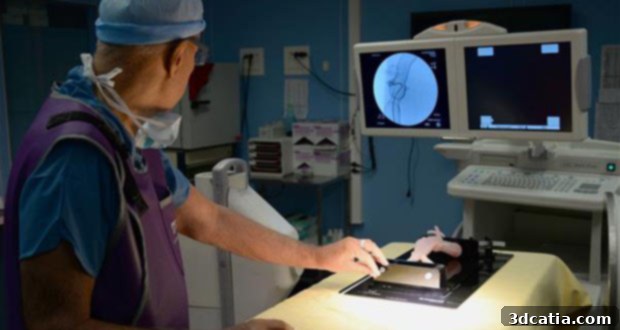
BIOMODEX: Pioneering 3D Printed Organs for Advanced Surgical Training and Personalized Medicine
In a previous feature, we explored the innovative work of OWA 3D, a startup dedicated to advancing the circular economy through 3D printing. Today, we turn our attention to an entirely different, yet equally critical, application of additive manufacturing: the medical field. This month, we spotlight a company making significant strides in transforming surgical education and patient care.
The alarming statistic that medical errors rank as the third leading cause of death in the United States served as a profound catalyst for Thomas Marchand and Sidarth Radjou. Recognizing this pressing issue, they envisioned a groundbreaking solution: a startup focused on creating highly realistic 3D printed organs and intricate simulation models. These innovative models provide surgeons with an invaluable tool, allowing them to meticulously practice complex procedures before ever stepping into an operating room. This pre-surgical rehearsal capability is designed to dramatically reduce the incidence of errors and mitigate associated risks during actual surgeries, ultimately enhancing patient safety and improving outcomes. It is with great anticipation that we introduce BIOMODEX, a true revolutionary force within the surgical world, poised to redefine training and preparation.
BIOMODEX: Bridging Innovation and Surgical Precision

Thomas Marchand
BIOMODEX is a pioneering French startup strategically located in both Paris and Boston, a dual presence that underscores its ambition for global impact in innovation and medical technology. The core mission of BIOMODEX revolves around the development of advanced synthetic organs, meticulously crafted using 3D printing technology directly from a patient’s medical imaging data. This groundbreaking approach addresses a critical and long-standing need within the medical community: the provision of superior training solutions for surgeons. Specifically, BIOMODEX focuses on enabling surgeons to receive highly specialized training for unique pathologies and comprehensive preoperative preparation. By creating patient-specific, anatomically precise models, BIOMODEX empowers medical professionals to refine their skills in a risk-free environment, leading to improved surgical performance and greater confidence.
The genesis of this ambitious project stemmed from a pivotal meeting between co-founders Thomas Marchand and Sidarth Radjou. Their individual academic and professional backgrounds perfectly converged to lay the foundation for BIOMODEX. Sidarth Radjou had previously delved into the intricacies of enhancing medical imaging through 3D printing techniques during his studies at the Centrale Paris School. Concurrently, Thomas Marchand explored the vast potential of “3D printing in health: what are the opportunities?” as the subject of his master’s thesis at ESSEC. Given their complementary expertise and shared vision for innovation in healthcare, their collaboration was not just natural but inevitable. Indeed, the conceptualization and formalization of BIOMODEX rapidly followed, with the duo teaming up just fifteen days after their initial encounter, driven by a mutual understanding of the transformative power of additive manufacturing in medicine.
Revolutionizing Surgical Training: BIOMODEX’s Dual Approach
At BIOMODEX, our fundamental role is to significantly elevate the standard of surgical training through a comprehensive dual approach. The first aspect involves the meticulous reproduction of complex anatomical structures and specific pathologies. Consider, for instance, the intricate anatomy of an ear, including its delicate bone chain and inner ear components, or the precise replication of a traumatic injury such as a wrist fracture. By creating these highly detailed synthetic models, we offer a robust and ethically sound alternative to traditional surgical training methods, which often fall short in modern medical education. Historically, training has relied on practices such as operating on live patients, utilizing cadaveric anatomical parts, or experimenting on animals. Each of these conventional methods presents significant limitations, including ethical dilemmas, logistical complexities, and often, an inability to accurately represent the specific pathological conditions surgeons will encounter in practice.
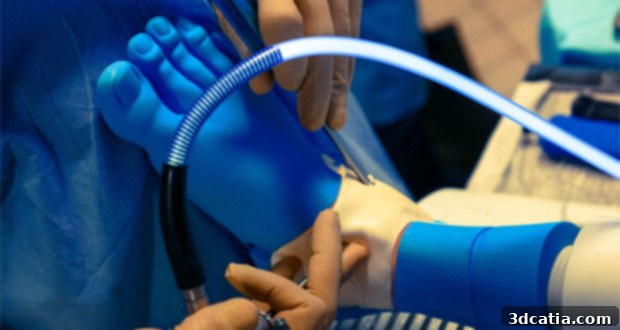
The second, equally vital, facet of our work is the advancement of personalized pre-operative training. This innovative process begins with a doctor uploading the patient’s medical images – sourced from scanners, MRI, or ultrasound data – onto our secure web platform. Within a few days, a tailor-made BIOMODEX synthetic organ, a precise replica of the patient’s specific anatomy and pathology, is delivered directly to the hospital. This unique model allows the surgeon to engage in highly realistic practice sessions, experimenting with different surgical approaches, refining their strategic decisions, and accurately determining the correct prosthesis size and optimal positioning tailored specifically for that patient. This commitment to personalized medicine is at the heart of our mission, aiming to substantially reduce operative risks and enhance the precision of every surgical intervention. Furthermore, our pre-operative training solutions are designed to generate significant cost savings for both state health systems and private insurance providers. By enabling surgeons to spend less time in the operating room – where costs can escalate rapidly, often reaching upwards of $50 per minute without staff in the USA – and by drastically reducing post-operative complications that frequently necessitate costly re-hospitalization, BIOMODEX offers a financially responsible pathway to superior patient care. In 2017 alone, we projected to print 1,000 synthetic organs under various pilot programs, predominantly within the United States, underscoring the rapid adoption and growing demand for our transformative technology.
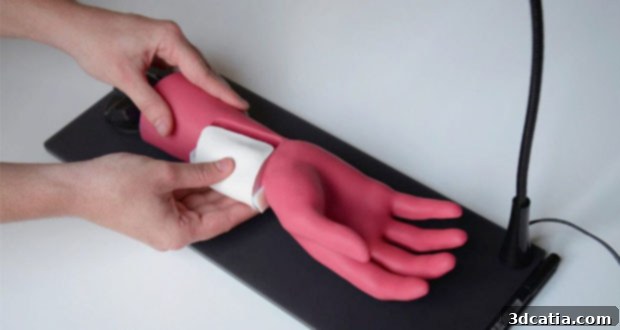
The Ingenuity Behind the Models: INVIVOTECH Technology
At the core of BIOMODEX’s revolutionary capabilities lies our proprietary and patented technology, aptly named INVIVOTECH. This advanced system allows us to transform standard medical imagery, routinely collected in clinical settings, into incredibly lifelike 3D printed models through a sophisticated series of numerical steps. The result is synthetic organs that not only visually replicate human anatomy but also respond with remarkable similarity to a clinician’s surgical tools, offering an unparalleled level of realism during simulation. The true innovation of INVIVOTECH lies in its ability to create composite materials engineered to possess the exact biomechanical characteristics of human tissues, whether hard like bone or soft like ligaments and skin. This means we can precisely mimic the tactile feel, elasticity, and resistance of biological structures. For instance, we are capable of 3D printing a complete ankle model, intricately including all its anatomical elements such as the skin, bones, ligaments, tendons, arteries, veins, and cartilage. This level of detail and biomechanical fidelity ensures that surgical practice on our models closely mirrors the experience of operating on a real human body.
Our journey of innovation has been significantly bolstered by the invaluable mentorship received from 3DExperience LAB, a division of Dassault Systèmes. Their guidance during our crucial first five years has been instrumental, providing not only technical expertise but also strategic insights that have profoundly shaped our development path. Without their high-level support, BIOMODEX’s trajectory and current capabilities would undoubtedly be different. This partnership has equipped us with a substantial competitive advantage, fostering an environment where continuous innovation and precision thrive. Consequently, BIOMODEX is exceptionally positioned to emerge as the global leader in its specialized field, driving forward the future of surgical simulation and personalized medical training.
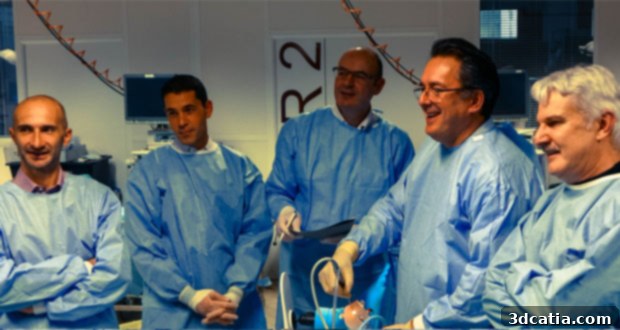
BIOMODEX’s Vision for the Future: Expanding Horizons
Having successfully developed highly effective simulators in the fields of ENT (Ear, Nose, and Throat) and orthopedics, BIOMODEX’s strategic priority for the coming years is to expand our innovative solutions into the critical areas of vascular and cardiovascular pathologies. This focus is driven by the stark reality that cardiovascular diseases remain the leading cause of mortality worldwide. BIOMODEX recognizes its profound responsibility and unique opportunity to make a significant impact in this challenging yet incredibly vital medical domain. Our efforts in this area are supported and guided by collaborations with some of the world’s most distinguished surgeons, including Professor Jacques Moret, Professor Alain Cribier, and Professor Jean-Pierre Becquemin. The involvement of such eminent experts not only validates our approach but also provides us with immediate international clinical credibility, fostering trust and accelerating adoption within the global surgical community. With the invaluable insights and scientific rigor provided by these leading figures, our overarching objective is to rigorously demonstrate, through comprehensive scientific studies and peer-reviewed publications, that our advanced simulation models empower surgeons to achieve superior training and preparedness for their procedures, thereby significantly reducing surgical risks and improving patient outcomes on a global scale.
Below, you can observe a surgical simulation of an ankle arthroscopy, showcasing the realism and functional accuracy of our models:
https://youtu.be/YkVXsVRRk4E?list=PLB4tbhCIgBtJ6vUiKM2gXdToblj3iyALr
The Transformative Future of 3D Printing in Surgery
We firmly believe that the customization of treatment, enabled by the unparalleled capabilities of 3D printing, will usher in a profound revolution in surgical practice. This paradigm shift promises to deliver patient care that is not only less risky but also demonstrably more effective, offering tangible benefits from both clinical and economic perspectives. One of the most significant values offered by 3D printing technology is its inherent ability to provide easy and cost-effective customization. Unlike traditional manufacturing methods that struggle with individualized production, 3D printing thrives on creating bespoke, patient-specific devices and models. This allows for precise anatomical matching, personalized implant design, and tailored surgical guides, leading to enhanced precision, reduced complications, and ultimately, superior patient outcomes. This shift towards personalized medicine, facilitated by additive manufacturing, represents a critical leap forward in healthcare, moving away from a one-size-fits-all approach to highly individualized treatment plans.
A Resilient Outlook: The Future of 3D Printing and BIOMODEX’s Role
While the 3D printing market has experienced periods of volatility, often characterized by a perceived gloom, such as the significant drop in stock values for 3D printing companies in the U.S. since 2012, or the notable downsizing of companies like Makerbot by 50% in recent years, it is imperative to maintain a confident and optimistic perspective on this truly unique and revolutionary technology. What we are witnessing today is not a decline, but rather a crucial phase of market correction and maturation. The initial “buzz and hype” surrounding 3D printing, which often led to inflated expectations, is now giving way to a more realistic and sustainable growth trajectory. We are transitioning from an era primarily focused on rapid prototyping to a new phase defined by industrial-scale additive manufacturing and mass production of end-use parts. BIOMODEX is strategically positioned and deeply committed to being one of the leading pioneers in this new era, aiming to be among the first key players to industrially manufacture synthetic organs. Our ambition is not just to create models for practice, but to establish a robust manufacturing pipeline that can meet the growing demand for advanced surgical simulators and patient-specific tools, solidifying 3D printing’s indispensable role in modern medicine.
For more insights, watch our exclusive video featuring Thomas Marchand at CES 2017:
Do you believe that 3D printing holds the key to profoundly revolutionizing the way future surgeons operate, making procedures safer and more effective? Share your thoughts and insights by leaving a comment below or engaging with us on our Facebook and Twitter pages! We look forward to your valuable contributions to this vital discussion.