
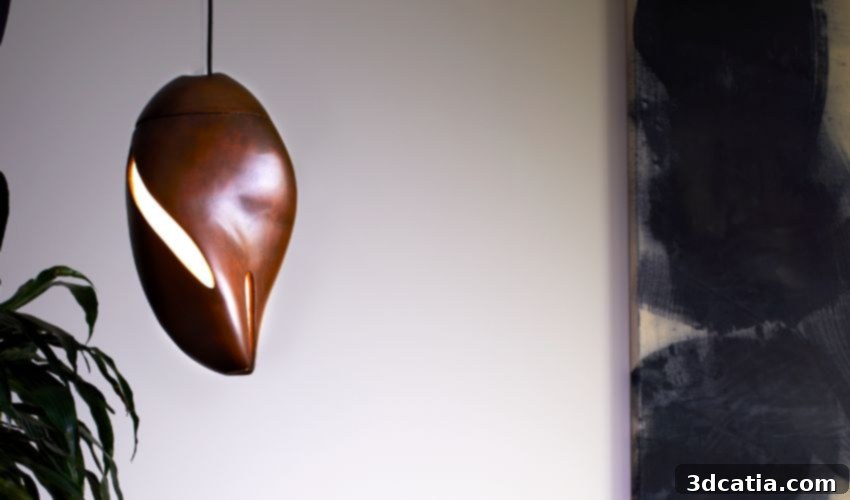
Revolutionizing Design: Sustainable Wood 3D Printing with Forust, Desktop Metal, and the Cocoon Light
In an era increasingly defined by innovation and environmental consciousness, 3D printing technology is rapidly evolving beyond its traditional confines of polymers and metals. The industry is now embracing a wider spectrum of materials, with a particular emphasis on sustainable alternatives. Among these, wood stands out as a uniquely eco-friendly resource. This focus on sustainable material development is precisely what drives the collaboration between Forust and Desktop Metal. Through the launch of their groundbreaking Shop System™ – Forust Edition, these pioneering companies are making significant strides toward achieving high-volume, affordable wood 3D printing using advanced binder jetting technology. This innovative approach has already found practical application in several projects, most notably in the creation of the exquisite Cocoon decorative pendant lights, a collaborative masterpiece with the esteemed designers HagenHinderdael.
The Dawn of Sustainable Wood 3D Printing
The pursuit of sustainability has become a paramount concern across all sectors, and manufacturing is no exception. Traditional wood manufacturing often results in significant waste, from sawdust to offcuts, which typically ends up in landfills. Additive manufacturing, or 3D printing, offers a transformative solution by enabling the creation of complex geometries with minimal material loss. However, the true innovation lies in adapting this technology to utilize reclaimed and repurposed materials. Forust, in partnership with Desktop Metal, has spearheaded this movement by developing a process that transforms wood waste – specifically sawdust byproduct from the timber milling industry – into a valuable resource for 3D printing.
This shift not only addresses the problem of wood waste but also presents a compelling vision for a more circular economy. By converting what was once considered industrial refuse into a high-performance, aesthetically pleasing material for additive manufacturing, Forust and Desktop Metal are setting new benchmarks for eco-conscious production. Their Shop System™ – Forust Edition represents a significant leap forward, democratizing access to wood 3D printing for a wide range of applications, from intricate decorative items to functional components, all while upholding principles of environmental responsibility. The technology’s ability to produce complex, organic forms without the need for traditional carving or assembly further enhances its appeal and ecological footprint.
The Cocoon Light: A Fusion of Nature, Technology, and Biophilic Design
The Cocoon pendant light is more than just an illumination fixture; it is a profound statement on sustainable design and the harmonious integration of nature with advanced technology. As previously highlighted, Cocoon is the imaginative outcome of the partnership between Forust and HagenHinderdael. HagenHinderdael is an award-winning creative practice renowned for its commitment to combining thoughtful design with cutting-edge technological innovations to craft immersive installations. Under the astute leadership of Sofia Hagen and Lisa Hindardael, the firm delves into the intricate relationship between immersive art and biophilic design. Biophilic design, at its core, is a concept dedicated to enhancing the connection between people and the natural world within built environments, fostering a sense of well-being and a deeper appreciation for nature’s intrinsic beauty.
This philosophy finds its perfect embodiment in the Cocoon. The pendant light meticulously transforms wood waste into an organic, technologically sophisticated lighting solution. Its design draws inspiration directly from nature, mirroring the intricate structures found in the natural world. This deliberate choice not only pays homage to the material’s origin but also serves to evoke a sense of calm and connection for those who interact with it. The very act of transforming discarded timber into such an elegant and functional piece underscores the potential for innovative processes to breathe new life into forgotten resources, creating objects that are both visually stunning and ethically sound. HagenHinderdael’s vision, realized through Forust’s technology, paves the way for a future where design not only captivates but also contributes positively to our planet’s health.
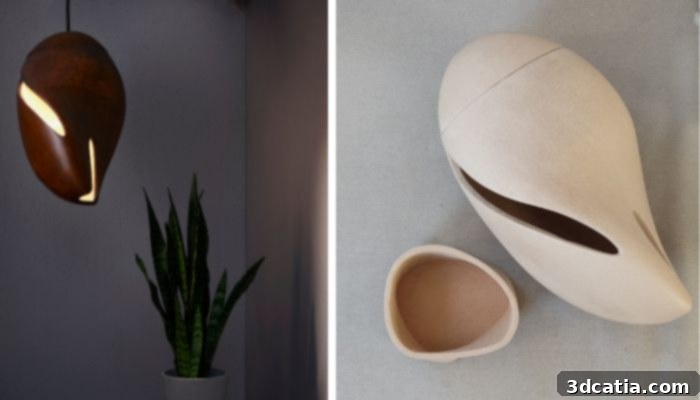
The finished (left) and unfinished (right) Cocoon (photo credits: Anders Gramer)
Crafting Cocoon: The Innovative Wood 3D Printing Process
The Cocoon light represents a powerful synthesis of diverse design and technological concepts. Fundamentally, the overarching objective was to develop a lighting fixture that not only exemplifies sustainability but also aesthetically embodies an organic structure, subtly referencing the natural materials from which it is derived. This ambitious goal was impeccably achieved, largely attributable to the groundbreaking wood 3D printing technology pioneered by Forust and Desktop Metal. The development of Cocoon leveraged an innovative process specifically engineered to minimize timber waste, transforming what would otherwise be discarded into a valuable, functional product. The resulting luminaire is thus not merely eco-friendly but also entirely degradable, completing a truly circular lifecycle.
The design of the Cocoon light intricately mimics organic forms, drawing notable inspiration from natural cocoons. This complex shape is brought to life through a sophisticated binder jetting process. In this method, meticulously layered powdered wood particles are precisely bound together using lignin. Lignin is a complex, naturally occurring plant-derived polymer, fundamentally serving as a key structural material within the support tissues of most plants. This makes the bonding agent inherently natural and sustainable. Consequently, this process transcends being merely a high-speed wood 3D printing technique capable of producing end-use parts; it is also profoundly non-destructive to the planet’s delicate ecological balance. In the specific instance of the Cocoon, the resulting part measures 250mm x 460mm and is available in two distinct typologies. Each printed Cocoon can be meticulously hand-stained and finished post-printing, offering a diverse range of aesthetic options, including the rich textures and hues of natural wood, oak, teak, and walnut, allowing for complete customization to complement any interior space.
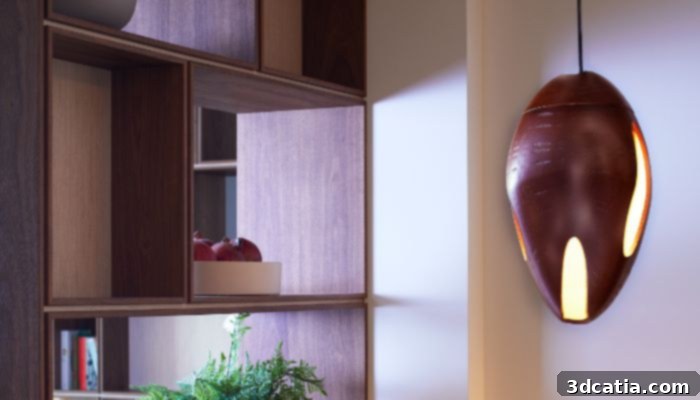
The light’s shape has been designed to pay homage to the natural materials used (photo credits: Anders Gramer)
Beyond its outer shell, the Cocoon light integrates an internal, energy-efficient OLED light source, which the shell itself protects. The OLED panel utilizes slimline technology, known for its minimal environmental impact. It is fabricated from 85% glass, complemented by a precise balance of organic materials and non-toxic metals, further enhancing its eco-credentials. A crucial aspect of the Cocoon’s creation is HagenHinderdael’s commitment to utilizing materials that would otherwise have been destined for landfills, reinforcing the project’s dedication to waste reduction. The fundamental aspiration behind this innovative light is to encourage a paradigm shift in product design—moving beyond conventional practices to explore how emerging technologies and processes can foster more sustainable initiatives for the future of lighting, setting a precedent for environmental responsibility in contemporary design.
The Shop System ™ Forust Edition: Powering Wood Additive Manufacturing
The triumph of this stunning decorative light, the Cocoon, is undeniably rooted in the sophisticated technology that underpins its creation. At the heart of this innovation lies the Shop System™ Forust Edition, a specialized variant of Desktop Metal’s highly successful Shop System™. This particular edition has been meticulously engineered and adapted to process unfinished sawdust byproduct sourced directly from the wood milling industry. As previously detailed, the machine operates on the principle of binder jetting, a rapidly gaining popularity in additive manufacturing due to its exceptional speed, production capabilities, and the inherent ability to create highly complex wood designs without the need for additional support structures during the printing process. This feature significantly reduces post-processing time and material waste, making it an incredibly efficient manufacturing solution.
The technical specifications of the Shop System™ Forust Edition are impressive. It boasts a build box measuring 350 x 222 x 200 mm (13.8 x 8.7 x 7.9 inches), providing ample space for printing a wide array of parts, from intricate decorative elements to larger, functional components. Furthermore, the machine delivers an impressive print speed of up to 1,600 cc/hr, which translates to approximately 21 mm in z-height per hour. This speed enables rapid prototyping and production, making it suitable for both custom, one-off pieces and larger-scale manufacturing runs. The ability to transform discarded sawdust into high-quality, durable wood products at such a pace opens up unprecedented opportunities for industries ranging from furniture design and interior decor to architecture and artistic installations, all while championing environmental sustainability.
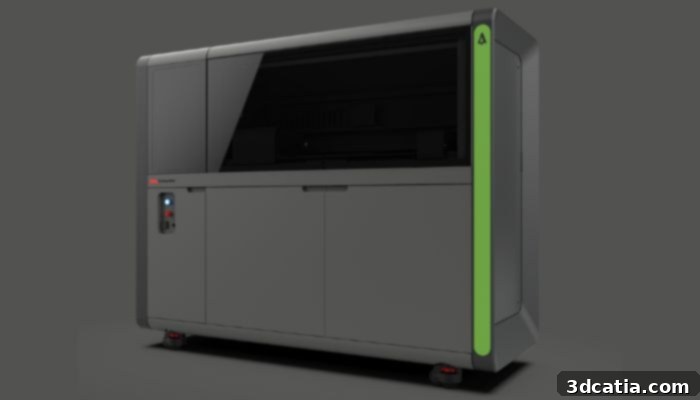
The Shop System™ Forust Edition (photo credits: Desktop Metal)
The Broader Impact and Future of Wood 3D Printing
The potential of on-demand 3D printing with waste natural materials, particularly wood, has garnered significant attention from thought leaders in sustainability and design. William McDonough, a renowned architect and co-author of the influential book “Cradle to Cradle: Remaking the Way We Make Things,” eloquently highlighted the transformative nature of this technology. He noted, “The on-demand 3D printing of wood using waste natural materials is a gamechanger. By allowing millions of trees to remain in place in their forests, Forust is launching a highly evolved technology for the circular technosphere. We have only begun to explore its beneficial potentials, but it is clear they are immense.” McDonough’s statement underscores the profound ecological benefits of this innovation, positioning it as a cornerstone for a truly circular economy where waste is minimized, and natural resources are preserved.
Indeed, with projects like the Cocoon light, the relevance and vast applicability of this technology become strikingly evident. Beyond decorative lighting, wood 3D printing holds immense promise for a myriad of applications. Imagine custom-designed furniture pieces that are not only aesthetically unique but also sustainably manufactured from recycled wood. Consider architectural elements, intricate interior details, or even consumer goods, all produced with minimal waste and a reduced carbon footprint. The ability to create complex geometries that would be impossible or prohibitively expensive with traditional woodworking techniques further broadens the horizons. This technology offers designers and manufacturers unparalleled creative freedom, allowing for the realization of previously unattainable forms and structures while simultaneously adhering to the highest standards of environmental stewardship. As the technology matures, we can anticipate a future where wood 3D printing becomes an integral part of sustainable manufacturing across various industries, contributing significantly to both economic growth and ecological preservation.
To delve deeper into the capabilities of the Shop System™ Forust Edition and explore other cutting-edge binder jetting solutions from Desktop Metal, you can watch our exclusive video featuring the company from Formnext 2022 below. Furthermore, for more detailed information about the enchanting Cocoon light, please visit HagenHinderdael’s official product page HERE.
What are your thoughts on the innovative use of wood 3D printing to create the Cocoon light? We invite you to share your insights and comments below, or join the conversation on our LinkedIn, Facebook, and Twitter pages! Don’t miss out on the latest advancements in additive manufacturing—be sure to sign up for our free weekly Newsletter here, delivering the freshest 3D printing news directly to your inbox! You can also explore all our comprehensive videos and interviews on our dedicated YouTube channel.
*Cover Photo Credits: Anders Gramer