
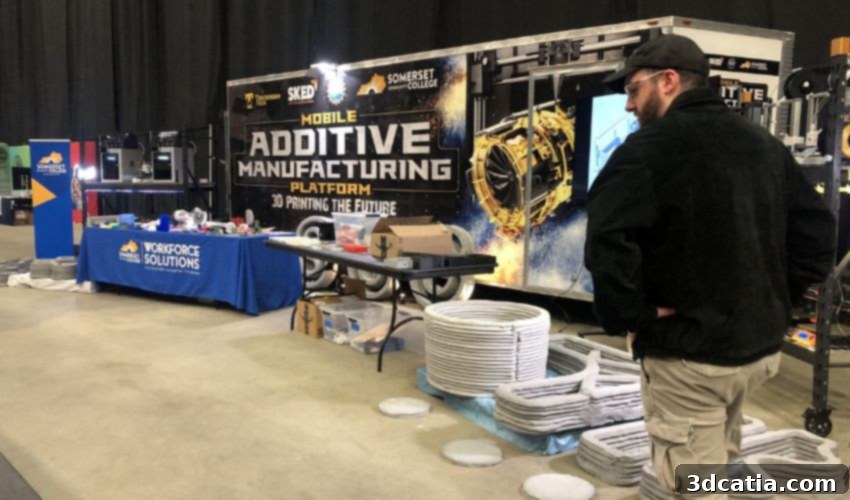
Pioneering Resilience: How Somerset Community College Leverages 3D Printing for Disaster Recovery and Sustainable Housing in Vulnerable Kentucky
In October 2023, the release of the US Climate Vulnerability Index cast a stark light on the environmental risks facing states nationwide. The report explicitly identified Kentucky as one of the most at-risk states, particularly due to its susceptibility to environmental disasters. Eastern Kentucky, with its unique geographical challenges, finds itself in an especially precarious position. Over recent years, the region has endured a relentless onslaught of natural calamities, including devastating floods and powerful tornadoes, which have struck with alarming frequency and intensity. A harrowing example occurred in 2022 when a catastrophic flood not only wiped away countless homes and essential schools but also claimed the lives of 45 individuals, leaving deep scars on the community. In response to this recurring destruction and the urgent need for robust rebuilding strategies, Kentucky’s Somerset Community College (SCC) has emerged as a beacon of innovation, placing additive manufacturing at the forefront of its ambitious recovery and resilience efforts.
For more than a decade, the KCTCS Additive Manufacturing Center, proudly housed at Somerset Community College, has been a national leader in advancing additive manufacturing education. The center has meticulously developed and implemented comprehensive training programs, effectively integrating this cutting-edge technology across the entire state of Kentucky. Andrew Clapper, the Concrete 3D Printing (C3DP) Project Manager and a key member of the dedicated SCC team, highlights their pioneering spirit, stating, “SCC was the first institution in the nation to develop a statewide additive manufacturing certificate program.” This monumental achievement underscores SCC’s commitment to preparing a skilled workforce capable of harnessing the power of 3D printing. Through strategic partnerships with leading universities and colleges, alongside vital support and funding from prestigious organizations such as the National Science Foundation and the USDA Rural Development, the SCC Team has successfully managed to “democratize and rapidly scale 3D printing education,” making advanced manufacturing accessible to a broader population and fostering a culture of innovation across the region.
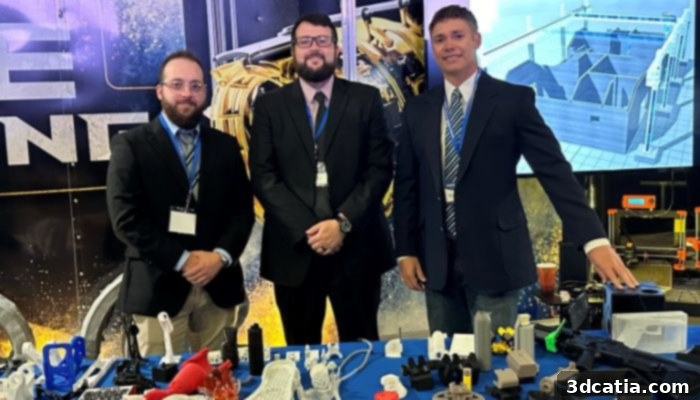
The KCTCS Additive Manufacturing team (Photo credits: Somerset Community College)
With the foundational education in additive manufacturing firmly established and widely integrated, the focus at SCC is now shifting towards practical application, particularly in the realm of construction. Eric Wooldridge, Director of the KCTCS Additive Manufacturing Center at SCC, articulated this pivotal transition, asserting, “It is time to do the same with concrete 3D printing.” This bold vision directly underpins the C3DP Project, a groundbreaking initiative designed to provide urgently needed, affordable, and highly resilient housing solutions for communities not only surviving but also actively rebuilding in the aftermath of devastating natural disasters. The project’s innovative approach promises to revolutionize post-disaster recovery, offering structures that are not only quicker to build but also significantly more resistant to future environmental threats. To date, the C3DP project has successfully secured crucial funding from both the USDA and the Appalachian Regional Commission (ARC), validating its potential and laying a solid financial groundwork for its ambitious objectives and widespread implementation across vulnerable regions.
Why 3D Printing? Benefits and Drawbacks for Disaster Relief
The C3DP team made a deliberate and strategic choice to leverage additive manufacturing for home construction, primarily driven by the technology’s immense potential to create exceptionally durable and disaster-resistant homes. Concrete 3D printed homes are rapidly gaining traction worldwide, lauded for their ability to significantly reduce material requirements and drastically cut down construction timelines. Andrew Clapper emphasized this efficiency, explaining, “The cost and timeline to build with this technology compared to conventional methods are markedly different.” This acceleration in construction means that displaced families can return to stable housing much faster, minimizing prolonged periods of disruption and uncertainty. Beyond speed, these innovative homes are engineered with enhanced structural integrity, making them far more capable of withstanding the destructive forces of floods and tornadoes, which are increasingly common in regions like Eastern Kentucky. The solid, continuous walls produced by concrete 3D printing offer superior resistance to high winds and water ingress compared to traditional stick-built homes. Furthermore, these robust builds are designed to actively mitigate persistent concerns often associated with flood damage, such as pervasive mold growth and insidious contamination, ensuring a healthier and safer living environment for residents.
The advantages of integrating 3D printing into construction extend far beyond just resilience and speed. Environmentally, the precise extrusion process of 3D printing significantly reduces construction waste compared to conventional methods, contributing to a more sustainable building practice. The technology also offers unprecedented design flexibility, allowing for innovative architectural solutions that can be tailored to specific community needs and environmental conditions, optimizing space and resource utilization. This ability to customize designs, combined with the efficiency of the printing process, can lead to substantial cost savings, making resilient housing solutions more accessible and affordable for a broader demographic, particularly in economically challenged post-disaster areas. However, like any nascent technology, widespread implementation of 3D printing in the construction sector requires careful navigation. The most significant hurdle lies in seamlessly integrating these advanced methods into existing residential building codes and standards. This process is crucial to ensure that 3D printed homes meet all regulatory requirements for safety, structural integrity, and livability. The C3DP project at SCC is actively working to overcome these regulatory challenges, aiming to establish proven models and methodologies that can then open doors for other regions and developers to adopt this transformative technology. Their pioneering efforts are not just about building houses; they are about setting new benchmarks for construction safety and efficiency.
Wooldridge further elaborated on the crucial demonstration aspect of their work: “We also want to demonstrate to contractors and developers how this technology paired with cutting-edge engineering applications can effectively produce affordable, next-generation homes that meet federal financing qualifications.” This comprehensive approach is vital for fostering broader acceptance and accelerating the adoption of concrete 3D printing in the mainstream construction industry. By proving both the technical feasibility and economic viability, SCC aims to build confidence among stakeholders and pave the way for a more resilient future. The team’s ambitions extend far beyond the immediate construction projects in Kentucky; they envision a future where this technology empowers communities everywhere. By showcasing what is truly possible, they hope to “pave the way for people to replicate and scale what we are doing,” Wooldridge emphasized. He passionately articulated the broader vision: “To find ways to put this technology in every school and community and give them the power to innovate. Because that is not only what Kentucky needs, but also our nation and our world.” This forward-thinking perspective underscores the profound potential of additive manufacturing not just for rebuilding after disasters, but for fostering a new era of localized innovation, self-sufficiency, and sustainable development. SCC’s commitment to education and practical application aims to cultivate a new generation of problem-solvers equipped with the skills to address complex challenges through advanced manufacturing. Their work serves as a powerful testament to how community colleges can drive national progress and global impact.
The initiative by Somerset Community College represents a pivotal moment in disaster preparedness and recovery, showcasing how advanced technologies can be harnessed for the greater good. Their dedication to developing resilient, affordable, and sustainable housing solutions through concrete 3D printing is not just a regional response to a local crisis but a blueprint for national and international application. The integration of robust educational programs with tangible construction projects creates a powerful synergy, ensuring that innovation is paired with practical implementation and skilled workforce development. As natural disasters continue to pose increasing threats globally, SCC’s model offers a hopeful and effective pathway towards building stronger, safer, and more adaptive communities. To delve deeper into the transformative work being done by SCC’s additive manufacturing project and its potential to rebuild and fortify communities across America, interested readers are encouraged to access the official press release here.
What are your thoughts on Somerset Community College’s pioneering 3D printing mission and its potential for disaster recovery? Let us know your insights and opinions in a comment below or join the conversation on ourLinkedIn,Facebook, andTwitter pages! Don’t miss out on the latest advancements and news in the 3D printing world; be sure to sign up for our free weeklyNewsletter here, delivering fresh updates straight to your inbox! Additionally, you can explore all our engaging videos and educational content on our dedicatedYouTube channel.
*Cover Photo Credit: Eric Wooldridge, LinkedIn