
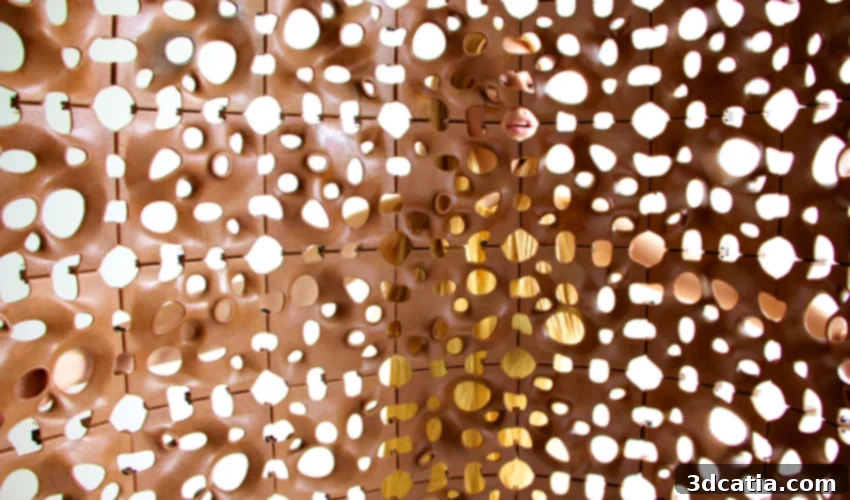
Forust Corporation: Revolutionizing Sustainable Interior Design with 3D Printed Wood
Forust Corporation stands at the forefront of innovation in wood technology, masterfully integrating advanced 3D printing techniques to craft exquisite and environmentally conscious interior design pieces. The core mission of Forust is ambitious yet vital: to manufacture stunning wood products without contributing to the depletion of our planet’s invaluable ecosystems. This pioneering company was brought to life by a team of visionary founders renowned for their contributions to the 3D printing landscape, including the minds behind Figulo, Boston Ceramics, and Emerging Objects. The latter, in particular, is celebrated for its groundbreaking and unconventional approach to material science and architectural design. We recently had the distinct pleasure of engaging in a comprehensive discussion with Andrew Jeffery, the CEO of Forust. Prior to co-founding Forust, Jeffery held the esteemed position of President at both Figulo and Boston Ceramics, solidifying his reputation as one of the leading experts in ceramic 3D printing within the United States. His extensive background and deep expertise are now channeled into Forust’s innovative endeavors, promising a future where sustainability and sophisticated design converge.
Andrew Jeffery’s Journey: A Pioneer in 3D Printing
 “I am Andrew Jeffery, and I currently serve as the CEO of Forust Corporation,” he begins, reflecting on his distinguished career. “This venture marks my fourth significant foray into the dynamic world of 3D printing, a field I’ve been deeply immersed in for nearly three decades since my arrival in the United States.” Jeffery’s journey into additive manufacturing began with a compelling challenge: “My very first assignment with my employer, Albany International Research in the Boston area, was to identify processes capable of creating products in the fewest possible manufacturing steps. This quest quickly steered me towards the burgeoning fields of Stereolithography (SLA) and other groundbreaking rapid prototyping technologies.” This early exposure to the transformative potential of 3D printing laid the groundwork for a career defined by innovation, problem-solving, and a relentless pursuit of efficiency. His continuous engagement with cutting-edge technologies has positioned him as a thought leader, now steering Forust towards a future where sophisticated manufacturing meets environmental stewardship. His vast experience across various facets of 3D printing, from ceramics to wood, underscores his unique perspective and profound understanding of material science and application.
The Genesis of Forust Corporation: From Sawdust to Sustainable Art
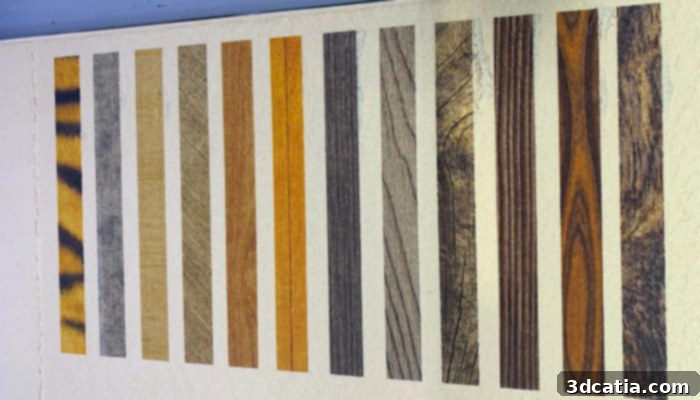
“Forust Corporation officially commenced its operations in October 2019, founded by myself alongside my esteemed co-founders, Ronald Rael and Virginia San Fratello,” Jeffery recounts, detailing the inception of the company. “Our collaborative efforts on various projects had been ongoing since our initial meeting in 2012, fostering a strong foundation of shared vision and expertise. A common thread throughout our partnership has been a profound interest in exploring the potential of unconventional materials for 3D printing, coupled with an ambitious goal to scale these processes for the mass production of a multitude of objects.” This long-standing collaboration between the trio, known for their innovative approaches in architecture and material science, was instrumental in laying the groundwork for Forust. They recognized a significant opportunity to transform industrial waste into valuable resources. The true spark of inspiration behind Forust was the innovative idea of utilizing sawdust—a ubiquitous waste byproduct generated extensively by the furniture manufacturing industry. Their vision was to repurpose this material, transforming it into aesthetically pleasing and highly functional objects suitable for diverse building interiors. Sustainability isn’t merely a buzzword for Forust; it is a fundamental pillar deeply embedded within their core values and operational philosophy. The company has already achieved significant milestones, successfully demonstrating the proof of concept for 3D printing with wood. More recently, they have made remarkable advancements by incorporating sophisticated texture and color mapping techniques. These innovations allow them to meticulously recreate a strikingly realistic wood appearance on objects meticulously crafted from reclaimed sawdust, blurring the lines between recycled material and natural timber. This commitment to both ecological responsibility and artistic integrity positions Forust as a trailblazer in the sustainable design movement.
The innovative approach taken by Forust not only addresses the issue of waste management but also opens up new avenues for design creativity. By converting what was once discarded into durable, beautiful products, Forust champions a circular economy model. This process not only preserves natural wood resources but also significantly reduces the carbon footprint associated with traditional wood manufacturing. The ability to precisely control the aesthetic outcome, from grain patterns to specific wood tones, through advanced digital mapping, means that clients are not limited to generic designs. Instead, they can achieve bespoke, high-quality finishes that rival or even surpass those of natural timber, all while contributing to a healthier planet. This harmonious blend of technological prowess, ecological awareness, and design excellence underscores Forust’s unique position in the market and its potential to reshape the future of interior design and architectural components.
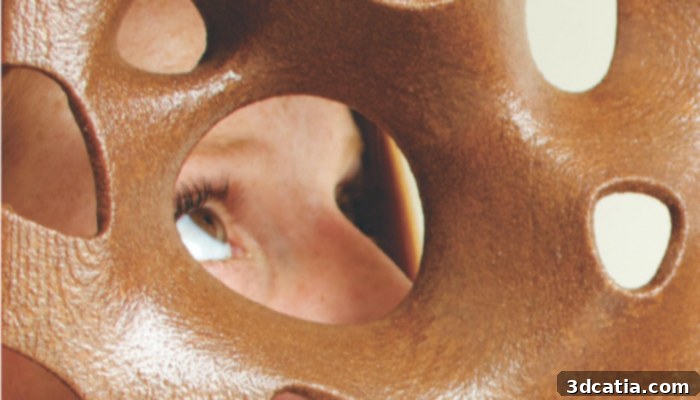
All image credits: Forust Corp.
The Forust Workflow: Precision and Sustainability Through Binder Jetting
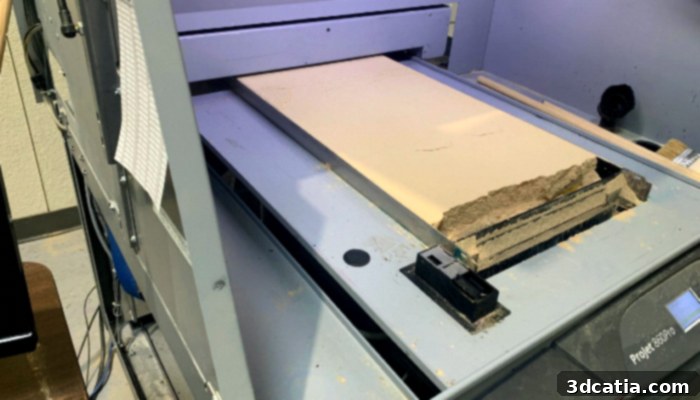
Delving into the technical heart of Forust’s operations, Andrew Jeffery explains, “Our production process utilizes the sophisticated Binder Jetting 3D printing technique, a method originally developed with pioneering research at the esteemed Massachusetts Institute of Technology.” He continues, “This technology is deeply familiar to me, as my first company, Specific Surface Corporation, proudly became one of the inaugural licensees of this very process back in 1995. My long-standing involvement has provided me with an intimate understanding of its nuances and capabilities.” The Binder Jetting process, while advanced, is remarkably straightforward in its execution. At its core, Forust employs a specially selected wood flour, which is essentially wood in a finely powdered form. This powder is meticulously chosen for a specific particle size range, a critical factor that ensures it can be spread uniformly in thin layers and easily de-powdered after printing. The cohesion of the wood powder is achieved by incorporating a “glue” directly within the powder itself. This latent adhesive is then activated by a liquid binder, which is precisely jetted onto the powder bed according to the digital design model. This selective application binds the wood particles layer by layer, gradually forming the desired object.
Following the printing phase, the parts are carefully removed from the 3D printer. They undergo a de-powdering process once dry, where any unbound wood flour is gently removed and can be recycled for future prints, minimizing waste. The now de-powdered parts are then subjected to a crucial post-processing step: infiltration with a specialized resin. This resin is akin to the high-quality protective coatings frequently employed in traditional fine woodworking. This infiltration step is vital for two primary reasons: it significantly enhances the final strength of the 3D printed object, transforming it into a robust and durable piece, and it achieves the desired finish, giving the product a tactile quality and aesthetic appeal comparable to natural wood. The result is a product that is not only visually stunning but also incredibly resilient.
The range of products emerging from Forust’s innovative workflow serves a dual purpose, fulfilling both decorative and functional needs within a wide array of commercial and residential interiors. Leveraging sophisticated CAD software, Forust possesses the unique ability to design and produce custom panels and screens. These bespoke elements are not merely visually appealing; they are engineered to offer tangible benefits, including excellent thermal and sound insulation properties. This makes them ideal for creating more comfortable and energy-efficient spaces. Beyond their practical advantages, these custom pieces boast exceptionally high aesthetic and design values, allowing architects and interior designers unparalleled freedom to realize complex, organic, or intricately patterned designs that would be virtually impossible to achieve with conventional woodworking techniques. By marrying advanced manufacturing with an artisanal finish, Forust delivers products that are sustainable, high-performance, and truly unique, redefining the possibilities of wood in modern interior design.
The Future of FORUST: Scaling Innovation for a Sustainable World
When contemplating the trajectory of Forust, Andrew Jeffery speaks with palpable enthusiasm: “The future of Forust is unequivocally focused on exponential growth and the significant scaling of our production capabilities.” He emphasizes the transformative power of their recent advancements: “The groundbreaking integration of color and texture mapping onto our 3D printed sawdust objects has not merely added a cosmetic touch; it has unlocked an immense spectrum of creative and functional possibilities that were previously unimaginable.” This innovation allows Forust to replicate the nuanced aesthetics of virtually any wood species, complete with its unique grain patterns and tonal variations, all from recycled material. This means designers are no longer constrained by the availability or cost of exotic timbers, opening up a world of sustainable design options. Jeffery underscores the evolving significance of our built environments: “Interiors are progressively gaining importance in shaping the quality of our daily lives, whether we are in the comfort of our homes, engaged in our professional endeavors at work, or journeying through various spaces during travel.” Forust is strategically positioned to be a pivotal force in this evolution. “Our aspiration is to be an integral part of this transformative movement, revolutionizing building products to forge a more sustainable and aesthetically enriched future.”
The company’s strategic vision is clear and ambitious: “Our plans are firmly set on growing Forust into a globally recognized manufacturer, celebrated for its impeccably designed, truly innovative, and unequivocally sustainable products of the very highest quality.” This involves not just expanding their product line but also solidifying their brand as a synonym for excellence in eco-conscious manufacturing. However, like any pioneering enterprise, Forust faces its share of hurdles. “The primary challenge we currently navigate is securing the necessary resources—be it capital investment, skilled talent, or advanced technological infrastructure—that are essential to fully realize the expansive vision we hold.” Overcoming these challenges is crucial for Forust to transition from a successful startup to a dominant player in the sustainable materials market. Their commitment to continuous research and development, particularly in further refining the realism and durability of their 3D printed wood, will be key to their sustained growth. Furthermore, exploring new applications beyond interior design, such as bespoke furniture components or architectural accents, could diversify their market reach and amplify their impact. Forust is not just building products; it is building a movement towards a more responsible and beautiful future, one meticulously crafted, 3D printed piece of wood at a time.
Additive Manufacturing in Design and Architecture: A New Frontier
Reflecting on the broader landscape of additive manufacturing (AM), Andrew Jeffery offers a critical perspective: “Historically, the AM industry has been significantly constrained by a limited palette of materials, often derived from primary raw material sources. Consequently, the application of these materials has largely been confined to niche markets, catering either to hobbyists or highly specialized industrial sectors.” This inherent limitation has prevented 3D printing from achieving its full potential in mainstream design and construction. However, Jeffery sees Forust as a catalyst for change. “We harbor a strong conviction that Forust will dramatically broaden the spectrum of materials accessible to both industry professionals and the general public, primarily through our innovative processes of upcycling and recycling sawdust.” By transforming wood waste into a viable and desirable building material, Forust is not just creating a new product; it’s establishing a new paradigm for resource utilization.
He specifically highlights a sector ripe for disruption: “One industry, in particular, that has yet to truly embrace and fully integrate 3D printing technologies is interior design and architectural cladding. We firmly believe that our unique material process is ideally suited to unlock novel possibilities for creating truly sustainable and highly aesthetic finishes in these areas.” Traditional methods for interior finishes often involve extensive material waste and can be limited in their design complexity. Forust’s ability to produce intricate, customized elements from recycled wood offers an unparalleled advantage. Moreover, Jeffery draws a crucial distinction within the broader application of AM in construction: “While there is considerable experimentation currently underway in what I would categorize as ‘rough construction’—primarily focusing on structural elements or building enclosures, typically employing cement mortar—we are confident that there exists a substantial and underserved market for more precise, highly finished, and intricately designed architectural components.” This differentiation positions Forust to cater to the demand for refined, detailed elements that elevate the aesthetic and functional quality of interiors, moving beyond mere structural utility. By focusing on high-value, aesthetically driven applications, Forust is carving out a unique and impactful niche, demonstrating that sustainable practices can coexist harmoniously with sophisticated design and cutting-edge manufacturing.
Engage with Forust: Join the Sustainable Design Movement
Concluding our insightful conversation, Andrew Jeffery extends an invitation to our readers: “Thank you immensely for your interest in Forust and our mission! We warmly invite you to connect with us and explore the wonderful world of upcycled wood products we meticulously craft. You can easily follow our journey and witness examples of our innovative designs on our Instagram account: forust.io. It’s the perfect place to see how we’re transforming waste into exquisite, sustainable art and to stay updated on all the exciting news and future developments concerning our company.”
What are your thoughts on Forust’s groundbreaking approach to sustainable manufacturing? Would you consider incorporating these beautifully 3D printed wooden designs into your own interior decoration projects? We would love to hear your perspectives! Please share your comments below or engage with us on our vibrant Facebook and Twitter pages. And for those eager to stay at the cutting edge of additive manufacturing news, don’t forget to sign up for our complimentary weekly Newsletter, delivering all the latest advancements in 3D printing directly to your inbox!