
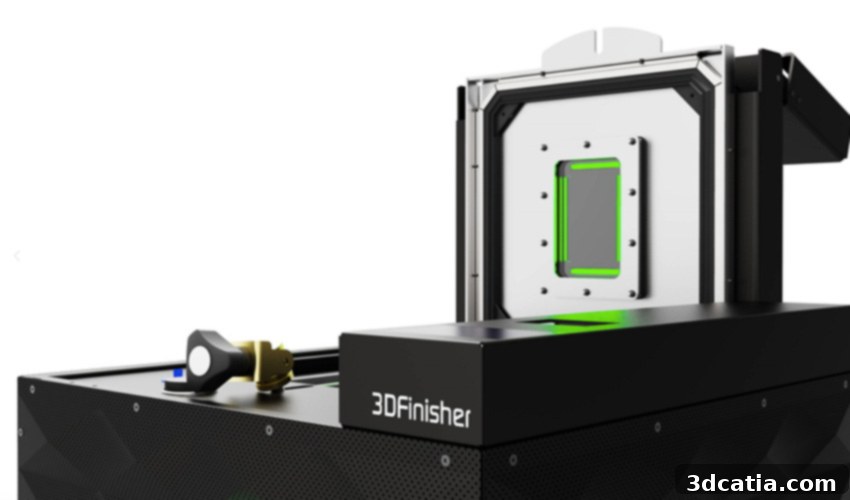
Revolutionizing 3D Printing Post-Processing: An In-Depth Look at 3DNextech’s 3DFinisher for Superior Surface Finishing
In the rapidly evolving landscape of additive manufacturing and digital fabrication, one Italian innovator, 3DNextech, stands out for its commitment to overcoming the inherent challenges of 3D printing. Specializing in advanced products and technologies for this dynamic sector, 3DNextech has developed a groundbreaking solution: the 3DFinisher. This machine represents a pivotal advancement, marking it as the first professional automatic device specifically engineered for the surface finishing of ABS, ASA, and cellulose acetate 3D printed parts. The genesis of the 3DFinisher stemmed from a critical industry realization: while 3D printing offers unparalleled design freedom, raw printed parts often fall short in essential properties like waterproofing and mechanical strength. These deficiencies can severely limit their real-world application, particularly in demanding industrial contexts. The 3DFinisher directly addresses these industry needs, transforming semi-finished prints into high-performance, aesthetically superior components ready for end-use. Its design emphasizes scalability, making it adaptable for various operational scales, from small and medium-sized enterprises (SMEs) to large-scale industrial production environments. To delve deeper into its functionality, benefits, and market adoption, we recently connected with Andrea Arienti, the visionary CEO and Founder of 3DNextech, who shared invaluable insights into this transformative technology.
3DN: Can you present yourself and tell us how you founded 3DNextech?
My journey in this field began in 2008, within the distinguished laboratories of The BioRobotics Institute at the Sant’Anna School of Advanced Studies. What started as an opportunity to develop my thesis evolved into a seven-year tenure, during which I was deeply involved in the mechanical design of cutting-edge marine robots for research purposes. It was here that I first encountered and extensively utilized 3D printing technologies. Specifically, ABS FFF (Fused Filament Fabrication) became an indispensable tool, often serving as the sole viable option for fabricating the intricate and non-conventional soft robots we were developing. This hands-on experience illuminated both the immense potential and the significant limitations of raw 3D printed parts.
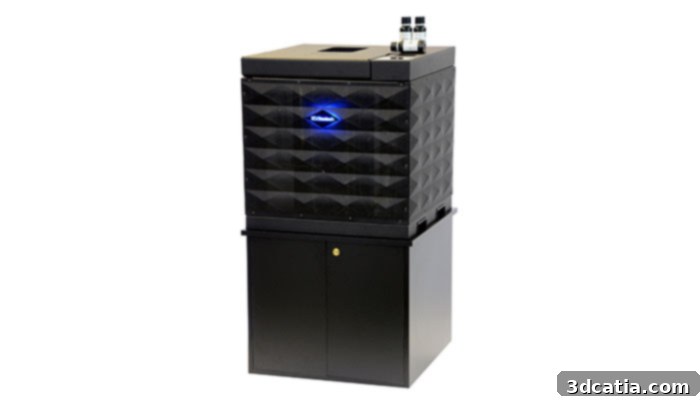
In 2015, driven by a desire to push the boundaries of additive manufacturing and address these observed shortcomings, I founded 3DNextech. As a Spin-Off of the renowned Sant’Anna School of Advanced Studies of Pisa, our company was established with a clear mission: to specialize in the development of innovative products and technologies that advance the realms of digital manufacturing, additive manufacturing, and 3D printing. Our inaugural B2B machine, the 3DFinisher, was designed with a generous 300 x 300 x 300 mm workspace, making it an ideal solution for SMEs seeking professional post-processing capabilities. Crucially, the core technology underpinning the 3DFinisher is inherently scalable, allowing for seamless integration into much larger industrial settings and facilitating complete turnkey projects. Beyond hardware, 3DNextech is dedicated to being a comprehensive partner for its clients. We offer expert support in designing and optimizing additive manufacturing workflows, thereby enabling novel applications, enhancing product quality, and strengthening our customers’ business models. Concurrently, a significant portion of our resources is allocated to robust research and development initiatives. This sustained investment in R&D is vital for expanding the application scenarios of our flagship 3DFinisher and for bringing other pioneering additive manufacturing and post-processing technologies to the market in the near future, continually striving to unlock the full potential of 3D printing for industrial production.

CEO and Founder, Andrea Arienti
3DN: How did the idea of creating 3DFinisher come up?
The inspiration for the 3DFinisher was born directly from the practical challenges I faced during my years as a researcher. We relied heavily on additive manufacturing technologies, particularly ABS FFF, to fabricate mechanical components for our marine robots. While these technologies offered unprecedented flexibility in design and rapid prototyping, they presented significant shortcomings that were particularly evident and critical in our applications. The 3D printed parts, as they came off the printer, were far from ideal. They often lacked crucial waterproofing capabilities, meaning they couldn’t endure submersion without issues. Furthermore, their mechanical performances were frequently insufficient for the rigorous demands of robotic operation, leading to concerns about durability and reliability. An additional problem, specific to marine environments, was the rough surface finish of the parts, which unfortunately facilitated the proliferation of algae, impacting robot performance and maintenance. To overcome these pressing limitations, I took matters into my own hands and engineered the very first 3DFinisher prototype. This initial device proved remarkably successful, providing the necessary improvements, and I utilized it extensively and effectively in numerous robotics applications over several months.
The tangible success of the prototype, coupled with the clear industrial need for such a solution, cemented the vision. After successfully filing our first patent for this innovative technology, my partners and I made the decisive step in 2015 to establish a company. Our ambition was not merely to solve a technical problem but to actively contribute to a broader industry shift: moving from traditional “mass production” paradigms towards a future of “mass customization.” While my initial engagement with 3D printing dates back to 2008, it was truly in 2015, with the founding of 3DNextech, that we began to aggressively champion the advancement of additive manufacturing technologies. Our core objective became to transform 3D printing from a prototyping tool into a robust, automatic, repeatable, user-friendly, and production-ready manufacturing method, thereby making advanced finishing accessible and efficient for industries worldwide.
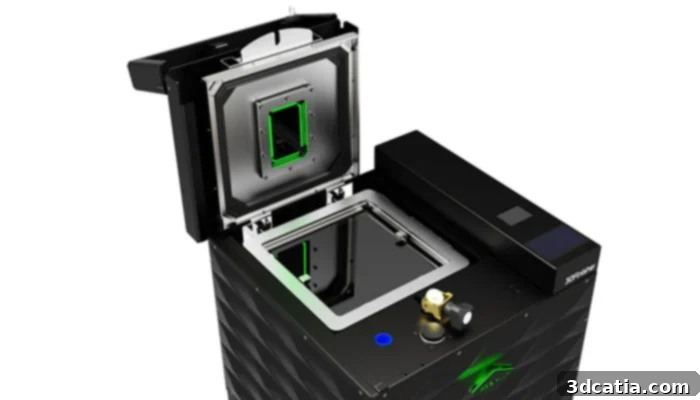
The 3DFinisher
3DN: Can you explain to us in detail how to use the 3DFinisher? Who is it meant for?
The 3DFinisher leverages a proprietary, patented technology based on a sophisticated chemical-physical process. This process takes place within a precisely controlled, sealed chamber, where the device meticulously manages all critical atmospheric parameters, including pressure and temperature. This stringent control ensures a consistently perfect and repeatable enhancement of every part, regardless of geometry or batch size. Ease of use and operator safety were paramount in its design. The operator never comes into direct contact with the chemical agents; these are safely contained within thermosealed disposable cartridges, which are simply inserted into the machine. Furthermore, the chemicals remain confined within the device throughout the process, and any waste products are automatically and safely ejected at the cycle’s conclusion. This design completely eliminates the need for external ventilation systems, such as fume hoods, making the 3DFinisher a truly plug & play solution requiring no additional infrastructure. Its versatility extends to operation, offering both an intuitive on-board display interface and remote control capabilities via smartphone, tablet, or PC, thanks to its integrated WiFi and Ethernet connectivity.
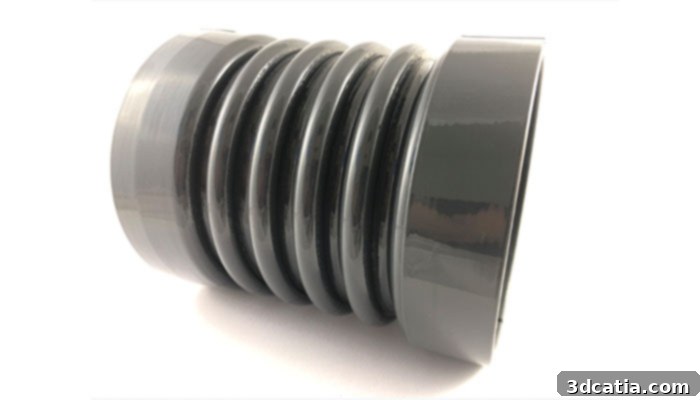
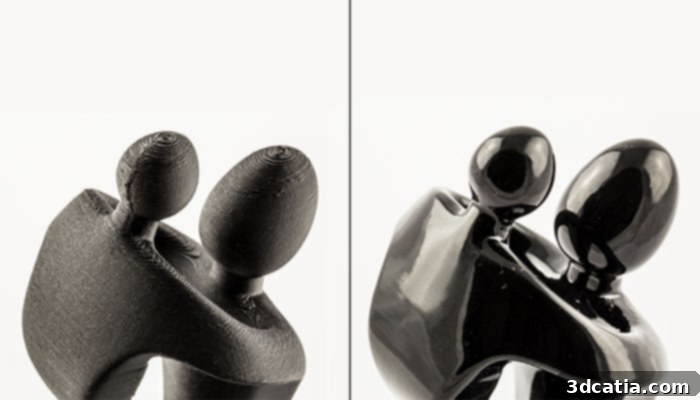
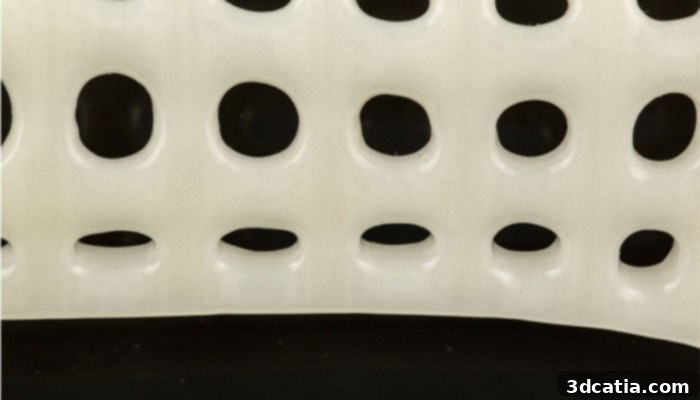
The workflow for the 3DFinisher is straightforward and highly efficient. Raw 3D printed parts are carefully placed inside the device’s work chamber. Once initiated, the machine executes an automatic finishing process that imbues the parts with a range of superior characteristics. Treated objects emerge significantly stronger, exhibiting a desirable glossy finish, becoming fully waterproof, highly resistant to dirt accumulation, easily washable, and even sterilizable. The 3DFinisher is also fully interconnected and compliant with Industry 4.0 principles, enabling seamless integration into modern manufacturing environments, with capabilities for remote control and real-time monitoring of operations. A typical finishing process lasts approximately 60 minutes, during which multiple objects can be treated simultaneously, maximizing throughput. The machine utilizes disposable cartridges containing our specially formulated, proprietary solvent, which are sold separately to ensure consistent and optimal results. The streamlined workflow can be summarized in three simple steps:
- Preparation
The operator carefully positions the raw 3D printed objects within the sealed work chamber. Following this, the desired process parameters are set via the user interface, and a disposable cartridge containing 3DNextech’s proprietary solvent is inserted into its designated slot within the 3DFinisher.
- Process
Once started, the parts undergo the precisely controlled chemical-physical process. This takes place within the hermetically sealed chamber, where critical atmospheric conditions, including pressure and temperature, are meticulously regulated to ensure an even and consistent finish across all surfaces.
- Results
Upon completion of the cycle, all treated parts achieve a perfect, uniform surface finish. They are transformed, becoming fully waterproof, smooth to the touch, and exhibiting an attractive glossy appearance. Importantly, they are also rendered paintable, opening up further customization possibilities. Beyond aesthetics, the mechanical properties of the parts are considerably improved, enhancing their durability and functional performance for diverse applications.
3DN: How important is nowadays the finish of the parts for FFF technology?
The importance of surface finishing for parts produced with FFF technology cannot be overstated in today’s industrial landscape. Currently, despite significant advancements, no 3D printer can inherently guarantee a perfect surface finish straight off the build plate. This means that raw 3D printed parts are, by definition, semi-finished products. To achieve the required aesthetic quality or functional performance, they necessitate a considerable amount of additional work, commonly known as post-processing. Traditionally, this has involved labor-intensive and often inconsistent methods such as manual sanding, the application of various resins, primers, or other coatings. These manual treatments, while sometimes effective to a degree, invariably entail substantial costs for companies due to the time, labor, and specialized skills required. Moreover, they often only partially solve the problem. The final quality achieved through manual methods is frequently not satisfactory for professional applications, and, critically, repeatability – a cornerstone of industrial production – cannot be reliably guaranteed. Variations in operator skill, material application, and environmental factors can lead to inconsistencies across batches. In numerous industrial and consumer contexts, these inherent shortcomings of raw FFF parts, particularly regarding surface quality and mechanical integrity, pose significant barriers to the widespread adoption of 3D printing for true production purposes. The 3DFinisher was designed precisely to eliminate these challenges, providing an automated, consistent, and high-quality solution that bridges the gap between raw 3D prints and ready-to-use, professional-grade components.
3DN: In your opinion, how will FFF technology evolve in the coming years?
I firmly believe that FFF technology possesses truly unique characteristics that promise a much brighter and more impactful future than a superficial analysis might suggest. This technology stands alone in its ability to allow for the pausing of the printing process to integrate components made from entirely different materials, such as other polymers or metals, and even components produced by entirely different manufacturing technologies like CNC milling or turning. This “hybrid manufacturing” capability opens up an unprecedented realm for creating exceptionally complex objects endowed with unique mechanical and functional characteristics that would be impossible to achieve with a single manufacturing method. Imagine parts with integrated metal inserts for strength, or precisely machined surfaces within a printed structure. Furthermore, FFF technology offers the remarkable potential to seamlessly incorporate electronic components, sensors, and other functional elements directly into the object during the production process, leading to truly smart and highly integrated products. Beyond this, industrial-grade FFF printers are increasingly recognized for their robustness and reliability, making them highly suitable for demanding industrial environments where consistency and uptime are critical. And when it comes to the sheer variety of materials that can be printed – from commodity plastics to high-performance engineering polymers and composites – no other additive manufacturing technology can currently compete on this front. FFF technology is now highly consolidated, with established processes and consistent, repeatable results. Looking ahead, I envision the future of FFF technology involving a significant shift towards the direct and indirect production of increasingly sophisticated and complex products, moving far beyond its initial prototyping role and becoming a cornerstone of advanced manufacturing.
3DN: Do you have any last words for our readers?
Traditionally, people tend to perceive manufacturing as a relatively self-contained, isolated process. However, at 3DNextech, we are actively striving to promote a considerably broader and more integrated view of this critical field. Additive manufacturing technologies, in fact, possess the power to profoundly influence a multitude of interconnected processes, extending far beyond the factory floor. They can dramatically impact supply chain logistics, allowing for localized production and reducing warehousing needs. More significantly, these technologies have the potential to completely redefine and even enable entirely new company business models, shifting focus from mass production to agile, on-demand, and customized solutions. The transformative influence of these technologies on conventional design processes is equally evident and revolutionary. To truly harness the full potential of these groundbreaking technologies, it is imperative that traditional mechanical design workflows are fundamentally revised and updated. This revision must be conducted in light of the entirely new possibilities that additive manufacturing offers, and critically, by overturning the long-held constraints and assumptions that conventional production methods have imposed. For instance, the assumption that a functional object must be composed of a number of homogeneous subparts (in terms of physical and chemical characteristics) or the morphological constraints arising from material deformation or subtraction processes, are simply no longer valid with additive manufacturing. This paradigm shift requires a new mindset for designers and engineers.
This profound revolution in manufacturing, while immensely promising, is not unfolding without its share of difficulties and misunderstandings. We often observe two opposing lines of argumentation that, in our opinion, fail to capture the nuanced reality of additive manufacturing’s role. On one side, some critics, by narrowly comparing these new technologies to conventional ones in specific contexts where the latter have been long-established and proven to work perfectly fine, prematurely argue that there is no true benefit in adopting additive manufacturing technologies at all. This overlooks the unique advantages AM offers in other scenarios. On the other side of the spectrum, we find those who describe these technologies as a miraculous, panacea solution to all manufacturing problems. They believe AM should completely replace all previous manufacturing schemes and work its magic with little to no need for user involvement or specialized expertise. Both of these extreme viewpoints are, of course, far from the complete truth. The additive approach undoubtedly holds the potential to truly disrupt and innovate the manufacturing world, but like every other new and powerful technology, it demands careful comprehension, meticulous optimization, precise tailoring to the specific needs of each client, and a thorough, case-by-case comparison with alternative solutions.
Indeed, there will certainly be cases where traditional manufacturing technologies will remain the best and most cost-effective choice for particular applications. Conversely, there will be instances where a specific product or application could only be realized by adopting more innovative paradigms and materials offered by additive manufacturing. And, crucially, there will be many scenarios where a thoughtful combination of older, established production schemes and newer, additive technologies might represent the most optimal and efficient bet. Attempting to merely replicate objects of the past with additive technologies is often a strategic mistake and a missed opportunity to leverage the true power of AM. What 3DNextech is relentlessly striving to do is to design, develop, and leverage innovative additive manufacturing technologies not just for today, but to design the objects and manufacturing processes of the future. We proudly stand beside companies that aspire to become first-movers in this exciting transformation, dedicating our expertise and resources to support their journey towards innovation and competitive advantage in the new era of manufacturing.
Find more information HERE.
What did you think of our startup of the month? Let us know in a comment below or on our Facebook and Twitter pages! Sign up for our free weekly Newsletter, all the latest news in 3D printing straight to your inbox!