
Revolutionizing Sustainable Fashion: 3D Printing and Silk Fibroin as the Future of Eco-Friendly Leather
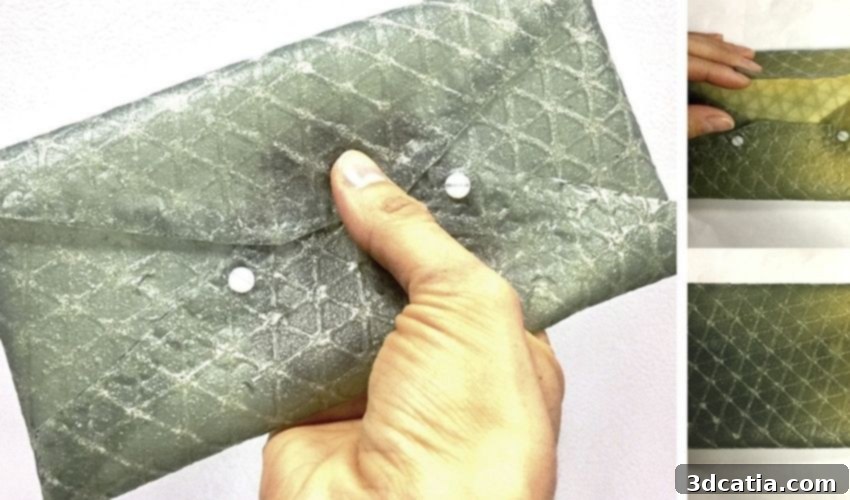
The landscape of modern manufacturing is continually being reshaped by technological advancements, with 3D printing, or additive manufacturing, standing at the forefront of this revolution. Offering unparalleled flexibility in design and the capacity to utilize a diverse range of materials, 3D printing has opened up new frontiers across various industries. From enabling artists and designers to realize intricate and complex geometries that were once impossible, to pushing the boundaries of material science, this technology fosters an environment where creativity truly knows no bounds. This transformative potential is now making significant inroads into the fashion industry, particularly in addressing the urgent global demand for more ethical production methods and robust climate protection initiatives. As environmental consciousness grows, there is an escalating interest in innovative material alternatives and environmentally friendly manufacturing processes. In this context, 3D printing proves to be an ideal tool for replicating natural patterns and shapes, often drawing inspiration from bionics to create sustainable solutions. A groundbreaking example comes from researchers at Tufts University, who are leveraging 3D printing to develop animal-free products from a novel leather alternative. This innovative material is engineered not only to visually mimic real leather but also to replicate its crucial mechanical properties, representing a significant step forward in sustainable fashion. The team has already demonstrated its potential by successfully crafting a wallet from this remarkable new material.
Could Traditional Tanning Soon Be a Relic of the Past?
The conventional production of leather has long been a subject of intense scrutiny, not only from animal rights activists but also due to its profound and often devastating environmental and social impacts. The process of tanning, which is essential for transforming raw animal skins into durable, usable leather, relies heavily on a cocktail of harsh chemicals. These substances, including highly toxic chromium salts, pose severe risks not only to human health but also to surrounding ecosystems, contaminating both flora and fauna. The global leather industry is vast, with major export countries like China, India, and Bangladesh playing significant roles. Alarmingly, many of these regions often lack stringent legal regulations concerning the use of these highly toxic chemicals, or robust environmental protocols to manage the extensive wastewater pollution generated by tanneries. This regulatory vacuum leads to catastrophic working conditions for laborers, who are exposed to hazardous substances daily, and widespread environmental degradation, affecting local communities and natural habitats. Consequently, both ethically-minded consumers and forward-thinking fashion labels are actively seeking viable, sustainable alternatives that do not compromise on quality or aesthetics. In response to these pressing concerns, scientists at the Tufts Silklab are pioneering the development of a so-called silk fibroin, an innovative material designed to be produced through environmentally friendly methods, aiming to offer a truly sustainable solution to the problems inherent in traditional leather production.
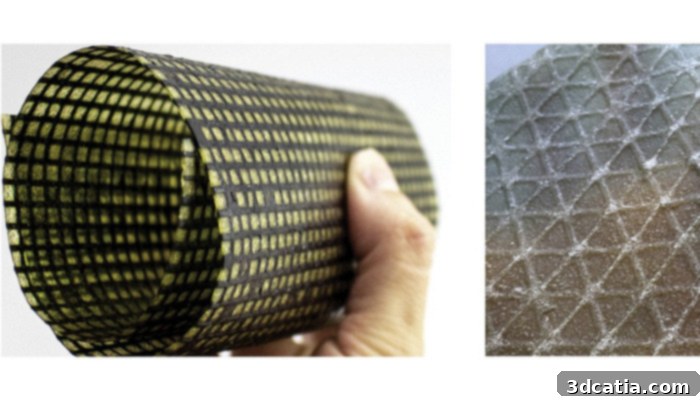
Silk cocoons of the silkworm Bombyx mori (Japan) were used to produce the leather alternative. (Photo Credits: Tufts University)
While the market has seen the emergence of various vegan leather alternatives, such as those derived from pineapple leaves, cork, or synthetic artificial leathers, many of these options, despite their visual similarity to genuine leather, often fall short in replicating its crucial performance attributes. The primary challenge lies in matching the inherent durability, flexibility, and robust mechanical properties that define high-quality real leather. These characteristics are vital for the longevity and functionality of fashion products like footwear, bags, and apparel. The dedicated research team at Tufts University has specifically focused on overcoming this limitation, striving to develop a leather-like material made from silk that not only looks authentic but also successfully retains these coveted mechanical properties. Their innovative approach has led to a method of preparing natural silk material in a way that significantly enhances its durability and tear-resistance, making it a truly viable substitute. As explained by Fiorenzo Omenetto, a Doble Professor of Engineering at Tufts School of Engineering and director of the Tufts Silklab, and a co-author of the study, their work is driven by a clear mission: “Our work is centered on the use of naturally-derived materials that minimize the use of toxic chemicals while maintaining material performance so as to provide alternatives for products that are commonly and widely used today. By using silk, as well as cellulose from textile and agricultural waste and chitosan from shell-fish waste, and all the relatively gentle chemistries used to combine them, we are making progress towards this goal.” This holistic approach underscores their commitment to creating truly sustainable and high-performance material solutions from abundant natural resources.
Innovating Material Preparation for 3D Extrusion
To successfully transform the innovative silk-based material into a form suitable for 3D printing and ensure it ultimately achieves the desired leather-like aesthetic and tactile qualities, a specific preparation process is meticulously followed. This involves creating a unique, sludge-like mass composed primarily of silk fibers. To imbue this mixture with the necessary flexibility and formability for extrusion, it is carefully blended with a plasticizer. Simultaneously, a vegetable rubber thickener is incorporated to achieve the ideal consistency and structural integrity required for precise additive manufacturing. A critical component for providing the material with its characteristic strength and resilience is chitosan. This natural sugar derivative, commonly found in the exoskeletons of shellfish, plays a vital role in imparting the hardness and durability that mimics real leather. What sets this manufacturing process apart is its commitment to sustainability: only mild, environmentally benign chemicals are utilized throughout production. These gentle chemistries are suitable for a standard laboratory environment, significantly reducing the ecological footprint associated with traditional material synthesis. This innovative approach allows the scientists to develop a leather alternative that is not only derived from a highly sustainable and renewable source but is also entirely biodegradable after its useful life, offering a truly circular solution to material consumption in fashion.
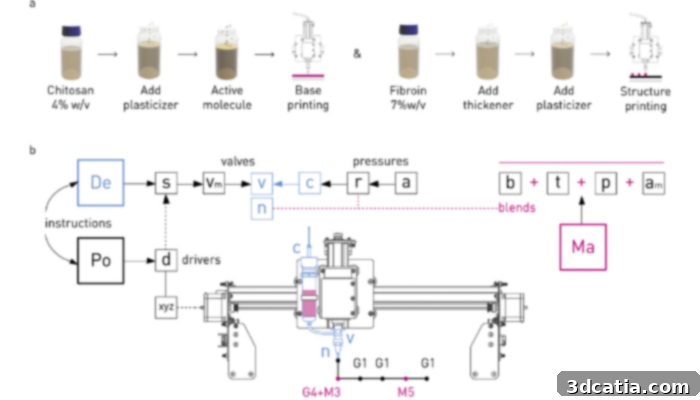
Photo Credits: Tufts University
Advanced 3D Printing for Bespoke Leather Alternatives
The adaptability of this silk-based material is truly remarkable, with its capacity to form structures ranging in size from a finely detailed 0.25 mm up to a robust 5 mm. This broad range signifies its suitability for printing virtually any geometry, from delicate patterns to more substantial components, offering immense design freedom. Furthermore, with specific modifications during the printing process or material preparation, the researchers can precisely control and achieve varying degrees of flexibility and opacity, allowing for tailor-made textures and aesthetic finishes that can truly rival traditional leather products. The manufacturing of these innovative products is currently facilitated by a custom-built pneumatic extrusion 3D printer. This sophisticated system is engineered for exceptional precision and control, particularly crucial for working with viscous, sludge-like materials. It comprises a highly accurate 3-axis CNC gantry, which ensures precise movement and positioning during the printing process across a substantial 1m x 1m print bed, accommodating larger-scale designs. The material dispensing is meticulously managed by a Nordson EFD ValveMate dispense valve controller, which guarantees consistent and accurate material flow, critical for achieving high-quality prints. This advanced setup allows for the creation of intricate designs and textures, pushing the boundaries of what is possible in sustainable material fabrication. Tufts University remains highly optimistic about its progress, confident that it is steadily advancing towards its ambitious goal of creating a truly sustainable and high-performing leather alternative. Looking ahead, comprehensive plans are already in motion to further refine and scale up the production process, and to expand the range of manufactured products, paving the way for wider adoption in the fashion and design industries.
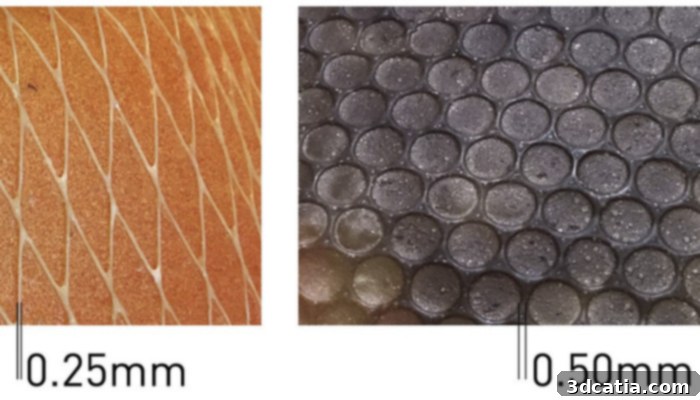
Geometries with a structure size of 0.25 – 5.00 mm can be achieved. (Image: Tufts University)
This pioneering project by Tufts University represents a significant leap forward in the quest for sustainable and ethical materials within the fashion industry. By ingeniously combining the natural strengths of silk fibroin with the precision and versatility of 3D printing technology, researchers are not just offering an alternative; they are setting a new standard for eco-conscious manufacturing. The ability to create a material that not only mirrors the look and feel of real leather but also surpasses many vegan alternatives in durability and flexibility, all while being environmentally benign and completely biodegradable, is truly transformative. This innovation has far-reaching implications, promising to drastically reduce the environmental footprint associated with traditional leather production and fostering a shift towards circular economy principles in the textile sector. As development continues, we can anticipate seeing this technology applied to a wider array of products, from luxury accessories to everyday apparel, fundamentally changing how we perceive and consume fashion. The success of this project highlights the critical role of academic research and interdisciplinary collaboration in driving industrial innovation and addressing some of the most pressing global challenges. It underscores a future where cutting-edge technology and natural resources converge to create a more sustainable and ethical world for all.
For more detailed information about this fascinating project, you can find the scientific publication HERE. What are your thoughts on the revolutionary use of 3D printing to create this sustainable leather alternative? We invite you to share your insights in a comment below or join the conversation on our Facebook, Twitter, and LinkedIn pages! Don’t miss out on the latest advancements in additive manufacturing – sign up for our free weekly Newsletter here and get the most recent 3D printing news delivered straight to your inbox!