
Top 5 3D Printing Innovations: A Weekly Showcase of Additive Manufacturing Excellence
Welcome to our exclusive weekly compilation of the most compelling 3D printing videos, meticulously curated just for you. In the dynamic world of additive manufacturing, staying informed about the latest advancements, groundbreaking applications, and practical tips is crucial. Each week, we scour the internet to bring you a handpicked selection that highlights the versatility and transformative power of 3D printing across various sectors. Whether you’re a seasoned professional, an enthusiastic hobbyist, or simply curious about the future of manufacturing, our ‘Top 5 Videos of the Week’ offers a concise yet comprehensive glimpse into the cutting edge. Dive in to explore revolutionary technologies, ingenious engineering solutions, and essential maintenance advice that empowers makers and industries alike. After watching, we encourage you to share your thoughts, comment on your favorite video, or engage with us on our social media platforms like Facebook and Twitter. Your insights help us understand what truly captivates our community, and we love seeing what inspires you. Don’t forget to share this exciting list with your friends and colleagues who are equally passionate about the endless possibilities of 3D printing!
TOP 1 – Zortrax Inventure: Professional 3D Printing Simplified
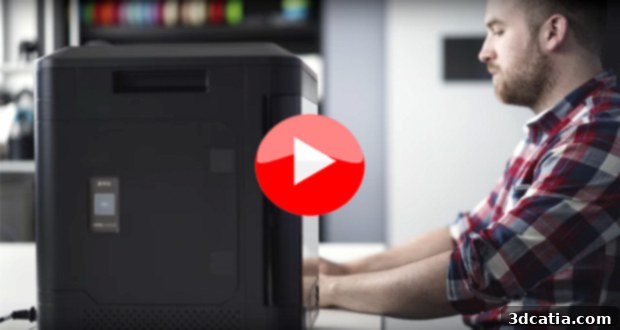
The first spot in our weekly lineup features the Zortrax Inventure, a professional desktop 3D printer that beautifully demonstrates how industrial-grade quality can coexist with user-friendly operation. Zortrax has long been recognized for its commitment to developing reliable and robust 3D printing solutions, and the Inventure model stands as a testament to this philosophy. This machine is designed to meet the rigorous demands of engineers, designers, and small-batch manufacturers who require precision and efficiency without the complexity often associated with high-end systems. The video showcases the Inventure’s ability to produce intricate parts with impressive speed and accuracy, highlighting its suitability for rapid prototyping, functional part creation, and iterative design processes.
A key differentiator for the Zortrax Inventure is its innovative material ecosystem, particularly the combination of Z-PETG filament and the unique water-soluble Z-SUPPORT. Z-PETG offers excellent mechanical properties, making it ideal for durable components, while Z-SUPPORT revolutionizes post-processing. Traditional support materials can be time-consuming and challenging to remove, often leaving blemishes on the printed object. With Z-SUPPORT, users can simply immerse their prints in water, and the support material dissolves away, revealing a clean, smooth finish. This not only saves significant time and effort but also allows for the creation of far more complex geometries with internal cavities or delicate overhangs that would be impossible with conventional supports. By enabling faster iteration and high-quality results straight off the print bed, the Zortrax Inventure truly accelerates product development cycles, giving businesses a competitive edge. See for yourself how this professional yet simple solution can transform your 3D printing workflow below.
TOP 2 – Phytec and Nano Dimension: Revolutionizing Electronics Prototyping
Our second top video spotlights the groundbreaking collaboration between German company Phytec and additive electronics pioneer Nano Dimension. Phytec, renowned globally for its cutting-edge System-On-Modules (SOMs) and embedded systems, has always been at the forefront of technological innovation. Their decision to integrate Nano Dimension’s 3D printed electronics technology into their development process marks a significant leap forward in rapid prototyping for the electronics industry. The core of this transformation lies in Phytec’s adoption of Nano Dimension’s DragonFly 2020 3D Printer, a sophisticated system designed specifically for additive manufacturing of complex circuit board prototypes.
The DragonFly 2020 printer enables Phytec to print multi-layered PCBs (Printed Circuit Boards) in-house, utilizing advanced conductive inks and dielectric materials. This capability dramatically accelerates their product development cycle. Previously, creating and testing new circuit board designs involved sending files to external manufacturers, which could take weeks or even months for fabrication and delivery. With the DragonFly 2020, Phytec can now design, print, and test functional prototypes in a matter of hours. This unprecedented speed allows their engineers to iterate designs rapidly, identify and rectify potential issues much earlier in the development process, and bring innovative products to market faster than ever before. This not only represents a significant cost saving for small batch runs and prototyping but also grants Phytec immense design freedom, enabling them to explore more complex and optimized electronic layouts. The impact of 3D printed electronics extends beyond mere speed; it’s ushering in an era where highly customized, functional electronics can be produced on demand, paving the way for advancements in IoT, medical devices, and other critical sectors.
TOP 3 – 3D Printing for Engines of the Future: Renault’s Automotive Innovation
Securing the third spot, we have a fascinating demonstration from automotive giant Renault, showcasing the immense potential of additive manufacturing in vehicle creation, particularly for engine components. The automotive industry is constantly striving for innovation, focusing on reducing weight, improving fuel efficiency, and enhancing overall performance. Renault’s project, highlighted in this video, exemplifies how 3D printing is not just an incremental improvement but a transformative force in achieving these goals.
The video illustrates Renault’s pioneering use of 3D printing in a motor block for one of their trucks. Traditionally, engine blocks are assemblies of numerous individual components, each manufactured separately and then put together. Through advanced additive manufacturing techniques, Renault has been able to replace multiple individual components with 3D printed parts, and even more impressively, combine several distinct parts into a single, complex component. This consolidation not only simplifies the assembly process but also allows for sophisticated topological optimization, creating designs that are impossible to achieve with conventional manufacturing methods. The results are astounding: Renault was able to cut the weight of the engine block by a remarkable 120kg and reduce the total number of parts by 200! This significant weight reduction directly translates to improved fuel efficiency and reduced emissions, contributing to a more sustainable transportation future. Beyond the immediate benefits, this project underscores the shift towards a future where customized, lightweight, and highly optimized vehicle components can be produced on demand, streamlining supply chains and accelerating the development of next-generation automobiles.
TOP 4 – 3D Printing for Facial Reconstructive Surgery: Changing Lives
The fourth video in our compilation highlights one of the most impactful applications of 3D printing: its role in the future of facial reconstructive surgery. While the benefits of 3D printing are widely recognized across various industries, its contribution to healthcare, particularly in personalized medicine, is truly revolutionary. This video provides a compelling look into how additive manufacturing is directly helping to change the lives of millions of people facing complex medical challenges, from severe injuries to congenital deformities or cancer resections.
In facial reconstructive surgery, every patient’s anatomy is unique, making standardized solutions often inadequate. This is where 3D printing excels. Surgeons can leverage medical imaging data (CT scans, MRI) to create highly accurate, patient-specific 3D models of skulls, jaws, and other facial structures. These models serve multiple critical purposes: they allow surgeons to meticulously plan complex operations, visualize potential challenges, and even practice delicate procedures before entering the operating room. Beyond planning, 3D printing enables the creation of custom surgical guides, which ensure unparalleled precision during bone cutting and implant placement. Furthermore, biocompatible materials like titanium, PEEK, or even resorbable polymers can be 3D printed into bespoke implants that perfectly match a patient’s anatomy, leading to superior functional and aesthetic outcomes. This level of personalization drastically improves surgical accuracy, reduces operating time, minimizes the risk of complications, and ultimately enhances the quality of life for patients. The work showcased in this video represents the cutting edge of biomedical 3D printing, offering hope and new possibilities for individuals needing advanced facial reconstruction, paving the way for even more sophisticated applications like bioprinting and regenerative medicine in the future.
TOP 5 – Clogged Nozzles: Essential Troubleshooting for Every 3D Printer User
Concluding our weekly roundup, we feature a video that addresses a common and often frustrating issue for both novice and experienced 3D printer users: the dreaded clogged nozzle. Many makers and 3D printing enthusiasts understand the sinking feeling that comes when a print unexpectedly fails due to a blocked extruder. Fortunately, the vast and helpful 3D printing community often provides solutions, and this week, we highlight the valuable insights from YouTuber Thomas Sanladerer.
Thomas Sanladerer, a well-respected figure in the 3D printing community, has uploaded an incredibly helpful video that breaks down the different methods and strategies for getting your 3D printer back on track after a nozzle clog. His comprehensive guide typically covers various types of clogs, from partial blockages to complete obstructions, and explains how to diagnose them. The video delves into practical techniques such as “cold pulls” (or atomic pulls), which involve heating the nozzle, pushing filament through, cooling it slightly, and then quickly pulling it out to extract any debris. It also often demonstrates how to perform a “hot pull,” how to use cleaning filaments, and in more stubborn cases, how to safely disassemble the hotend to physically clear the obstruction using tiny tools or acupuncture needles. Understanding these methods is crucial for maintaining optimal print quality and extending the lifespan of your 3D printer. Beyond troubleshooting, Sanladerer often provides valuable advice on preventing clogs in the first place, such as using high-quality filament, storing it properly to avoid moisture absorption, and ensuring correct print temperature settings. This video is an invaluable resource that empowers users to confidently tackle one of the most common hurdles in 3D printing, ensuring smoother and more successful printing experiences for everyone.
That wraps up another exciting week in the world of 3D printing! From pushing the boundaries of professional desktop additive manufacturing with Zortrax, to revolutionizing electronics prototyping with Nano Dimension and Phytec, and transforming automotive engineering with Renault, this week’s selection showcased the incredible diversity and innovation within the industry. We also witnessed the life-changing impact of 3D printing in facial reconstructive surgery and gained essential knowledge for everyday 3D printer maintenance from Thomas Sanladerer. These videos collectively highlight how additive manufacturing continues to drive progress across various sectors, offering solutions that are faster, more efficient, and often more personalized than traditional methods.
We hope this curated list provided valuable insights and sparked your imagination about the future possibilities of this dynamic technology. Don’t forget to connect with us on social media and share your thoughts on which video stood out to you the most! Your engagement fuels our passion for bringing you the best of 3D printing innovation every week. Stay tuned for our next exciting compilation, and keep on creating!