
Weekly 3D Printing News: Desktop Metal Restructuring, Market Growth, and Key Investments Shaping the Future
Welcome to #3DExpress, your concise yet comprehensive digest of the most impactful news from the additive manufacturing world. This week brings a mix of strategic shifts, promising growth, and significant financial moves that are poised to shape the future of 3D printing. We delve into Desktop Metal’s latest cost reduction plan, which includes substantial workforce adjustments, and explore Prodways’ decision to exit the jewelry 3D printer market. Additionally, we highlight an encouraging report on the booming construction 3D printing sector, analyze the strategic investment by the Development Bank of Japan in 3DEO, and celebrate Wayland Additive’s successful funding round. These developments offer crucial insights into the evolving landscape of additive manufacturing, reflecting both the challenges and the immense potential within the industry. Join us as we unpack these stories and consider their broader implications for innovation, market dynamics, and global adoption of 3D printing technologies.
Desktop Metal Announces Major Restructuring and Workforce Reductions
The additive manufacturing industry continues to watch Desktop Metal closely following a period of significant strategic reevaluation. Last year, the much-anticipated merger with Stratasys failed to materialize, leaving many questions about Desktop Metal’s future trajectory. These uncertainties were further exacerbated by a NYSE non-compliance notice issued in December, signaling potential delisting if the company failed to meet certain financial benchmarks. In response to these pressures and a “softer demand environment” impacting the broader industry, Desktop Metal has announced a new and comprehensive cost reduction plan. This initiative aims to achieve substantial annual cost savings of $50 million, a critical step towards financial stabilization and achieving positive cash flow.
A significant component of this new plan involves further workforce reductions, with the company announcing a 20% cut in its global workforce. This follows previous reductions of 12% and 15% respectively, underscoring a continuous effort to streamline operations and enhance efficiency. While such measures are often painful, they are presented as necessary steps to navigate current market challenges and refocus resources. Ric Fulop, Desktop Metal CEO and Founder, articulated the rationale behind these decisive actions: “The cost-reduction plans announced today, in addition to the $100 million in cost reductions realized in 2023, will help us generate positive cash flow in light of a softer demand environment. While our industry is working through a challenging period, Desktop Metal’s commitment to its Additive Manufacturing 2.0 vision has not changed. We continue to have a positive long-term outlook for this industry as it transitions to mass production.”
This emphasis on “Additive Manufacturing 2.0” suggests a continued focus on scaling production and moving beyond prototyping into true industrial applications. However, the repeated layoffs raise questions about the long-term impact on innovation and employee morale within the company. For Desktop Metal, the challenge will be to maintain its technological edge and market relevance while undergoing such significant internal restructuring. The company’s ability to achieve positive cash flow by the end of Q1 2024, as projected, will be a key indicator of the success of these strategic shifts amidst a fluctuating global economic climate and evolving competitive landscape in additive manufacturing.
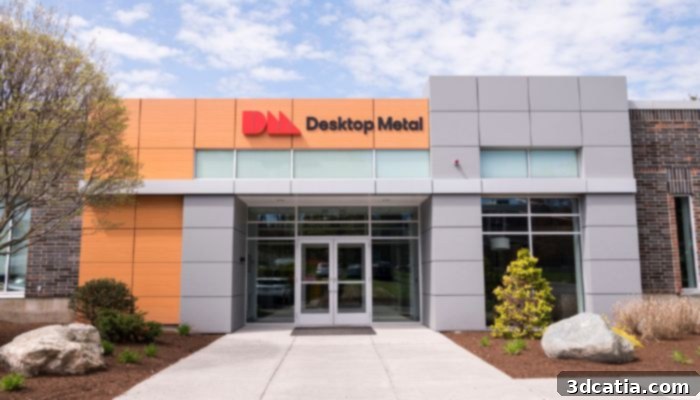
Desktop Metal has announced further cost reduction measures, including layoffs for 20% of its workforce (photo credits: Desktop Metal)
The Global Construction 3D Printing Market Continues its Rapid Ascent
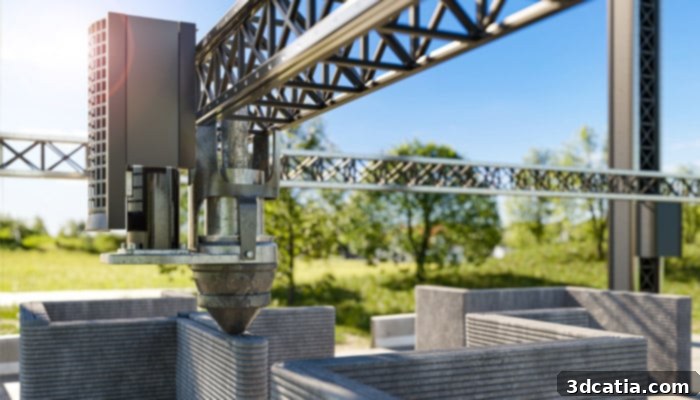
The landscape of the construction industry is undergoing a monumental transformation, largely driven by the accelerating adoption of 3D printing technologies. This week, a new study published by Research and Markets has underscored this significant trend, projecting an exponential growth trajectory for the 3D printing market within the construction sector. The report anticipates that this specialized market will surge to an impressive value exceeding $11 billion by 2030. This forecast represents an extraordinary estimated annual growth rate (CAGR) of 44% over the analyzed period, a stark increase from its valuation of $629 million in 2022.
Such a rapid expansion is hardly surprising to those observing the numerous innovative projects that have emerged over the past two years. Construction additive manufacturing (AM) offers a compelling array of advantages that are proving increasingly vital in addressing some of the most pressing challenges faced by the global construction sector. These benefits include significantly reduced construction times, lower labor costs, enhanced design flexibility, and improved material efficiency, often leading to less waste. The ability to rapidly construct affordable housing, develop sustainable infrastructure, and even create highly customized architectural structures positions 3D printing as a transformative force.
Furthermore, the technology holds immense promise in mitigating the ongoing global housing crisis by enabling faster, more cost-effective, and potentially more sustainable construction of residential units. From remote areas needing rapid deployment of shelters to urban environments grappling with affordability issues, 3D printing provides innovative solutions. Companies are leveraging this technology to build entire neighborhoods, create emergency relief housing, and develop specialized structures with unparalleled efficiency and precision. As material science advances and regulatory frameworks adapt, the integration of 3D printing into mainstream construction practices is set to expand even further, promising to revolutionize how we design and build our physical world.
Prodways Exits Jewelry 3D Printer Market, Focuses on Industrial Solutions
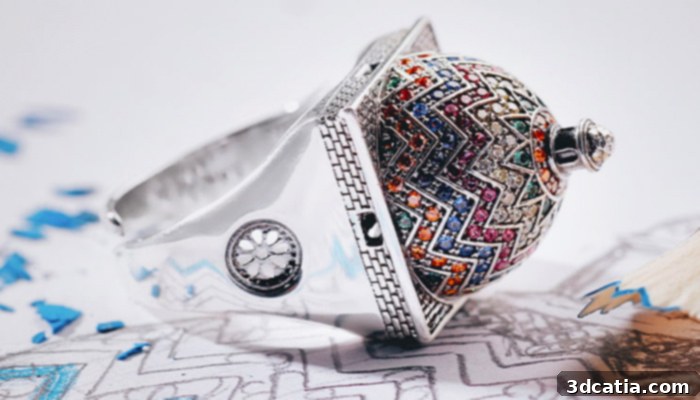
Prodways, a prominent manufacturer renowned for its comprehensive range of additive manufacturing solutions, has announced a significant strategic pivot: discontinuing the sale of 3D printers specifically designed for the jewelry sector. This decision comes after a thorough evaluation of the company’s 2023 performance, which revealed that its small wax and resin 3D printers, marketed under the Solidscape brand, experienced weak sales, generated low turnover, and incurred substantial operating losses. The competitive landscape for jewelry 3D printing has become increasingly crowded, with numerous specialized players offering highly refined solutions, making it challenging for broader AM providers to sustain profitability in this niche.
By exiting the jewelry market, Prodways aims to strategically reallocate its valuable resources towards bolstering its high-volume industrial 3D printing solutions and expanding its portfolio of high value-added materials. This calculated shift is rooted in the belief that these segments offer more accessible growth pathways and promise higher profitability. Prodways’ industrial offerings often cater to demanding applications in sectors such as automotive, aerospace, medical, and consumer goods, where precision, speed, and material versatility are paramount. The company sees greater opportunity in developing and enhancing these advanced systems and materials, which leverage its core expertise in industrial-grade additive manufacturing.
This move is anticipated to strengthen the French company’s overall competitive position within the broader additive manufacturing market. By consolidating its efforts and focusing on areas of proven strength and greater market potential, Prodways can streamline its research and development, optimize its manufacturing processes, and intensify its marketing and sales strategies for industrial applications. This targeted approach is expected to lead to greater operational efficiencies and a more robust financial performance, reinforcing Prodways’ standing as a key player in the evolving world of industrial 3D printing.
Development Bank of Japan Invests in 3DEO, Signaling Shift in Japanese Manufacturing
In a significant development for the global additive manufacturing landscape, particularly within Asia, the Development Bank of Japan (DBJ) and Epson, one of Japan’s leading electronics conglomerates, have jointly announced a strategic investment in 3DEO. This move represents not just financial backing but also a powerful endorsement of 3DEO’s innovative approach to metal 3D printing. For those unfamiliar, 3DEO is a North American startup that has rapidly gained recognition for its proprietary end-to-end 3D printing ecosystem, specifically engineered for the high-volume production of complex metal parts with exceptional precision and cost-effectiveness.
3DEO’s technology, known as Intelligent Layering®, distinguishes itself by producing parts with isotropic mechanical properties, superior surface finish, and tight tolerances, making it suitable for demanding industrial applications. The investment from DBJ and Epson is earmarked to fuel 3DEO’s aggressive growth strategy, not only expanding its footprint across the United States but also facilitating its crucial entry and scaling within the Japanese market. This collaboration is particularly noteworthy as it signals a significant shift in attitude within Japan, a nation traditionally renowned for its mastery of conventional metalworking techniques, such as precision casting and machining.
Japan’s manufacturing sector has historically been characterized by meticulous craftsmanship and well-established conventional processes. The DBJ’s investment in 3DEO, a pioneer in advanced metal additive manufacturing, reflects a strategic commitment to embracing new technologies to innovate and restructure Japan’s manufacturing industry for the 21st century. This move is expected to act as a catalyst, accelerating the adoption of additive manufacturing across various sectors in Japan, from automotive and electronics to medical and industrial machinery. By integrating AM into its industrial fabric, Japan aims to enhance competitiveness, foster technological leadership, and create new opportunities for advanced manufacturing solutions, ultimately reinforcing its global position as a manufacturing powerhouse.
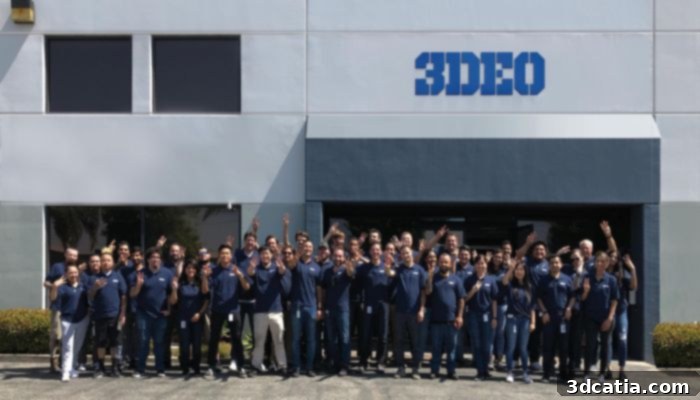
The 3DEO team in front of the headquarters (photo credits: 3DEO)
Wayland Additive Secures €4.2 Million in Strategic Funding for Global Expansion
Wayland Additive, a rapidly emerging player in the metal additive manufacturing sector, has successfully closed a funding round, securing an impressive €4.2 million. This substantial investment is earmarked to accelerate the company’s ambitious plans for global expansion and significantly grow its customer base across various industrial sectors. Originating as a spin-off from the prestigious University of Sheffield’s Department of Materials Science and Engineering, the UK-based company has swiftly made a name for itself with its innovative Calibur3 metal additive manufacturing machines.
The Calibur3 system stands out by employing advanced electron beam powder bed fusion (EBPBF) 3D printing technology, a method particularly renowned for its ability to produce geometrically complex metal parts with superior material properties. EBPBF offers significant advantages, including high-temperature processing capabilities that reduce residual stress in parts, enabling the use of reactive and high-performance alloys. This makes Calibur3 machines exceptionally well-suited for applications demanding high integrity and performance. The technology has already seen strong adoption across North America and Europe in critical sectors such as aerospace, where lightweight and high-strength components are essential; mining, for durable and wear-resistant parts; engineering, for complex prototypes and functional components; medical, for customized implants and instruments; motorsports, for performance-enhancing bespoke parts; and defense, for robust and reliable mission-critical components.
Discussing the recent funding achievement, Will Richardson, the CEO of Wayland Additive, highlighted the company’s remarkable progress and future aspirations: “Wayland has grown exponentially over the past year, with this latest raise representing a major milestone for our business as we continue to seek additional funding over the coming year. After a successful 2023, we’re setting our sights on further developing our in-house production capacity and increasing our global customer base to enable more sectors to benefit from our cutting-edge electron beam printing technology.” This strategic funding will allow Wayland Additive to invest further in research and development, enhance its manufacturing capabilities, and strengthen its sales and support networks globally, solidifying its position as a leader in high-performance metal 3D printing.
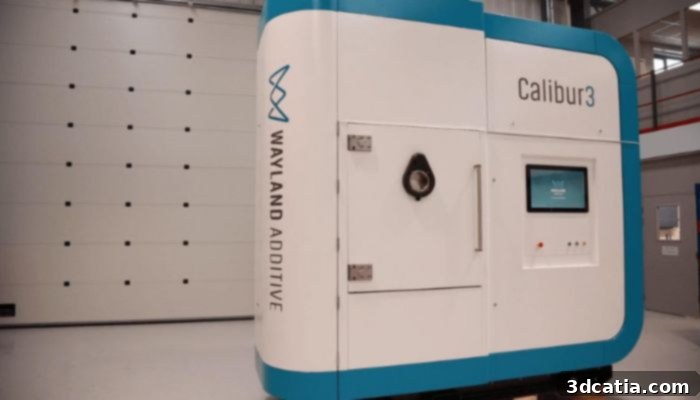
The Calibur3 metal 3D printing solution from Wayland Additive (photo credits: Wayland Additive)
The past week has provided a compelling snapshot of the dynamic and rapidly evolving 3D printing industry. From established players like Desktop Metal navigating financial restructuring and market demands to specialized firms like Prodways making strategic shifts, and innovative startups such as 3DEO and Wayland Additive attracting significant investments, the additive manufacturing sector is clearly in a phase of intense innovation and strategic realignment. The explosive growth projected for construction 3D printing further highlights the vast potential and diverse applications of this technology across various industries. These developments collectively underline a vibrant ecosystem where adaptability, technological advancement, and strategic partnerships are key to sustained success and long-term impact.
What are your thoughts on Desktop Metal’s latest round of layoffs? Did any of the other news items in this week’s #3DExpress column particularly capture your attention or surprise you? We value your insights and encourage you to share your comments below or engage with us on our LinkedIn, Facebook, and Twitter pages! For the latest breaking news, exclusive interviews, and in-depth analyses delivered directly to your inbox, don’t forget to sign up for our free weekly newsletter here. You can also explore our extensive library of videos and tutorials on our YouTube channel.