
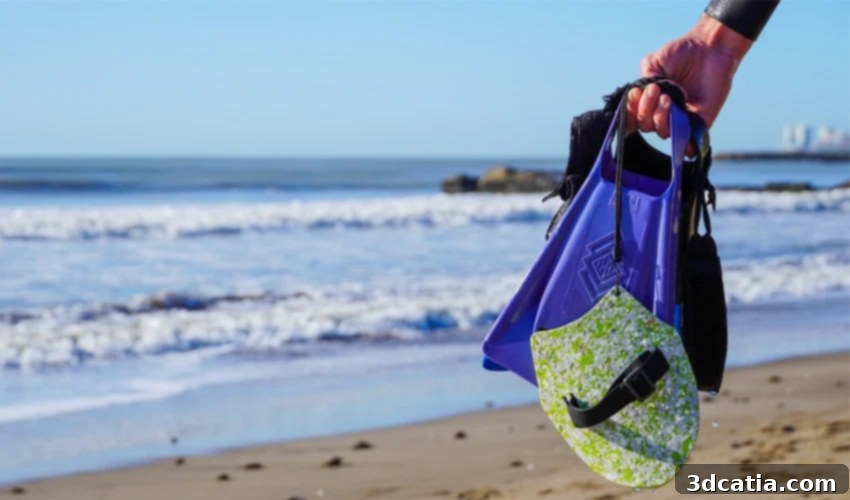
Uido Design Studio Transforms 3D Printed Waste into Eco-Friendly Wabo Bodysurfing Handplanes
In a remarkable demonstration of innovation and commitment to sustainability, Uido Design Studio, with operations spanning the U.S. and Argentina, has unveiled an ingenious new product: Wabo handplanes designed for bodysurfing enthusiasts. These unique paddles, affectionately known as handplanes within the bodysurfing community, are not just about enhancing a surfer’s glide over ocean waves; they represent a pioneering step towards a truly circular economy in product design and manufacturing. What makes Wabo handplanes truly stand out is their ecological foundation: they are meticulously crafted from recycled 3D printed plastic prototypes, remnants of Uido’s extensive product development process. The studio heavily relies on Fused Deposition Modeling (FDM) for creating prototypes of its future products, and rather than discarding these essential but often transient objects, Uido has found a brilliant second life for them, transforming potential waste into valuable, performance-enhancing accessories for wave riders.
The concept of 3D printing and its inherent potential for waste reduction and recycling is gaining significant traction across various industries. As many are becoming increasingly aware, additive manufacturing technologies offer unparalleled opportunities to reuse and repurpose materials, minimizing environmental impact. The number of projects embracing the principles of the “circular economy” through 3D printing is expanding rapidly, underscoring the growing belief that additive manufacturing (AM) is a manufacturing process inherently kinder to our planet. This eco-conscious trend is particularly evident in watersports, where the pursuit of adventure often intertwines with a deep appreciation for nature. From innovative materials to sustainable production methods, numerous eco-friendly initiatives are emerging, including projects like 3D printed surfboards, all striving to make watersports more sustainable.
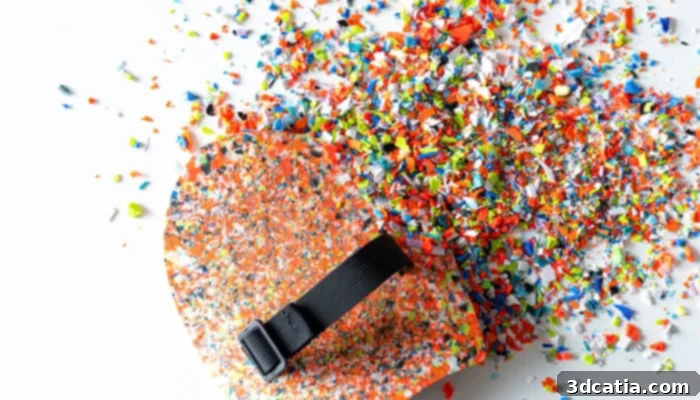
Wabo handplanes are made from recycled 3D printed prototypes (photo credits: Uido Design Studio LLC)
Uido’s Design Philosophy and the Prototyping Imperative
Uido Design Studio’s primary mission revolves around providing comprehensive support and expert advice to its clientele, guiding them through the intricate process of developing both aesthetically pleasing and highly practical products. Their expertise spans various critical areas, from cutting-edge graphics and innovative industrial design to sophisticated digital components. To effectively communicate and visualize these complex ideas for their clients, Uido frequently creates tangible, physical examples. This crucial step in the design journey heavily relies on advanced 3D printing technology, particularly FDM, to quickly and cost-effectively produce detailed prototypes. These prototypes are indispensable tools, allowing clients to touch, feel, and evaluate product concepts before committing to full-scale production. They enable iterative design, identify potential flaws, and refine product functionality, making them an essential part of Uido’s service offering.
Addressing the Prototype Waste Challenge: A New Vision
The efficiency and speed of 3D printing, while revolutionary for product development, also presented Uido with an escalating challenge: what happens to these numerous prototypes once their purpose is served? Are they simply destined to become another contribution to the ever-growing mountains of plastic waste that accumulate in landfills every day? This question spurred the Uido team to critically re-evaluate their internal processes and seek a more responsible and sustainable path forward. Driven by a desire to minimize their environmental footprint and maximize resource utilization, the studio embarked on an exciting new project. As the company elaborates on their motivation, they shared: “Every time we undertake a product design project, the creation of 3D printed prototypes stands as an absolutely essential part of our process. Consequently, throughout the year, we find ourselves accumulating an impressive volume of these prototypes, filling countless boxes with objects of varying colors, sizes, and shapes. This led us to seriously ponder what productive use we could make of them and how we might transform this ‘waste’ into an engaging and innovative new product. It was from this contemplation that the idea of crafting hand-held boards for riding ocean waves was conceived, marking the birth of Wabo.” This internal reflection not only addressed a practical problem but also ignited a creative spark, leading to a product that embodies both utility and environmental stewardship.
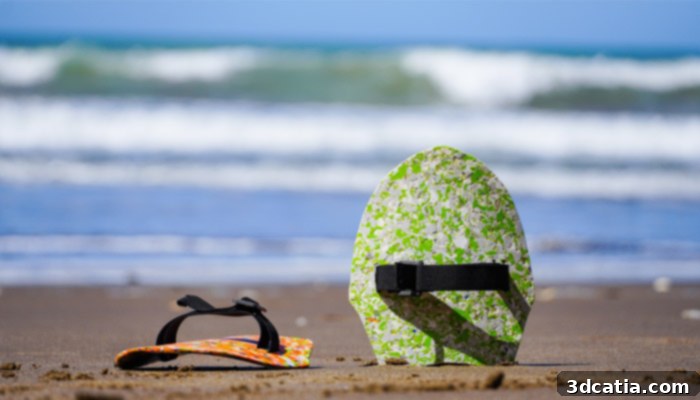
Photo Credits: Uido Design Studio LLC
The Wabo Transformation: From Waste to Wave Rider
The process of transforming these 3D printed prototypes into functional Wabo handplanes is a testament to Uido’s ingenuity and commitment to closed-loop manufacturing. It begins with a meticulous collection and preparation phase. Uido’s dedicated production teams gather all the discarded 3D printed prototypes from their design projects. These varied plastic objects are then meticulously ground down into fine plastic shavings. This crucial step not only reduces the material into a workable form but also blends the diverse colors of the original prototypes, creating a unique aesthetic signature for the Wabo handplanes. The recovered plastic shavings are then thermally processed and pressed into uniform 6mm thick sheets or plates. This consistency ensures the structural integrity and performance of the final product. Once these sheets are created, they are precisely cut into the ergonomic shape of the handplanes – specifically designed to fit comfortably under a bodysurfer’s hand, optimizing their interaction with the waves. The result is a truly original and vibrant mix of colors, with each Wabo handplane bearing a distinct, kaleidoscopic pattern, a visual narrative of its recycled origins. The final touch involves adding the necessary fastener, typically an adjustable strap, to secure the handplane to the surfer’s hand. As Uido succinctly and powerfully articulates, this project embodies the transformative principle that “one person’s trash becomes another person’s boards.” This initiative not only provides a practical solution for prototype waste but also brilliantly illustrates how additive manufacturing can be intimately linked to and effectively drive the principles of a circular economy. It champions a future where waste is not an end but a new beginning, constantly feeding into new product cycles. To explore more of their groundbreaking projects and innovative designs, be sure to visit the Uido Design Studio’s official website.
3D Printing’s Indispensable Role in the Circular Economy
The Uido Wabo project serves as a compelling case study for the broader role of 3D printing in advancing the circular economy. Additive manufacturing, by its very nature, offers unparalleled advantages in waste reduction and material efficiency compared to traditional subtractive manufacturing methods. The ability to print only the material needed, layer by layer, significantly minimizes scrap during the production phase. Furthermore, the inherent flexibility of 3D printing allows for the use of a wide range of recycled materials, from plastics like those in Wabo handplanes to metals and composites. This technological capability enables companies to close material loops, transforming waste streams into valuable feedstocks for new products. It shifts the paradigm from a linear “take-make-dispose” model to a regenerative “take-make-reuse-remanufacture” approach. By embracing recycled filaments and powders, 3D printing empowers designers and manufacturers to create products that are not only innovative and functional but also fundamentally sustainable, reducing reliance on virgin resources and mitigating landfill waste. This symbiotic relationship between additive manufacturing and circular economy principles is pivotal for developing sustainable practices across diverse industries, from consumer goods to aerospace.
FDM: A Key Technology for Sustainable Prototyping and Beyond
Fused Deposition Modeling (FDM), the 3D printing technology central to Uido’s prototyping process, is particularly well-suited for recycling initiatives. FDM printers work by extruding thermoplastic filaments, which are heated and deposited layer by layer to build a 3D object. The resulting prototypes, typically made from common plastics like PLA or ABS, are relatively straightforward to collect, sort, and process for recycling. The thermoplastic nature of these materials means they can be melted down and reformed multiple times without significant degradation, making them ideal candidates for circular applications like the Wabo handplanes. This ease of recycling, coupled with the ability to create complex geometries and customized products on demand, positions FDM as a powerful tool not just for rapid prototyping but also for decentralized, sustainable manufacturing. It allows for the production of items closer to the point of use, further reducing transportation-related carbon emissions and empowering local manufacturing economies. Uido’s utilization of FDM waste exemplifies how a prevalent industrial process can be reimagined to foster environmental responsibility, inspiring other companies to look within their own operations for opportunities to turn waste into valuable resources.
Beyond Wabo: Inspiring a Sustainable Future
The innovation showcased by Uido Design Studio with their Wabo handplanes extends far beyond the realm of bodysurfing. It serves as a powerful inspiration for countless other industries grappling with the challenges of waste management and resource depletion. Uido’s initiative demonstrates that sustainability is not merely a buzzword but a tangible goal achievable through creative design thinking and the intelligent application of existing technologies. By taking ownership of their waste stream and transforming it into a high-quality, desirable product, Uido sets a precedent for how design studios and manufacturers can actively contribute to a greener future. This project resonates with the growing global demand for eco-conscious products, as consumers are increasingly seeking brands that align with their environmental values. The Wabo handplanes are more than just a piece of sporting equipment; they are a symbol of what is possible when design, technology, and ecological responsibility converge. They highlight the critical role of designers in envisioning and implementing solutions that not only meet market needs but also safeguard our planet for future generations. As we move forward, such pioneering efforts will be instrumental in fostering a widespread shift towards genuinely sustainable manufacturing practices.
Join the Conversation: Your Thoughts on Sustainable Design
What are your thoughts on the innovative Wabo boards and Uido Design Studio’s pioneering approach to recycling 3D printed prototypes? Do you believe this model could be widely adopted across other industries to combat plastic waste? We invite you to share your perspectives and engage in the conversation by leaving a comment below or by connecting with us on our social media channels. Find us on LinkedIn, Facebook, and Twitter to discuss this and other exciting developments in sustainable additive manufacturing. Furthermore, stay informed about the latest advancements in 3D printing technology and eco-friendly innovations by signing up for our free weekly Newsletter here, delivered straight to your inbox. For a visual deep dive into the world of 3D printing and sustainable design, you can also explore all our videos on our YouTube channel. Your insights and participation are invaluable as we collectively explore the future of manufacturing.
*Cover Photo Credits: Uido Design Studio LLC