
Revolutionizing Coral Reef Conservation: 3D Printing an Underwater Future with Innovareef
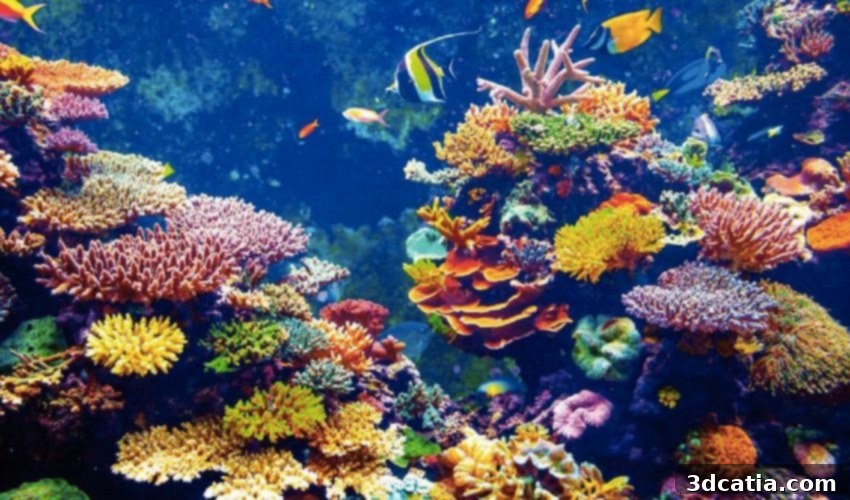
Coral reefs, often referred to as the “rainforests of the sea,” are ancient ecosystems that have graced our planet for millions of years. They have stoically witnessed and endured countless geological shifts, dramatic climate fluctuations, and even survived the mass extinctions that wiped out the dinosaurs and the harsh conditions of numerous ice ages. Their incredible resilience has allowed them to adapt and persist through millennia of environmental change. However, as we navigate the complexities of the 21st century, these vital marine structures face an unprecedented array of threats that challenge their very existence. The question is no longer *if* they can survive, but *how* we can ensure their future amidst rapidly changing global conditions. Fortunately, innovative minds worldwide are rising to this challenge. Pioneers in marine conservation, such as the archiREEF initiative, have already begun leveraging advanced technologies to protect and restore these invaluable ecosystems. Adding to this global effort, the Aquatic Animal Medical Research Centre of Excellence (VMARCE) at Chulalongkorn University in Thailand has introduced a groundbreaking project named **Innovareef**. This ambitious initiative harnesses the power of 3D printing to create sophisticated replicas of natural coral structures, designed to significantly accelerate the settlement, growth, and overall recovery of damaged coral reefs. These extraordinary underwater formations, often mistaken for rocks or plants, are in fact living animals – complex colonies of marine invertebrates known as polyps.
The ecological and economic significance of coral reefs cannot be overstated. Found in all of the world’s oceans, predominantly in warm, shallow waters, they form intricate three-dimensional habitats that support an astounding quarter of all marine species. This makes them biodiversity hotspots, nurturing a vast array of fish, invertebrates, and other ocean life that depend on the reefs for shelter, food, and breeding grounds. Beyond their role as vibrant underwater cities, reefs serve as crucial natural barriers, protecting coastlines from the relentless force of ocean waves, storm surges, and erosion, thereby safeguarding human settlements and infrastructure. Humanity’s reliance on healthy coral reefs extends far beyond their protective capabilities. A staggering number of fish species, critical for global food security, live, breed, and feed within these ecosystems. Moreover, reefs are invaluable economic assets, driving significant revenue in the tourism sector through activities like snorkeling and diving, and supporting thriving fishing industries that sustain millions of livelihoods. In the medical field, corals are a rich source of novel biochemical compounds, with ongoing research exploring their potential for developing new pharmaceuticals and treatments for various human diseases. The combined environmental, social, and economic benefits underscore the urgent need for effective conservation strategies like Innovareef.
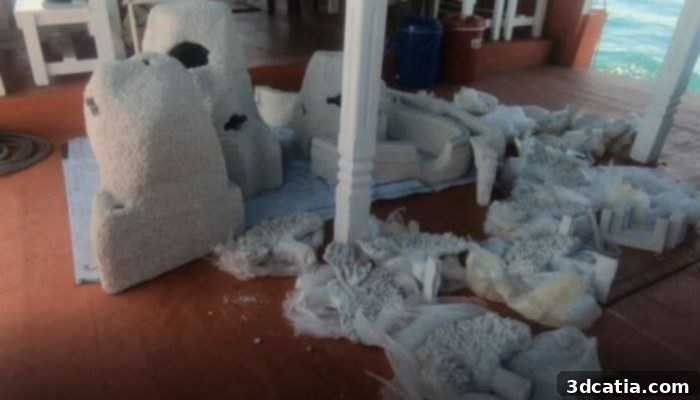
The individual Innovareef parts. (Photo credit: Innovareef)
The Alarming Decline: Why Are These Marine Ecosystems Disappearing?
Despite their ancient lineage and historical resilience, coral reefs are currently facing unprecedented threats, leading to their rapid degradation and disappearance. The primary driver of this crisis is climate change, which manifests in several devastating ways. Rising ocean temperatures, directly linked to global warming, are the leading cause of coral bleaching – a phenomenon where corals expel the symbiotic algae (zooxanthellae) living in their tissues, causing them to turn white. These algae provide corals with most of their energy, and without them, corals become stressed and are highly susceptible to disease and mortality. Mass bleaching events, once rare, are becoming more frequent and severe, wiping out vast expanses of reefs globally. Furthermore, increased atmospheric carbon dioxide absorbed by the oceans leads to ocean acidification, which reduces the availability of carbonate ions essential for corals to build and maintain their calcium carbonate skeletons, making them weaker and more vulnerable. Excessive sunlight, especially in conjunction with elevated temperatures, can exacerbate bleaching.
Beyond climate change, local stressors compound the problem. Pollution from land-based sources, including agricultural runoff, sewage, and industrial waste, introduces excess nutrients, sediments, and toxic chemicals into coastal waters. These pollutants can smother corals, promote algal overgrowth that outcompetes corals for light and space, and directly poison coral polyps. Destructive and excessive fishing practices also take a heavy toll. Methods like dynamite fishing and cyanide fishing physically shatter reef structures and stun fish, causing widespread damage and mortality. Overfishing of herbivorous fish removes key grazers that keep algae in check, allowing them to proliferate and smother corals. Physical damage from unregulated tourism, anchor damage, and coastal development further degrades these fragile environments. To underscore the urgency of this crisis, consider the Coral Triangle in the Philippines, renowned as the most valuable treasure of marine biodiversity on the planet. Home to nearly 1,800 species of fish and over 600 species of reef-building corals, this region is critically endangered. The loss of these reefs would not only decimate marine life but also have catastrophic impacts on the millions of people who depend on them for food and livelihood. It is in this context of profound environmental peril that advanced solutions like 3D printing emerge as a beacon of hope, offering a novel approach to addressing this complex problem.
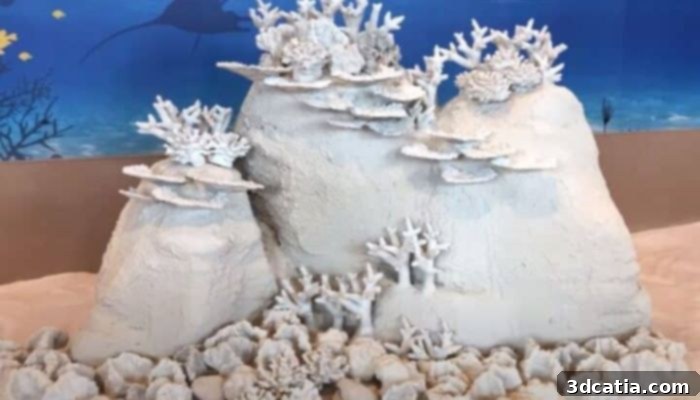
Innovareef is a realistic coral design (Photo credit: Innovareef)
Innovareef: How 3D Printing is Building a Future for Coral Ecosystems
The Innovareef project represents a paradigm shift in coral restoration, leveraging the precision and versatility of 3D printing technology to create artificial structures that closely mimic the complex geometries of natural corals. These sophisticated replicas are crafted from a specially formulated concrete, chosen for its durability, stability in marine environments, and its ability to integrate seamlessly into existing ecosystems. The design incorporates a three-module system, intricately engineered to provide optimal refuge and settlement surfaces for coral larvae, known as planulae. Unlike traditional artificial reef solutions, 3D printing allows for the creation of highly intricate, biomimetic designs that offer diverse microhabitats, critical for encouraging the attachment and growth of new coral polyps, as well as providing shelter for a wide range of marine organisms from the very start.
A key innovation of the Innovareef structures is their pre-coating with calcium phosphate. This essential mineral plays a critical role in the biological process of calcification, which is how corals build their hard, protective skeletons. By integrating this coating, the 3D printed replicas are primed to encourage and accelerate the natural settlement and growth of coral polyps, providing them with the necessary building blocks from day one. The efficacy of this approach was rigorously tested in 2020, when several groups of Innovareef structures were installed off the coast of Chonburi and other locations in Thailand. The results were remarkably encouraging, demonstrating a significantly faster reef growth rate of 3 to 4 centimeters per year – a pace that considerably outstrips natural recovery rates in degraded areas. This accelerated growth is crucial for rapidly rebuilding struggling ecosystems.
The benefits of the Innovareef project extend far beyond just coral growth. These complex 3D printed structures quickly become thriving mini-ecosystems themselves, offering vital habitats for a diverse array of marine life, including various species of fish, molluscs, crustaceans, and other invertebrates. By providing immediate shelter and fostering a rich environment, Innovareef aids in the restoration of biodiversity, attracting and supporting species that are essential for the overall health and balance of the marine food web. Furthermore, the project integrates advanced monitoring capabilities through strategically placed sensors. These sensors continuously collect crucial environmental data, including tidal forces, water temperature, and acidity levels. This real-time data allows researchers to closely track the performance of the artificial reefs, monitor the health of the surrounding marine environment, and observe the colonization patterns of various creatures. Such comprehensive data is invaluable for refining future designs, optimizing deployment strategies, and gaining deeper insights into the complex dynamics of coral reef restoration. The meticulous research and development process behind Innovareef is testament to its potential, as Associate Professor Dr. Nantarika Chansue, director of the research center responsible for the project, eloquently explains:
“The team has been through stages of design, molding, creating uneven surfaces, casting branches separately as well as performing tests on vortex, sinking of the base, and resistance to tidal waves both in our laboratory and at sea, before we have the Innovareef that’s resistant to tidal waves, sturdy, not submerged into the sand, with small vortex around it and branches to enhance natural settlements of planula.”
This detailed account from Dr. Chansue highlights the scientific rigor and engineering challenges overcome during the development of Innovareef. From initial biomimetic design concepts to extensive laboratory and field testing, every aspect of the structure – its hydrodynamics, stability, and surface characteristics – has been carefully optimized. The goal was to create not just a physical replica, but a functional, stable, and attractive habitat for coral larvae and other marine life, capable of withstanding the harsh marine environment while actively promoting ecosystem recovery. The attention to detail in creating uneven surfaces and separate branches is crucial, as these features enhance the natural settlement processes for planula, mimicking the complex micro-environments found in healthy natural reefs.
A Sustainable Future for Our Oceans
Initiatives like Innovareef offer a powerful glimpse into the future of marine conservation, demonstrating how advanced technologies like 3D printing can be harnessed to actively restore degraded marine environments. By strategically deploying these 3D printed coral replicas, we can play a direct role in rebuilding lost seabed ecosystems, providing a vital lifeline for countless marine species and the critical services they provide. The success of projects like Innovareef is not just about bringing back corals; it’s about restoring the health of our oceans, supporting biodiversity, and ensuring the long-term sustainability of coastal communities and economies worldwide. As human pressures on our planet continue to mount, innovative, scalable, and scientifically-backed solutions are more critical than ever.
The progress made by Chulalongkorn University’s Innovareef project serves as an inspiring example of what can be achieved when cutting-edge technology meets dedicated scientific research. It paves the way for a more proactive approach to environmental conservation, moving beyond mere protection to active restoration. This project, along with others worldwide, shows that despite the immense challenges facing our coral reefs, there is genuine hope for their recovery and a thriving underwater future. If you are interested in delving deeper into the specifics of this groundbreaking research and keeping up with the latest developments, you can find more information HERE.
What are your thoughts on this innovative approach to coral reef restoration? We invite you to share your comments below or connect with us on our LinkedIn,Facebook, andTwitter pages! Don’t forget to sign up for our free weeklyNewsletter here to receive the latest 3D printing news straight to your inbox! You can also find all our videos and more insights on ourYouTube channel.
*Cover photo credits: Sebastian Pena Lambarri at GQ