
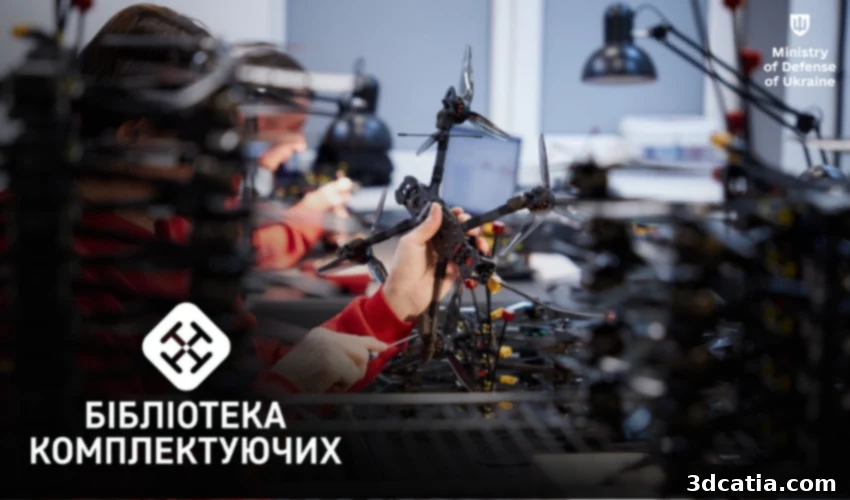
Ukraine’s Component Library: Boosting Domestic Defense with Advanced 3D Printing
In a pivotal move to bolster its national defense capabilities, the Ukrainian Ministry of Defence has significantly expanded its secure digital “Component Library.” This innovative platform now hosts an impressive array of over 170 domestically produced parts and specialized manufacturing services, prominently featuring advanced 3D printing capabilities. This strategic initiative is meticulously designed to forge stronger connections among Ukrainian defense manufacturers, thereby fortifying local supply chains and drastically reducing reliance on foreign suppliers. The timing of this expansion is critical, directly addressing the urgent demands and logistical complexities presented by the ongoing Russo-Ukrainian War, which has underscored the imperative for self-sufficiency and rapid indigenous production in times of conflict.
The Component Library operates as a highly secure, closed online database, ensuring that only meticulously verified Ukrainian producers can access, list, and source critical components for a wide spectrum of weapons systems and military equipment. This rigorous verification process is paramount to maintaining the integrity and security of the supply chain, preventing unauthorized access and ensuring the quality and reliability of all listed items. The inventory of available items is extensive and continually growing, encompassing essential elements such as high-performance antennas, durable batteries, robust FPV drone frames, precision flight controllers, efficient propellers, and an array of specialized electronic modules vital for modern military operations. Beyond tangible physical parts, the platform also grants access to a comprehensive suite of 11 distinct manufacturing services. These services include precision CNC machining, various casting techniques, and, crucially, advanced 3D printing. These integrated capabilities empower manufacturers to rapidly produce highly precise components, swiftly adapt designs to evolving battlefield requirements, and respond with unparalleled agility to urgent operational needs, effectively shortening the crucial timeline from design to deployment.
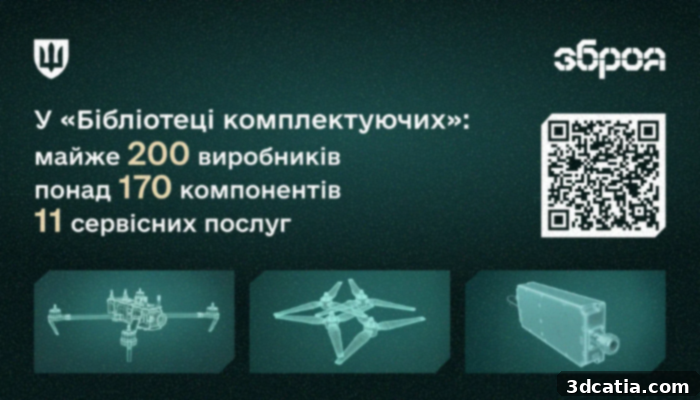
(Translation: In the Ukrainian MoD ‘Components Library’ there are over 200 manufacturers, more than 170 components, and 11 services that can be accessed.)
Within this innovative ecosystem, 3D printing, also known as additive manufacturing, is rapidly emerging as a foundational and truly transformative tool. By seamlessly integrating additive manufacturing services directly into the platform, Ukrainian defense companies gain an unprecedented ability to rapidly prototype and fabricate intricate and complex parts entirely within national borders. This localized production capability is exceptionally valuable, particularly for generating small batches of highly customized components where traditional, often global, supply chains prove to be either prohibitively slow, expensive, or susceptible to disruption. The inherent flexibility of 3D printing allows for quick design iterations, material optimization, and the production of geometrically complex parts that might be impossible or too costly with conventional methods. This domestic production through 3D printing significantly compresses the critical time between a design concept and its deployment on the battlefield, ensuring that front-line units receive vital equipment and replacement parts with unprecedented speed and efficiency. Furthermore, it fosters an environment of continuous innovation, enabling engineers to experiment with new designs and materials without the prohibitive costs and delays associated with traditional manufacturing processes, thereby accelerating technological advancements within the Ukrainian defense sector.
The adoption rate of the Component Library has been swift and robust, with almost 200 Ukrainian defense manufacturers already granted access to this essential resource. Access is facilitated through a highly secure authorization process leveraging Diia (Дія), Ukraine’s advanced digital government platform. This digital integration ensures both security and ease of access for verified entities, streamlining what would otherwise be a cumbersome bureaucratic process. Once authorized, companies can effortlessly browse the extensive catalog of available parts, request direct contact information for potential suppliers, and swiftly establish new, vital partnerships within the domestic defense ecosystem. The overarching goal of this ambitious initiative is to cultivate a robust and self-sustaining network of producers. This network will be capable of consistently meeting the escalating demands of the armed forces, effectively circumventing the inherent vulnerabilities and lengthy lead times associated with international import processes. Such a localized network not only enhances national security but also stimulates economic growth, fosters technological self-reliance, and builds a resilient foundation for Ukraine’s industrial future. By empowering local businesses, the Ministry is investing in a strategic capability that extends far beyond the current conflict, promising long-term benefits for the nation’s defense and economy.
This emphasis on domestic production, particularly through advanced technologies like 3D printing, translates directly into critical advantages on the battlefield. It allows for rapid iteration and deployment of essential equipment, enabling quick modifications based on combat feedback without waiting for overseas shipments or navigating complex international logistics. This agility is invaluable in a dynamic conflict environment where conditions can change by the hour. From custom drone components to urgently needed repair parts for vehicles and weaponry, the ability to produce these items domestically and on-demand provides Ukrainian forces with a vital operational edge. Moreover, the platform facilitates knowledge sharing and collaboration among manufacturers, accelerating innovation and ensuring that the most effective solutions are developed and deployed rapidly. This collective effort fosters a strong sense of national purpose and resilience, reinforcing the strategic autonomy of Ukraine’s defense sector.
Deputy Minister of Defense Hanna Hvozdiar has eloquently articulated the profound strategic importance of this initiative, highlighting that domestic sourcing is inherently faster, significantly more cost-effective, and ultimately more reliable than the arduous process of searching for and acquiring components from abroad. By strategically integrating cutting-edge technologies like 3D printing into a centralized, accessible platform, the Ministry of Defense is not merely creating a database; it is actively nurturing an ecosystem designed to support rapid innovation and ensure that front-line units receive mission-critical equipment precisely when and where they need it most. This proactive approach minimizes downtime, optimizes resource allocation, and directly contributes to the operational effectiveness and safety of Ukrainian personnel. The Component Library is more than just a list of parts; it is a testament to Ukraine’s commitment to building a resilient, self-sufficient, and technologically advanced defense industry that can meet any challenge. This initiative serves as a powerful model for other nations facing similar geopolitical pressures, demonstrating how digital platforms and advanced manufacturing can be leveraged to secure vital supply chains and enhance national defense capabilities. For those interested in delving deeper into the specifics of this groundbreaking portal, the official press release is available for detailed review HERE.
What are your thoughts on the Ukrainian Ministry of Defense’s innovative Component Library and its integration of advanced manufacturing? We invite you to share your insights in a comment below or engage with us on our LinkedIn or Facebook pages! Furthermore, don’t miss out on the latest advancements in additive manufacturing by signing up for our free weekly Newsletter, delivering top 3D printing news directly to your inbox. You can also explore our extensive library of videos on our YouTube channel. For more focused news and analyses on 3D printing applications within the aerospace and defense sectors, be sure to visit our dedicated page HERE.
*All Photo Credits: Ministry of Defense of Ukraine