
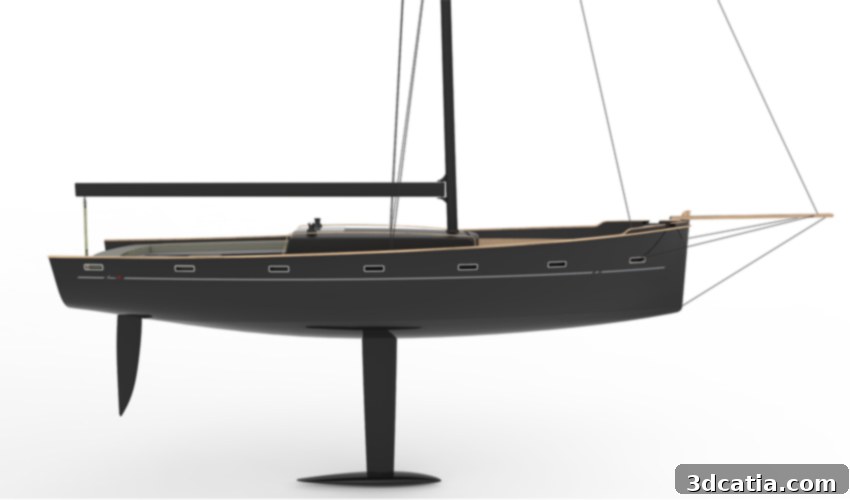
Livrea Yacht: Pioneering the Future of Naval Architecture with Revolutionary 3D Printing Technology
In an era defined by rapid technological advancement, Livrea Yacht is making waves, quite literally, with an innovation that challenges conventional wisdom in naval architecture. This forward-thinking company has achieved what many considered impossible: constructing a high-performance yacht entirely through additive manufacturing, commonly known as 3D printing. But they aren’t stopping there. To unequivocally demonstrate the robustness and reliability of their groundbreaking creation, Livrea is preparing to embark on an ambitious transatlantic voyage. This audacious endeavor, sailing the vast Atlantic in a 3D-printed vessel, serves as a powerful testament to the maturity and potential of their technology. Such a bold statement naturally piqued our interest, compelling us to sit down with the visionary minds behind this incredible project to delve deeper into the fascinating details of their work and explore the implications for the future of boat manufacturing.
Unveiling Livrea Yacht: A Journey from Concept to Revolutionary Manufacturing
“Livrea Yacht is a company forged from a shared vision and a passion for innovation, founded in 2013 by myself, Daniele Cevola, and my co-founder, Francesco Belvisi,” explains Daniele. “Our journey began in 2014 when we proudly unveiled the concept of the Livrea 26, born by the wind. This design was deeply inspired by the elegance and functionality of the Lancia of Pantelleria, a traditional sailing boat emblematic of the beautiful island in southern Sicily. We envisioned a modern daysailer that seamlessly integrated cutting-edge technology with classic nautical heritage. From its inception, the Livrea 26 incorporated parts meticulously crafted through Additive Manufacturing, a critical step realized in close collaboration with CRP Technology. As an Italian company, CRP Technology stands as a global leader in high-performance composite materials (CFC) and advanced Additive Manufacturing machining, bringing unparalleled expertise to our project. Over time, fueled by our growing knowledge and invaluable partnerships with experienced specialists across various fields, our initial concept blossomed into a far more ambitious undertaking. This evolution has culminated in our current monumental endeavor: the construction of the very first ocean-going boat built entirely using Additive Manufacturing techniques, pushing the boundaries of what is possible in maritime engineering.”
The Imperative of 3D Printing: A Design-Driven Revolution
When asked about the initial decision to embrace 3D printing, Daniele emphasizes, “Our turn to 3D printing was less about chasing a fleeting ‘trend’ and more about finding a profound response to a very specific design imperative. In fact, as we meticulously designed the Livrea 26, we quickly realized that achieving our vision of a vessel as hydrodynamically clean and structurally optimized as possible, with minimal interference from traditional construction limitations, necessitated a radical departure from conventional methods. To create components with intricate geometries, precisely integrated functionalities, and superior performance characteristics, Additive Manufacturing emerged not just as an option, but as the only viable solution. Traditional boat building often involves numerous separate parts, complex molds, and labor-intensive assembly, leading to compromises in design freedom and structural integrity. 3D printing, conversely, offered us the unparalleled ability to produce consolidated structures, tailor geometries for peak efficiency, and embed features directly into components, thereby streamlining the manufacturing process and elevating the boat’s overall performance and aesthetic purity. It was a strategic decision driven by an unwavering commitment to engineering excellence and innovative design.”
The Revolutionary Creation Process: Software, Robotics, and Advanced Materials
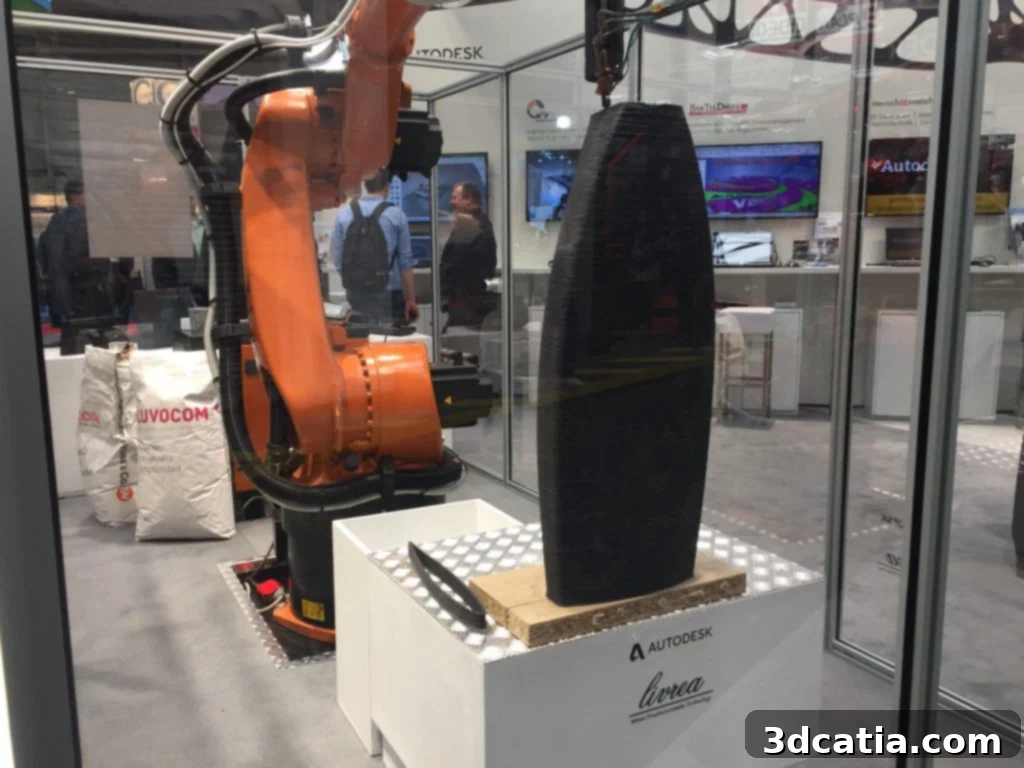
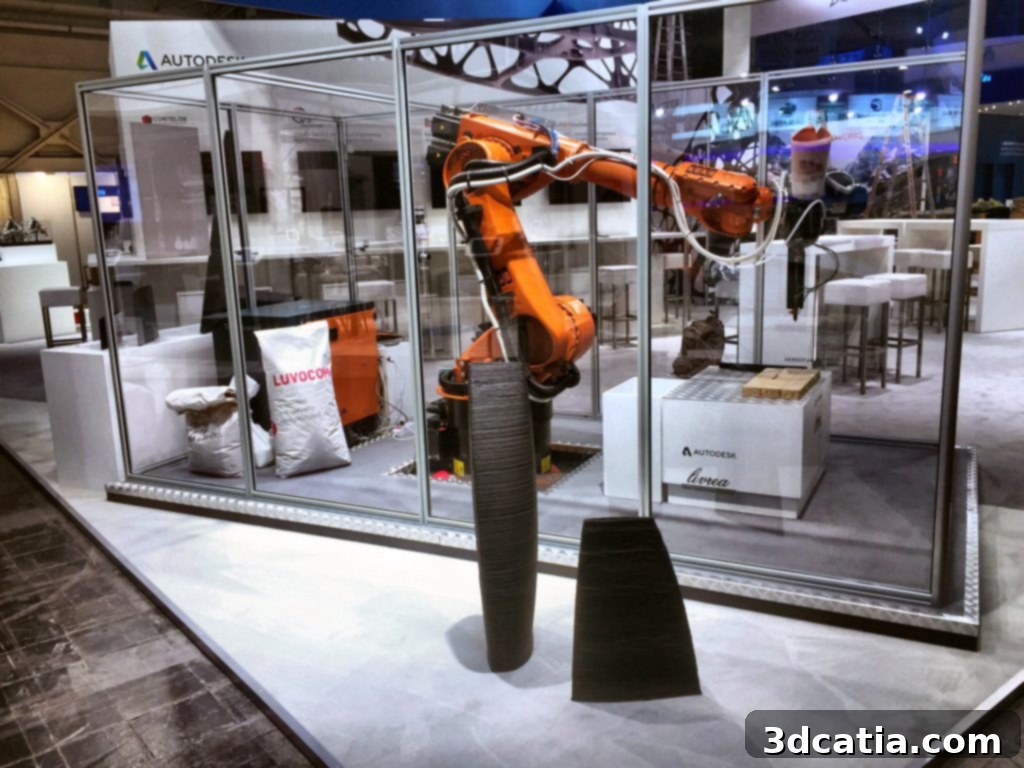
“To design and bring the Livrea 26 to life, we embarked on an intensive journey of re-evaluation, forcing us to consider numerous design principles that extended far beyond the traditional processes known to date in the nautical industry,” Daniele elaborates. “We had to deliberately pause and question virtually all the accumulated knowledge we had acquired over years, recognizing that the fundamental paradigm of the design process itself was undergoing a profound transformation. This challenging but exhilarating approach was made possible thanks to the indispensable support of our partner, Autodesk. Utilizing their powerful Powermill software, we have been able to convert intricate 3D CAD designs into precise robot paths, onto which an advanced extruder, meticulously designed and constructed by our own team, is mounted. This robotic additive manufacturing system allows for large-scale, high-precision deposition of material. A further and equally fundamental pillar of support has been provided by Lehmann & Voss, a distinguished German company renowned for manufacturing high-performance plastic materials. They believed deeply in our ambitious project, offering the critical technical support and material science expertise necessary to rigorously test and select the most suitable materials capable of achieving our demanding performance and structural integrity goals. The culmination of this innovative process was vividly demonstrated during the last Hannover MESSE, where, before an amazed international audience, we successfully 3D-printed the complex helm of our boat in an astonishingly short two hours. This public demonstration was a resounding success, showcasing the speed, precision, and viability of our manufacturing methodology for advanced marine components.”
Navigating Challenges and Harnessing the Advantages of 3D Printing in Boat Manufacturing
“Combining advanced 3D printing with the rigorous demands of boat manufacturing presents both unique challenges and transformative advantages,” Daniele explains. “One of the most significant advantages is the ability to produce truly one-off, bespoke boats without the enormous upfront investment typically required for traditional models and molds. This dramatically reduces lead times and costs for custom projects, making highly personalized vessels more accessible. Another immense benefit is the unprecedented freedom to design and then realize complex, organic forms that, until recently, were either impossible to create or only achievable at exorbitant production costs using conventional methods. This design freedom opens up new avenues for optimizing hydrodynamics, improving aesthetic appeal, and creating revolutionary internal structures. Furthermore, it becomes possible to integrate multiple functions and accessories directly into a single, consolidated component. This not only reduces the overall part count and assembly complexity but also enhances structural integrity and allows for boats to be designed as truly unique objects, perfectly tailored around the precise needs and desires of the customer. The problem of ‘splitting molds’ – the intricate process necessary in traditional manufacturing to achieve certain production goals – is entirely circumvented by Additive Manufacturing. With our technology, we can now achieve geometries and complexities that were previously unattainable without compromise. However, the real game-changing advantage, particularly for high-performance vessels, lies in the ability to create topologically optimized structures. This advanced design approach ensures that material is only placed where it is structurally necessary, resulting in components and entire hulls that exhibit exceptional strength-to-weight ratios. The outcome is significantly lower weight coupled with incredibly high strength, translating directly into superior performance benefits such as increased speed, improved fuel efficiency, and enhanced maneuverability. For now, our technology is specifically engineered for those boat designs that aim to push the absolute limits of performance research and maritime engineering.”
Charting the Future: The Mini Transat Challenge and Beyond
Looking ahead, Livrea Yacht is poised for another monumental undertaking. “By January 2018, we aim to complete the construction of a new boat specifically designed to participate in the prestigious Mini Transat regatta in 2019,” Daniele reveals with a glint of determination. “This is an extraordinarily demanding single-handed transatlantic race, spanning over 4000 nautical miles from the north of France all the way to South America. The Mini Transat is globally renowned for being one of the most grueling tests in offshore sailing, pushing both the skipper and, crucially, the boat itself to their absolute limits. This ambitious marketing operation is not merely about competition; it’s a strategic demonstration to prove, beyond any doubt, that the advanced 3D printing technology developed by Livrea Yacht is not only functional and efficient but also incredibly robust and capable of withstanding the immense and relentless stresses imposed by the open ocean. I am perfectly aware that this project is incredibly ambitious, perhaps even audacious, but based on the extensive testing and rigorous simulations we have conducted so far, we are profoundly optimistic about our prospects. This endeavor will serve as a powerful validation of additive manufacturing in extreme marine environments, paving the way for wider adoption across the nautical industry. Beyond the Mini Transat, our future developments include exploring larger vessel applications, expanding into mass customization solutions, and continuously refining our materials and processes to ensure even greater sustainability and performance in boat manufacturing.”
A Vision for Tomorrow: Redefining Naval Traditions
Concluding our conversation, Daniele shares a compelling message for our readers: “We are acutely aware that the traditional nautical world is, by its very nature, often conservative. Introducing radical technological innovation within such a historically ‘closed’ context is frequently met with skepticism and suspicion. However, what we are actively building and demonstrating today at Livrea Yacht is not just a new method; it is an entirely fresh perspective on how boats will be constructed in the future. We firmly believe that for the Livrea Yacht, the future is not a distant concept – the future is now. Our core philosophy is rooted in an unwavering belief in the power of technological innovation, and we are relentlessly pursuing the absolute maximum in performance, efficiency, and design freedom. We invite everyone in the marine industry, from enthusiasts to professionals, to embrace this evolution and join us in shaping a more innovative and sustainable future for naval architecture.”
For a visual insight into Livrea Yacht’s pioneering work, check out this video below: