
Revolutionizing Industries: The Latest in Metal 3D Printing, Smart Glasses, and Advanced Additive Manufacturing Applications
Welcome to your weekly dose of additive manufacturing insights! This edition brings you a comprehensive look into groundbreaking advancements across various sectors, from aerospace to healthcare and high-performance engineering. We’ll explore how leading manufacturers like Trumpf are pushing the boundaries of metal 3D printing for critical applications, uncover innovative solutions in medical technology with 3D printed smart glasses designed to assist individuals with dyslexia, and revisit essential knowledge for optimizing your engineering-grade 3D printing projects. Furthermore, we delve into the dynamic world of motorsport, where additive manufacturing is crucial for competitive advantage, and provide details on an upcoming virtual event dedicated entirely to aerospace additive manufacturing. Prepare to discover the transformative power of 3D printing that continues to reshape industries globally.
TOP 1: Trumpf’s TruPrint 5000: Advancing Metal Additive Manufacturing for the Aerospace Industry
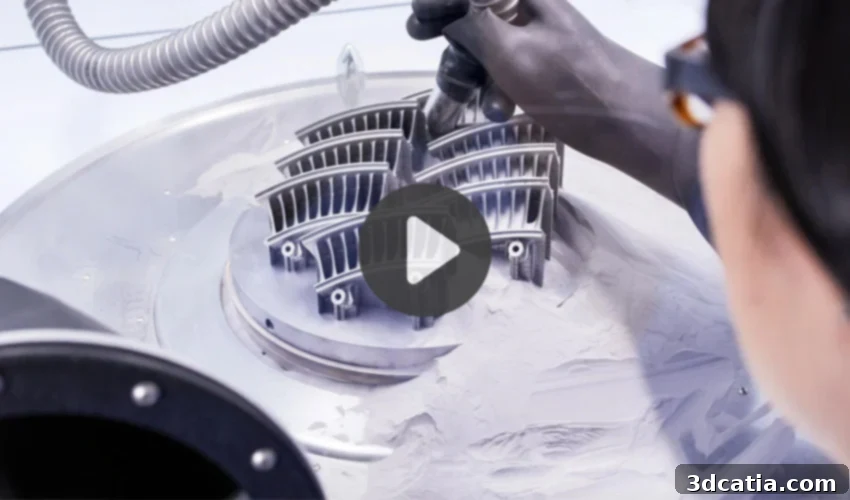
Trumpf, a renowned German industrial 3D printer manufacturer, stands at the forefront of innovation, consistently addressing the complex demands of various high-tech industries, including the highly demanding aeronautics sector. In a recent spotlight, Trumpf showcased its advanced metal additive manufacturing solution, the TruPrint 5000. This powerful machine is engineered to overcome some of the most persistent challenges in metal 3D printing, particularly when working with high-performance alloys like titanium.
A standout feature of the TruPrint 5000 is its integrated preheating option, capable of reaching temperatures up to 500°C. This functionality is absolutely crucial when processing materials such as titanium, which are prone to cracking due to high thermal stresses during the additive manufacturing process. By maintaining an elevated temperature throughout the build, the TruPrint 5000 significantly mitigates these stresses, ensuring the structural integrity and quality of the final part. This preheating capability is a game-changer for the aeronautical sector, where component reliability and performance are non-negotiable.
The benefits of this advanced system extend beyond crack prevention. The reduced residual stress achieved through optimal preheating translates directly into superior geometric accuracy, allowing manufacturers to produce parts with tighter tolerances and more precise dimensions. Furthermore, the ability to minimize internal stresses often leads to a reduction in the need for extensive support structures, or “print media,” which not only saves material but also streamlines post-processing efforts, thereby cutting down on overall production time and cost. The TruPrint 5000 facilitates the creation of lighter, more complex, and more durable components—characteristics highly valued in aerospace applications where every gram and every millimeter counts towards fuel efficiency and performance.
For those looking to deepen their understanding of integrating such cutting-edge technology into an industrial setting, we highly recommend listening to the Trumpf expert. Their insights provide valuable guidance on how to effectively leverage the TruPrint 5000’s preheating option and maximize its potential within your manufacturing environment, ensuring a smooth transition to advanced metal additive manufacturing workflows.
TOP 2: Abeye and Lexilens: Empowering Individuals with Dyslexia Through 3D Printed Smart Glasses
In a remarkable demonstration of how additive manufacturing can directly impact personal well-being, 3Dnatives recently visited the innovative startup Abeye to delve into their groundbreaking product, Lexilens. This revolutionary pair of smart glasses is specifically designed to provide assistance to children and individuals grappling with dyslexia, offering a beacon of hope for improved reading and comprehension. Our particular interest in Lexilens stems from its ingenious use of 3D printing technology for its frame, showcasing a perfect blend of design, functionality, and manufacturing efficiency.
Dyslexia, a common learning difficulty that primarily affects the skills involved in accurate and fluent word reading and spelling, can present significant challenges in academic and daily life. Lexilens aims to mitigate some of these difficulties through its smart features, which manipulate light and filtering to enhance the clarity and separation of letters for the wearer. The effectiveness of such a precise optical aid depends heavily on the accuracy and comfort of its frame, which is where 3D printing makes a significant difference.
Abeye leveraged HP Multi Jet Fusion (MJF) technology for the production of the Lexilens frames. This choice brought a multitude of advantages to the young French company. Firstly, MJF technology allowed for a drastic reduction in the number of assembly stages. Traditionally, complex eyewear frames might involve multiple injection-molded components that need to be joined. With 3D printing, intricate geometries can be produced as a single, consolidated part, significantly simplifying the manufacturing process and reducing potential points of failure. Secondly, the rapid prototyping capabilities of HP MJF enabled Abeye to quickly test numerous design iterations. This agility in design and manufacturing meant that various ergonomic and aesthetic improvements could be implemented and validated in a fraction of the time compared to conventional methods, ensuring the final product was optimized for comfort and performance.
Lastly, and perhaps most importantly for a startup, 3D printing helped to lower production costs. By avoiding expensive tooling associated with injection molding and reducing labor for assembly, Abeye could bring an innovative, high-tech product to market more affordably. The ability to produce parts on demand also minimizes inventory risks, further contributing to cost efficiency. We had the privilege of going behind the scenes of this fascinating manufacturing process, and we encourage you to watch the full video to witness how 3D printing is making a tangible difference in the lives of those with dyslexia.
TOP 3: Mastering Engineering-Grade 3D Printing: A Comprehensive Webinar on Materials and Printers
For professionals and enthusiasts keen on elevating their additive manufacturing capabilities for demanding applications, our webinar held on February 25th in collaboration with 3DGence offered invaluable insights into selecting the optimal 3D printing material and the right printer for engineering-grade projects. The session was a deep dive into the nuances of working with advanced plastics that are essential for functional prototypes, jigs, fixtures, and even end-use parts in various industrial settings.
The webinar covered a wide spectrum of engineering-grade plastics commonly utilized in 3D printing, including robust materials like Polycarbonate (PC) and various Polyamides (PA). These materials are chosen for their excellent mechanical properties, such as high strength-to-weight ratio, chemical resistance, and thermal stability, making them suitable for challenging environments. Understanding the specific characteristics and application requirements for each material is paramount to achieving successful and durable prints.
Beyond material selection, the webinar meticulously explored the critical printing requirements associated with these advanced filaments. A key topic discussed was the necessity of a heated build chamber. We addressed questions like: “Why do you need a heated chamber?” The answer lies in managing thermal stresses. Engineering-grade thermoplastics often have higher glass transition temperatures and coefficients of thermal expansion. A heated chamber helps maintain a consistent, elevated temperature around the printed part, which significantly reduces warping, delamination, and residual stresses, leading to better part integrity and dimensional accuracy. Conversely, we explored whether it’s possible to print with these materials without one, discussing the compromises and potential workarounds, albeit with limitations.
Another crucial aspect highlighted was the importance of having dry material. Most engineering-grade filaments are hygroscopic, meaning they absorb moisture from the air. Even a small amount of moisture can lead to a host of printing issues, including bubbling, poor layer adhesion, reduced mechanical strength, and aesthetic defects. The webinar emphasized best practices for material storage and preparation, such as using filament dryers, to ensure optimal print quality and material performance. For anyone serious about pushing the boundaries of functional 3D printing and seeking to avoid common pitfalls, watching the full webinar is an indispensable resource. It provides practical knowledge and expert advice to help you succeed with your most demanding engineering projects.
TOP 4: Motorsport and 3D Printing: Driving Innovation on the Race Track
As you may already know, additive manufacturing has cemented its indispensable role within the fast-paced and highly competitive world of motorsport. Its immense popularity in this sector stems from its unparalleled ability to produce lightweight components, a critical factor for enhancing vehicle performance and speed, as well as its capacity to rapidly and easily create bespoke spare parts, essential for quick repairs and iterative design improvements during racing seasons. This combination of speed, precision, and design freedom makes 3D printing a go-to technology for racing teams looking to gain a competitive edge.
This undeniable advantage is precisely what prompted Tim Hunter, a fervent motorsport enthusiast and innovator, to integrate Airwolf3D’s Fused Deposition Modeling (FDM) solutions into his work on his Volvo C30 race car. Tim utilized FDM 3D printing to design and produce a variety of custom components, each tailored to specific performance enhancements or structural needs. From optimized air ducts to precisely fitted hose clamps and robust camera mounts, additive manufacturing allowed him to iterate quickly and implement designs that would be challenging or impossible to create with traditional manufacturing methods.
One particularly illustrative example of Tim’s ingenuity involves the air ducts. By leveraging the design freedom offered by 3D printing, Tim was able to imagine and create larger, more efficient air ducts for his vehicle. These redesigned ducts significantly improved airflow and cooling to critical components, such as the brakes. The consequence of better cooling is a reduction in the operational temperatures of brake discs and pads. This, in turn, translates directly into less wear and tear on these vital components, thereby extending their lifespan considerably. In motorsport, where every component’s longevity and performance are pushed to their limits, such improvements not only save on maintenance costs but, more importantly, contribute to consistent performance over longer periods, potentially securing crucial race outcomes.
Tim Hunter’s experience with Airwolf3D’s FDM technology perfectly encapsulates the transformative power of 3D printing in motorsport. It’s not just about creating parts; it’s about enabling rapid innovation, custom optimization, and ultimately, a superior performance outcome on the track. We invite you to discover all the advantages and creative applications he derived from 3D FDM printing in the accompanying video, showcasing how accessible 3D printing can empower individuals to make significant impacts in high-performance fields.
TOP 5: ADDITIV Aerospace: A Premier Virtual Event for Additive Manufacturing in Aviation
Following the resounding success of our previous ADDITIV events, which included highly acclaimed gatherings like ADDITIV Medical France and ADDITIV Digital World, we are thrilled to announce the organization of a new and equally engaging 100% virtual event: ADDITIV Aerospace. This dedicated platform is specifically curated to explore the profound impact and immense potential of additive manufacturing within the aerospace industry – a field that is rapidly evolving due to the unparalleled benefits that AM brings.
The aerospace sector, known for its stringent requirements for safety, performance, and efficiency, is increasingly turning to additive manufacturing for innovative solutions. AM offers unprecedented capabilities in producing lightweight, complex geometries that are impossible or cost-prohibitive with traditional manufacturing methods. These advantages translate directly into significant fuel savings, reduced emissions, improved component performance, and shortened lead times for both prototyping and production. From intricate engine components and structural parts to interior elements, 3D printing is revolutionizing how aircraft are designed, manufactured, and maintained.
ADDITIV Aerospace is conceptualized as a free, one-day virtual event, meticulously organized by 3Dnatives, recognized as the leading online magazine dedicated to 3D printing and Additive Manufacturing. This event will serve as a crucial meeting point for industry leaders, innovators, engineers, and enthusiasts to discuss the latest trends, showcase groundbreaking technologies, and share valuable insights into the application of AM in aerospace. Attendees will have the opportunity to engage with experts, learn about cutting-edge case studies, and network with peers, all from the comfort of their own environment. Don’t miss this unique opportunity to immerse yourself in the future of aerospace manufacturing. You can register for free HERE and secure your spot at this pivotal industry event.
We’d love to hear your thoughts! What are your impressions of Trumpf’s metal additive manufacturing machines, or perhaps the innovative Lexilens smart glasses? Share your insights and opinions in a comment below or join the conversation on our Facebook, Twitter and LinkedIn pages! For all the very latest news and developments in the rapidly evolving 3D printing industry, delivered directly to your inbox, don’t forget to sign up for our free weekly Newsletter. Stay connected and stay informed with 3Dnatives!