
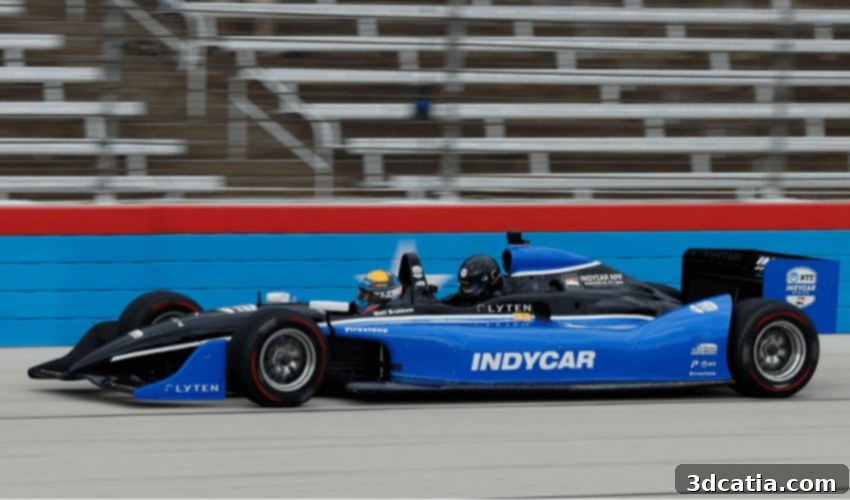
Lyten’s 3D Graphene and Advanced 3D Printing: Revolutionizing Performance in Motorsport
The competitive realm of motor racing constantly seeks breakthroughs that offer even the slightest edge in performance, safety, and efficiency. In recent years, 3D printing, also known as additive manufacturing, has emerged as a transformative technology, gaining significant traction across various motorsport disciplines. From the pinnacle of engineering in Formula 1 to other demanding motorsport categories, 3D printing accelerates the production of complex components, optimizes vehicle dynamics, and dramatically reduces manufacturing costs. This rapid prototyping and production capability allows teams to iterate designs faster, test new concepts quickly, and bring cutting-edge parts to the track with unprecedented speed. The ability to create lightweight, yet incredibly strong, custom components on demand has fundamentally changed how racing teams approach vehicle development and maintenance.
Embracing this spirit of innovation and pushing the boundaries of material science, Lyten, a company renowned for its development of supermaterials and expertise in 3D graphene, recently unveiled Lyten Motorsport. This dedicated new entity signifies Lyten’s strategic commitment to integrating its advanced material innovations directly into the heart of motorsport part development. By focusing its considerable scientific prowess on the unique challenges and opportunities within racing, Lyten aims to redefine what’s possible in terms of vehicle performance, driver safety, and sustainable manufacturing practices. The establishment of Lyten Motorsport underscores a clear intent to move beyond theoretical applications into tangible, track-proven solutions, setting a new benchmark for material integration in high-stakes environments.
Unlocking Potential with 3D Graphene: A Motorsport Game-Changer
At the core of Lyten’s pioneering efforts is its proprietary 3D graphene. This isn’t just any carbon-based material; it’s an innovative structure engineered to be highly customizable, allowing its properties to be precisely tuned for the specific demands of high-performance applications. Unlike conventional materials, Lyten’s 3D graphene offers unparalleled flexibility, enabling engineers to adjust its strength, weight, thermal conductivity, and electrical properties to achieve optimal performance in various scenarios. This adaptability is particularly crucial in motorsport, where every gram and every micron of material can significantly influence a vehicle’s capabilities, from its aerodynamic efficiency to its structural resilience under extreme stress. The unique atomic structure of 3D graphene provides superior mechanical properties that traditional materials simply cannot match.
The objective for Lyten Motorsport is remarkably clear: to engineer and produce components that are simultaneously stronger and significantly lighter than those made from traditional materials. In racing, a lighter vehicle translates directly into improved acceleration, superior braking performance, enhanced cornering speeds, and greater fuel efficiency, all of which are critical factors in gaining a competitive advantage. Concurrently, increased material strength contributes to greater structural integrity, crucial for driver safety in the high-stress environment of competitive racing, ensuring components can withstand immense forces without failure. By leveraging the unique attributes of 3D graphene in conjunction with advanced additive manufacturing processes, Lyten is poised to deliver a new generation of parts that elevate both speed and safety to unprecedented levels, pushing the limits of what a racing vehicle can achieve.
Sustainable Performance: Beyond Lightweighting with Lyten
Lyten’s innovation extends beyond just vehicle components and into the crucial area of energy storage. The company’s underlying 3D platform also forms the basis for designing next-generation lithium-sulfur batteries. These advanced batteries promise to be significantly more efficient than conventional lithium-ion models, which often rely heavily on scarce and often controversially sourced materials like nickel and cobalt. Lyten’s approach drastically reduces the use of these extracted materials—by almost 85%—marking a substantial leap towards more sustainable energy storage solutions. This dual focus on both high-performance materials for parts and efficient, cleaner batteries underscores Lyten’s holistic approach to innovation in the automotive and motorsport sectors, demonstrating a commitment to environmental responsibility alongside performance gains.
The synergy between these two areas of development is profoundly powerful. By designing ultra-light components for racing vehicles using 3D graphene, Lyten reduces the overall mass of the car. This reduction in weight, when combined with more efficient and cleaner batteries, leads to a profound impact, especially in the burgeoning field of electric motorsport. Lighter vehicles require less energy to move, thus extending range or allowing for smaller, lighter battery packs, further contributing to overall performance and sustainability. The ability to minimize battery size and weight while maintaining or even increasing energy density is a holy grail for electric vehicle development. For Lyten, these next-generation materials are not merely incremental improvements; they represent a fundamental transformation of the industry, echoing the disruptive impact that carbon fiber had in its heyday by offering a new paradigm for material science.
“Material science is creating a future that is lighter, stronger and safer, while reducing our impact on the planet,” stated Dan Cook, Lyten Co-Founder and CEO. “Motorsports sit at the apex of materials innovation, where small improvements make the difference in speed and safety. The introduction of carbon fiber revolutionized the sport, and we believe Lyten 3D Graphene can be the next materials revolution in motorsports.”
Cook’s vision highlights the critical role of material science in driving progress, particularly in an environment as demanding as motorsport. The analogy to carbon fiber is particularly potent, as carbon fiber composites fundamentally reshaped vehicle design and performance across all racing categories, enabling unprecedented speeds and safety improvements. Lyten believes 3D graphene possesses the same potential for paradigm-shifting innovation, offering properties that could surpass even carbon fiber in specific applications, particularly when combined with the design freedoms offered by 3D printing. This forward-looking perspective positions 3D graphene not just as an alternative, but as a superior foundational material for the next era of high-performance engineering.
From Lab to Track: Lyten Motorsport’s Strategic Expansion
Lyten’s commitment to motorsport innovation is tangible, with ongoing research and development activities based in California complementing its strategic expansion. The company has established a dedicated production center in Indianapolis, a city deeply ingrained in the heart of American motorsport. This prime location allows Lyten Motorsport to be closer to key racing teams, manufacturers, and testing facilities, fostering collaborations and accelerating the adoption of its cutting-edge materials. The proximity to this vibrant racing ecosystem provides unparalleled opportunities for direct feedback, rapid prototyping, and real-world testing. The Lyten Motorsports branch is already actively engaged in designing and manufacturing 3D parts using its proprietary materials, and it continues to expand its production capabilities to meet growing demand.
The primary aim of these efforts is multifaceted: to significantly improve the performance characteristics of existing carbon fiber parts and to strategically replace certain traditional metal components with much lighter, yet equally strong, composite versions made from 3D graphene. This targeted approach allows for a direct impact on vehicle weight reduction, which is paramount in racing. By shaving off kilograms from critical areas such as chassis components, suspension arms, or aerodynamic elements, Lyten’s materials can help optimize weight distribution, lower the center of gravity, and enhance the overall agility and responsiveness of racing vehicles. This translates into quicker lap times, improved tire wear, and a more stable platform for drivers.
Lyten Motorsport isn’t limiting its ambitions to a single racing series or region. The company is actively targeting a wide range of competitions, both within the USA and internationally. This broad scope reflects the universal demand for advanced materials in motorsport and Lyten’s confidence in its ability to deliver superior solutions across diverse racing environments, from closed-wheel endurance racing and rallying to open-wheel sprint categories like Formula series or IndyCar. The widespread applicability of 3D graphene’s properties, including its exceptional strength-to-weight ratio and tunable characteristics, makes it a valuable asset for engineers seeking an undeniable advantage in any competitive setting where performance is king.
Scott Jasek, CEO of INDYCAR Experience, underscored this industry demand, stating, “Motorsports is a high-growth, technology-enabled industry and challenge #1 is pushing the bounds of known materials. There is tremendous demand for that next materials innovation and Lyten has it with its 3D Graphene platform.”
Jasek’s comments reinforce the notion that the pursuit of marginal gains in motorsport is relentless, and material science stands at the forefront of this quest. Teams are constantly looking for the “next big thing” to break away from the competition, and Lyten’s 3D Graphene platform is positioned as a leading contender to fulfill this critical need. The ability to create parts with superior strength-to-weight ratios, enhanced thermal management, and novel functional integrations through advanced additive manufacturing techniques offers an unparalleled toolkit for performance engineers. This not only allows for current vehicle optimization but also opens doors for radical new designs previously deemed impossible, pushing the very definition of a racing machine.
The Technical Edge: How 3D Printing Unleashes Graphene’s Potential
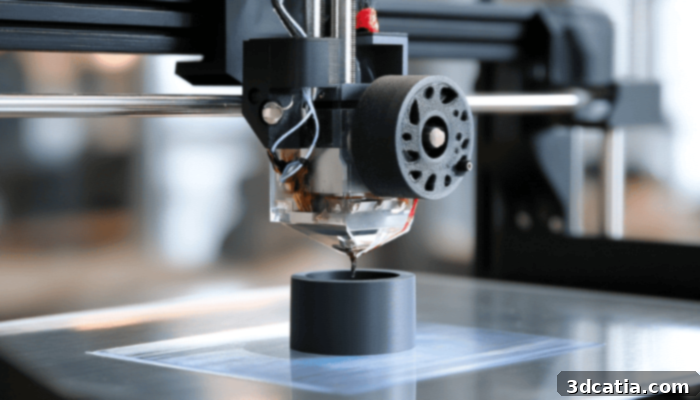
The true power of Lyten’s 3D graphene is fully realized when paired with advanced 3D printing technologies. Additive manufacturing allows engineers to create incredibly intricate geometries and complex internal structures that are impossible to achieve with traditional subtractive manufacturing methods. This design freedom enables the precise placement of material only where it is needed for structural integrity, leading to parts that are not only lighter but also inherently more efficient in their load-bearing capabilities. For instance, topology optimization, a design method often used with 3D printing, can be applied to generate designs that are mathematically optimized for minimum weight and maximum strength, perfectly aligning with motorsport’s stringent requirements for both durability and agility.
Furthermore, the rapid iteration cycle inherent in 3D printing allows for quick design-test-refine loops. Racing teams can swiftly experiment with new aerodynamic profiles, suspension components, cooling ducts, or engine parts, printing and testing multiple variations in a fraction of the time it would take with conventional manufacturing. This agility is invaluable in a sport where continuous development and adaptation are crucial for success, especially during a demanding racing season. The ability to respond to track-specific demands or quickly implement performance upgrades mid-season provides an immense competitive advantage. Lyten’s ability to leverage its unique 3D graphene material with these agile manufacturing processes provides an unmatched toolkit for performance engineers in the relentless pursuit of automotive excellence.
Beyond the Racetrack: A Vision for Sustainable Future Materials
While motorsport serves as an unparalleled testbed for extreme performance and rapid innovation, Lyten’s vision for 3D graphene extends far beyond the racetrack. The lessons learned and the technologies perfected in the demanding environment of competitive racing will undoubtedly find applications in a much broader range of industries. The push for ultra-lightweight, high-strength materials with a reduced environmental footprint is a universal challenge that resonates across various sectors. From aerospace where every gram counts, to consumer electronics requiring durable yet thin components, and from electric vehicles seeking extended range to infrastructure demanding robust and long-lasting materials, the potential for Lyten’s supermaterials to drive sustainable progress is immense.
The company’s commitment to reducing reliance on critical raw materials through its lithium-sulfur battery technology also underscores a broader dedication to environmental responsibility. By developing solutions that are not only high-performing but also resource-efficient and less dependent on ethically problematic supply chains, Lyten is contributing to a more sustainable future for manufacturing and energy consumption worldwide. Motorsport, often perceived as a gas-guzzling industry, is increasingly embracing electrification and sustainable practices, seeking to align with global environmental goals. Lyten is strategically positioned at the forefront of this green transformation through its innovative material science and additive manufacturing capabilities, demonstrating that peak performance and environmental stewardship can indeed go hand-in-hand.
To delve deeper into Lyten’s exciting plans and strategic initiatives, you can access their official press release HERE.
We’d love to hear your thoughts on Lyten’s ambitious plans and the future of 3D graphene in motorsport! Share your insights in a comment below or join the conversation on our LinkedIn and Facebook pages. Don’t miss out on the latest advancements in additive manufacturing—sign up for our free weekly Newsletter here to receive the freshest 3D printing news directly in your inbox. You can also explore all our insightful videos on our YouTube channel, offering visual demonstrations and interviews with industry leaders. For more comprehensive news and updates specifically on 3D printing within the automotive and transportation sector, be sure to visit our dedicated page HERE, where you’ll find a wealth of information on how additive manufacturing is shaping the future of mobility.