
Revolutionizing Commercial Tire Retreading: Boosting Efficiency and Sustainability with 3D Printing and Additive Manufacturing
The commercial transportation sector, a backbone of global economies, relies heavily on the durability and performance of its vehicle fleets. A critical component of this maintenance strategy is tire retreading, a process that extends the life of worn tires by replacing the tread. While essential for sustainability and cost-efficiency, traditional tire retreading methods have inherent inefficiencies and environmental drawbacks. Recognizing this challenge, the prestigious REMADE Institute has awarded a substantial $1.5 million project to a pioneering team from Virginia Tech. Their mission: to dramatically enhance tire retreading through the innovative application of additive manufacturing, specifically 3D printing and 3D scanning technologies. This initiative promises to not only improve operational safety and efficiency but also to significantly reduce waste and carbon emissions within the crucial logistics industry.
In the United States, the vitality of the shipping industry is inextricably linked to its vast network of commercial vehicles, prominently featuring tractor-trailers, often referred to as semi-trailer trucks. The sheer scale is staggering: the Bureau of Transportation reports approximately 13 million trucks operating across the U.S., including 2.9 million tractor-trailers. These vehicles are indispensable, transporting nearly 70% of all freight nationwide, solidifying trucking as one of the country’s most significant and impactful industries. Consequently, the demand for tire maintenance and replacement is immense. According to a press release from Virginia Tech, an astounding 14.5 million tires undergo retreading annually in the U.S. While retreading offers a more sustainable alternative to discarding tires entirely, the conventional process still generates considerable waste—an estimated 9 pounds of excess material per tire. Over millions of tires, these inefficiencies and material waste accumulate rapidly, posing significant environmental and economic concerns. This underscores the urgency and importance of research into advanced solutions, which is precisely why Chris Williams, the L.S. Randolph Professor in Mechanical Engineering at Virginia Tech, along with the REMADE Institute, is championing the quest for enhanced efficiencies in tire retreading, particularly through the transformative power of 3D printing technology.
The Environmental and Economic Imperative for Smarter Tire Retreading
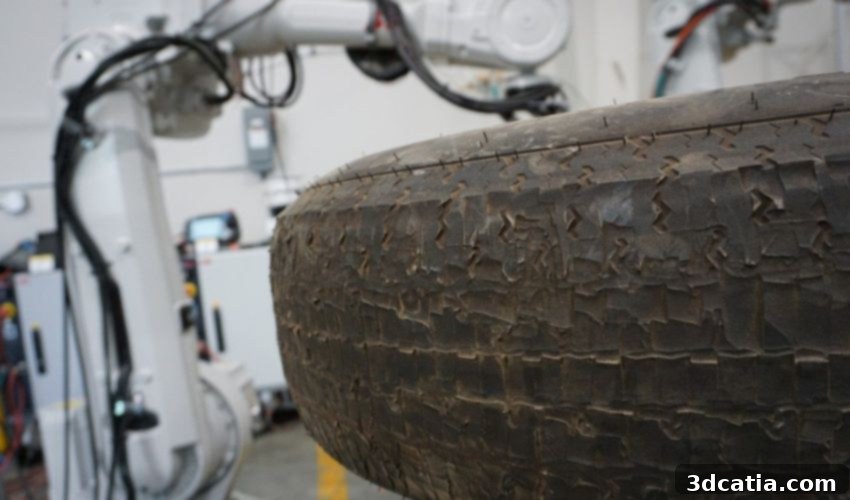
The current state of tire retreading, while beneficial, leaves much room for improvement. The traditional process involves physically buffing away the worn surface of a tire before a new layer of rubber is adhered. This buffing creates a significant amount of rubber dust and waste material, contributing to landfills and consuming energy. Moreover, the imprecision inherent in manual or semi-automated processes can lead to suboptimal adhesion or uneven thickness, potentially impacting tire longevity and safety. With millions of tires processed each year, the cumulative impact of 9 pounds of waste per tire is truly substantial, amounting to hundreds of millions of pounds of rubber waste annually. Beyond the waste, the energy consumption for heating and curing, coupled with the emissions from material production and processing, adds to the overall environmental footprint of the transportation sector. Addressing these challenges is not just an environmental imperative but also an economic one, as improved efficiency translates directly into cost savings for trucking companies and a more robust, sustainable supply chain.
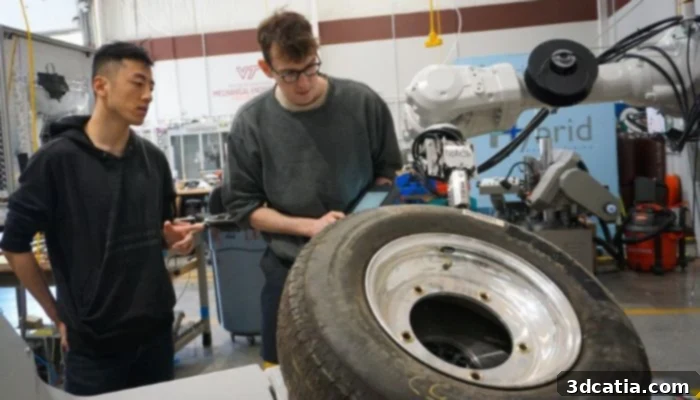
Graduate students Yigun Fu and Tadek Kosmal monitoring the 3D printing process
A Transdisciplinary Approach: 3D Scanning, 3D Printing, and Industrial Robotics
The Virginia Tech team’s innovative strategy harnesses a powerful combination of cutting-edge technologies: 3D scanning, advanced 3D printing, and sophisticated industrial robotics. This synergistic approach aims to fundamentally reimagine the entire tire retreading workflow. According to insights from Virginia Tech, the project’s success hinges on the seamless integration of these diverse technologies with pioneering material science. Chris Williams emphasizes this transdisciplinary necessity, stating, “The only way to address this project’s grand challenge of reimagining the tire retreading process is through a team-based transdisciplinary approach focused in simultaneous considerations of materials, the additive manufacturing process, and the final tires’ performance.” This holistic perspective ensures that every aspect, from the selection of raw materials to the functionality of the final retreaded tire, is optimized for maximum efficiency, safety, and environmental benefit.
How Additive Manufacturing Transforms Tire Retreading
The technical implementation involves several key advancements. Firstly, 3D scanning technology will be employed to precisely map the worn surface of each tire. This detailed digital blueprint allows for an exact understanding of the tire’s geometry and wear patterns, ensuring that the subsequent retreading process is perfectly tailored to the individual tire’s needs. This eliminates guesswork and minimizes the amount of material that needs to be removed or applied, thereby reducing waste from the outset.
Following the precise scanning, the core innovation lies in the 3D printing method. The team is developing a novel extrusion technique that utilizes specialized attachments on a robotic arm. This setup allows for highly accurate and localized deposition of new tread material directly onto the worn tire. This direct-write approach is reminiscent of Directed Energy Deposition (DED) for metals, but adapted here for polymers. The flexibility and precision of industrial robotic arms are crucial, enabling the printer to follow the complex contours of the tire and apply material exactly where it’s needed, with optimal thickness and density. This not only ensures superior material utilization but also allows for custom tread patterns or repairs specific to the tire’s condition, potentially enhancing its performance characteristics.
Crucially, the success of this additive manufacturing process hinges on the materials used. The Virginia Tech team is collaborating with Arizona State’s Biodesign Center for Sustainable Macromolecular Material and Manufacturing to synthesize high-performance 3D printing elastomers. These advanced polymer materials are designed to meet, or even exceed, the stringent safety requirements of commercial vehicle tires, ensuring durability, grip, and longevity comparable to, or better than, conventionally retreaded tires. The development of these specialized elastomers is a significant scientific undertaking, providing the necessary mechanical properties and adhesion characteristics for a robust and safe retreaded product.
Projected Impact: A Sustainable Future for Commercial Logistics
The potential benefits of this revolutionary retreading technology are far-reaching. By introducing precision manufacturing to a traditionally resource-intensive process, the project stands to deliver substantial environmental and economic advantages. Reduced material waste during the buffing and application stages means fewer raw materials are consumed and less rubber ends up in landfills. The energy efficiency of localized additive manufacturing compared to bulk processes also contributes to a lower carbon footprint. Furthermore, extending the lifespan of tires through high-quality retreading means fewer new tires need to be manufactured, conserving resources and reducing the energy demands associated with virgin tire production.
The economic implications for the commercial vehicle industry are equally compelling. Longer-lasting, more reliably retreaded tires translate directly into lower operational costs for trucking companies, reducing the frequency of tire purchases and maintenance. This improved efficiency can enhance the competitiveness and sustainability of the entire supply chain. Chris Williams articulates the project’s ambitious goals: “We are really excited to undertake this challenging project, which integrates advances in polymer science and manufacturing including 3D scanning, 3D printing, and industrial robotics. If all goes well, the resulting retreading technology could result in annual reductions of about 90 metric kilotons of tire waste and 800 metric kilotons of CO2 [carbon dioxide] emissions across the retreading industry.” These projected reductions represent a significant stride towards a more circular economy within the transportation sector, highlighting the profound impact that innovative manufacturing technologies can have on global sustainability efforts. You can find out more about the project on Virginia Tech’s website HERE.
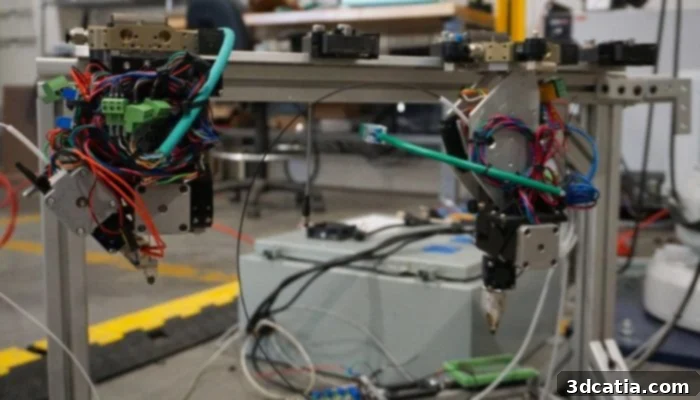
Different attachments for the robotic arm which is used to print polymer materials directly onto worn tires
The initiative by Virginia Tech and the REMADE Institute represents a forward-thinking application of additive manufacturing that tackles a tangible industry problem with significant environmental and economic benefits. By integrating sophisticated 3D scanning, precise robotic 3D printing, and advanced material science, the project aims to set new standards for tire retreading, paving the way for a more efficient, sustainable, and safer future for commercial transportation.
What are your thoughts on using 3D printing to revolutionize tire retreading? We invite you to share your perspectives in the comments section below or join the conversation on our LinkedIn,Facebook, andTwitter pages! For the latest advancements in additive manufacturing delivered directly to your inbox, don’t forget to sign up for our free weekly Newsletter here. You can also explore all our insightful videos on our YouTube channel.