
Advancing Medical Frontiers: How 3DBiotech Leverages 3D Bioprinting for Regenerative Medicine and Personalized Healthcare
The landscape of modern medicine has been irrevocably transformed by the emergence of 3D bioprinting, a revolutionary technology that provides advanced treatment solutions and significantly enhances the efficacy of surgical interventions. We have previously explored the profound advantages of additive manufacturing in the realm of personalized medicine, examining various 3D printing technologies and their diverse applications across different medical fields. At the forefront of this innovation is 3DBiotech, a pioneering company based in Córdoba, Spain, dedicated to the rigorous research and development of cutting-edge solutions for multiple medical sectors. Through the strategic application of additive manufacturing technologies, 3DBiotech has achieved remarkable surgical outcomes by creating patient-specific anatomical models, thereby enabling highly precise and successful surgical planning. Our curiosity led us to investigate how 3DBiotech harnesses the power of 3D printing to develop its innovative solutions, particularly within the critical domain of regenerative medicine. To gain deeper insight, we had the privilege of interviewing Eduardo Espinosa, a leading expert and integral part of their team.
3DN: Could you please introduce yourself and share your journey and relationship with 3D printing technologies?
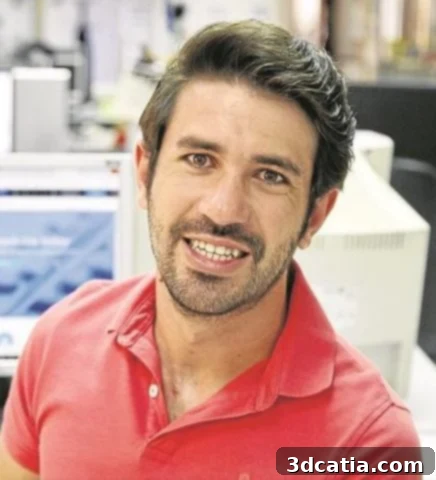
My name is Eduardo Espinosa, and I proudly lead the R+D+i (Research, Development, and Innovation) Department at 3DBiotech. My initial exposure to 3D printing, on a personal level, occurred during a research stay at a technological center called RISE PFI AS in Trondheim, Norway, which was part of my doctoral studies. During that period, my work extensively involved hydrogels, specifically focusing on creating intricate structures that held immense potential for applications in 3D bioprinting and the 3D printing of medical solutions, particularly for advanced wound treatment. This foundational experience sparked my passion for the field. Upon joining 3DBiotech, I expanded my expertise to work with a much broader spectrum of 3D printing technologies and diverse materials. Our primary focus here at 3DBiotech has been on developing bespoke solutions tailored for the dental and hospital sectors, leveraging the unparalleled capabilities of additive manufacturing.
3DN: Can you provide us with more details about 3DBiotech and its core mission?
Certainly. 3DBiotech is a dynamic, technology-driven company whose fundamental purpose revolves around the development of comprehensive digital CAD/CAM solutions specifically designed for the dental and hospital sectors. The genesis of our project stems from the rapid and increasing evolution of these types of solutions within the hospital sector, coupled with the significant market niche that has emerged and grown substantially in recent years. Prior to venturing deeply into the hospital space, 3DBiotech already possessed extensive experience and a proven track record in successfully implementing these advanced digital solutions within the dental sector. The dental field has historically been a pioneer in the clinical adaptation of such technologies into its daily practices. Recognizing this accumulated know-how and successful developmental foundation, our strategic goal was to extrapolate this invaluable experience and technological expertise to the broader hospital and biomedical sectors, where the need for personalized and precise solutions is equally, if not more, critical.
3DN: 3DBiotech is actively involved in projects related to regenerative medicine. Could you elaborate on these initiatives?
Within the vast spectrum of possibilities that bioprinting offers in the exciting field of regenerative medicine, our initial strategic approach is concentrated on the dental sector. This is a deliberate choice, as the dental sector is where we hold a leadership position and possess a robust foundation that allows us to effectively introduce and integrate novel technologies and advanced procedures. This focused approach specifically involves applying regenerative medicine principles to the critical areas of bone tissue and gingival mucosa regeneration. These two areas represent significant challenges in modern dentistry. For instance, low bone density often complicates or even prevents the successful placement of dental implants, impacting numerous patients. Concurrently, the retraction or loss of gum tissue, frequently caused by various pathologies, can lead to severe aesthetic concerns and significant health problems for individuals. By addressing these issues with bioprinting-based regenerative solutions, we aim to dramatically improve patient outcomes, restore natural function, and enhance quality of life, solidifying our commitment to advancing personalized dental care.
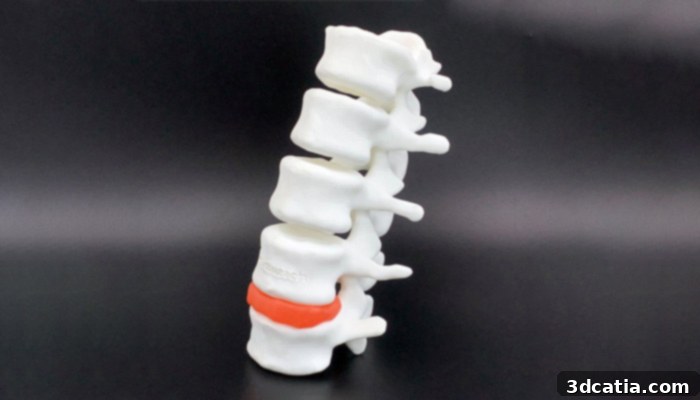
Credits: 3DBiotech
3DN: You currently offer your 3D BIOLOGIC MOD-101 bioprinter. Could you provide more details about its technologies and the biomaterials it supports?
Our 3D BIOLOGIC MOD-101 bioprinter is nearing the final stages of development, with us meticulously refining the last details and functionalities of the prototype before its commercial launch. This device is engineered to incorporate many of the sophisticated features typically found in high-tech, top-tier models within this advanced field. These include a meticulously controlled clean chamber environment to prevent contamination, an auto-sterilization capability ensuring aseptic conditions, and pneumatic injection systems for precise material deposition. What sets our bioprinter apart, however, is its commitment to accessibility: we are offering these cutting-edge capabilities at a competitive price point and in a user-friendly format. This strategic approach is designed to facilitate its rapid adoption by a broad range of stakeholders and researchers keenly interested in leveraging this powerful technology for their work. Regarding biological materials, our bioprinter boasts extensive versatility, covering the entire spectrum of materials relevant to bioprinting applications. This includes both traditional thermoplastic materials such as PLA (Polylactic Acid), PLC (Poly(L-lactide-co-caprolactone)), and high-performance polymers like PEEK (Polyether Ether Ketone), which are valued for their mechanical properties and biocompatibility. Furthermore, it excels with various biomaterials available in hydrogel formats, including natural components like collagen and chitosan, as well as nanocellulose and alginate. This comprehensive material compatibility ensures that we can effectively supply our users with all the necessary resources and options to meet the diverse and evolving requirements of their groundbreaking research and developmental projects.
3DN: In your expert opinion, what are the most significant benefits of tissue bioprinting for personalized medicine?
The primary and perhaps most transformative advantage that tissue bioprinting brings to personalized medicine is its ability to mitigate or entirely prevent the risk of rejection once a bioprinted biological structure has been implanted into a patient. This is because the structures can often be created using the patient’s own cells, leading to the body recognizing the implant as “self” rather than a foreign object, thereby circumventing adverse immunological responses that are common with traditional transplants. Beyond this crucial benefit, bioprinting empowers us with unparalleled design capabilities through CAD (Computer-Aided Design) software. This allows us to meticulously design and construct biological structures that are astonishingly similar, in both form and function, to those created naturally by the human body. The ability to build these complex biological tissues and organs *ex vivo* (outside the human body) offers a controlled environment for their development. Furthermore, this technology facilitates the achievement of a highly homogeneous distribution and precise alignment of cells within the newly created tissue, factors that are absolutely vital for the successful integration, functionality, and long-term viability of the engineered tissue once implanted. This level of customization and control is simply unattainable through conventional medical approaches.
3DN: How do you envision the future of additive manufacturing within the medical sector?
I believe that additive manufacturing already holds a substantial and growing presence within the medical sector here in Spain, and its future is poised for even greater expansion, particularly with the anticipated widespread implementation of bioprinting technologies in our hospitals and clinics. However, for this vision to fully materialize, we still have several stages to navigate, including regulatory approvals, infrastructure development, and comprehensive training. At 3DBiotech, we are keenly aware that our long-term vision must be forward-thinking, guiding us towards an innovative future, yet without losing sight of our present realities and immediate opportunities. This dual focus is crucial. That’s precisely why we are concurrently developing two projects with immediate, practical applications that are already making a tangible impact on the use of additive manufacturing within the medical and hospital sectors across Spain.
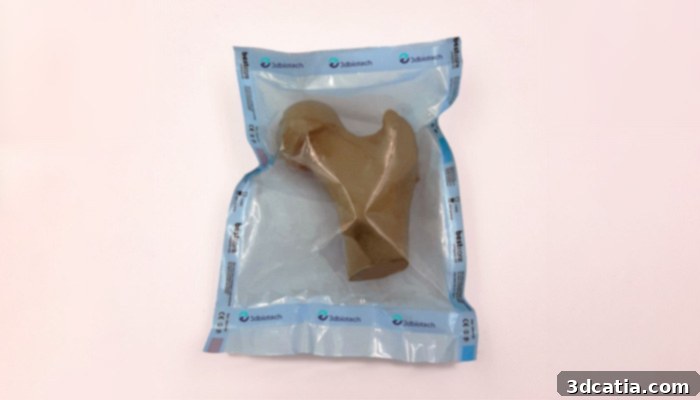
A sterilizable 3D printed biomodel | Credits: 3DBiotech
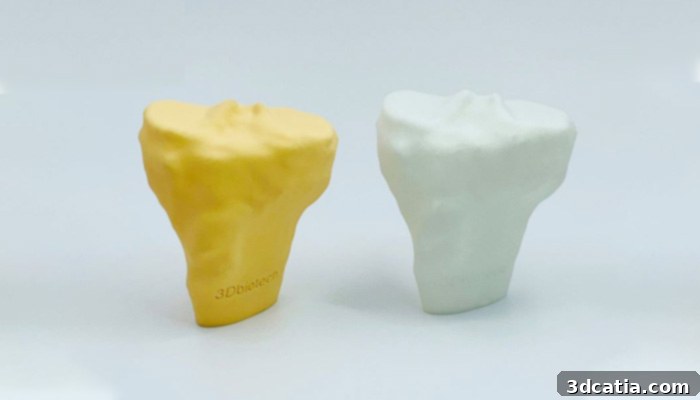
One of these groundbreaking initiatives is our specialized line of biomodels. These highly accurate, 3D-printed anatomical models are indispensable tools for diagnosis, pre-surgical planning, and advanced surgical simulation. This service is currently fully operational and is facilitated through an intuitive online platform that ensures seamless and effective communication between medical professionals and our expert staff. This streamlined methodology significantly enhances the efficiency of the product acquisition process, allowing medical teams to specify and receive biomodels with precise characteristics desired for each patient’s unique case. Furthermore, it dramatically accelerates procedural timelines and delivery schedules. With this innovative product, we aim to provide tailored solutions across all major medical specialties that rely on biomodels for optimal functioning. This includes, but is not limited to, traumatology, maxillofacial surgery, cardiology, respiratory medicine, neurosurgery, urology, and digestive surgery, offering an unprecedented level of precision and preparation for complex medical procedures.
The second significant project is Inmov3D, a revolutionary system designed to develop personalized immobilization orthoses for patients. This process begins with a highly accurate image acquisition system, typically involving a 3D scan of the limb requiring immobilization. The acquired data is then processed using our proprietary algorithm, which intelligently generates a completely customized orthosis, perfectly adjusted to the unique anatomy of the patient. The final step involves the precise 3D printing of this bespoke orthosis, followed by its placement on the patient. This solution provides orthopaedic specialists with an exceptionally easy and highly effective methodology for implementing this type of personalized product. It offers numerous benefits over traditional casts, including enhanced patient comfort, improved hygiene, a more precise and secure fit, and potentially faster recovery times due to better ventilation and reduced muscle atrophy. Currently, the Inmov3D tool is primarily designed for immobilizing various injuries sustained in upper limbs, specifically the arms. However, we are actively researching and adapting our solution for application to other body parts, such as legs, the trunk, the neck, and other areas, aiming for a comprehensive and versatile range of custom immobilization solutions. This innovative approach not only facilitates the expansion of orthopaedic practices but also enables them to offer new, highly personalized services to their patients.
Credits: 3DBiotech
3DN: Do you have any final message for our readers?
I would simply like to extend my sincere gratitude to all our readers for their invaluable interest in this transformative technology. I warmly invite them to join companies like 3DBiotech in our mission to integrate this technology into our daily lives, particularly concerning health-related issues. We are collectively witnessing and participating in the unprecedented boom of additive manufacturing and bioprinting—a technological revolution that is destined to profoundly change the medical sector in the coming years. At 3DBiotech, we are committed to being there every step of the way, accompanying you on this wonderful and exciting journey towards a healthier, more personalized future in medicine. For those eager to delve deeper and learn more about our ongoing innovations and projects, additional information about 3DBiotech can be found HERE.
What are your thoughts on the groundbreaking work being done by 3DBiotech? We would love to hear from you! Please share your insights and comments below, or connect with us on our Facebook and Twitter pages. And don’t forget to subscribe to our free weekly Newsletter to receive all the latest news and updates in the world of 3D printing directly in your inbox!