
3D Printing for Wildlife Conservation: How Decoy Kittiwakes Are Helping Seabirds Thrive at Ørsted’s Hornsea Wind Farm
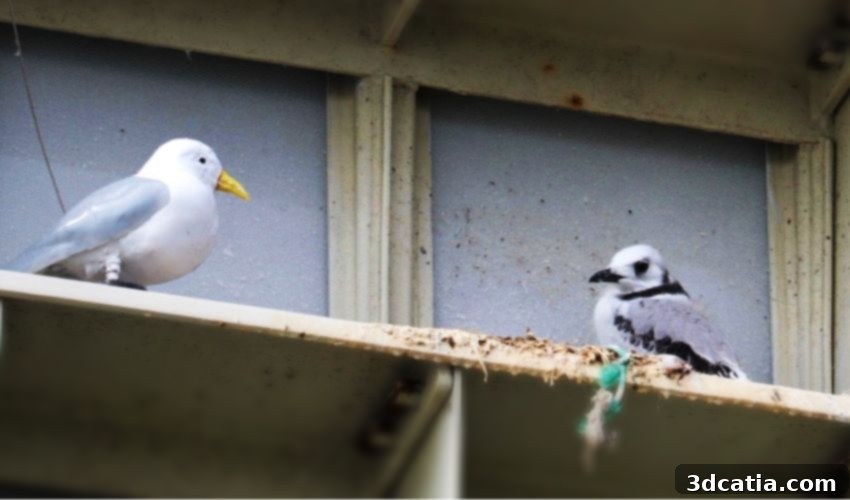
In a remarkable blend of renewable energy development and cutting-edge wildlife conservation, a tiny, fuzzy kittiwake chick recently hatched in an artificial nesting structure off the picturesque coast of Suffolk, England. Its immediate neighbors were not other live birds, but rather expertly crafted 3D printed kittiwake decoys. This pioneering event signals a significant step forward in how large-scale infrastructure projects can coexist with delicate ecosystems, leveraging advanced manufacturing techniques like 3D printing to protect vulnerable species.
Since 2020, Ørsted, a global leader in sustainable energy, has embarked on the ambitious Hornsea Project. This monumental initiative involves the construction of four offshore wind farms in the United Kingdom’s North Sea. These wind farms are not just large; they are record-breaking in their sheer scale and distance from the coast, boasting an extraordinary capacity to generate clean, sustainable energy. Hornsea 3, the third phase of this project, is set to become the single largest commercial offshore wind farm in the world. With an estimated completion target of 2027, Hornsea 3 is projected to achieve a generating capacity of 2.9 GW, sufficient to power more than 3 million UK homes. This immense undertaking underscores the nation’s commitment to tackling climate change and transitioning to a greener energy future.
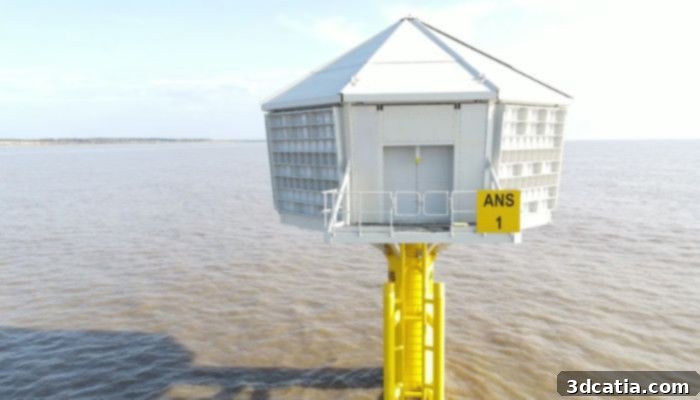
One of the artificial nesting structures (photo credit: Ørsted)
However, the development of the Hornsea wind farms occurs along a coastline that is also a vital habitat for black-legged kittiwakes, a vulnerable seabird species currently facing a worrying decline in population. Ornithologists and researchers attribute this decline primarily to the multifaceted impacts of climate change, which include shifts in oceanic currents and temperatures, leading to a shortage of their primary prey sources. To proactively mitigate any potential additional impact that the construction and operation of the Hornsea wind farm might have on these already struggling bird populations, Ørsted was mandated to establish three state-of-the-art offshore artificial nesting structures. These structures are specifically designed to provide a safe and attractive environment to support the endangered kittiwakes. Though directly linked to the Hornsea 3 project, these nesting platforms are strategically located far from the actual wind farm site to minimize disturbance. Each meticulously engineered structure is capable of accommodating approximately 500 breeding pairs of kittiwakes. To further encourage the real birds to investigate and ultimately adopt these new homes, researchers innovatively placed lifelike decoy kittiwakes on two of the three nesting structures.
Why 3D Print Decoy Birds for Seabird Conservation?
The concept of using bird decoys to attract real birds is far from new, with practices dating back centuries, particularly in activities like hunting. Traditionally, these avian models were meticulously carved from wood, a time-consuming and labor-intensive process. In more recent times, many decoys are produced using molds or other conventional manufacturing methods. However, the advent of 3D printing technology offers a revolutionary leap forward in precision, customization, and efficiency, making it an ideal choice for sensitive conservation efforts.
For this specific project, 3DPrintingCornwall, a specialist in additive manufacturing, employed cutting-edge techniques to create the kittiwake decoys. Their process involved carefully scanning taxidermy kittiwakes to obtain incredibly accurate three-dimensional metrics. This meticulous approach ensured that the positioning, anatomical proportions, and surface texture of the decoys were exact replicas of real birds. The goal was to create decoys so lifelike that they would effectively attract real kittiwakes, signaling a safe and established colony. A significant environmental benefit of this project is that the decoys were fabricated using recycled plastic, further minimizing the ecological footprint of the intervention. While the exact type of 3D printing technology utilized for the kittiwake decoys was not explicitly specified, 3DPrintingCornwall is known for its expertise across various additive manufacturing methods, including Stereolithography (SLA), Selective Laser Sintering (SLS), and Fused Deposition Modeling (FDM). Each of these technologies offers distinct advantages in terms of material versatility, detail resolution, and production speed, making them suitable for diverse applications, including intricate wildlife models. SLA, known for its smooth surface finishes, SLS for its robust parts, and FDM for its cost-effectiveness and material range, all contribute to the broad capabilities of modern 3D printing in conservation.
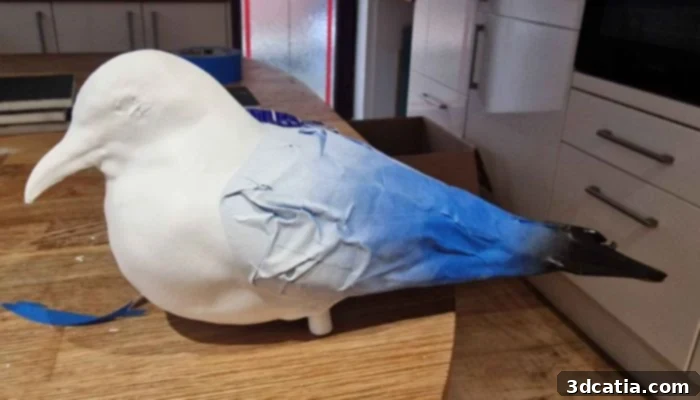
A decoy being made by 3DPrintingCornwall (photo credit: 3DPrintingCornwall)
Michael Hunt, a 3D printing consultant at 3DPrintingCornwall, underscored the broader implications of this project, stating, “This application demonstrates not just the adaptability of 3D printing technology, but also its immense potential for wildlife conservation initiatives globally.” For Hunt, the truly exciting development was the hatching of the first kittiwake chick at the site in late August, which he proudly described as “an unequivocal indication of their success and a testament to the effectiveness of this innovative approach.” This initial success provides crucial validation for the methodology and strengthens the case for integrating advanced manufacturing into ecological preservation strategies.
The construction of these essential artificial nesting structures was finalized in the spring of 2023. Consequently, the recent breeding season marked the very first time these newly established habitats were available for kittiwakes. The ornithologists and project team were pleasantly surprised by the rapid success. According to an official press release from Ørsted, “The team was surprised but incredibly pleased that a chick has already been born, especially given that it can often take several years for a new colony to properly establish itself. They are profoundly hopeful that this one chick marks the pivotal first baby steps towards a truly successful and thriving project for the kittiwake population.” This early sign of colonization is a powerful indicator that the combination of carefully designed structures and realistic 3D printed decoys is highly effective in attracting and encouraging breeding among these vulnerable seabirds.
Expert ornithologists from GoBe, a specialist environmental consultancy, will continue their diligent efforts to monitor the birds’ activity at these artificial nesting sites. The structures themselves are intelligently designed with alternating rows, which not only provide ample nesting space but also offer excellent visibility for monitoring purposes. This allows researchers to observe and record the birds’ behavior, breeding patterns, and overall health without causing undue disturbance. The hope is that in the coming years, an increasing number of kittiwakes will recognize these safe havens and choose the artificial nesting structures as their permanent home, leading to a significant recovery in their local population. This ongoing monitoring is crucial for assessing the long-term efficacy of the intervention and for informing future conservation strategies. To delve deeper into Ørsted’s Hornsea Project and their dedicated mission to protect the kittiwakes, the official press release offers comprehensive details and can be accessed here.
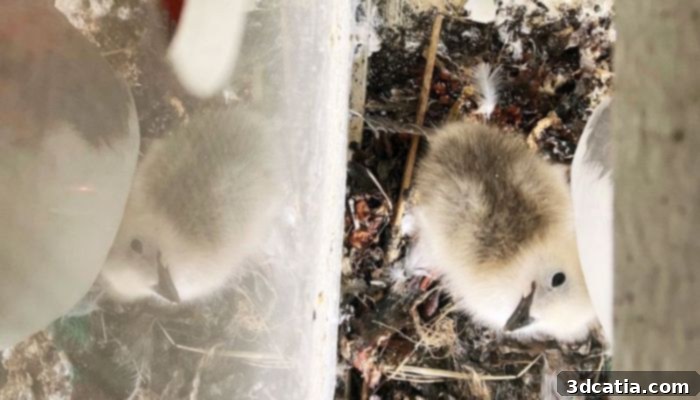
The first chick born at Hornsea 3’s artificial nesting site (photo credit: Ørsted)
The success of Ørsted’s initiative in deploying 3D printed kittiwakes highlights a powerful new avenue for wildlife conservation, demonstrating how innovative technology can play a vital role in protecting biodiversity amidst essential industrial development. What are your thoughts on Ørsted’s forward-thinking implementation of 3D printed decoys for kittiwake conservation? Do you have ideas on other wildlife conservation initiatives or vulnerable species that could significantly benefit from the precision, customization, and material advantages offered by 3D printing technology? We invite you to share your insights and engage in this important discussion by leaving a comment below or by connecting with us on our LinkedIn, Facebook, and Twitter pages! Furthermore, don’t miss out on the latest advancements and news in the additive manufacturing world; make sure to sign up for our free weekly Newsletter here, delivering the freshest 3D printing news straight to your inbox! You can also explore all our insightful videos and content on our dedicated YouTube channel. Join the conversation and help shape the future of sustainable development and wildlife protection through technology.