
Unveiling ChatGPT’s Perspective: An In-Depth Interview on the Evolving World of 3D Printing and Additive Manufacturing
In a truly unique and forward-thinking exploration, we embarked on an extraordinary interview with artificial intelligence (AI) itself. Our objective was to rigorously test the capabilities of the widely recognized ChatGPT, a sophisticated chatbot system developed by OpenAI. Based on an advanced artificial intelligence model utilizing cutting-edge machine learning technology, ChatGPT is designed to understand, process, and generate human-like text. We approached this experiment as we would any interview with a seasoned 3D printing expert, posing questions pertinent to the industry and evaluating the AI’s responses. When prompted to introduce itself, ChatGPT responded with a clear mission statement: “I’m here to help you solve your problems. I will be glad to help you in any way I can.” This highlights its core function as an assistive tool, capable of not only answering a diverse array of questions but also interpreting complex queries, composing original text, and even generating images from textual input. Our primary curiosity, however, revolved around one central question: what does ChatGPT truly know about the dynamic and rapidly advancing field of 3D printing? To uncover this, we posed the same types of questions we routinely ask industry professionals in our weekly interviews. It is crucial to note that our questions explicitly referenced the year 2021, as the bot’s knowledge base is limited to information available up to that specific year. The following sections detail our findings: what were its answers, and how reliable and insightful were they? Join us as we delve into the AI’s perspective and assess its understanding of additive manufacturing.
3DN: Hello, ChatGPT! Do You Know 3Dnatives?
“Yes, 3Dnatives is an online platform that offers information, news and guides on everything related to 3D printing innovation and technologies. 3Dnatives offers a wide range of content on 3D printers, filaments, materials, software, innovations, designs, projects, and more. The platform is based on an editorial model that provides detailed information on everything related to 3D printing. It is aimed at professionals and key players in the industry. It exists in eight languages: English, French, German, Spanish, Italian, Chinese, Japanese and Korean.”
- ChatGPT’s initial assessment of 3Dnatives was largely accurate in its description of our mission and content focus. The platform indeed serves as a comprehensive resource for news, guides, and information on 3D printing innovation, targeting professionals and key industry stakeholders. However, the AI’s information regarding the number of languages was slightly outdated. As of our current operations, 3Dnatives is available in five languages: English, French, German, Spanish, and Italian. While we aspire to expand our global reach, the mention of Chinese, Japanese, and Korean reflects either aspirational data or potentially past efforts that did not materialize into full-fledged platforms. This initial response immediately highlighted a critical aspect of interacting with AI systems like ChatGPT: while the structure and articulation of its answers are often impressive, the factual accuracy, particularly concerning dynamic information, requires careful verification. This sets a precedent for the entire interview, emphasizing the need for human validation even when confronted with seemingly authoritative AI-generated text. It underscores that even highly advanced AI models, with their vast data processing capabilities, can sometimes present information that is “close, but not quite” accurate, necessitating a discerning human eye to ensure fidelity to current realities.
3DN: What Were the Main Applications of 3D Printing in 2021?
“3D printing was used in a wide range of applications in 2021. First, prototype and model production: 3D printing has been used to rapidly create product prototypes and architectural models, allowing engineers and designers to test and improve their designs before mass production. Second, for custom manufacturing: 3D printing enables the production of custom objects on demand, without the need to create molds or expensive tooling. Third, for spare parts manufacturing: 3D printing can be used to produce spare parts for machinery and equipment, allowing companies to keep equipment running without having to wait for spare parts to be delivered. Fourth, Medicine: 3D printing has been used to create prosthetics, implants, molds for the production of custom orthodontic appliances, and anatomical models for medical training. Finally, architecture: 3D printing has been used to create models of buildings and structures, enabling architects to visualize and test their designs before construction.”
- ChatGPT’s response concerning the main applications of 3D printing in 2021 was factually correct but notably constrained in its scope. While prototyping, custom manufacturing, and spare parts production certainly represent foundational and ongoing uses of additive manufacturing, the AI’s list felt somewhat rudimentary and did not fully capture the sophisticated advancements seen in 2021. Our report on 3D printing trends in 2021 highlighted significant growth in sectors such as construction 3D printing, which moves far beyond just architectural models to fabricating actual structural components. Furthermore, while medical applications, particularly in dental, are undeniably crucial and rapidly expanding, the AI’s overall perspective still seemed to categorize 3D printing predominantly as a tool for initial design validation or niche customization. This overlooks its increasing integration into mainstream industrial production for end-use parts. Modern additive manufacturing is a technology extensively employed in highly specialized and innovative industries, where it manufactures complex geometries and optimized components that would be impossible or impractical with traditional methods. Consider the vital applications in the aerospace industry, where 3D printing is used for producing lightweight, high-performance parts for rockets, engines, and satellites. Similarly, the automotive sector leverages additive manufacturing for creating intricate, optimized end-use components for cars, motorcycles, and cutting-edge vehicles, moving well beyond simple prototyping into functional, performance-critical parts. ChatGPT’s answer, while accurate on the surface, reflected a view that was somewhat dated or simply superficial, missing the deeper industrial integration and advanced applications that defined 3D printing’s trajectory by 2021.
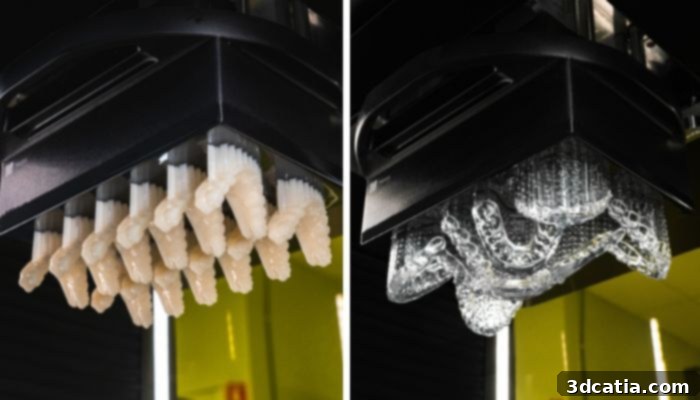
3D printing applications in the dental sector are numerous and increasingly in demand. (Photo credit: Carbon)
3DN: What Are the Cheapest 3D Printers on the Market?
“There are several inexpensive 3D printers available on the market, some of which are: Ender-3 by Creality: this 3D printer is very popular among beginners and is available for less than $200; Anet A8, a 3D printer that is also very popular among beginners and is available for less than $150; Monoprice Select Mini V2, a compact and affordable 3D printer sold for less than $200; FlashForge Finder, a 3D printer that is easy to use and sells for less than $300; and the Prusa i3 3D printer, one of the most affordable of the popular Prusa Research brand, selling for less than $500.”
ChatGPT also adds, “Keep in mind that these inexpensive 3D printers may have lower print quality than more expensive 3D printers, and they may be more difficult to set up and use. In addition, there are also 3D printer self-build kits available for less than $150”.
- In addressing the question of affordable 3D printers, the artificial intelligence demonstrated its ability to accurately identify several low-cost 3D printer models from well-known manufacturers, which were indeed popular on the market around 2021. The listed printers – Creality Ender-3, Anet A8, Monoprice Select Mini V2, FlashForge Finder, and Prusa i3 – are generally recognized as entry-level or budget-friendly options. However, the selection criteria remain somewhat ambiguous. While these are all legitimate choices, the market for 3D printers under $500 is incredibly vast and dynamic. It’s difficult to ascertain why these specific models were chosen over many other equally, if not more, popular and well-regarded alternatives that existed at the time. Does the AI prioritize sales volume, review scores, or perhaps a geographic market bias (e.g., the U.S. market)? This highlights a recurring challenge with AI-generated information: while often correct, the underlying reasoning or comprehensive scope can be lacking. Nevertheless, we commend ChatGPT for including a crucial caveat regarding the potential trade-offs of inexpensive printers, such as lower print quality and increased setup complexity. Its mention of self-build kits for even lower prices also adds valuable context for those seeking the absolute cheapest entry into 3D printing. This nuanced advice demonstrates an understanding of user expectations and challenges within the budget segment, adding a layer of practical utility to an otherwise straightforward list.
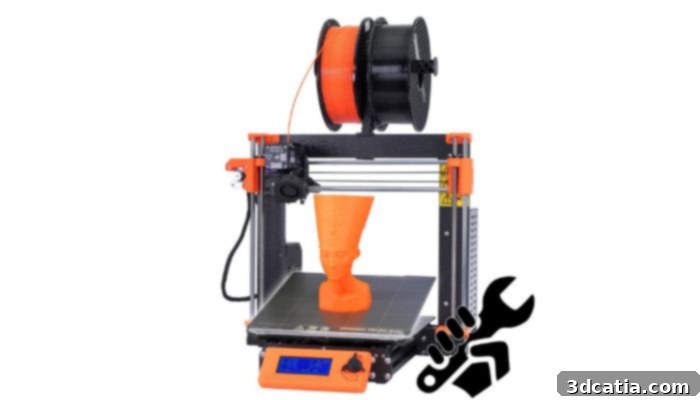
The price of the Original Prusa i3 MK3S+ Kit ranges from $500 to $800. (Credits: Prusa3D)
3DN: Which Are The Best-Known 3D Printing Companies?
“1. Stratasys: is one of the world’s leading 3D printing companies, with a wide range of industrial and desktop 3D printers.
2. Formlabs: is a professional 3D printing company offering both 3D printers and high-quality materials.
3. Ultimaker: is a desktop 3D printing company that offers high-quality 3D printers at affordable prices.
4. MakerBot: is one of the leading 3D printing companies, offering high-quality desktop 3D printers and a wide range of printing materials.
5. 3D Systems: is a 3D printing company with a wide range of products, including industrial 3D printers, desktops, and a wide range of printing materials.”
- ChatGPT provided a list of five prominent 3D printing companies: Stratasys, Formlabs, Ultimaker, MakerBot, and 3D Systems. While these companies are indeed major players in the additive manufacturing industry, this response vividly illustrates the critical limitation of the AI’s 2021 data cutoff. A significant market event that occurred in 2022 was the merger of Ultimaker and MakerBot, two of the companies listed, to form a new entity: UltiMaker. Since May 2022, these two distinct brands have operated as a single, combined force in the desktop 3D printing segment. This crucial development, naturally, falls outside ChatGPT’s knowledge base, rendering its answer partially obsolete. Furthermore, similar to its response on inexpensive printers, the criteria for “best-known” remain undefined. Is it based on total sales, number of units shipped, market capitalization, brand recognition, or technological innovation? The omission of other significant global players, particularly those dominant in metal additive manufacturing or specific industrial verticals, suggests a potential bias. A plausible hypothesis is that the data predominantly concerns the U.S. market, where many of these listed companies have strong brand presence and established market shares. This further underscores the necessity of contextualizing AI-generated information, especially in fast-evolving technological markets where mergers, acquisitions, and new market entrants frequently reshape the competitive landscape.
3DN: Which Additive Manufacturing Technology Is Best Suited for Creating Aerospace Rockets?
“The additive manufacturing technology most suitable for creating aerospace rockets is Fusion Deposition Modeling (FDM). This 3D printing technology uses heated and melted plastic or nylon filaments to rapidly create complex three-dimensional shapes. FDM is ideal for prototypes and applications where strength and durability are a priority. In addition, FDM technology allows larger parts to be printed than many other 3D printing technologies, which is critical when working with aerospace parts.”
- Here, our attempt to challenge the AI with a more specific, industry-focused question revealed a clear inaccuracy in ChatGPT’s understanding. Its assertion that Fusion Deposition Modeling (FDM) is the “most suitable” additive manufacturing technology for creating aerospace rockets is incorrect for final, functional parts. While FDM technology, which uses heated and melted plastic or nylon filaments, can indeed be valuable in the aerospace sector for applications such as rapid prototyping, creating jigs and fixtures, or testing design concepts, it is generally not the go-to technology for producing critical, high-performance end-use components for rockets. For such demanding applications, where extreme strength, temperature resistance, lightweighting, and precise metallurgical properties are paramount, metal 3D printing technologies are overwhelmingly preferred. Technologies like Direct Metal Laser Sintering (DMLS) or Electron Beam Melting (EBM), which fall under the Powder Bed Fusion (PBF) category, are widely utilized in the aerospace industry to produce components from advanced alloys such as titanium, inconel, and aluminum. These methods allow for the creation of complex geometries with superior mechanical properties, crucial for rocket engines, structural components, and satellite parts. This specific error highlights the importance of precision in formulating questions for AI. To elicit a more accurate answer, we likely should have asked, “What is the best technology to create *final functional parts* for space rockets?” Furthermore, the AI’s default to FDM, being the most common and accessible 3D printing technology, suggests a potentially rudimentary understanding of additive manufacturing’s diverse landscape. It appears to prioritize familiarity over specialized industry application, indicating a need for deeper, more nuanced knowledge in highly technical fields.
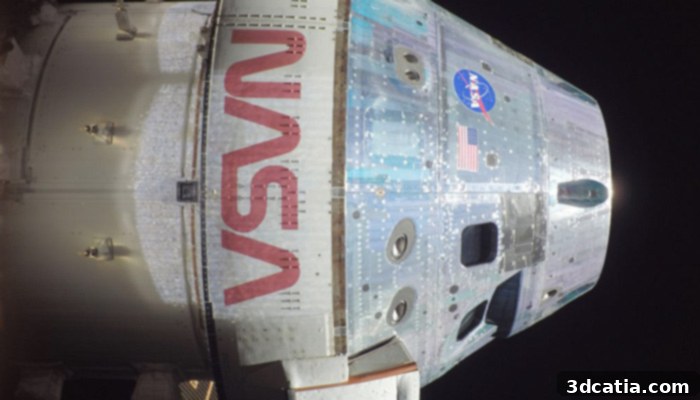
NASA’s space capsule, Orion, was powered by rocket engines with 3D printed parts (photo credits: NASA)
3DN: What Do You Think Is the Future of 3D Printing? What Will Be the Next Innovations in the Field?
“The future of 3D printing is extremely promising. The 3D printing industry is expected to grow at a very fast pace in the coming years. It is expected to be used in the automotive industry, aerospace, medical facilities, industrial facilities, architecture, fashion, engineering, prototype production, consumer goods production, spare parts production, etc. 3D printing will reduce production costs, increase production efficiency, and help create innovative prototypes. In addition, 3D printing will enable manufacturers to produce more complex parts that would otherwise be difficult to obtain.
Upcoming innovations in 3D printing will include the printing of more advanced materials, such as metals and polymers, the use of advanced post-processing techniques to improve the quality of the finished product, and the ability to print large objects, such as vehicles or parts of buildings. In addition, innovations in 3D printing technology will make it possible to print faster and with greater precision, so that more accurate and efficient products can be created.”
- ChatGPT’s vision for the future of 3D printing, while broad and somewhat generic, was arguably its most commendable response. The prediction of rapid market growth aligns perfectly with industry forecasts and the palpable momentum within the additive manufacturing sector. The AI accurately listed key sectors – automotive, aerospace, medical, industrial, architecture, fashion – and applications like cost reduction, increased efficiency, and enabling complex geometries. This comprehensive overview demonstrates a solid grasp of the transformative potential of 3D printing across diverse industries. What truly impressed us, however, was the specific mention of post-processing as an area for upcoming innovation. This is a critical insight, as post-processing optimization, including automation and advanced finishing techniques, is widely recognized by industry professionals as one of the most significant bottlenecks and a key area for immediate investment and improvement. The focus on enhancing quality and process automation in this stage is indeed expected to drive significant advancements. Similarly, the prediction of large-format 3D printing, enabling the creation of objects like vehicles or building parts, also aligns with current trends and ongoing developments in construction 3D printing and large-scale manufacturing. However, when compared against the major trends of 2022 and beyond, ChatGPT’s forecast missed some notable emerging innovations. For instance, it did not explicitly “predict” the increasing prominence of technologies like Binder Jetting for high-volume metal part production, the accelerated push towards more sustainable 3D printing materials and processes, or the convergence of AI with additive manufacturing itself to optimize print parameters and design. Despite these omissions, the AI’s general outlook and its specific mentions of post-processing and large-format printing highlight a robust understanding of fundamental growth vectors within the industry.
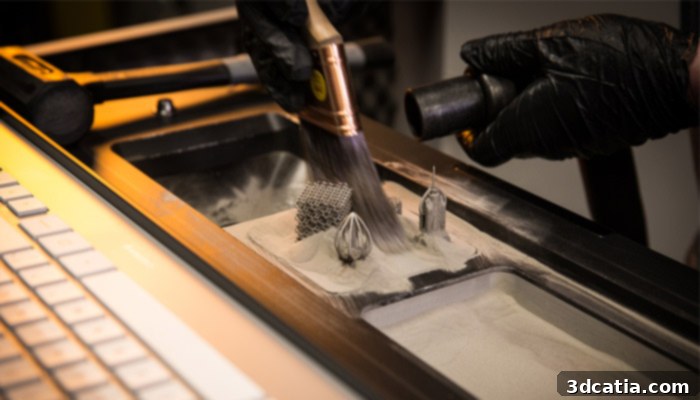
Optimizing the post-processing stage will be one of the trends in the coming years. (Credits: Protolabs)
3DN: Any Last Words for Our Readers?
“We recommend that our readers experiment with 3D printing, explore new technologies and learn as much as they can. 3D printing can be fun, practical and extremely rewarding, so embrace it and enjoy the journey!”
- With this encouraging and optimistic closing remark, we concluded our intriguing interview with ChatGPT. Overall, this experiment reaffirmed that ChatGPT is an extraordinary technological tool with immense potential across various functions. Its capabilities extend far beyond simple question-answering, encompassing data interpretation, text composition, and the simplification of repetitive tasks. What remains truly astonishing is its unparalleled ability to generate human-like language, a feat that sets it apart from many other AI systems developed to date. However, our interview also unequivocally demonstrated that ChatGPT, while powerful, is not infallible. We observed instances where the information provided was not entirely accurate or lacked the most up-to-date details. This underscores the critical necessity for users to always verify both the sources of the information ChatGPT offers and the veracity of those sources. Furthermore, it is essential to remember the AI’s inherent limitation regarding its data cutoff, meaning it cannot access or process the latest news and developments beyond its training data (in this case, prior to 2021). Therefore, for the time being, human input, critical analysis, and expert validation remain absolutely essential and indispensable in leveraging AI effectively and responsibly.
- Specifically concerning the complex and rapidly evolving subject of 3D printing and additive manufacturing, it appears that ChatGPT still has a considerable learning curve. Its responses, while well-articulated, often did not reflect the nuanced and in-depth understanding that an expert in the field would possess. Instead, they frequently revealed a somewhat superficial knowledge of the subject. If we were to “humanize” the AI’s persona based on its answers, it might best be described as an individual who is broadly familiar with 3D technologies, perhaps as a hobbyist or an interested observer, but who does not actively work within or deeply specialize in the industry. Despite these limitations, our curiosity about ChatGPT’s future developments and expanded uses remains profound. As AI models continue to evolve and integrate more recent and specialized data, their potential to become even more valuable resources for informed decision-making and innovation is immense, always in tandem with human expertise.
If you are curious to test ChatGPT yourself and experience its capabilities firsthand, you can do so HERE. What are your thoughts and impressions of ChatGPT? We invite you to share your insights in a comment below or join the conversation on our LinkedIn, Facebook, and Twitter pages! Don’t forget to sign up for our free weekly Newsletter here to receive the latest 3D printing news directly in your inbox! You can also explore all our informative videos and engaging content on our YouTube channel.
*Cover photo credits: OpenAI