
Revolutionizing Industries: Latest Advancements in 3D Printing, From Space to Sustainable Food
This week, we delve deep into the dynamic world of additive manufacturing, exploring groundbreaking developments that are shaping various industries. From the cosmos to our dinner plates and urban landscapes, 3D printing continues to push boundaries and offer innovative solutions. We begin our journey with a significant collaboration in the aerospace sector: SpaceX’s strategic licensing and support agreement with metal 3D printer pioneer Velo3D, a deal that signals renewed optimism for the latter. Simultaneously, the food technology landscape is buzzing with Steakholder Foods unveiling its new demonstration center, making significant strides in plant-based food production through 3D printing. Europe also sees remarkable progress in sustainable construction, with a French project receiving a crucial certification for its 3D-printed multifamily dwellings. Further solidifying industrial applications, Toolcraft and Siemens are forging a path forward for porous metal structures, expanding the horizons of material science. Finally, we celebrate the rising stars of tomorrow, reviewing the inspiring results from WorldSkills 2024, particularly in the additive manufacturing category. Join us as we uncover these pivotal moments that underscore the transformative power of 3D printing.
SpaceX Forges Pivotal Partnership with Velo3D, Igniting New Opportunities in Space Manufacturing
Velo3D, a prominent name in metal additive manufacturing, is once again in the spotlight, this time with a surge of positive news following a period of considerable financial challenge. Just last week, concerns mounted over the company’s potential delisting from the NYSE, casting a shadow over its future. However, a groundbreaking development has emerged, offering a substantial lifeline to the struggling metal 3D printer manufacturer. It has been confirmed that Velo3D has successfully entered into a comprehensive licensing and support agreement with SpaceX, the pioneering aerospace manufacturer and space transportation services company founded by Elon Musk. This significant collaboration, valued at $8 million, is being hailed by many industry experts as a potentially “lifesaving” move for the innovative additive manufacturing solutions provider.
The intricacies of the deal reveal a strategic investment designed to empower both parties. The agreement includes an initial payment of $5 million specifically for the technology license, granting SpaceX extensive rights to Velo3D’s proprietary additive manufacturing processes. An additional $3 million is allocated for crucial engineering and support services, ensuring a smooth integration and optimal utilization of Velo3D’s advanced systems within SpaceX’s demanding operational framework. A key aspect of this licensing agreement is its broad scope: it is worldwide, non-exclusive, royalty-free, and perpetual. This robust framework means that SpaceX will possess the unprecedented ability to manufacture, modify, and develop Velo3D’s cutting-edge technology for its internal operations, effectively bringing advanced metal 3D printing capabilities in-house for critical aerospace components.
Furthermore, the agreement meticulously outlines intellectual property (IP) considerations. For the initial 12 months, any improvements or modifications made to the technology by Velo3D will also be covered under this license, benefiting SpaceX directly. After this crucial period, however, new advancements developed by Velo3D will remain the company’s sole property, while innovations spearheaded by SpaceX will fall under their own independent IP. This structured approach fosters a collaborative environment while respecting the individual contributions and future growth of both entities. Velo3D’s technology, particularly its Sapphire series of printers, is renowned for its ability to print complex geometries without the need for internal support structures, a significant advantage for manufacturing lightweight, high-performance parts essential for space applications.
For Velo3D, this partnership not only provides much-needed capital and stability but also validates its innovative approach to metal additive manufacturing. It allows the company to continue its research and development efforts, pushing the boundaries of what’s possible with metal 3D printing. For SpaceX, integrating Velo3D’s advanced capabilities internally means greater control over its supply chain, accelerated production cycles, and the potential to innovate faster in component design for rockets, spacecraft, and other critical systems. This landmark deal is anticipated to be a huge milestone, not only for Velo3D’s resurgence but also for the broader adoption and advancement of additive manufacturing across the space industry, promising to unlock new frontiers in performance and efficiency.
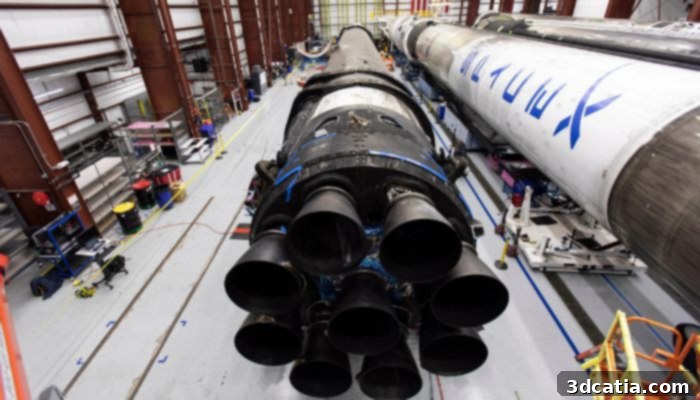
Photo Credits: SpaceX
Steakholder Foods Unveils Innovative Demonstration Center for Plant-Based Food 3D Printing
In a significant stride towards revolutionizing the culinary world, Israeli food technology trailblazer Steakholder Foods has proudly announced the grand opening of its cutting-edge demonstration center. This pioneering facility is designed to offer an immersive and educational experience for all interested parties, providing an on-the-spot, tangible understanding of how sophisticated 3D printing technology is being leveraged to produce plant-based food alternatives. This move underscores the growing global emphasis on sustainable food production and the urgent need for innovative solutions to meet future dietary demands.
The new demonstration center is set to be a hub of innovation, featuring Steakholder Foods’ flagship food production systems: the MX200 and HD144 printing plants. Visitors will have the unique opportunity to witness these state-of-the-art machines in live operation, showcasing the precision and versatility of food 3D printing in real-time. The overarching goal behind this initiative is multifaceted. Firstly, Steakholder Foods aims to significantly raise public and industry awareness regarding the viability and benefits of alternative food production methods, illustrating how sustainable, plant-based options can be crafted with incredible detail and texture. Secondly, the center is strategically positioned to strengthen customer loyalty by offering transparency and direct engagement with the technology, while simultaneously attracting new partners and clients who are eager to embrace the future of food.
Arik Kaufman, CEO of Steakholder Foods, expressed his enthusiasm for this new venture, stating: “We firmly believe that our demonstration center will serve as a foundational cornerstone for invaluable interaction with both potential customers and strategic partners. It transcends the mere act of observing technology in action; it’s about genuinely experiencing the future of food production unfolding in real-time before your eyes. This innovative center is poised to play an absolutely crucial role in powerfully promoting our extensive capabilities and diligently building stronger, more collaborative relationships within the dynamic food technology industry.” This facility represents more than just a showroom; it’s a testament to Steakholder Foods’ commitment to pioneering sustainable, delicious, and technologically advanced food solutions for a healthier planet.
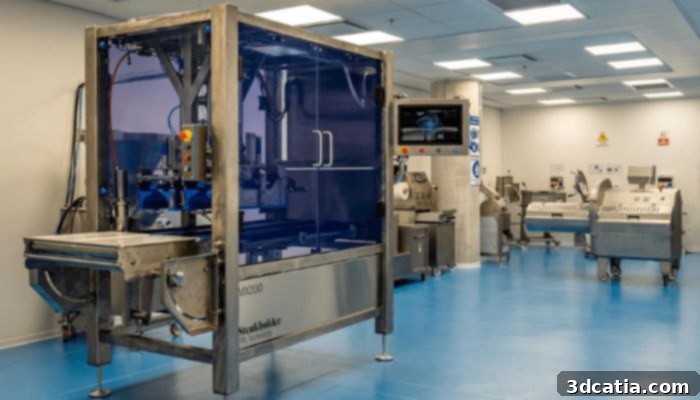
Photo Credits: Itamar Ginsburg
Plurial Novilia’s ViliaSprint² Project Achieves Landmark Certification, Paving the Way for 3D Printed Housing
The landscape of construction is continuously evolving, with additive manufacturing emerging as a transformative force. Among the pioneering projects leading this charge is Plurial Novilia’s ambitious ViliaSprint², a groundbreaking initiative set to deliver 12 multifamily dwellings whose walls will be innovatively 3D printed directly on-site in the Champagne-Ardenne region of France. This project is not just a testament to technological advancement but also addresses critical needs for efficient, sustainable, and potentially more affordable housing solutions.
The reason this project is drawing significant attention once again is a recent, highly encouraging development: ViliaSprint² has been officially awarded the ATEx (Appréciation Technique d’Expérimentation) by the CSTB (Centre Scientifique et Technique du Bâtiment). This technical assessment is a pivotal recognition in the construction sector, specifically designed to “evaluate innovative products or processes not adequately covered by existing technical opinions or standards, thereby facilitating and accelerating innovation within the construction sector.” Receiving the ATEx is more than just an accolade; it’s a crucial green light that officially enables the project to transition from its experimental and developmental stages directly into its full operational phase, validating the safety, reliability, and performance of its additive manufacturing approach.
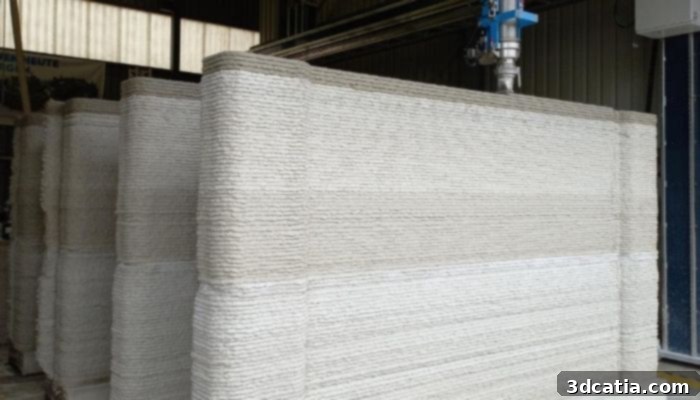
The journey to this certification involved rigorous and extensive testing. For many months, prototypes of the substantial 3-meter-high by 4-meter-wide walls underwent a battery of demanding evaluations, including comprehensive fire resistance assessments and stringent structural and mechanical tests. These trials ensured that the 3D-printed components not only meet but exceed the safety and durability standards required for residential buildings. The building itself is designed to be three storeys high, showcasing the scalability and structural integrity achievable with this advanced construction method. With this crucial certification now secured, the printing phase for the ViliaSprint² project is scheduled to commence by the end of the year, with the entire construction work anticipated to be completed within an efficient 18-month timeframe. This project signifies a major step forward for 3D printed construction in Europe, demonstrating its potential to redefine urban development and contribute significantly to sustainable building practices.
3D-printed wall prototypes (photo credits: Plurial Novilia)
Toolcraft and Siemens Digital Industries Pioneer Porous Metal Structures for Advanced Industrial Applications
In a significant development for industrial additive manufacturing, Toolcraft, a leading precision component manufacturer, and Siemens Digital Industries, a powerhouse in automation and digitalization, have combined their formidable expertise. This powerful collaboration is specifically aimed at accelerating and advancing the industrial applications of porous metal structures, unlocking new possibilities for performance and efficiency across a multitude of sectors. The inherent challenge lies in optimizing these intricate 3D-printed structures to precisely meet the demanding structural and functional requirements prevalent in various industries – a feat that is often exceedingly difficult, if not impossible, to achieve using traditional manufacturing processes.
Recognizing the limitations of conventional methods, both partners have strategically opted for powder bed fusion as the preferred additive manufacturing process. This choice is driven by powder bed fusion’s exceptional capability to precisely control pore size and distribution within the metal structures. This level of granular control is absolutely critical for tailoring material properties to specific needs, whether it’s for filtration, heat exchange, or lightweighting applications. Dr. Karsten Heuser, VP Additive Manufacturing at Siemens Digital Industries, elaborates on the vast potential, stating, “We clearly see primary potential applications in demanding fields such as the process industry, advanced energy process engineering, and critical aerospace components. However, the scope doesn’t end there; promising applications in precision mechanical engineering and innovative medical technology are also readily conceivable. With Toolcraft, we are fortunate to have a long-standing and highly valued partner at our side who is uniquely positioned to build the strategic bridge to the industrial production of these exceptionally sophisticated material structures. We are immensely delighted that Toolcraft can confidently take on this pivotal role.”
This partnership leverages Siemens’ deep understanding of digital industrial solutions and additive manufacturing software, combined with Toolcraft’s proven capabilities in precision manufacturing and industrial production of complex metal parts. Together, they aim to translate theoretical possibilities into practical, scalable industrial applications, offering enhanced performance, reduced weight, and entirely new design possibilities for components that were previously unmanufacturable. This collaboration not only highlights the growing maturity of metal additive manufacturing but also its critical role in driving innovation for future industrial challenges.
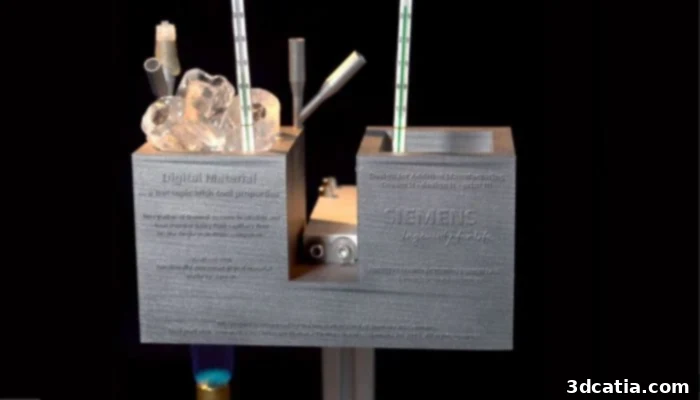
Bild: toolcraft
Celebrating Emerging Talent: WorldSkills 2024 Additive Manufacturing Category Winners Announced
Let’s conclude this comprehensive edition of #3DExpress with an inspiring look at the future of additive manufacturing, brought to life by the impressive capabilities of the young 3D printing generation. As many in the industry keenly follow, the grand finale of the prestigious International Skills Competition, WorldSkills 2024, recently captivated audiences. This global event brought together thousands of exceptionally talented young individuals, all under the age of 23, who competed fiercely to represent their respective countries and proudly showcase their highly specialized skills across a diverse array of categories.
Among these highly competitive categories, additive manufacturing stood out as a beacon of innovation and future potential. The Additive Manufacturing competition challenges participants to demonstrate proficiency across the entire 3D printing workflow, from digital design and sophisticated slicing software to actual part production on various machines, followed by meticulous post-processing and quality control. These young professionals must exhibit not only technical expertise but also critical problem-solving skills, precision, and an understanding of material science. The intense competition culminated in an exciting announcement of the winners: the gold medal in the “Additive Manufacturing” category was proudly claimed by Korea, showcasing their exceptional talent and advanced training. France secured a commendable second place, highlighting their strong educational foundation in this cutting-edge field, while China rounded out the top three with an impressive third place finish. The remarkable performances by these youths underscore a bright and promising future for the additive manufacturing industry, affirming that with such talented individuals at the helm, innovation and progress are not just assured but destined to accelerate.

The winners in additive manufacturing
The past week has truly showcased the incredible versatility and impact of additive manufacturing across a spectrum of industries, from the high stakes of aerospace to the intricacies of food production and the urgent needs of sustainable construction. The strategic alliance between SpaceX and Velo3D, the innovative demonstration center by Steakholder Foods, the critical certification for Plurial Novilia’s construction project, the pioneering material science work by Toolcraft and Siemens, and the inspiring achievements at WorldSkills 2024 all underscore the dynamic growth and boundless potential of 3D printing. We are witnessing a revolution in how products are designed, manufactured, and utilized.
What are your thoughts on these significant developments, particularly the landmark deal between Velo3D and SpaceX? We invite you to share your insights and opinions in a comment below, or engage with us on our LinkedIn, Facebook, and Twitter pages! For those who wish to stay at the forefront of the additive manufacturing world, don’t forget to sign up for our free weekly newsletter here, delivering the latest 3D printing news directly to your inbox. Additionally, you can explore all our in-depth video content and interviews on our dedicated YouTube channel, offering even more perspectives on this fascinating industry.