
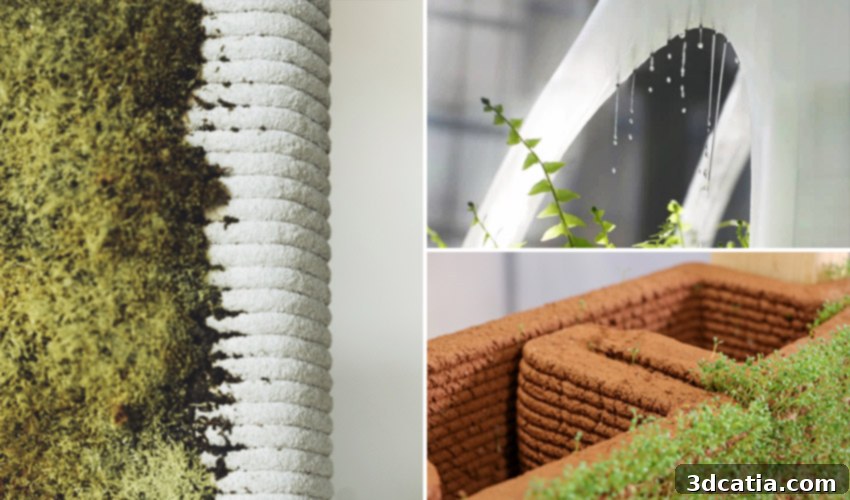
3D Printing for a Greener Future: Innovations in Sustainable Architecture and Urban Greenery
3D printing, also known as additive manufacturing, has rapidly transformed a multitude of industries in recent years, spanning from intricate architecture and innovative product design to advanced medical technology. Amongst its most captivating applications is the fusion of this cutting-edge technology with the growing movement of “greenery” – the conscious integration of plant life into our modern living and urban environments. This powerful combination allows for the precise, efficient, and resource-saving production of bespoke planters, elaborate vertical gardens, intelligent modular greenery systems, and ground-breaking structures designed specifically for urban greening initiatives. Far beyond mere aesthetics, this convergence of technology and nature unlocks unprecedented possibilities for sustainable design, highly individualized interior and exterior landscaping, and the crucial promotion of healthier, more vibrant urban living spaces. 3D printing not only empowers designers with unparalleled creative freedom but also serves as a robust platform for the effective implementation of environmentally conscious ideas. Indeed, a core characteristic of additive manufacturing is its inherent position as a sustainable technology. Therefore, what could be more fitting than pairing the principles of sustainability with the creation of flourishing green living spaces in contemporary settings? Below, we’ve curated a selection of the most intriguing greenery projects, each uniquely featuring elements of 3D printing and showcasing its profound potential. Prepare to discover everything from compostable houses and living walls that sprout plants, to advanced irrigation systems and shoes that plant seeds as you run!
What if Walls Could Bloom? “To Grow a Building” by Nof Nathanson
The visionary project titled “To Grow a Building,” conceived by designer Nof Nathanson, made a significant impact at this year’s Biennale di Venezia. This remarkable 3D-printed house stands at the fascinating intersection of mechanical precision and the inherent unpredictability of the natural world, masterfully blending both perspectives into a truly breathtaking installation. The entire structure was meticulously printed from locally sourced earth using innovative 3D printing technology developed by the renowned construction company WASP. The most intriguing aspect of this project is its organic evolution: carefully selected seeds were intentionally planted within the soil mixture *before* the printing process began. Consequently, as the house gradually took form, these embedded seeds began to sprout, progressively transforming the rigid structure into a dynamic, “living architecture.” The construction was executed using WASP’s advanced Crane WASP Scara printer, demonstrating the capability of large-scale additive manufacturing. Throughout the duration of the Biennale, the building was not merely an exhibit but a continuous spectacle of growth and transformation. By the conclusion of the cultural festival, the construction was designed to naturally fade and return to the earth, mirroring the cyclical nature of life. Nathanson’s project profoundly challenges the conventional perception of architecture as a static, permanent artifact. Instead, the designer reimagines the house as a living organism – an entity that does not merely withstand the test of time, but rather actively grows and evolves with it, ultimately reintegrating with the natural environment at its appointed time.
3D Printing for Bio-Based Architecture
Have you ever considered the revolutionary potential of 3D printing with soil-based inks? In 2022, the University of Virginia published a pivotal study demonstrating the successful creation of geometrically complex, ecologically active soil structures infused with seeds through 3D printing. The ambitious vision for this research is that, with continued advancement, these innovative soil structures could be seamlessly integrated into various architectural applications. Imagine vibrant rooftop gardens or dynamic green walls that not only enhance the aesthetic appeal of buildings but also provide natural insulation, effectively absorb rainwater, and dramatically increase accessible green space within urban landscapes. A significant advantage of this bio-based construction method lies in its exceptional sustainability, primarily because the soil “ink” can be readily reused or recycled, minimizing waste. This stands in stark contrast to traditional construction practices, which typically follow a linear process where most materials are not easily adapted, reused, or recycled, leading to considerable environmental waste and a substantial carbon footprint. This pioneering innovation not only offers a powerful means to reduce the environmental impact of building projects but also fundamentally redefines the very essence of what construction can be: living, adaptable, regenerative, and deeply connected to nature.
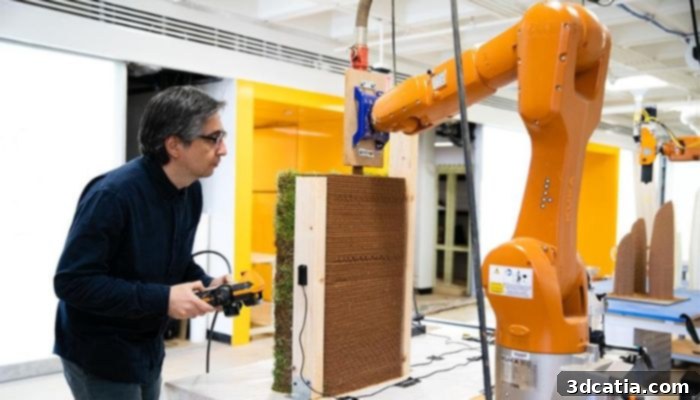
Eshan Barhalou, assistant professor in UVA’s School of Architecture, created a system with a robotic arm and extruder to perform the soil structure experiments. Photo credit: Tom Daly, University of Virginia
3D Printed Clay Reefs for Enhanced Biodiversity
In a pioneering initiative in Oeffelt, Netherlands, a project is harnessing the power of 3D-printed clay structures to bolster local ecosystems and support nature. These intricately designed forms, which are heated and hardened to ensure durability, are strategically placed along riverbanks to serve as vital refuges for a diverse array of aquatic species, even in the face of strong currents. Unlike conventional, uniform stone blocks often used for riverbank stabilization, these innovative ceramic modules boast an irregular texture and are riddled with numerous cavities and crevices. This thoughtful design creates a far richer, more complex environment that is exceptionally well-suited to support and encourage local flora and fauna, fostering increased biodiversity. These artificial reefs, conceptualized by Urban Reef and seamlessly integrated into the broader Maaskracht project, aim to significantly enhance ecological diversity and provide essential stability to vulnerable riverbanks. Ongoing observations and scientific assessments are currently underway to meticulously evaluate their long-term effects on the riverine ecosystem, promising valuable insights into the potential of additive manufacturing for ecological restoration.
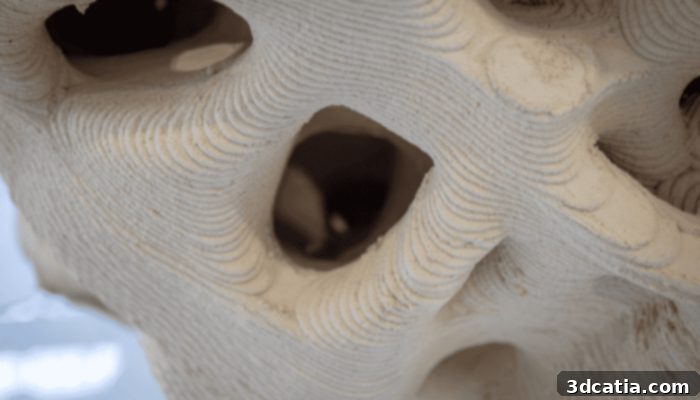
Photo Credit: Maaskracht
Sustainable Architecture with 3D Printed Earth by IAAC
The Institute for Advanced Architecture of Catalonia (IAAC) has made a significant stride in sustainable construction with the development of a 100 m² low-carbon building prototype. This innovative structure was brought to life by ingeniously combining local soil and other natural materials with cutting-edge 3D printing technologies. Named the 3D Printed Earth Forest Campus, and situated in the vibrant city of Barcelona, this facility functions as a dynamic living laboratory dedicated to testing and refining new sustainable building solutions. The project leveraged WASP’s advanced Crane printer, which enabled the creation of sophisticated cavity walls. This design choice is particularly impactful, as it significantly reduces the overall use of materials while simultaneously enhancing both ventilation and insulation properties within the building. This approach beautifully marries traditional earthen construction techniques with advanced technological capabilities. The earth itself, carefully extracted and treated from the immediate surrounding environment, was printed in controlled layers, ensuring both structural stability and remarkable adaptability. Through this thoughtful design and construction process, the project successfully achieved an organic and flexible distribution of interior, semi-open, and exterior spaces, showcasing a harmonious blend of nature and technology.
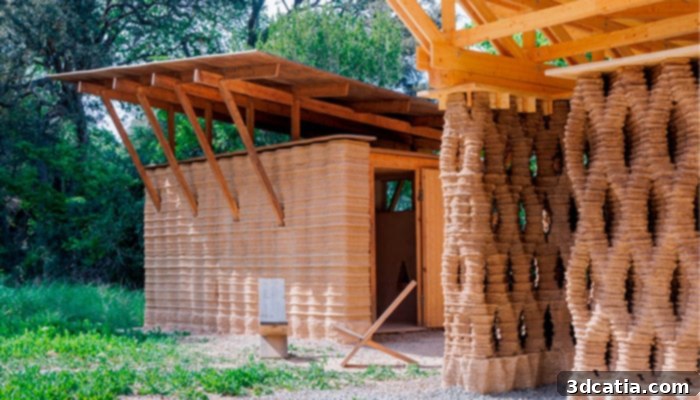
Photo Credit: IAAC
TECLA: 3D Printed Eco Housing for a Climate-Resilient Future
The groundbreaking TECLA project, a visionary collaboration between WASP and Mario Cucinella Architects, introduces a novel and environmentally conscious approach to housing development. This innovative prototype proposes a new type of eco-friendly dwelling, built entirely from readily available local raw earth using advanced 3D printing techniques. The fundamental aim of TECLA is to offer a scalable and sustainable solution to the pressing global climate crisis. The first full-scale house has already been successfully constructed in Massa Lombarda, Italy, demonstrating the project’s practical viability. TECLA masterfully integrates natural materials with sophisticated advanced technologies, positioning itself at the forefront of global innovation. It embraces principles of personalization, industrial automation, and the connectivity of smart objects. The specialized 3D printer utilized for this ambitious undertaking, WASP’s Crane, is particularly unique; its modular and multi-level design allows two machines to operate simultaneously and in perfect coordination, significantly accelerating the construction process. Furthermore, each TECLA house is meticulously designed to be highly adaptable to the specific climatic conditions of its surrounding environment, ensuring optimal performance and comfort while minimizing environmental impact. This project truly exemplifies how 3D printing can revolutionize housing to be both sustainable and resilient.
Architecture that Becomes a Forest by Takenaka Corporation
The esteemed Japanese company Takenaka Corporation is set to unveil an incredibly innovative architectural project at Expo 2025 Osaka in Japan. Their design features striking round pavilions, meticulously crafted from plant-based resin, intended to provide visitors with a serene and rejuvenating retreat amidst the bustling urban landscape. Similar in spirit to projects that envision “living architecture,” these unique buildings are designed with a built-in lifespan, fostering a deeper connection to nature’s cycles. During the exhibition, children will be invited to participate in a heartwarming activity: attaching handmade seed pods to the walls of the pavilions. Over time, these seeds will gradually sprout, transforming the structures into burgeoning green spaces. The plan encourages children to continuously care for these young plants, fostering a sense of stewardship and connection to nature. Crucially, the pavilions are constructed from fully biodegradable materials, ensuring that they will naturally decompose at the end of their exhibition life cycle. Rather than leaving a substantial ecological footprint, these structures are envisioned to gracefully transform into a flourishing forest on the grounds of Yumeshima, the Expo venue. This transformative process elegantly reflects a profound shift in societal values: moving away from notions of permanent ownership and towards shared experiences and profound sustainability. Moreover, the project actively seeks to forge a stronger, more empathetic connection between people and the natural world – an inspiring and vital idea, especially within the dense, concrete urban canyons of cities like Osaka.
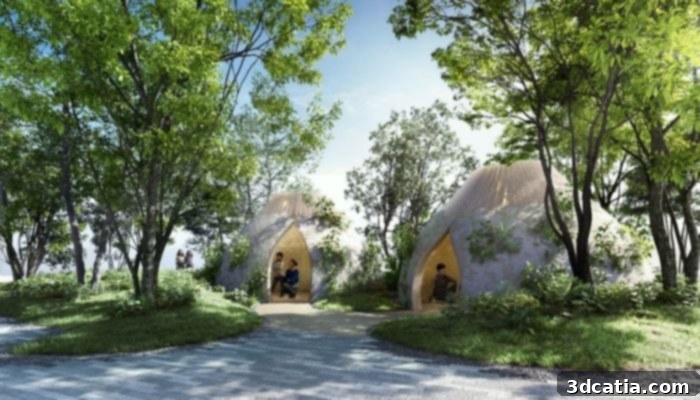
A concept of the pavilions that will be a forest in the future. Photo Credit: Takenaka Corporation
A Robot as a Sustainable Gardener? The “magic queen” Exhibition by MAEID
“magic queen” represents an innovative and thought-provoking installation developed by the Viennese studio MAEID, which garnered significant attention at the 2021 Architecture Biennale in Venice. This captivating piece consists of an intricately 3D-printed landscape, fabricated from local, fully biodegradable soil material. The entire structure was meticulously constructed over a three-month period directly on-site at the historic Arsenale, minimizing transportation impacts. Within this unique landscape, a diverse array of plant and fungi species thrive, growing and evolving throughout the exhibition’s duration, showcasing the dynamic nature of living systems. A suspended robotic arm, acting as an intelligent ‘gardener,’ diligently waters the plants and utilizes an array of sensors and machine learning algorithms to continuously collect data on growth patterns and surface changes. This rich stream of data is then ingeniously converted into compelling visual and auditory signals, which vividly illustrate the intricate interactivity and symbiotic interplay between the various biological and technological elements of the installation. “magic queen” profoundly emphasizes the interconnectedness between nature, advanced technology, and living systems, challenging viewers to re-evaluate the fundamental role of architecture and design in fostering harmony with natural processes. In an illuminating interview with designboom, MAEID studio member Daniela Mitterberger articulated that “magic queen” is “a structure that is able to evolve, decay, and grow during the timespan of the biennale. […] ‘magic queen’ represents a hybrid environment that incorporates and fuses biological systems with organic materials and machines — creating an ecosystem of empathy and co-existence.” This project powerfully demonstrates the potential for architecture to transcend static forms and embrace dynamic, responsive, and empathetic systems.
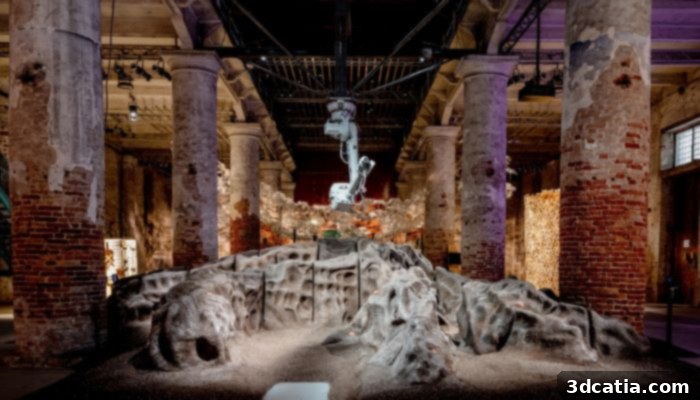
The robot acts as a gardener in an interplay of technology and nature. Photo Credit: MAEID
BANYAN Eco Wall: A 3D Printed Irrigation Wall for Urban Greening
The BANYAN Eco Wall, a groundbreaking development by BigRep and ingeniously designed by Mirek Claßen, Tobias Storz, and Lindsay Lawson, represents a fully 3D printed irrigation wall that boasts an integrated internal drainage system. What sets BANYAN apart from other similar green infrastructure solutions is its holistic design approach: unlike structures where the drainage system is retrofitted or installed after production, BANYAN’s internal channels are meticulously thought out and designed from the very initial stages, and then seamlessly 3D printed directly into the structure. This integrated approach ensures optimal functionality and efficiency. The BANYAN Eco Wall measures an impressive 2000 x 2000 x 600 mm and is composed of four distinct, large-format parts. For the primary structural elements, BigRep’s durable PETG material was utilized, while BigRep Black PRO HT was chosen for the robust planters, ensuring both longevity and performance. This remarkable achievement in large-format 3D printing, combined with sophisticated generative design software, unlocks exciting new possibilities for green architecture. It actively encourages the widespread development of innovative vegetal walls and advanced systems for urban agriculture, paving the way for more vibrant, sustainable, and eco-friendly cityscapes.
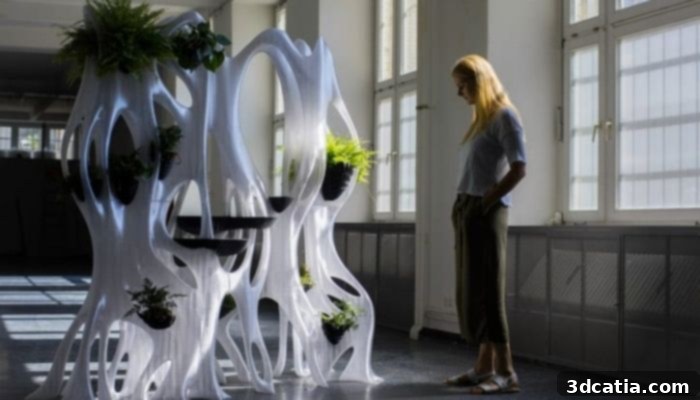
Photo Credit: BigRep
The Rewild the Run Project: Planting Seeds with Every Step
Young British designer Kiki Grammatopoulos has conceived a truly striking and inspiring idea with her “Rewild the Run” project, which emerged during her Master’s degree in Material Futures at Central Saint Martins in London. At the heart of this innovative concept is a specially designed running shoe engineered to plant seeds as the wearer runs. Starting with a standard New Balance trail shoe as a base, Kiki ingeniously created a unique 3D-printed sole. This advanced sole is equipped with a mechanism capable of scattering seeds along the running course, thereby actively and sustainably contributing to the greening of urban areas. The overarching goal of the project is profound: to engage citizens directly in urban rewilding efforts, inspiring them to become active participants in nurturing the nature around them, one step and one seed at a time. This creative fusion of fitness and ecological impact demonstrates how everyday activities can be transformed into powerful acts of environmental restoration and community engagement, offering a tangible way for individuals to contribute to a greener planet.
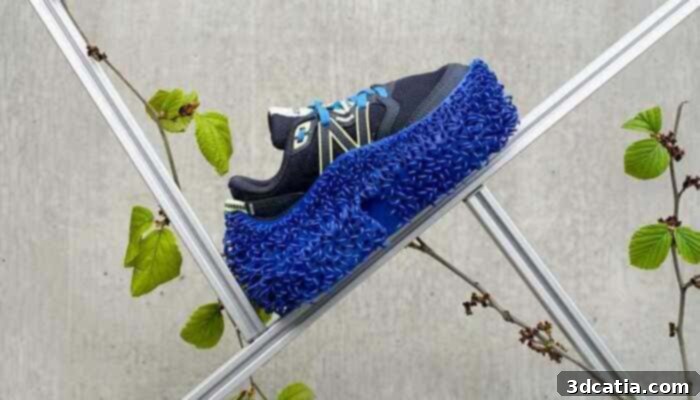
Photo Credit: Maël Hénaff
Concrete Walls and Bioresponsive 3D Printing by VERTICO
Our next featured project showcases a revolutionary 3D printed wall that literally breathes, refreshes its environment, and fosters natural growth – a visionary proposal from the Dutch company VERTICO, specialists in concrete 3D printing. In a collaborative effort involving VERTICO, the company VolkerWessels, expert material and geoscience scientists, and the prestigious Delft University of Technology, a truly bioresponsive wall has been developed. So, what exactly is it about? This innovative wall is meticulously designed to actively encourage the growth of moss and functions as an efficient natural cooling system. Its carefully engineered texture and finishes are optimized to retain moisture, creating an ideal microclimate for moss adhesion and proliferation. Beyond its significant aesthetic value, the project boldly proposes a future where building facades are transformed into living, functional ecosystems. These intelligent material facades are capable of making substantial contributions to urban sustainability by naturally regulating temperature, improving air quality, and enhancing biodiversity. All these advanced features are geared towards significantly reducing environmental impact and enabling cities to more effectively adapt to the escalating challenges of climate change, offering a tangible path towards more resilient and ecological urban landscapes.
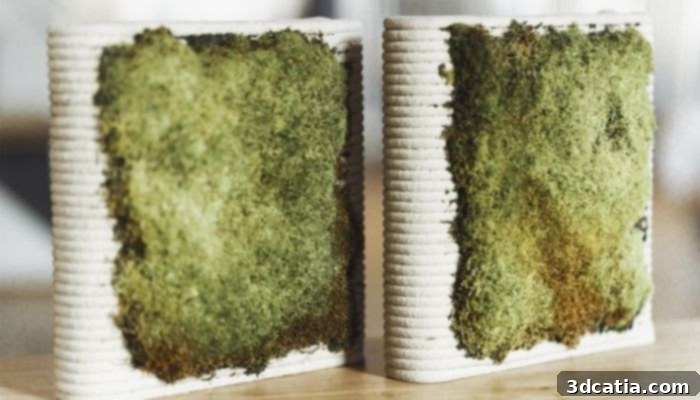
VERTICO’s 3D printed and bioresponsive wall grows, breathes and refreshes. Photo credit: VERTICO
The integration of 3D printing with greenery is clearly paving the way for a more sustainable, innovative, and biologically diverse future. From living architecture that breathes and evolves, to urban interventions that actively engage citizens in rewilding efforts, these projects demonstrate the immense potential when technology meets nature. Which of these fascinating 3D printing greenery projects captivated your imagination the most? We’d love to hear your thoughts! Let us know in a comment below or connect with us on our LinkedIn and Facebook pages! Don’t forget to sign up for our free weekly Newsletter here to get the latest 3D printing news delivered straight to your inbox. You can also explore all our insightful videos on our YouTube channel.