
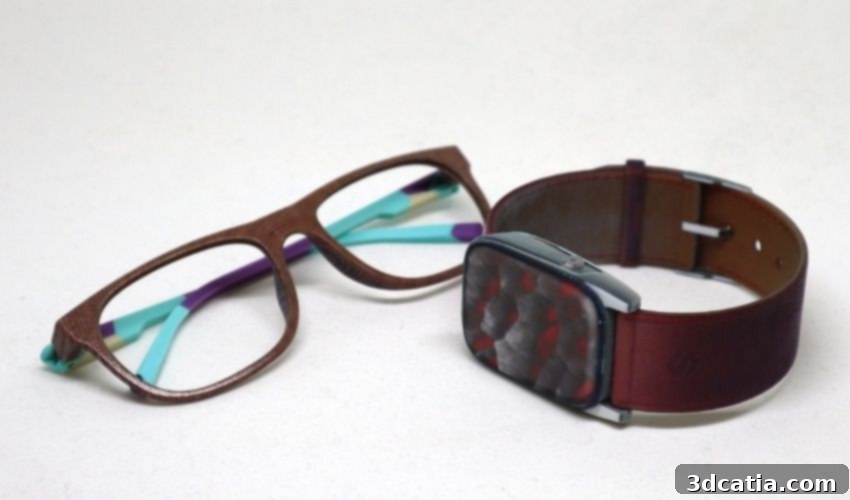
Stratasys & Adobe Substance 3D: Revolutionizing Product Design with Direct Full-Color 3D Printing
The realms of digital design and physical manufacturing have long sought a seamless bridge, and now, industry leaders Stratasys and Adobe have forged a powerful partnership to create just that. This collaboration marks a significant milestone in additive manufacturing (AM), offering an integrated solution that empowers engineers and designers to transform their intricate digital 3D renderings into tangible, full-color 3D printed models directly and effortlessly. By combining Stratasys’ cutting-edge PolyJet 3D printing technology with Adobe’s widely acclaimed Substance 3D software suite, the duo has eliminated traditional workflow complexities, ushering in a new era of efficiency and creative freedom. What makes this solution particularly revolutionary is its direct nature: no additional software or laborious intermediate processes are required, truly streamlining the journey from concept to physical prototype. Pierre Maheut, Head of Strategic Initiatives & Partnerships, 3D and Immersive — Substance for Adobe, eloquently captured the essence of this breakthrough, stating, “This collaboration has allowed us to see our designs for the very first time in the physical world – which is every artist’s and designer’s dream.”
Prior to this innovative partnership, the typical workflow for transitioning a digital design into a 3D-printed physical model was often cumbersome and fraught with friction. Designers utilizing Adobe Substance 3D, renowned for its realistic texture and material creation capabilities, would face the challenge of navigating multiple third-party software applications. This multi-step process involved exporting designs, potentially losing fidelity during format conversions, and then preparing them for print through separate slicing and printing software. Each additional step introduced potential errors, required specialized knowledge, and significantly extended both the time and cost associated with prototyping. This fragmented approach not only slowed down the product development cycle but also restricted creative iteration, forcing designers to make compromises or rely heavily on imagination when presenting concepts to clients.
Unlocking Unprecedented Design Freedom with Seamless Integration
The Stratasys-Adobe solution fundamentally redefines this process. Designers can now work within their familiar Adobe Substance 3D environment, meticulously crafting models with preferred colors, textures, and material properties, and then send them directly to a Stratasys PolyJet 3D printer, such as the Stratasys J55, for physical realization. This direct integration is a game-changer, removing the previous restrictions that plagued the product design process. The ability to print a physical prototype that accurately reflects the digital rendering’s aesthetic and tactile qualities means designers and their clients no longer need to merely imagine what a product could be based on a digital screen. Instead, they can interact with, evaluate, and refine physical prototypes, fostering a deeper understanding and more effective communication throughout the design and approval stages. This hands-on experience accelerates decision-making, reduces costly misunderstandings, and ultimately leads to more innovative and market-ready products.
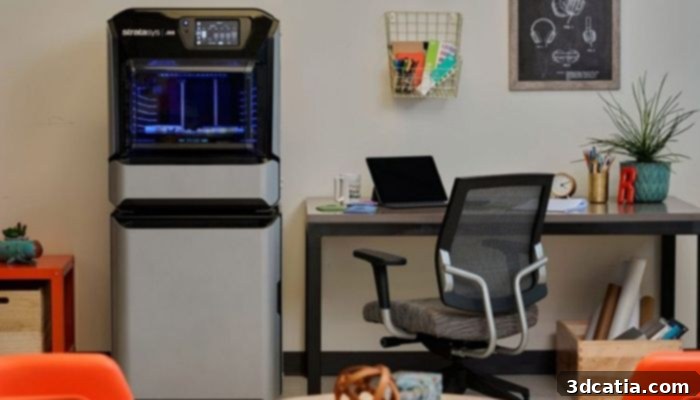
The Stratasys J55 Polyjet 3D printer is a key component in enabling this streamlined workflow.
The Power of Stratasys PolyJet Technology and Adobe Substance 3D
At the heart of this transformative solution lies Stratasys’ highly advanced PolyJet technology. PolyJet printers operate by jetting thousands of tiny droplets of liquid photopolymer material onto a build tray, which are then immediately cured by UV light. This process allows for incredible precision, creating prototypes that not only look but also feel like the final product. A key strength of PolyJet is its ability to print in full color – utilizing CMYK (cyan, magenta, yellow, and black) material cartridges to produce a vast spectrum of vibrant hues and gradients. Furthermore, PolyJet’s multi-material capabilities enable the creation of models with varying durometers, from rigid plastics to flexible elastomers, and even transparent components, all within a single print job. This means designers can accurately test the desired rigidity and flexibility for their final product, simulating real-world functionality and aesthetics with unparalleled fidelity. The Stratasys J55, for instance, is a desktop-friendly PolyJet printer known for its office-friendly design and impressive full-color, multi-material capabilities, making it an ideal choice for design studios and educational institutions seeking to leverage this integration.
On the software side, Adobe Substance 3D provides a comprehensive suite of tools for 3D material authoring, texturing, and staging. Software like Substance Painter allows artists to paint 3D models in real-time with an array of realistic materials, textures, and patterns. Substance Designer enables the creation of procedural materials from scratch, offering limitless creative possibilities for surfaces and finishes. By integrating these powerful digital tools directly with Stratasys PolyJet technology, designers gain a substantial degree of design efficiency. The meticulous details, color gradients, and surface textures crafted in Substance 3D are now faithfully translated into physical objects, eliminating the need for tedious manual post-processing, color matching, or texture application on printed parts. This direct digital-to-physical pipeline significantly reduces both the added cost and additional time traditionally associated with high-fidelity prototyping, making iterative design cycles faster and more economical.
Transformative Impact on Product Development and Creative Industries
The implications of this collaboration extend far beyond mere convenience. For designers, it means a more intuitive and unhindered creative process. The ability to quickly produce full-color, multi-material prototypes directly from their design software empowers them to experiment more freely, test concepts rigorously, and present ideas with unprecedented clarity. This leads to better-informed design decisions and a reduced risk of errors in later production stages. For clients, it means tangible, realistic models that bridge the gap between abstract digital renderings and the final product, fostering deeper engagement and more accurate feedback. Industries such as consumer products, footwear, fashion, automotive, and even medical device design stand to benefit immensely from this streamlined workflow. Imagine a footwear designer creating a complex shoe sole with intricate textures and varying flexibilities in Substance 3D, then printing a perfect physical replica overnight for immediate wear-testing. Or an automotive designer presenting a new car interior concept with realistic material finishes and color schemes, allowing stakeholders to feel and see the proposed textures in person.
Pat Carey, Senior Vice President of Strategic Growth for Stratasys, articulated the ambition behind this project: “After seeing the amazing digital models created in Adobe Substance 3D, we challenged ourselves with being able to 3D print them, identically, in the real world, bringing them to life.” He added, “We have not only accomplished our goal but have seen excitement from Adobe about what this means for their Substance users.” This sentiment perfectly encapsulates the partnership’s success in pushing the boundaries of what’s possible, turning digital artistry into physical reality with remarkable precision. The collaboration not only validates the potential of full-color, multi-material 3D printers but also establishes a new benchmark for design workflows in the additive manufacturing industry. The enhanced accessibility and ease of use provided by this integration mean that more designers can now leverage the power of advanced 3D printing technologies without needing extensive technical knowledge of the printing process itself. You can learn more about this collaboration and its specifics via the official announcement here.
The Stratasys and Adobe partnership represents a leap forward in the journey towards fully integrated digital manufacturing. By bridging the gap between sophisticated digital design and high-fidelity physical production, this solution empowers designers to bring their visions to life faster, more accurately, and with unparalleled creative freedom. It’s a testament to the power of collaboration in driving innovation and shaping the future of product design and additive manufacturing.
What are your thoughts on this groundbreaking Adobe design collaboration with Stratasys? Do you believe this will significantly impact the speed and quality of product development? Let us know your perspective in a comment below or engage with us on our Linkedin, Facebook, and Twitter pages! Don’t forget to sign up for our free weekly Newsletter here, bringing the latest 3D printing news straight to your inbox! You can also find all our compelling videos on our YouTube channel, offering deeper insights into the world of additive manufacturing.
Photo Credits: Stratasys