
3D Printing the Future of Coral Reefs: ArchiREEF’s Groundbreaking Restoration Efforts in Hong Kong
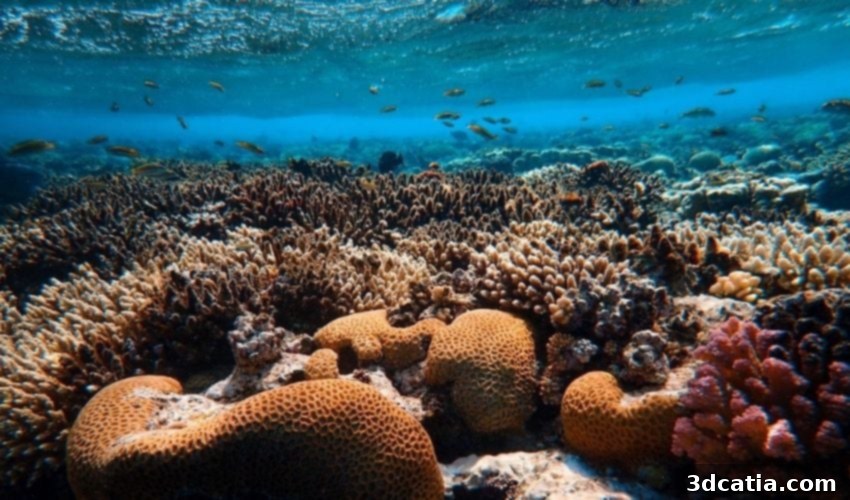
Coral reefs, often called the “rainforests of the sea,” are vital ecosystems teeming with an astonishing array of marine life. They support global biodiversity, protect coastlines, and contribute significantly to human economies through fishing and tourism. However, these precious underwater cities are facing an unprecedented crisis. Climate change, ocean acidification, pollution, and urban development are rapidly devastating coral populations worldwide, pushing many species towards extinction. The stark reality is that nearly 90% of all coral could be eradicated over the next two decades, a terrifying prospect that threatens not only marine ecosystems but also human livelihoods and global food security.
Amidst this grim outlook, innovative solutions are emerging, offering a beacon of hope for marine conservation. One such pioneering initiative is ArchiREEF, a startup launched in 2020 by a visionary team of scientists from The University of Hong Kong (HKU). Their mission: to leverage cutting-edge 3D printing technology to restore marine life in the critically endangered coral reefs near Hong Kong. We have previously highlighted ArchiREEF’s innovative 3D-printed terracotta tiles, but exciting new developments have further underscored the project’s profound impact. In a remarkable achievement, ArchiREEF’s methods have facilitated coral repopulation at a rate four times faster than traditional concrete-based restoration techniques over a six-month period. This extraordinary success demonstrates the immense potential of additive manufacturing in tackling one of the most pressing global environmental crises.
The rapid decline of coral reefs has far-reaching implications. These intricate invertebrate animals, known as coral polyps, form the foundation of ecosystems that support an estimated $200 billion in the global supply of food and medicine. Beyond their ecological and economic value, coral reefs act as natural barriers, protecting coastlines from destructive storm erosion and rising sea levels. The loss of these natural defenses exposes coastal communities to increased risks from extreme weather events, highlighting the critical role reefs play in global resilience. While ArchiREEF’s 3D-printed tiles have proven remarkably effective in swiftly restoring coral habitats, it is important to remember that coral still requires a considerable period—typically 3 to 5 years—to fully mature. Pui Yi Apple Chui, a coral restoration researcher at the Chinese University of Hong Kong, aptly reminds us, “Restoration should be the last resort; we should protect before we restore.” This sentiment underscores the dual imperative of implementing robust conservation measures alongside advanced restoration efforts. Nevertheless, numerous restoration projects are actively underway globally, with several incorporating 3D printing technology, as researchers and conservationists strive to reverse the extensive damage already inflicted upon these invaluable marine environments.
ArchiREEF’s Innovative Coral Restoration in Hoi Ha Wan Marine Park
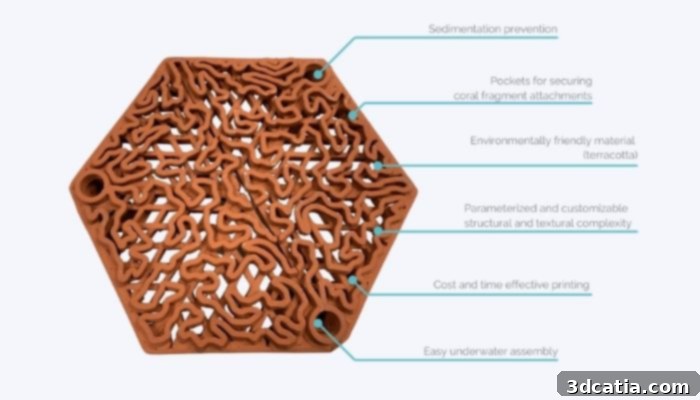
The groundbreaking 3D-printed coral reef tiles deployed in the biologically rich waters of Hoi Ha Wan Marine Park are the product of a collaborative synergy between HKU’s Faculty of Architecture and School of Biological Sciences. This interdisciplinary approach allowed for the integration of advanced design principles with deep ecological understanding. At the heart of their innovation lies a sophisticated algorithm, meticulously designed to accurately print biomimicry patterns inspired by nature itself. These pioneering tiles ingeniously imitate the complex, naturally occurring shape of “brain coral” (specifically, the *Platygyra* genus). The intricate, cavernous turns and undulating surfaces characteristic of *Platygyra* serve as an exceptional host for diverse marine life. The convoluted valleys and sheltered crevices provide ideal nesting grounds and crucial hiding spots from predators, creating a miniature ecosystem that encourages rapid recolonization and biodiversity enhancement. This biomimetic design is crucial; it’s not just about providing a surface for coral to attach to, but about creating an environment that mimics natural reef structures, thereby optimizing conditions for a thriving marine community. The precision offered by 3D printing is instrumental in replicating these complex organic forms with unparalleled accuracy, a feat that would be challenging, if not impossible, using traditional manufacturing methods.
The ArchiREEF team meticulously crafted an artificial reef using tiles, each approximately two feet wide, strategically placed to maximize their ecological impact. The production phase involved creating 128 individual reef tiles, which collectively cover an impressive area of roughly 40 square meters. This initial deployment was successfully completed in July 2020, marking a significant milestone in the project. The Hoi Ha Wan initiative is envisioned as a long-term commitment, with plans extending for another two years, including the development of ten new test sites currently in various stages of planning. This expansion demonstrates the team’s dedication to scaling their innovative restoration efforts and gathering more comprehensive data on their efficacy across different micro-environments. Furthermore, to ensure the long-term sustainability and scalability of this ambitious restoration project, the ArchiREEF team is actively pursuing extensive research into new, more eco-friendly materials. This is a critical undertaking because the current production of terracotta clay, while effective, is an energy-intensive process that results in considerable carbon dioxide emissions. The commitment to finding sustainable alternatives reflects a holistic approach to conservation, aiming to minimize the environmental footprint of the restoration process itself. The overwhelming success observed so far, with results surpassing initial expectations, is incredibly promising. This landmark case, alongside other pioneering applications of 3D technologies, is poised to inspire individuals and organizations globally to actively engage in combating climate change and fostering ecological resilience. We eagerly anticipate the future advancements and expanded impact of this vital project.
The transformative potential of 3D printing, or additive manufacturing, in the realm of marine conservation extends far beyond ArchiREEF’s groundbreaking work. This technology offers unparalleled advantages for ecological restoration, particularly in its ability to create complex, customizable, and biomimetic structures with extreme precision. Traditional methods of reef building often involve sinking large, undifferentiated concrete blocks, which, while providing some substrate, lack the intricate micro-habitats essential for diverse marine life. 3D printing, in contrast, allows scientists and designers to replicate the exact geometries of natural coral, including the nuanced textures and varied crevices that serve as critical shelters and nurseries for fish, invertebrates, and juvenile corals. This level of detail enhances the ecological functionality of artificial reefs, making them far more effective at fostering biodiversity. Moreover, the iterative design capabilities of 3D printing enable rapid prototyping and testing of various structures, allowing researchers to optimize designs based on specific environmental conditions and target species. This agility is crucial in dynamic marine environments, where site-specific solutions are often required. From creating frameworks for coral fragments to grow on, to designing complex wave-attenuating structures that mimic natural reef resilience, 3D printing is emerging as an indispensable tool for protecting and rebuilding our planet’s invaluable marine ecosystems, offering hope where traditional methods have often fallen short.
Understanding the profound significance of coral reefs is key to appreciating the urgency and innovation behind projects like ArchiREEF. These underwater ecosystems are not merely beautiful; they are fundamental to planetary health. They support an estimated 25% of all marine species, making them biodiversity hotspots that are disproportionately rich in life compared to their relatively small footprint on the ocean floor. This incredible biological diversity contributes to a resilient and healthy ocean, providing critical ecological services that ripple throughout the global food web. For humans, the direct benefits are immense: from sustaining lucrative fishing industries that feed millions, to providing potent compounds for medical advancements, including treatments for cancer, arthritis, and bacterial infections. Furthermore, coral reefs provide crucial economic stability for countless coastal communities through tourism and recreation. The vibrant colors and teeming life attract divers and snorkelers, generating significant revenue that supports local economies. The degradation of reefs not only threatens these economic pillars but also undermines the cultural heritage and traditional practices of indigenous communities who have lived in harmony with these ecosystems for centuries. Therefore, the work of ArchiREEF and similar initiatives is not just about saving marine life; it is about preserving a cornerstone of our global ecosystem, protecting human well-being, and ensuring a sustainable future for both nature and humanity.
What are your thoughts on ArchiREEF’s inspiring coral restoration project and the broader potential of 3D printing in environmental conservation? We invite you to share your perspectives in the comments section below or join the conversation on our Facebook and Twitter pages. Don’t miss out on the latest advancements and news in the world of additive manufacturing and sustainable technologies. Sign up for our free weekly newsletter to receive all the crucial updates delivered directly to your inbox!
*All Image Credits: University of Hong Kong