
Revolutionizing Theme Parks: How 3D Printing Creates Immersive Experiences and Next-Gen Attractions
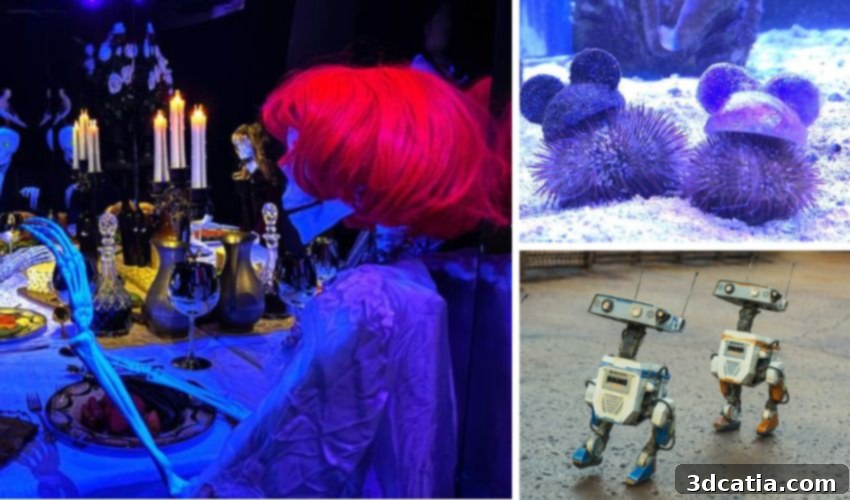
Amusement parks have always been about crafting unforgettable moments, blending exhilarating thrills with meticulously designed environments. What once focused solely on high-speed roller coasters and adrenaline-pumping rides has evolved into an art form of immersive storytelling and hyper-detailed experiential design. Today, the world’s leading theme parks attract millions of visitors annually, not just with their signature attractions, but with entire worlds meticulously crafted to transport guests to fantasy realms. Every single detail contributes to this magic, from the intricate decor of queue lines to the themed restaurants and even functional ride components. Increasingly, 3D printing is at the forefront of bringing these intricate visions to life, serving as a powerful tool for innovation in the amusement and leisure industry. This advanced manufacturing technology empowers designers and engineers to create custom, eye-catching, and highly functional elements that were once impossible or prohibitively expensive to produce using traditional methods. Whether it’s unique props, elaborate set pieces, structural components, or even sophisticated character enhancements, 3D-printed designs are transforming the landscape of theme park development. While many cutting-edge projects remain behind the scenes, a growing number of publicly recognized collaborations showcase the incredible potential of 3D printing in creating truly one-of-a-kind experiences. Sharp-eyed guests often spot these intricate details, sharing their discoveries and fueling the excitement around this cutting-edge application that is redefining what’s possible in entertainment.
Enhancing Character Performance with 3D-Printed Exoskeletons in Disney Parks
Disney, a global leader in immersive entertainment and character experiences, is leveraging the power of 3D printing to revolutionize its character performances through an ambitious initiative known as Project Exo. This groundbreaking project focuses on developing sophisticated exoskeleton structures that enable performers to embody oversized characters with unprecedented realism, agility, and comfort. The core of this patented invention is a lightweight yet incredibly robust 3D-printed lattice framework. This innovative design serves a crucial ergonomic purpose: it strategically transfers the significant weight of elaborate character costumes directly to the ground, rather than burdening the performer. The result is a dramatic reduction in physical strain, allowing cast members to move more freely, naturally, and interact convincingly with guests for extended periods. This not only enhances the performer’s well-being and longevity in the role but also elevates the magic of character interactions, making them more believable, dynamic, and engaging for visitors. Beyond structural support, Project Exo also incorporates a series of on-demand 3D-printed “bio-elements.” These intricate components, ranging from simulated muscles and fat to other biological features, are crucial for achieving lifelike textures and realistic movement within the costumes. By rapidly producing these detailed elements, Disney Imagineers can ensure that every character costume looks and feels authentic, responding convincingly to physical motion and external contact. This capability allows for quick iterations and customization, ensuring that each character is perfectly articulated and expressive, further blurring the line between fantasy and reality. This application of 3D printing highlights its capacity for both ergonomic enhancement and aesthetic fidelity, pushing the boundaries of live entertainment and character meet-and-greets.
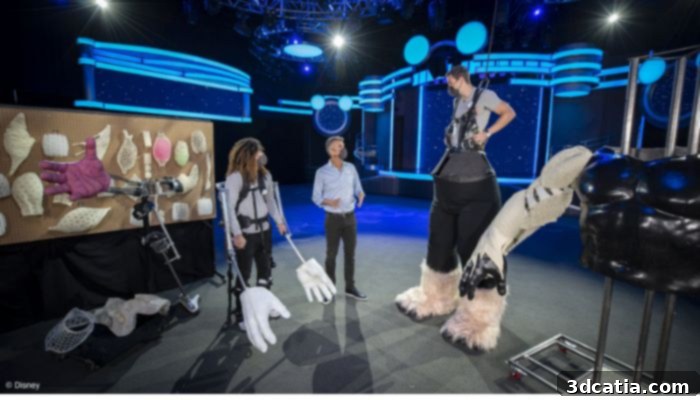
Photo Credit: Disney, Walt Disney Studios
Walt Disney Imagineering: Innovative 3D-Printed Flooring at Epcot’s Connections Café & Eatery
Epcot, known for its enduring celebration of human achievement, technological innovation, and international culture, has embraced 3D printing in a stunning new way as part of its multi-year transformation. At the heart of World Celebration, the new Connections Café & Eatery features an intricately designed 3D-printed floor that perfectly blends cutting-edge technology with profound historical homage. This unique flooring is more than just a surface; it’s a dynamic storytelling element, a tangible testament to Epcot’s legacy and Walt Disney’s original, forward-thinking vision. Disney Imagineers, celebrated for their relentless pursuit of creative and technical solutions, utilized a sustainable biopolymer material for the printing process. This conscious choice underscores Disney’s broader commitment to environmental responsibility and sustainable practices, while simultaneously demonstrating the remarkable versatility of additive manufacturing. The floor’s design draws direct inspiration from Walt Disney’s initial visionary concept for ‘Epcot City’ – specifically its groundbreaking radial layout and urban planning principles. The precise, geometrically perfect patterns and intricate details were first 3D printed to serve as an exact template or mold. Following this, skilled artisans meticulously poured inlays into the 3D-printed guides, carefully sanding and buffing them to achieve a flawless, smooth, and durable finish. The result is a dynamic and visually stunning tribute that honors Epcot’s origins while boldly looking toward its future as a living, evolving park. This project exemplifies how 3D printing facilitates the creation of complex, custom designs that would be challenging, time-consuming, and potentially cost-prohibitive with traditional construction methods. It makes it an invaluable tool for maintaining the exceptionally high aesthetic and thematic standards of Disney parks. This initiative is a prime example of how 3D-printed floors and architectural elements can contribute to an overall immersive environment, reflecting Walt Disney’s enduring philosophy of Epcot as a “living blueprint of the future.”
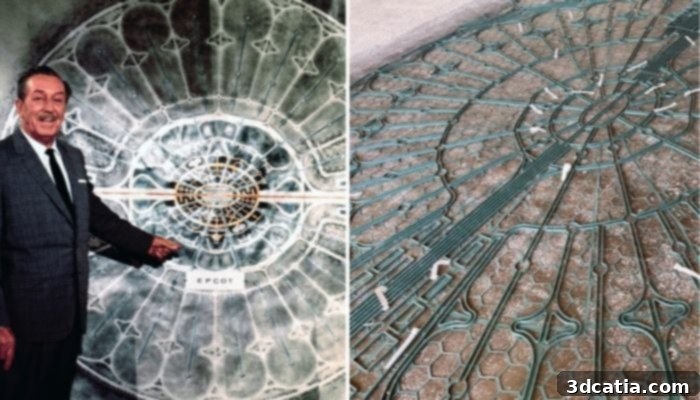
Photo credits: Disney Archives / Zach Riddley via The Walt Disney Company.
Fashion Meets Fantasy: Coperni’s 3D-Printed Ariel Swipe Bag at Disneyland Paris
The captivating magic of Disney parks extends far beyond just attractions and entertainment, even reaching into the exclusive world of high fashion. In a truly remarkable fusion of haute couture and fantasy, the renowned French fashion house Coperni chose the iconic Sleeping Beauty Castle at Disneyland Paris as the majestic backdrop to unveil a groundbreaking new accessory during its SS2025 runway show in October 2024: the completely 3D-printed Ariel Swipe Bag. This enchanting handbag, directly inspired by the beloved Disney mermaid princess Ariel, represents a significant leap forward in wearable additive manufacturing, blurring the lines between art, technology, and storytelling. To achieve its unique, fluid form and captivating aquatic aesthetic, Coperni collaborated with Rapid Liquid Print, a company celebrated for its innovative “gravity-free” printing technique. This advanced method involves submerging a needle-equipped nozzle into a tank filled with a specialized, transparent, water-based gel. This gel acts as a dynamic support medium, expertly stabilizing the liquid silicone as it’s precisely extruded layer by layer. The silicone then cures within the gel, allowing for the creation of incredibly complex, organic, and intricate shapes without the need for traditional solid support structures or being constrained by the forces of gravity. The result is a stunningly charming and distinctive creation that perfectly encapsulates Ariel’s graceful movement and the ethereal nature of the underwater world. This high-profile collaboration not only highlights the immense artistic possibilities of 3D printing in luxury fashion but also demonstrates how iconic theme parks can serve as unique, inspiring backdrops for showcasing technological and creative advancements. The Ariel Swipe Bag is a testament to the astonishing versatility of 3D printing, proving its capability to produce intricate, high-quality products for diverse industries, from cutting-edge engineering to high-end fashion, all while captivating global audiences at a premier entertainment destination like Disneyland Paris.
Modernizing a Classic: The Ghost Train Renovation with Bambu Lab 3D Printers at Luna Park Melbourne
Celebrating a significant and venerable milestone, the iconic Ghost Train at Luna Park Melbourne underwent a complete and spectacular modernization for its 90th anniversary, with 3D printing playing a pivotal and transformative role in its revitalization. This beloved haunted attraction, renowned as one of the oldest of its kind globally, was skillfully brought into the 21st century under the visionary creative direction of designer Edward Félix. His innovative approach expertly blended traditional craftsmanship, preserving the ride’s nostalgic charm, with state-of-the-art technology to enhance its spooky ambiance and immersive storytelling. The extensive renovation process began with a comprehensive, high-resolution 3D scan of the entire attraction. This crucial first step provided Félix and his team with a precise digital twin, allowing them to virtually experiment with new designs, layouts, and thematic elements without any risk to the existing physical structure or valuable historical resources. It served as an invaluable digital sandbox for unparalleled innovation and creative exploration. From this robust digital foundation, numerous elements crucial to setting the scene and enhancing the narrative for each part of the train’s journey were meticulously 3D printed. Specifically, four ornate candelabras designed to cast eerie shadows, custom LED light covers crafted to create dramatic illumination, an entire library filled with detailed false books, and various hidden structural components were precisely fabricated. These essential parts were produced using four high-performance Bambu Lab X1 Carbon printers, known for their exceptional speed, precision, and ability to handle a wide variety of materials. The adoption of 3D printing for this ambitious project offered immense advantages. Beyond facilitating the creation of intricate aesthetic details, it provided unparalleled ease in customizing and manufacturing all components to exact specifications. This allowed for rapid iteration of designs, ensuring that every prop and structural piece perfectly fit the desired theme and functional requirements, all while keeping the project well within budget. The ability to create complex, bespoke elements on demand significantly streamlined the renovation, proving 3D printing to be an indispensable tool for preserving, enhancing, and future-proofing historical attractions.
![[Left]: Scene with 3D-printed candelabras. [Right]: Fully 3D-printed fake library. (Credit: Bambu Lab Blog)](https://3dcatia.com/wp-content/uploads/2025/10/img_66040_4.jpg "Shaping Tomorrow's Thrills Our Top 3D Printed Theme Park Creations 4")
[Left]: Scene with 3D-printed candelabras. [Right]: Fully 3D-printed fake library. (Credit: Bambu Lab Blog)
Engineering Efficiency: Lighter Components and Reduced Operational Load at Luna Park (Italy)
In a testament to the profound transformative potential of additive manufacturing for industrial and recreational applications, a highly collaborative and ambitious project titled M.P.M.A.G. (Method of Design and Production in Additive Manufacturing of Complex Components for the Carousel Rides Sector) brought together numerous leading Italian companies. Under the expert leadership of Verona-based Extreme Analysis Engineering, this consortium aimed to thoroughly integrate additive manufacturing into the core design and production processes of amusement park rides. Key partners included ProM and its innovative Polo Meccatronica workshop, Guarnieri, the esteemed University of Padua, Exemplar, and many other specialized collaborators, each contributing invaluable expertise in materials science, advanced engineering, and cutting-edge manufacturing techniques. The primary objective of the M.P.M.A.G. project was multi-faceted and comprehensive: to develop and produce functional prototypes of complex carousel components using advanced additive manufacturing techniques such as Selective Laser Melting (SLM) for metal parts and Direct Energy Deposition (DED) for repair and creation; to secure intellectual property through filing three robust patent applications related to these pioneering innovations; to design an integrated Internet of Things (IoT) system for enhanced operational monitoring and predictive maintenance; and ultimately, to completely redesign a modern swinging carousel incorporating these additively manufactured components. One of the most significant and impactful outcomes was the drastic reduction in the weight of individual components. By meticulously optimizing designs specifically for 3D printing, engineers were able to create parts that were functionally robust and structurally sound, yet substantially lighter than those traditionally produced through conventional manufacturing methods like casting or machining. This significant weight reduction had a positive cascade of effects throughout the ride’s operation: it dramatically lowered the overall structural load on the carousel, enhancing safety, reducing wear and tear, and potentially extending the ride’s operational lifespan. Furthermore, the decreased weight directly translated into significantly lower energy consumption for motors, brakes, and overall electricity usage, leading to substantial operational cost savings, reduced maintenance, and a much-improved environmental footprint. The project culminated in the successful introduction of a new, highly efficient, and innovative swinging ride in Italian amusement parks, offering an even more exciting, safer, and sustainable experience for visitors, all thanks to the intelligent and innovative application of 3D printing technology. This initiative perfectly illustrates how additive manufacturing can drive both performance improvements and sustainable practices within the dynamic leisure industry.
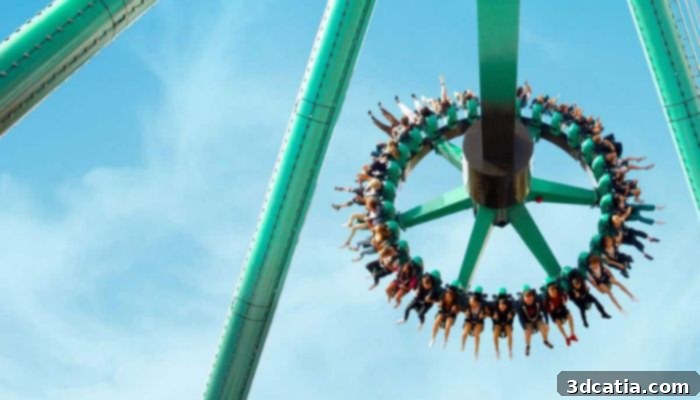
Photo Credit: Luna Park Italia
Animal Welfare Enhanced: Disney Embraces 3D Printing at Animal Kingdom Park
At Disney’s Animal Kingdom, the spirit of innovation is deeply intertwined with a profound, unwavering commitment to animal welfare and enrichment. Walt Disney Imagineering’s creative teams collaborate closely with the park’s dedicated caretakers and animal behaviorists to develop cutting-edge improvements tailored to the unique and specific needs of the hundreds of species residing there. This holistic approach ensures not only their impeccable physical and medical care but also vital mental and behavioral stimulation, which is absolutely essential for the animals’ overall development, happiness, and well-being. Modern technologies like 3D printing, sophisticated motorized mechanisms, and the ingenious use of recycled materials are key components in these compassionate efforts. Among the notable initiatives is the creation of the “cheetah ball.” This innovative, motorized device, partly designed and fabricated using 3D printing, serves as a dynamic and engaging enrichment tool. It’s cleverly engineered to awaken the cheetahs’ natural hunting instincts and encourage vigorous running, simulating the physical exertion and predatory behaviors they would experience in their wild habitats. The customizable nature and rapid prototyping capabilities of 3D printing allowed for swift iterations and fine-tuning of the device to maximize its effectiveness, safety, and durability for the powerful felines. Similarly, primates at Animal Kingdom benefit immensely from specific innovations like intricate food puzzles. These puzzles, often crafted from recycled materials for sustainability, are designed with varying levels of complexity to stimulate the animals’ curiosity, challenge their problem-solving skills, and provide engaging, enriching activities that closely mimic natural foraging behaviors. The inherent flexibility and design freedom offered by 3D printing enables the creation of complex, varied, and easily updated puzzle designs that can be regularly changed to prevent habituation, ensuring continuous mental engagement and preventing boredom. By integrating 3D printing and other advanced technologies, Disney Animal Kingdom demonstrates how modern manufacturing can contribute significantly to environmental stewardship and exemplary animal care, creating a more stimulating, humane, and naturalistic environment for its resident species. This initiative powerfully underscores the versatile impact of 3D printing, extending its profound benefits far beyond human entertainment to encompass the crucial well-being of the natural world and its incredible inhabitants.
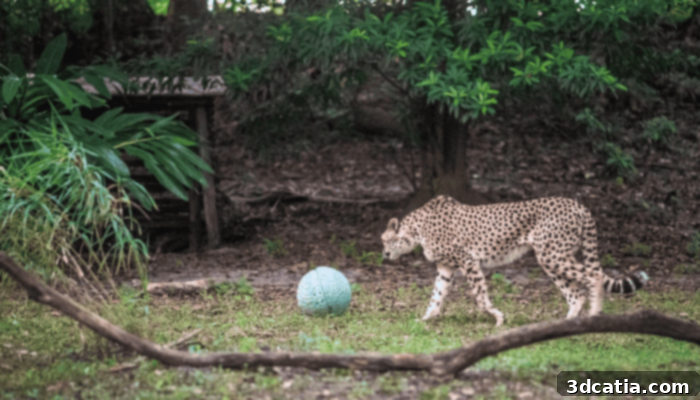
Photo Credit: Thrill Geek
Bringing Characters to Life: BDX Droids Enchant Disney Parks with 3D Printing
From the captivating narratives of the hit series “The Mandalorian” to the bustling pathways of Disneyland parks across the globe, the adorable BDX droids have made a remarkable and much-anticipated leap from screen to reality, quickly becoming cherished favorites among visitors of all ages. These charming robots are not merely static props; they move with incredibly authentic, lifelike motion and expressive gestures, creating a truly magical and interactive experience for guests, much to their delight. Kyle Laughlin, Senior Vice President of Walt Disney Imagineering’s Research and Development division, aptly summarizes their profound purpose: “The droids were not designed for a factory; rather, they were designed to spark emotions in people.” This core philosophy underscores the meticulous attention to detail and advanced engineering that went into their creation. To achieve this profound emotional connection and intricate functionality, the dedicated Disney Research team in Zurich took on the significant challenge of designing these expressive robots from the ground up. Their ambitious goal was to imbue the droids with unique personalities and responsiveness that would genuinely bring the parks to life and foster immediate guest engagement. A crucial and enabling factor in their rapid development and successful deployment was the extensive and strategic use of 3D printing technology. Many intricate, custom-designed, and expressive components of the BDX droids are precisely produced using additive manufacturing. This capability allowed the team to iterate design concepts quickly, prototype complex parts efficiently, and then manufacture the final robots in record time. The entire development process, from the initial concept sketches to the fully functional, emotionally resonant droid model, astonishingly took less than a year – an unprecedented feat for such sophisticated animatronics and robotics. Thanks to the flexibility, speed, and customization offered by 3D printing technologies, multiple droids could be built and deployed simultaneously, ensuring their widespread presence across various parks and maximizing their profound impact on guest experiences. The BDX droids perfectly exemplify how 3D printing facilitates the creation of highly detailed, customized, and emotionally resonant characters, truly embodying Disney’s enduring commitment to innovation in storytelling and unparalleled guest engagement.
The integration of 3D printing within the amusement park industry is rapidly evolving, consistently driving innovation in design, functionality, and visitor engagement across all facets of operations. From enhancing the realism of character interactions and creating incredibly immersive themed environments to optimizing ride components for safety and efficiency, and even promoting animal welfare through custom enrichment tools, additive manufacturing is proving to be an indispensable tool for the future of entertainment. These highlighted examples represent just a fraction of the incredible possibilities that 3D printing unlocks, enabling parks to craft more memorable, sustainable, and magical experiences for guests worldwide. As technology continues to advance and become more accessible, we can expect even more imaginative and groundbreaking applications to emerge, further solidifying 3D printing’s pivotal role in shaping the next generation of theme park attractions and beyond.
What do you think about the transformative use of 3D printing in amusement parks and its potential for the future? We’d love to hear your thoughts! Share your insights in a comment below or connect with us on our LinkedIn or Facebook pages! Plus, don’t forget to sign up for our free weekly Newsletter to get the latest 3D printing news, breakthroughs, and applications delivered straight to your inbox. You can also find all our engaging videos and exclusive content on our YouTube channel.