

Revolutionizing Manufacturing: AI, Cold Weather 3D Printing, and Customization Drive Innovation
This week brings a fresh wave of innovation from the world of additive manufacturing, showcasing how 3D printing continues to push boundaries across diverse sectors. From groundbreaking research by U.S. Army scientists developing construction methods for extreme cold environments to the exponential growth of artificial intelligence in optimizing production, and from advanced metal printing techniques to personalized consumer products, the industry is witnessing transformative advancements. This deep dive explores how these cutting-edge developments are not just enhancing efficiency and reducing costs, but also enabling previously impossible applications, truly shaping the future of design and manufacturing. Join us as we uncover these fascinating stories and their potential impact on our world.
U.S. Army Scientists Pioneer Ice 3D Printing for Arctic Construction
In a remarkable display of ingenuity, scientists from the U.S. Army Corps of Engineers have achieved a significant breakthrough: successfully 3D printing an ‘ice dollhouse.’ This innovative project, undertaken at the Cold Regions Research and Engineering Laboratory (CRREL), represents a monumental step forward for construction possibilities in the planet’s most challenging and remote cold regions. The goal is to leverage naturally abundant materials like water and extreme temperatures to create essential infrastructure, from igloos and temporary shelters to crucial road repairs.
The process involved modifying a standard ceramic 3D printer to handle a unique material mixture. This mixture comprised water combined with tiny fibers of wood pulp, which were then deposited layer by layer. Crucially, each layer needed to be frozen rapidly during the deposition process to maintain its structural integrity and build the desired shape. Kiera Towell, a research materials engineer at CRREL, articulated the project’s core objective: “In scenarios where your usual construction methods don’t work, can you use 3D printing with the natural available materials and take advantage of the cold temperatures to use ice instead, to get you whatever you need through the winter?” This highlights the strategic importance of developing resilient and adaptable construction techniques for military operations and humanitarian aid in polar environments.
While the successful creation of the ice dollhouse demonstrates feasibility, the project still faces notable challenges. One primary hurdle lies in optimizing the material itself, ensuring it possesses sufficient fluidity to pass smoothly through the printer’s nozzle while simultaneously solidifying instantaneously upon extrusion to hold its form. The delicate balance between flowability and rapid freezing is critical for larger, more complex structures. Despite these technical intricacies, the CRREL scientists are actively working on scaling up the initiative. Their next phase involves utilizing a larger printer to fabricate bigger, taller structures, aiming to transition from an ‘ice dollhouse’ to something as substantial as an ‘ice doghouse.’ This ongoing research promises to unlock new frontiers in sustainable and adaptive construction, offering vital solutions for cold weather engineering and resource-constrained environments globally.
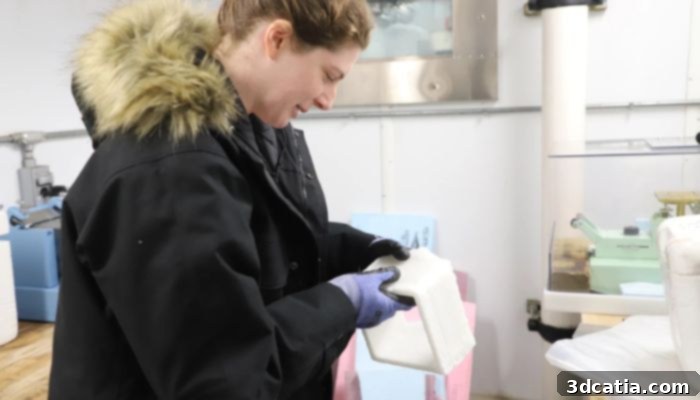
Photo Credits: Justin Campfield/US Army Corps of Engineers
Global AI 3D Printing Market Set for Sharp Growth and Integration
Artificial intelligence has rapidly transitioned from a niche concept to a ubiquitous force, profoundly influencing nearly every facet of our daily lives since groundbreaking innovations like ChatGPT demonstrated its immense capabilities. The manufacturing sector, particularly 3D printing (also known as additive manufacturing), stands out as an area where AI’s integration is proving exceptionally transformative. The inherent complexity and data-rich nature of additive manufacturing processes make it an ideal candidate for AI optimization, leading to significant advancements in efficiency, quality, and design freedom.
A recent comprehensive report by the Business Research Company underscores this synergy, forecasting an explosive growth trajectory for the AI in 3D printing market. The study estimates that this market, already valued at an impressive $1.7 billion in 2023, is projected to skyrocket to $9 billion, demonstrating a staggering compound annual growth rate (CAGR) of 39.7%. This remarkable expansion is fueled by several critical drivers that are reshaping industrial production. Firstly, there’s an increasing global demand for enhanced efficiency and substantial reductions in production costs, pressures that AI is uniquely positioned to address through process automation and predictive analytics. Secondly, the escalating consumer and industrial need for highly customized and personalized products necessitates advanced design and manufacturing capabilities, which AI-driven 3D printing readily provides.
Furthermore, AI contributes significantly to optimizing various aspects of the 3D printing workflow. This includes generative design, where algorithms create intricate, optimized geometries impossible for human designers; real-time process monitoring and control to minimize defects and improve print success rates; and intelligent material selection, predicting optimal material properties for specific applications. The increasing automation across all stages of additive manufacturing, from initial design to post-processing, is heavily reliant on AI. These factors collectively position AI-powered 3D printing as a dominant trend to meticulously observe in the coming years, promising to redefine how products are conceived, designed, and manufactured across industries, from aerospace and healthcare to automotive and consumer goods.

AI in 3D printing is experiencing unprecedented growth
New Case Study Unlocks the “Holy Grail” of Metal LPBF 3D Printing
The pursuit of the “Holy Grail” in metal 3D printing—characterized by simultaneous high productivity, exceptional surface quality, and significant cost savings—has long been a paramount objective for manufacturers. A groundbreaking collaboration between three industry leaders, Equispheres, Aconity3D, and Dyndrite, has yielded a compelling case study demonstrating how these seemingly conflicting goals can be achieved in Laser Powder Bed Fusion (LPBF) additive manufacturing. This detailed study provides invaluable insights into optimizing metal 3D printing for demanding industrial applications.
The key to this breakthrough lies in the synergistic combination of advanced hardware, innovative materials, and sophisticated software. The process begins with the integration of cutting-edge laser beam shaping technologies, which allow for precise control over the laser’s interaction with the metal powder bed. This precision is complemented by the use of highly engineered AM powders, specifically developed by Equispheres. These specialized powders exhibit superior flowability and melting characteristics, which, when combined with optimized laser parameters, collectively led to remarkable productivity gains of 7-9 times over conventional methods. Such an increase in speed directly translates to reduced manufacturing lead times and lower operational costs per part.
However, high speed often comes at the expense of surface quality. To counteract this, Dyndrite LPBF Pro software was integrated into the workflow. Dyndrite’s next-generation additive manufacturing software provides unparalleled control over the build process, enabling engineers to meticulously manage parameters that influence surface finish, internal stresses, and overall part integrity. By leveraging the advanced computational capabilities of Dyndrite, the team was able to ensure that even with significantly increased build speeds, the resulting metal parts maintained superior surface quality, often a critical requirement for aerospace, medical, and high-performance industrial components.
This downloadable case study is designed to be a comprehensive resource for users, shedding light not only on the intricate interplay between software, material science, and process optimization but also on the tangible benefits in real-world applications. It serves as a testament to how collaborative innovation can overcome long-standing challenges in metal additive manufacturing, making LPBF a more viable and competitive production method for a broader range of industries seeking to enhance performance while controlling costs.
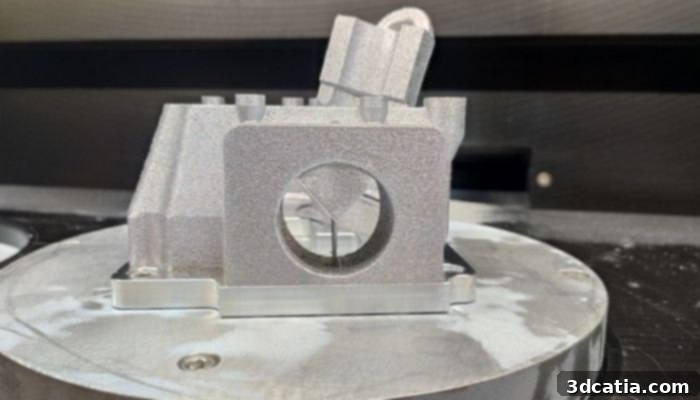
A part made by Aconity3D and Equispheres (photo credits: Equispheres)
FDR Technology Creates Ultralight Support Frames for Festo’s BionicBee Project
Innovation in robotics and automation often hinges on the development of highly specialized, lightweight, and robust components. This principle is perfectly exemplified by a collaborative project between 1zu1 Prototypen GmbH & Co. KG, a high-tech expert in 3D printing, and Festo, a leading automation specialist. Together, they have developed an exceptionally lightweight support frame using 1zu1’s advanced Fine Detail Resolution (FDR) technology, specifically for Festo’s autonomous flight initiative, the BionicBee.
The BionicBee is a fascinating project designed to simulate the complex swarming behavior of bees. By studying these intricate movements and interactions, Festo aims to gain critical insights that can be applied to future automation technologies, enhancing the capabilities of autonomous systems in various industrial contexts. For such a delicate and precise flying object, every gram matters, making lightweight yet stable components absolutely essential. This is where FDR laser sintering technology proved indispensable.
FDR technology allows for the manufacturing of functional plastic parts with incredibly intricate structures while simultaneously maintaining strong mechanical properties. This precision is remarkable, enabling a detail resolution of just 0.05 millimeters, which translates into exceptionally accurate and fine printing results. For the BionicBee’s frame, made from PA 11 material, the 3D-printed structure weighed a mere 3 grams, with individual struts only 0.9 millimeters thick. This design provides an extremely light yet remarkably stable support structure, crucial for the BionicBee’s aerial maneuvers and stability.
Beyond the critical aspect of low weight, the FDR-printed frame offers several additional advantages, including inherent stability, a degree of flexibility to absorb minor impacts, and the profound possibility of individual customization for different iterations of the robotic bee. Mattias-Manuel Speckle, Head of Additive Manufacturing Prototyping at Festo, lauded the results, stating, “The results are visually equivalent to particularly detailed stereolithography, but many times more robust. The feather-light and flexible parts withstand take-off and landing without any problems.” This testament highlights FDR’s capability to deliver both aesthetic precision and functional durability, setting new standards for lightweight engineering in advanced robotics and autonomous flight systems.
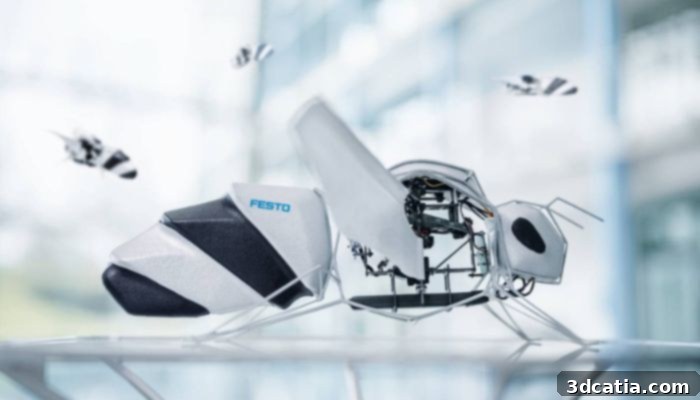
Festo’s BionicBee sets new standards for autonomous flight and, thanks to 3D-printed components from 1zu1, the flying object weighs just 34 grams (photo credits: Festo SE & Co. KG)
Fitasy Revolutionizes Footwear with AI and 3D Printed Custom Sports Shoes
For sports enthusiasts and anyone seeking unparalleled comfort and performance, the latest innovation from Fitasy is set to transform the footwear industry. Unveiled at the prestigious ISPO sports trade fair in Munich, the US-based company introduced a groundbreaking approach to creating customized 3D-printed sports shoes. This revolutionary process seamlessly integrates mobile smartphone scanning, advanced AI modeling, and precise 3D printing technology to deliver footwear perfectly tailored to each individual’s unique needs.
The production process begins with an incredibly accessible and user-friendly step. Customers utilize the Fitasy app on their smartphone to conduct a detailed 3D scan of their feet. This eliminates the need for specialized equipment or inconvenient appointments, making personalized footwear accessible to a broader audience. Once the precise anatomical data of the foot is captured, it is securely transmitted to Fitasy’s platform. Here, sophisticated AI modeling algorithms spring into action. The AI analyzes the individual foot geometry, accounting for subtle differences in arch height, foot width, pressure points, and even medical considerations, to create a truly bespoke shoe model.
Following the AI’s design optimization, the customized shoe model is brought to life through a state-of-the-art 3D printing process. The shoes are fabricated from high-quality thermoplastic materials, chosen for their durability, flexibility, and lightweight properties. This additive manufacturing approach allows for intricate internal structures and varying densities within the shoe, which can be precisely engineered to provide targeted support, cushioning, and responsiveness where it’s needed most. Fitasy places a strong emphasis on not only lightness and comfort but also on integrating the wearer’s medical factors. This ensures that the shoes provide optimal biomechanical support, reduce the risk of injury, and enhance overall athletic performance. The synergy of mobile technology, artificial intelligence, and 3D printing democratizes access to truly personalized athletic gear, promising a future where ill-fitting shoes are a thing of the past.
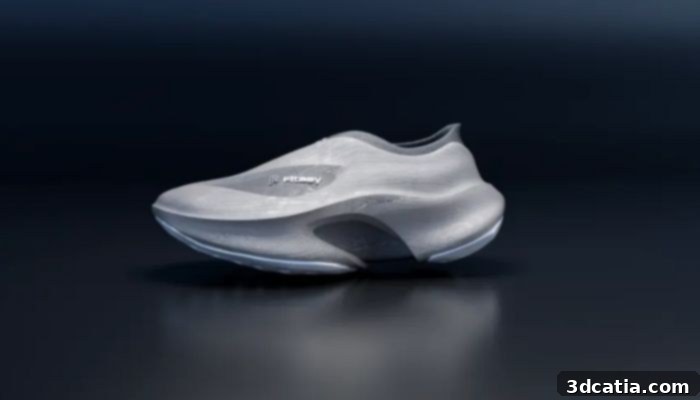
Fitasy combines mobile 3D scanning, AI technology and 3D printing to create customized shoes (photo credits: Fitasy)
The innovations highlighted this week underscore the dynamic and evolving landscape of 3D printing and its complementary technologies. From enabling resilient construction in challenging arctic environments to revolutionizing personalized consumer products and optimizing industrial manufacturing with AI, additive manufacturing is clearly at the forefront of technological progress. These advancements not only demonstrate the incredible versatility of 3D printing but also its potential to solve complex problems and create entirely new possibilities across various sectors. What are your thoughts on these groundbreaking developments? Let us know in a comment below or on ourLinkedIn,Facebook, andTwitter pages! Don’t forget to sign up for our free weeklyNewsletter here, the latest 3D printing news straight to your inbox! You can also find all our videos on ourYouTube channel.
*Cover Photo Credits: Justin Campfield/US Army Corps of Engineers