
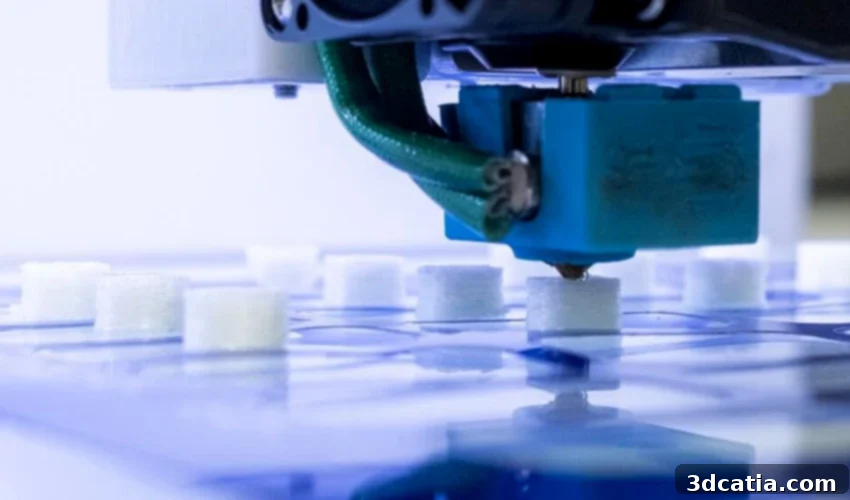
The Future of Personalized Medicine: Exploring 3D Printed Drugs and Their Impact on Pharmaceuticals
Personalized medicine represents a revolutionary approach to healthcare, tailoring treatments to the unique genetic makeup, lifestyle, and individual characteristics of each patient. At the forefront of enabling these custom-made therapies is additive manufacturing, commonly known as 3D printing. Within the medical sector, 3D printing technologies have already demonstrated their transformative potential, facilitating the creation of bespoke prosthetics, specialized implants, and a wide array of other custom medical devices designed to fit patients perfectly. The innovation extends even further, with research and development actively exploring the creation of 3D bioprinted organs. Beyond devices and organs, another crucial frontier for adapting treatment to individual patient needs lies in the development of personalized drugs. 3D printed drugs are emerging as a game-changer, offering the potential to precisely meet each patient’s specific requirements and fundamentally alter pharmaceutical treatments in the long term. This article delves into the various 3D printing technologies currently employed to create these innovative medicines, examining the techniques, their myriad benefits, and their anticipated impact on the global pharmaceutical industry.
Today, millions worldwide rely heavily on prescription medications to manage a diverse range of conditions and illnesses. However, a significant challenge arises from the traditional mass production of uniform pills. This conventional manufacturing model often leads to patients consuming dosages that may not be optimally suited for their body weight, metabolism, or specific medical condition, frequently resulting in doses above or below the ideal therapeutic window. Fred Paretti, CEO of Multiply Labs – a leading manufacturer of pharmaceutical filament crucial for creating 3D printed pills – highlights this critical issue:
“Currently, medications are developed especially for white adult men, which means that all women and children often receive an excessive prescription for their bodies. This fact profoundly underlines the importance of personalized medicines, emphasizing the unique physiological individuality of each patient. Errors in the dosage of certain active ingredients can, in fact, lead to the reduced efficacy or even complete malfunctioning of some treatments, underscoring the urgency for a more tailored approach.” This insight powerfully illustrates why a one-size-fits-all approach to medication is increasingly outdated and potentially detrimental.

Since 2018 the market for 3D printed medicines has experienced a growth rate of 7% | Credits: Industry Stats Report
Observing the advancements in 3D printed drug development over the past few years paints an encouraging picture for the future of pharmaceuticals. The market for 3D printed drugs has witnessed substantial expansion, experiencing a robust 7% annual growth rate since 2018. Projections from the Industry Stats Report study indicate that this burgeoning market is expected to reach a value of $437 million by 2025. This rapid growth signifies a crucial shift in the pharmaceutical landscape, driven by innovation and increasing demand for customized solutions. Notably, the United States stands as the primary driver of this growth, accounting for a significant 39.75% share of total revenue. This dominance can be attributed to the substantial investments made by major pharmaceutical companies within the country in research and development dedicated to advanced 3D printing techniques. Their commitment is accelerating the pace of innovation, pushing the boundaries of what’s possible in drug manufacturing and paving the way for wider adoption of these personalized solutions globally.
Milestones in 3D Printed Drug Development: A Historical Overview
The journey of 3D printed medications began in earnest in 2015 with the landmark launch of Spritam. This pioneering pill, specifically developed for the treatment of epilepsy, was created using advanced powder bed technologies. Its approval by the FDA marked it as the world’s first 3D printed drug, opening an entirely new chapter in pharmaceutical innovation. Developed by Aprecia Pharmaceuticals, Spritam not only validated the concept of customized pills but also demonstrated the feasibility of treatments with varying doses tailored for individual patients. Today, Aprecia Pharmaceuticals remains a pivotal player in this specialized industry, continuously manufacturing Spritam using its patented ZipDose® technology. This groundbreaking technology allows the drug to dissolve within seconds upon contact with liquid, offering a profound advantage for individuals suffering from epilepsy, who often require rapid drug action, and for patients who struggle with swallowing traditional pills.
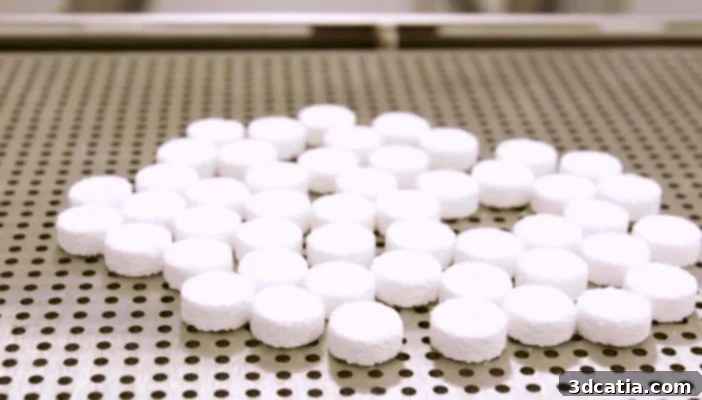
In 2015 the first 3D printed pill was released: Spritam | Credits: Aprecia Pharmaceuticals
The same pivotal year that saw the introduction of Spritam, 2015, also witnessed another significant breakthrough. Dr. Martin Burke, a distinguished researcher at the Howard Hughes Medical Institute, along with his dedicated team, innovated a specialized 3D printer capable of manufacturing drugs by assembling molecular blocks. This ingenious approach stemmed from the observation that small molecules frequently exhibit recurring patterns or groups of atoms. Capitalizing on this insight, Dr. Burke’s team isolated hundreds of these fundamental patterns and engineered a 3D printer specifically designed to assemble them, much like building with LEGO bricks, to construct any desired molecule. This pioneering work laid a robust foundation for the development of highly customized pills, allowing for unprecedented precision in drug composition and a radical shift towards true molecular-level personalization in medication.
Further expanding the horizons of 3D printed drug development in its early stages was a groundbreaking study from the National University of Singapore (NUS). This research not only demonstrated the feasibility of printing multiple active pharmaceutical ingredients into a single pill but also revealed the extraordinary potential to precisely schedule the release of each substance within that pill. This “poly-pill” concept, allowing for varied and controlled drug release profiles from a single dosage form, promised to revolutionize patient compliance and simplify complex treatment regimens. Recognizing this immense potential, Multiply Labs launched its startup in 2016, bringing this innovative idea to market. Today, Multiply Labs specializes in manufacturing advanced pharmaceutical filaments that enable the programmed, time-released delivery of drugs within a sophisticated 3D printed capsule. Fred Paretti elaborated on their unique approach:
“At Multiply Labs, we apply 3D printing to the manufacture of the capsule or container of the medicine itself. This isn’t just a normal capsule; inside this 3D printed cover, we actually have separate compartments. Crucially, each part of the capsule can be engineered to release a specific drug at a different, predetermined time.” While Multiply Labs primarily focuses on printing the drug delivery mechanism rather than the active substances themselves, their multi-compartment 3D printed pills offer a powerful solution for large pharmaceutical companies. This technology could allow patients who currently require multiple medications throughout the day to take just a single, intelligently designed pill, significantly enhancing convenience and adherence to treatment.
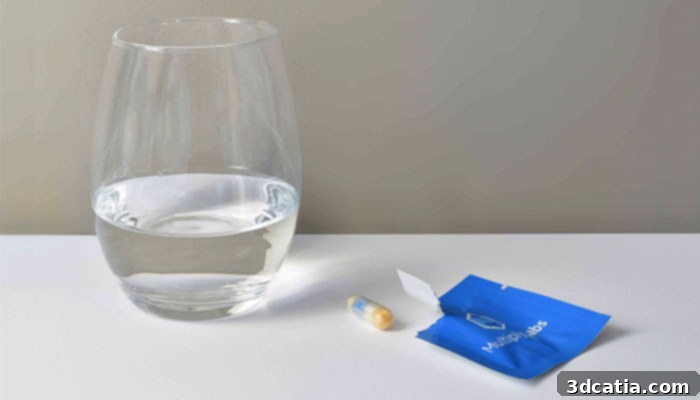
Multiply Labs manufactures the 3D printed pill compartments and cover | Credit: Multiply Labs
Current 3D Printing Technologies Driving Pharmaceutical Innovation
Since the monumental introduction of the first 3D printed drug in 2015, there has been a continuous surge in the development and refinement of additive manufacturing techniques specifically adapted for pharmaceutical production. To provide an in-depth understanding of these cutting-edge techniques, we enlisted the expertise of FabRx, a renowned “Pharmaceutical Biotechnology Spin-out of University College London (UCL), which specializes in the 3D printing of oral dosage forms – essentially, the creation of drugs through additive manufacturing,” as explained by Patricija Januskaite, Senior Scientist at the company. Their insights are invaluable in navigating the complexities of this rapidly evolving field.
Fused Deposition Modeling (FDM)
The Fused Deposition Modeling (FDM) or Fused Filament Fabrication (FFF) technique stands out as one of the most widely adopted and versatile methods in the realm of 3D drug printing. This technology involves extruding pharmaceutical-grade filaments, which are loaded with active medicinal ingredients, layer by layer to construct custom pills. A primary challenge and a critical consideration when utilizing FDM for drug manufacturing is meticulously adjusting and controlling the extrusion temperatures. Any deviation can potentially compromise the stability and efficacy of the active pharmaceutical ingredients (APIs) embedded within each pill. Despite this, FDM offers significant advantages. As Patricija Januskaite elaborates, “Fused Deposition Modeling (FDM) has the remarkable ability to facilitate the creation of combinations of multiple drugs within a single dosage form (poly-pills), as well as to produce tablets designed for sustained or delayed release, allowing for precise control over drug delivery kinetics.” Furthermore, beyond directly embedding drugs into filaments, there’s also the innovative approach of using inactive pharmaceutical filaments to print the pill’s structure, which then houses the drug, as exemplified by Multiply Labs. Fred Paretti illustrates this flexibility: “We can 3D print a compartment or a pill with an incredibly thin wall designed to release its product in approximately 30 minutes, and then integrate another wall that can release a different drug in 2 hours; all contained within a single capsule featuring two compartments that allow for exquisitely programmed release profiles.” This adaptability makes FDM a powerful tool for complex drug regimens.
Direct Powder Extrusion
Direct Powder Extrusion is a sophisticated 3D printing technique that bears conceptual similarities to the powder bed technologies utilized for the first FDA-approved 3D printed medication, ZipDose®. This method is particularly adept at creating medications with a high drug load and exhibiting rapid disintegration properties, primarily due to the inherent porosity of the materials used. Patented by FabRx, Direct Powder Extrusion operates by extruding a meticulously prepared powdered material – a precise mixture of active ingredients and pharmaceutical excipients (inactive substances used as a vehicle for the drug) – through a nozzle via a unique screw extruder. This controlled extrusion process allows for the production of drug formulations that enable sustained or delayed release dosing, according to the British pharmaceutical company. The ability to precisely control the powder composition and extrusion parameters makes it an invaluable technique for developing drugs with tailored release profiles, addressing specific therapeutic needs.
Stereolithography (SLA)
Stereolithography (SLA) is a highly precise 3D printing technology that employs photopolymers. It works by selectively solidifying liquid resins or materials layer by layer using an ultraviolet (UV) laser. In the context of drug manufacturing, active pharmaceutical ingredients can be intricately incorporated into the polymer network of these resins. This process allows for the production of pills loaded with active ingredients or the development of medical devices designed for sustained drug release. A key advantage of SLA technology is its exceptional ability to create complex geometries and intricate internal structures, making it uniquely suited for combining different drugs within the same 3D printed container. This enables the creation of multi-drug formulations with precisely engineered release characteristics, which can be highly beneficial for patients requiring complex medication regimens. The fine resolution achievable with SLA also opens doors for micro-dosing and highly accurate drug placement.
Selective Laser Sintering (SLS)
The manufacturing of 3D printed pills using Selective Laser Sintering (SLS) technology involves the precise mixture of active pharmaceutical ingredients with various biocompatible copolymers in powder form. The core principle of SLS involves a powerful laser selectively fusing these powdered materials, layer by layer, based on a digital design. This sophisticated technique allows for the creation of medicines with a wide range of characteristics. From controlled-release dosage forms, which can precisely govern when and how much drug is released into the body, to orodispersible tablets that dissolve rapidly in the mouth, SLS offers remarkable flexibility. The ability to control porosity and density during the sintering process is crucial for achieving these diverse release profiles, making SLS a powerful tool for developing advanced, patient-specific drug formulations.
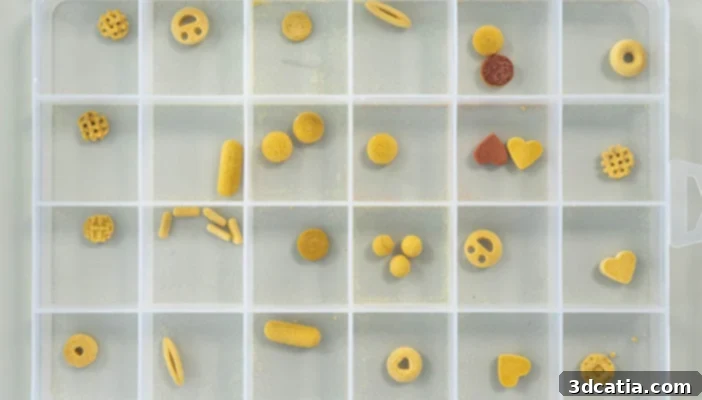
Pills created with SLS technology | Credits: Sintratec
Inkjet Printing for Pharmaceuticals
While “Inkjet printing” might evoke images of standard 2D document printing, its application in drug manufacturing is more closely aligned with Binder Jetting technology in the additive manufacturing landscape. In this specialized pharmaceutical context, combinations of active ingredients and excipients, often formulated as “inks” or liquid binders, are precisely sprayed through a nozzle. These minute droplets build up structures layer by layer. The sprayed liquid solidifies on a powder substrate, which is then often cured or further processed to create the final solid dosage form. This technique offers excellent control over the deposition of materials, allowing for intricate layering and precise drug distribution within a pill. The ability to deposit very small quantities of material with high accuracy makes inkjet printing particularly suitable for low-dose drugs and for creating complex drug release profiles.
It is important to note that alongside these primary techniques, the field of 3D printed drug manufacturing is dynamic and rapidly evolving. Many pharmaceutical companies are actively engaged in developing proprietary technologies, refining existing methods, and exploring hybrid approaches to push the boundaries of personalized medication even further. This continuous innovation ensures a vibrant future for customized drug development.
The Promising Horizon: What Does the Future Hold for 3D Printed Drug Manufacturing?
Despite the significant strides made, we are still considered to be in the nascent stages of developing truly widespread 3D printed drugs and fully realizing the vision of personalized medicine. Nevertheless, the undeniable growth trajectory of this sector is a strong indicator of its transformative potential. Companies at the forefront of this innovation consistently agree that if the sector maintains its current robust growth, mirroring the progress of the last two years, we can anticipate profound changes in our approach to drug consumption and prescription within the next decade. This paradigm shift will move us away from standardized treatments towards more patient-centric care.
However, alongside the exciting speed of technological development, it is imperative to acknowledge and address the critical importance of subjecting these novelties to rigorous regulatory frameworks. The medical sector, by its very nature, demands the highest standards of safety, efficacy, and quality control. As with the introduction of any powerful new technology, the potential for misuse in drug printing could lead to serious harm for patients, and it could even be adapted for the inclusion of illicit or health-damaging substances. Therefore, robust regulatory oversight and ethical guidelines are paramount to ensure that 3D printed drugs are developed and deployed responsibly, safeguarding public health and maintaining trust in these advanced therapeutic solutions.
The future of 3D printed medicines is undeniably bright and holds the promise of fundamentally altering the course of contemporary medical treatments. As Fred Paretti from Multiply Labs optimistically concludes, “In ten years’ time, no patient will agree to take the same thing as another million people. And no doctor will prescribe the same thing to two patients.” This vision encapsulates a future where medication is as unique as the individual receiving it, optimizing health outcomes and ushering in an era of truly personalized healthcare. This shift promises enhanced efficacy, reduced side effects, and a more humane approach to managing illness.
What are your thoughts on the revolutionary potential of 3D printed drugs? We invite you to share your insights in a comment below or join the conversation on our Facebook and Twitter pages! Don’t forget to subscribe to our free weekly Newsletter to receive all the latest news and innovations in 3D printing delivered directly to your inbox!