
Top 5 Weekly 3D Printing & Additive Manufacturing Videos: Exploring Cutting-Edge Innovations
Welcome to our weekly roundup of the most captivating videos in the world of 3D printing and additive manufacturing. Every week, we scour the internet to bring you the most exciting, informative, and inspiring content that highlights the transformative power of this incredible technology. From groundbreaking medical advancements to ambitious space colonization projects and accessible creative tools, 3D printing continues to push the boundaries of what’s possible across countless industries. This selection showcases the versatility and profound impact of additive manufacturing on our daily lives and our future. We invite you to explore these fascinating developments, share your thoughts, and engage with our community by commenting on this article or connecting with us on 3Dnatives’ Facebook or Twitter account. We hope you find these insights as compelling as we do and have a fantastic Sunday!
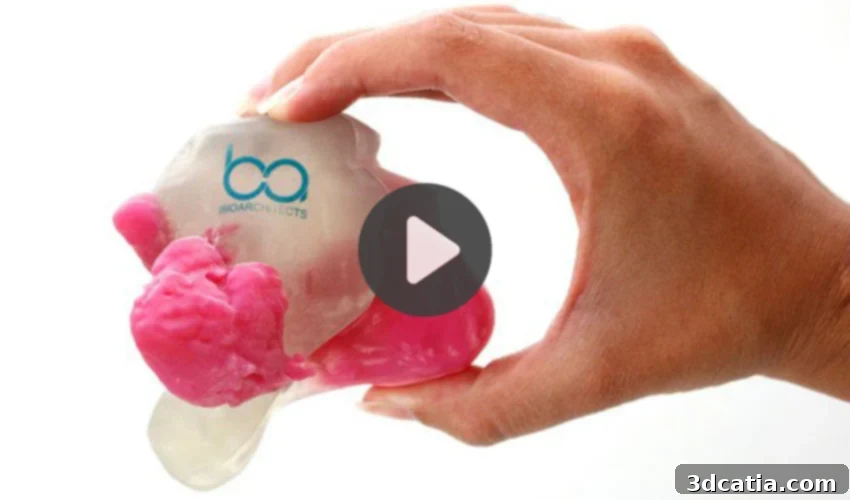
Top 1: The Fourth Industrial Revolution: 3D Printing in Medical Advances
We are undeniably standing on the cusp of the Fourth Industrial Revolution, a period defined by the convergence of physical, digital, and biological realms. Within this revolutionary era, additive manufacturing, more commonly known as 3D printing, has emerged as a pivotal technology, especially within the medical field. Its ability to create highly customized, complex geometries directly from digital designs is fundamentally transforming healthcare, offering unprecedented opportunities for innovation and patient-specific solutions.
In medicine, 3D printing is revolutionizing everything from surgical planning to personalized prosthetics and even the frontier of bioprinting living tissues. Surgeons can now use 3D printed anatomical models derived from patient scans to meticulously plan intricate operations, reducing risks and improving outcomes. Patients requiring prosthetics or orthotics benefit immensely from custom-fit devices that are lighter, more comfortable, and perfectly tailored to their unique anatomy, significantly enhancing their quality of life. The technology also allows for the rapid production of dental aligners, crowns, and implants, streamlining processes and making treatments more accessible.
Beyond these established applications, the most exciting frontier lies in bioprinting. Researchers are actively developing methods to 3D print living cells and biomaterials to create functional tissues and even organs. While still in its early stages, this technology holds the promise of someday overcoming organ donor shortages and enabling personalized drug testing on patient-specific tissue models. The potential for personalized medicine, where treatments and devices are precisely engineered for individual patients, is being unlocked by 3D printing, making it a cornerstone of the next wave of medical breakthroughs. This video eloquently highlights how 3D printing isn’t just an advancement; it’s a paradigm shift in how we approach medical treatment and care.
Top 2: The Ethical Dilemmas of 3D Printed Guns and Their Creator
The rapid evolution of 3D printing technology, while offering immense benefits across various sectors, also presents complex ethical and legal challenges. Few topics have sparked as much heated debate as the emergence of 3D printed firearms. This segment delves into a significant interview conducted by CNN’s Senior Tech Correspondent Laurie Segall with Cody Wilson, the controversial figure behind the online publication of blueprints for 3D printed guns. His actions ignited a global discussion about technological freedom, national security, and public safety.
The conversation with Wilson explores the multifaceted issues surrounding these “ghost guns” – firearms that can be manufactured at home using 3D printers, often without serial numbers, making them difficult to trace by law enforcement. The debate encompasses fundamental questions about the right to bear arms, the implications of readily available weapon blueprints, and the challenges of regulating technology that can bypass traditional manufacturing controls. Wilson’s perspective often centers on principles of free speech and the decentralization of manufacturing, arguing that access to such blueprints is an extension of individual liberty in the digital age. This stance directly clashes with concerns raised by governments, law enforcement agencies, and gun control advocates who fear a surge in untraceable weapons, potentially jeopardizing public safety.
The interview provides a crucial platform to understand the various viewpoints fueling this ongoing controversy. It highlights the inherent dual-use nature of many advanced technologies, where innovations designed for beneficial purposes can also be repurposed for potentially harmful ones. As 3D printing becomes more sophisticated and accessible, societies worldwide grapple with how to balance innovation with responsibility, individual rights with collective security. This discussion is not just about 3D printing technology; it’s about the broader implications of digital freedom in an era where information can rapidly translate into physical objects with profound societal consequences.
Top 3: Pioneering Deep-Sea Exploration with 3D Printed Soft Robots for Underwater Organisms
The deep sea remains one of Earth’s last great frontiers, a vast, mysterious realm teeming with unique and often incredibly delicate life forms. Sampling and studying these soft-bodied sea creatures presents immense challenges: traditional rigid robotic grippers can easily damage fragile specimens, making scientific collection difficult and ethically problematic. However, a revolutionary solution is emerging from the intersection of marine biology, engineering, and robotics: 3D printed soft robots.
This fascinating video highlights the innovative work of an interdisciplinary team that has developed custom-made soft grippers designed specifically to interact gently with delicate marine organisms. Unlike their metallic, rigid predecessors, these soft robots mimic the flexibility and adaptability of biological structures, allowing them to gently encase and retrieve specimens without causing harm. The ability to precisely 3D print these grippers enables rapid prototyping and customization, meaning scientists can quickly adapt designs to suit the specific needs of different creatures, from gelatinous jellyfish to fragile corals.
The underlying principle of soft robotics is to create machines from compliant materials, often silicones or elastomers, allowing for inherent safety and adaptability when interacting with unknown or delicate environments. For deep-sea exploration, this translates into a dramatically improved ability to collect pristine samples for scientific analysis, leading to new discoveries about biodiversity, marine ecosystems, and the physiological adaptations of deep-sea life. This technology is not only preserving valuable specimens but also expanding our understanding of some of the planet’s most extreme environments. Beyond marine biology, the principles demonstrated here have broader implications for other fields requiring delicate manipulation, such as medical surgery, food handling, and even space exploration, showcasing the expansive potential of custom 3D printed soft robotics.
Top 4: Building Humanity’s Future: 3D Printing a Sustainable Martian Base
The dream of living on Mars, once confined to the realm of science fiction, is steadily moving towards reality, and 3D printing is poised to be a crucial enabler of this monumental endeavor. Establishing a sustainable human colony on the Red Planet presents an array of formidable challenges, from the prohibitive cost of transporting building materials from Earth to contending with Mars’s harsh, radiation-filled environment. This compelling video explores how innovative pioneers and scientific teams are leveraging 3D printing technology to overcome these obstacles, making Martian colonization a tangible prospect.
One of the most significant advantages of 3D printing for space exploration is its ability to utilize in-situ resources. Instead of shipping massive quantities of pre-fabricated components from Earth – an incredibly expensive and logistically complex undertaking – astronauts could potentially use Martian regolith (soil and rocks) as the primary building material. Scientists are actively developing specialized 3D printers capable of melting, binding, or curing this indigenous material to construct shelters, laboratories, and even infrastructure directly on the Martian surface. This approach drastically reduces launch mass and costs, making long-term habitation more feasible.
Beyond structural integrity, 3D printing can also address critical aspects of sustainability for a Martian colony, including the creation of tools, replacement parts, and even elements for food production systems. Imagine vertical farms with 3D printed components optimized for efficient nutrient delivery and climate control, allowing settlers to grow fresh produce in an otherwise barren landscape. The technology also allows for rapid prototyping and customization, essential for adapting to unforeseen challenges in a remote, hostile environment. Projects like the one highlighted demonstrate a meticulous plan to use additive manufacturing to create not just temporary outposts, but resilient, long-term habitats designed to shield inhabitants from radiation, maintain breathable atmospheres, and foster self-sufficiency. This vision of an extraterrestrial future, built layer by layer through 3D printing, represents a monumental leap in humanity’s quest to extend its presence beyond Earth.
Top 5: Unleashing Creativity: The Versatility and Fun of the 3D Printing Pen
To round off this week’s exploration of advanced additive manufacturing, let’s step back and appreciate a more accessible, yet equally innovative, aspect of 3D printing: the 3D printing pen. This ingenious device brings the magic of creating three-dimensional objects directly into the hands of artists, hobbyists, educators, and anyone eager to explore their creative potential without the complexity or cost of a full-scale 3D printer. This video provides a delightful showcase of the artistic and practical applications of this surprisingly versatile tool.
A 3D printing pen works by heating and extruding plastic filament, similar to a FDM (Fused Deposition Modeling) 3D printer, but in a handheld format. This allows users to “draw” in the air, transforming two-dimensional sketches into three-dimensional sculptures, intricate models, or functional repairs. The immediate gratification and direct control offered by a 3D pen make it an exceptional tool for fostering creativity across all age groups. Children can use it to visualize and construct geometric shapes, bringing STEM concepts to life in a tangible way. Artists can craft unique jewelry, elaborate figurines, or even repair broken plastic items around the house.
The applications are limited only by imagination. From creating custom phone stands and decorative elements to intricate architectural models and imaginative characters, the 3D printing pen bridges the gap between traditional drawing and advanced manufacturing. It serves as an excellent entry point into the world of additive manufacturing, helping users develop spatial reasoning and design skills in an intuitive and engaging manner. This video beautifully illustrates how this simple yet powerful device can unlock boundless creativity, encouraging everyone to experiment with various cool shapes and figures this weekend, turning their imaginative ideas into physical realities with just a flick of the wrist. It’s a testament to how 3D printing, in its simplest form, can empower innovation at a personal level.
We hope you thoroughly enjoyed this week’s collection of TOP 5 videos, showcasing the incredible breadth and depth of innovation within the 3D printing and additive manufacturing industry. From life-saving medical breakthroughs and critical discussions on emerging technologies to revolutionary deep-sea exploration and the boundless creativity enabled by a simple 3D pen, these videos underscore the profound impact of this technology on our world and future. We are continuously amazed by the advancements and applications that emerge each day.
Your engagement fuels our passion! We encourage you to drop a comment below and share your thoughts on these videos, or connect with us on our Facebook and Twitter pages. What caught your eye? What innovations are you most excited about? And don’t forget to sign up for our free weekly Newsletter to ensure you stay fully updated on all the very latest news, trends, and breakthroughs in the 3D industry, delivered straight to your inbox! Thank you for being a part of our community, and we look forward to bringing you more exciting content next week.