
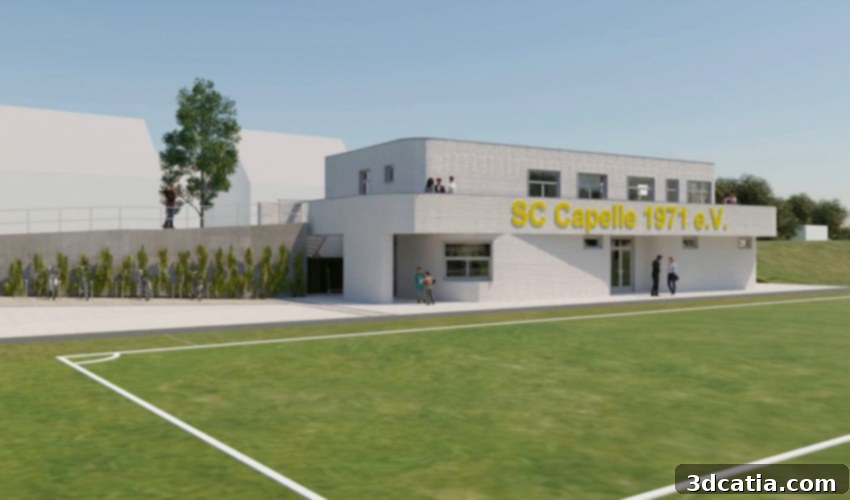
Revolutionizing Construction: Europe’s First 3D Printed Public Building and the Future of Additive Manufacturing
The global construction industry is currently undergoing a profound transformation, largely driven by the rapid advancements in 3D printing technology. This innovative approach, often referred to as additive manufacturing, is not merely a novelty but a powerful catalyst for change, opening up a multitude of unprecedented possibilities. At its core, 3D construction printing offers compelling advantages such as unparalleled cost efficiency, remarkable speed, and enhanced sustainability, positioning it as a cornerstone for the future of building.
Leading this charge is COBOD, a pioneering company dedicated to intelligent construction solutions. Their mission is to champion this transformative approach through their highly versatile and robust printing robots. By integrating COBOD 3D printers into construction projects, experts project that a significant portion—approximately 50%—of traditional construction work can be automated. This level of automation promises not only increased productivity but also a substantial, long-term reduction in carbon emissions, aligning perfectly with global sustainability goals. The efficacy of these advanced printers has already been demonstrated across various landmark projects. They have been successfully deployed in the creation of Europe’s inaugural 3D printed buildings, luxurious villas in Dubai, innovative wind turbine foundations, and notably, the largest 3D printed building situated in Heidelberg. Adding to this impressive portfolio, the latest testament to this technology’s potential is Europe’s very first public 3D printed building: the new soccer clubhouse for SC Capelle in Nordkirchen, a groundbreaking project spearheaded by the PERI Group.
The Strategic Partnership: PERI Group and COBOD Driving Innovation
The success and rapid adoption of 3D construction printing are significantly bolstered by strategic partnerships between industry leaders. In 2018, the PERI Group, a renowned international manufacturer and supplier of formwork, scaffolding, and engineering solutions, recognized the immense potential of this emerging technology. This foresight led them to acquire a substantial stake in the Danish company COBOD International. This investment forged a close and highly productive collaboration between the two entities, pooling their expertise to accelerate the development and implementation of 3D printing in construction worldwide. The synergy between PERI’s extensive construction experience and COBOD’s cutting-edge additive manufacturing technology has proven instrumental in pushing the boundaries of what is achievable in modern building practices.
For the construction of the pioneering SC Capelle clubhouse in Nordkirchen, the PERI Group has strategically chosen to deploy the COBOD BOD2 3D printer. This particular model represents the pinnacle of current 3D construction printing technology, renowned for its precision, speed, and reliability. This advanced printer is tasked with the ambitious goal of completing the entire two-story clubhouse structure, which measures an impressive 25 meters in length, 15 meters in width, and 10 meters in height, in an astonishingly short timeframe of just 140 hours. This rapid construction pace dramatically reduces project timelines compared to conventional building methods, showcasing a paradigm shift in efficiency. Once completed, the soccer club will benefit from approximately 330 square meters of highly functional and modern usable space, perfectly tailored to their needs.
Architectural Vision Meets Additive Manufacturing
Beyond its technical innovation, the design of the Nordkirchen clubhouse has also garnered special attention. The structure, envisioned by the acclaimed and innovative architectural firm Steinhoff, represents a harmonious blend of functionality, aesthetic appeal, and futuristic construction methods. The design ensures that the clubhouse for SC Capelle, a team from the 3rd league, will not only embody groundbreaking technology but also be visually stunning and integrate seamlessly into its environment. This thoughtful combination of advanced technology and sophisticated aesthetic appeal epitomizes a prevailing concept of progress—one that transcends traditional urban centers and extends its innovative reach into rural regions as well. This project serves as a beacon, demonstrating that cutting-edge solutions are not exclusive to metropolitan areas but can thrive and benefit communities in smaller towns. Mayor Dietmar Bergmann of Nordkirchen eloquently articulated this sentiment, stating, “This initiative serves as a clear indication that small towns in rural areas can also drive innovation and future technologies. With the substantial financial support from the Ministry of the Interior of the State of North Rhine-Westphalia and the expertise of our project partners, we are realizing a construction project in Nordkirchen that not only garners attention locally but also beyond our region.” This project underscores the collaborative spirit and forward-thinking approach that can propel even smaller communities onto the global stage of innovation.
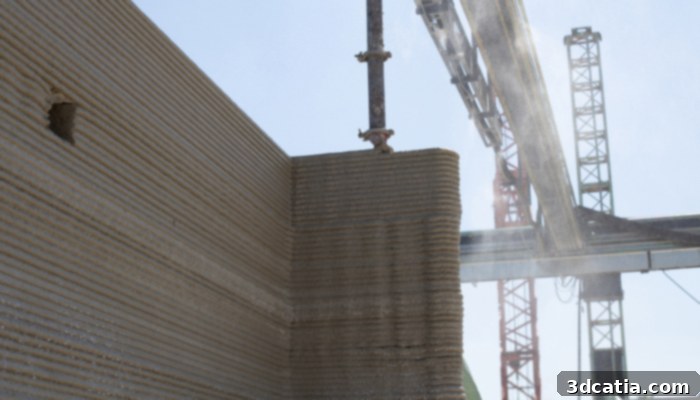
Europe’s first 3D printed public building is a testament to sustainability and innovation, showcasing the potential of additive construction. (photo credit: PERI 3D Construction)
Unlocking Efficiency and Sustainability: The Core Advantages of 3D Construction Printing
The deployment of 3D printing technology in construction heralds a new era of building, characterized by methods that are inherently faster, significantly more cost-effective, and remarkably more environmentally sustainable than conventional approaches. One of the most compelling aspects of additive manufacturing in this context is its ability to effectively mitigate, if not entirely eliminate, pervasive challenges such as persistent labor shortages within the construction sector and often-extended project timelines. By automating significant portions of the building process, 3D printers can operate continuously, reducing reliance on manual labor and accelerating overall project completion.
Dr. Fabian Meyer-Brötz, Managing Director at PERI 3D Construction, passionately advocates for the sustainable utilization of materials, a key benefit of this technology. He elaborates: “In light of significant challenges such as skilled labor shortages and stagnant productivity in the construction industry, 3D construction printing offers a much-needed solution to build faster, more affordably, and with reduced material consumption.” This reduction in material consumption is a critical factor in enhancing environmental sustainability. Traditional construction methods often involve considerable material waste, from offcuts to over-ordered supplies. 3D printing, conversely, is a highly precise process that deposits material only where it is needed, minimizing waste and optimizing resource usage. Furthermore, the concrete utilized in these pioneering projects, supplied by Heidelberg Materials, exemplifies cutting-edge building material science. This specially formulated concrete is not only engineered for optimal pumpability and extrusion properties—essential for seamless 3D printing—but it is also 100% recyclable as a mineral substance. This commitment to using fully recyclable materials significantly reduces the environmental footprint of construction, aligning with circular economy principles and contributing to a healthier planet. The combination of reduced waste, optimized material use, and the incorporation of recyclable components positions 3D construction printing as a genuinely green alternative for the future of building.
The First Public 3D Printed Building: Shifting the Paradigm in Construction
The rapid advancements in 3D printing technology, coupled with the increasing ability to incorporate intricate, creative, and previously unfeasible designs, are fundamentally revolutionizing the construction industry. These innovations are setting new precedents and laying the groundwork for future building methods with far-reaching implications. A particularly notable and exciting trend emerging from this technological shift is the gradual evolution from constructing predominantly residential structures, such as individual apartments, private houses, and hotels, towards the widespread adoption of 3D printing for public buildings. This transformative shift is not confined to a single geographical area; rather, it is a global phenomenon, observed and implemented on an international scale, signaling a mature and confident embrace of the technology across diverse building types.
Henrik Lund-Nielsen, Founder and General Manager of COBOD International, expresses enthusiastic support for this progressive development. He highlights the versatility and expanded capabilities of their printers, stating, “This new project by PERI exemplifies how our printers can be used beyond low-rise construction. This upcoming 3D printed building will serve as the first-ever soccer clubhouse and public structure created through this innovative technique. Additionally, following the recent completion of the world’s largest 3D printed building—an impressive luxury horse barn spanning nearly 1,000 square meters in Florida—numerous examples of non-residential 3D printed structures are now emerging.” Lund-Nielsen’s observation underscores a significant milestone: the technology is proving its scalability and adaptability for larger, more complex, and diverse architectural applications that serve communal or commercial purposes. From sprawling agricultural facilities to vital community hubs like sports clubhouses, 3D printing is demonstrating its capability to deliver structures that are not only functional but also architecturally distinct and built with unprecedented speed and efficiency.
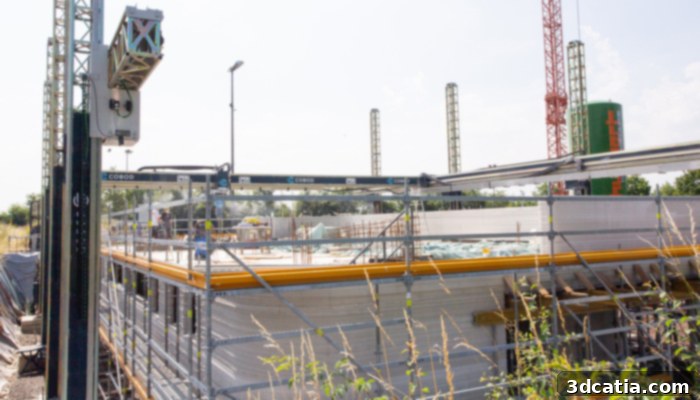
The COBOD BOD2 3D printer is extremely fast and efficient, making it ideal for rapid construction projects. (photo credits: PERI 3D Construction)
The Future Landscape of Construction: Paving the Way for Smart and Sustainable Environments
The groundbreaking 3D printed clubhouse in Nordkirchen is more than just a single building; it signifies a pivotal moment—the commencement of a widespread sequence of 3D-printed structures that are poised to profoundly reshape our urban and rural environments in the years and decades ahead. This pioneering project serves as a powerful demonstration of what is possible, inspiring architects, developers, and policymakers to envision a future where construction is faster, more sustainable, and inherently more adaptable. We can anticipate an increasing diversification in the types of structures being 3D printed, ranging from critical infrastructure like bridges and utility buildings to specialized commercial and public facilities. This technology promises to address urgent global challenges such as affordable housing, rapid disaster relief construction, and the development of sustainable smart cities. The ability to customize designs, integrate new materials, and automate construction processes will lead to unprecedented levels of architectural freedom and ecological responsibility. As materials science evolves and printer capabilities advance, the scope of what can be 3D printed will only expand, leading to more resilient, energy-efficient, and aesthetically diverse built environments. This evolution will not only accelerate project delivery but also democratize access to high-quality construction, fundamentally transforming the way we design, build, and interact with our physical surroundings. For additional details regarding this remarkable project, please refer to the link HERE.
What are your thoughts on SC Capelle’s innovative 3D Printed building and the future of additive manufacturing in construction? We invite you to share your insights in a comment below or join the conversation on our LinkedIn, Facebook, and Twitter pages! Don’t forget to sign up for our free weekly Newsletter here to get the latest 3D printing news delivered straight to your inbox! You can also find all our compelling videos on our YouTube channel, offering a visual dive into the world of additive manufacturing.
*Cover photo credits: STEINHOFFarchitecture