
Spectroplast Secures €1.38 Million Investment to Revolutionize Silicone 3D Printing and Customized Product Manufacturing
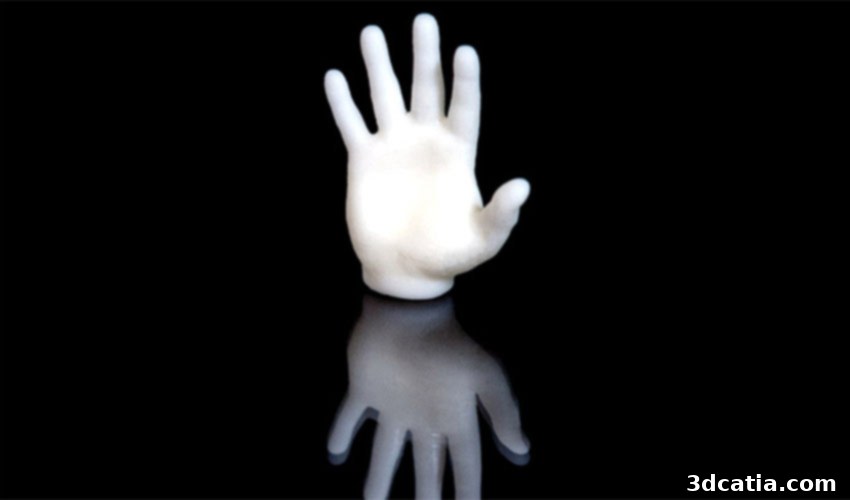
Spectroplast AG, a pioneering service provider specializing in SLA (Stereolithography) silicone additive manufacturing, has successfully completed a significant funding round, raising €1.38 million. This crucial investment was spearheaded by Munich-based investor AM Ventures, a prominent name in the additive manufacturing sector. Spectroplast first garnered attention in February 2019 when co-founder Petar Stefanov provided insights into the company’s innovative work. The startup, which spun out of the prestigious ETH Zurich in October 2018, has dedicated several years to extensive research and development in silicone resins. Its primary focus lies in the creation of highly customized silicone products, particularly for the healthcare industry, but with broad applications across numerous other markets.
Johann Oberhofer, Chief Technology Officer at AM Ventures, articulated the strategic importance of this investment, stating, “Spectroplast’s introduction of Silicones to the world of Additive Manufacturing is well-timed with a rapidly growing demand for customized Silicone products observed not only in the healthcare sector but also in many other markets.” This sentiment underscores the growing recognition of silicone’s potential in 3D printing and Spectroplast’s position at the forefront of this emerging field. The capital infusion will enable Spectroplast to accelerate its research, expand its service offerings, and scale its operations to meet the escalating global demand for bespoke silicone solutions.
Spectroplast’s Funding Fuels Innovation in Custom Silicone Products
The question naturally arises: what are the compelling benefits of integrating silicone into additive manufacturing processes? Petar Stefanov elaborated on this critical point in a previous interview, explaining, “Silicone is a safe and biocompatible material that is already used in a wide range of applications – from sealants to life-saving medical implants. Silicones have yet not been accessible to additive manufacturing – which is a well-known technology for materialising rigid objects made of metals, ceramics or plastics that are not soft. Soft materials exhibit a number of unique characteristics, including multifunctionality, adaptability, and responsiveness.” This highlights the significant gap that Spectroplast is now filling. Traditional additive manufacturing excels at producing rigid structures, but the realm of soft, flexible, and biocompatible materials like silicone has largely remained unexplored territory until now.
Silicone’s inherent properties make it an ideal candidate for a vast array of applications where conventional rigid materials fall short. Its unparalleled flexibility allows for dynamic movement and interaction, essential in fields like soft robotics or customizable medical devices that conform to the human body. The material’s biocompatibility is a non-negotiable requirement for implants and wearables that come into direct contact with human tissue, minimizing the risk of adverse reactions. Furthermore, silicone’s durability, temperature resistance, and chemical inertness contribute to its widespread utility across various industrial and consumer sectors. By making this versatile material accessible through 3D printing, Spectroplast is unlocking previously unimaginable possibilities for product design, functionality, and personalization.
Credits: Spectroplast AG
Spectroplast’s overarching mission is clear and ambitious: to firmly establish itself as the world’s leading provider of customized silicone products enabled by additive manufacturing. Manuel Schaffner, Chief Executive Officer and Co-Founder of Spectroplast AG, reiterated this commitment, emphasizing the strong market validation the company is experiencing. “The traction in the market is shown by our growing customer base. It is our defined mission to become the world’s leading provider of customized Silicone products. This will impact many industries around the globe.” This vision is not merely about technological advancement but about fundamentally transforming how industries approach design, manufacturing, and supply chains for products requiring the unique properties of silicone. The ability to produce highly specific, functional silicone parts on demand represents a paradigm shift, moving away from mass production of standardized items towards an era of hyper-personalization and agile manufacturing.
The strategic investment from AM Ventures will undoubtedly play a pivotal role in realizing this mission. Beyond mere capital, AM Ventures brings invaluable expertise and a vast network within the additive manufacturing ecosystem. This partnership is expected to accelerate Spectroplast’s market penetration, streamline its operational efficiencies, and support its expansion into new geographic and industrial sectors. The synergy between Spectroplast’s groundbreaking technology and AM Ventures’ strategic guidance is poised to solidify the company’s leadership in the rapidly evolving landscape of advanced materials 3D printing.
Advanced Stereolithography: The Core of Spectroplast’s Silicone 3D Printing Technology
At the heart of Spectroplast’s groundbreaking capabilities lies its proprietary adaptation of stereolithography (SLA) technology. This sophisticated additive manufacturing process utilizes light to selectively solidify liquid silicone resins, building up complex parts layer by painstaking layer. Unlike conventional 3D printing methods that often struggle with soft and elastomeric materials, Spectroplast has engineered its SLA process to precisely cure photopolymerizable silicone, achieving unparalleled detail and material integrity. The principle is elegant: a focused light source, typically a UV laser, traces the cross-section of each layer onto a vat of liquid resin. Where the light strikes, the resin solidifies, adhering to the previous layer. This process is repeated until the complete three-dimensional object is formed with exceptional accuracy and surface finish.
This advanced approach offers significant advantages over traditional silicone manufacturing techniques such as injection molding or casting. These conventional methods are notoriously time-consuming, expensive, and often require specialized tooling that limits design flexibility and makes small-batch production economically unfeasible. Injection molding, while excellent for mass production, involves high upfront tooling costs and long lead times for mold fabrication. Casting, while more flexible for custom shapes, can be labor-intensive and challenging to achieve consistent quality and intricate geometries. Spectroplast’s SLA silicone 3D printing eliminates the need for costly molds, significantly reducing both lead times and manufacturing costs for customized and low-volume production runs. This efficiency allows for rapid prototyping, design iteration, and on-demand manufacturing, revolutionizing product development cycles.
Adding to its versatility, Spectroplast offers a range of silicones with varying degrees of stiffness and mechanical properties. This material flexibility empowers designers and engineers to select the optimal silicone formulation for specific applications, whether it requires extreme softness and elasticity or a firmer, more supportive structure. This capability is particularly crucial in applications where precise material performance is paramount, ensuring that the 3D printed silicone product performs exactly as intended.
Transformative Applications: From Healthcare to Soft Robotics and Beyond
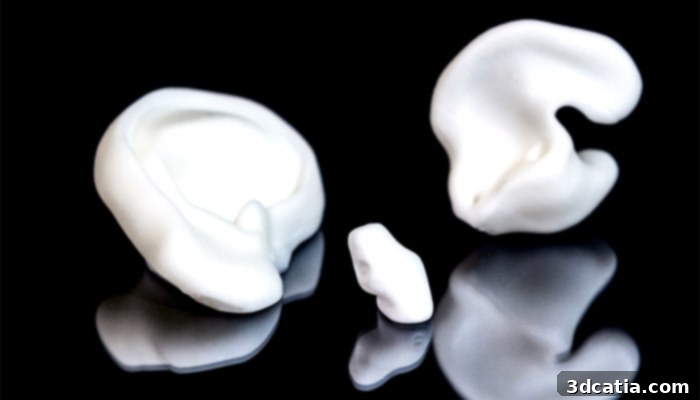
The potential applications for Spectroplast’s 3D printed silicone are incredibly diverse, with healthcare products being a top priority due to the material’s biocompatibility and customizability. The medical sector is poised for significant transformation, with examples ranging from highly personalized headphones and wearables tailored perfectly to a patient’s anatomy for enhanced comfort and performance, to custom-fit hearing aids that improve acoustic fidelity and reduce discomfort. Imagine customized shoe soles designed to address individual gait issues or provide therapeutic support, or even advanced medical implants that precisely match a patient’s unique biological structure, leading to better integration and outcomes. These personalized solutions represent a major leap forward from generic, off-the-shelf products, offering superior fit, function, and patient experience.
Beyond the critical healthcare sector, the applications extend broadly into various industrial domains. The field of soft robotics, for instance, stands to benefit immensely. Soft robots, which rely on flexible materials to achieve complex and adaptive movements, can leverage 3D printed silicone for intricate grippers, actuators, and sensing elements that are difficult or impossible to manufacture with traditional methods. In the food & beverage sector, customized silicone molds, gaskets, and seals can be produced rapidly, ensuring hygiene and precise fit for specialized equipment. Other industries like automotive (for custom seals and damping components), consumer goods (for unique product designs and ergonomic features), and even aerospace (for lightweight, flexible components) can find numerous pieces benefiting from this innovative manufacturing approach. The ability to prototype and produce complex silicone geometries quickly and cost-effectively opens doors for innovation across countless product categories.
Spectroplast CEO Manuel Schaffner further emphasized the broader implications of their technology: “As an emerging industry, we are just starting to understand how powerful 3D Printing of functional products will become when it is combined with the massive potential offered by industrial scale production. Having the financial support and domain expertise of AMV will help us execute our mission even more rapidly and broadly.” This statement underscores the vision of moving beyond niche applications to integrated, industrial-scale production of highly functional silicone parts. The convergence of additive manufacturing’s flexibility with silicone’s unique material properties, supported by strategic investment, promises to unlock a new era of product innovation and manufacturing efficiency.
The future of manufacturing is increasingly leaning towards customization, agility, and the use of advanced materials. Spectroplast, with its pioneering SLA silicone 3D printing technology and recent funding, is perfectly positioned to lead this charge. By making customized, functional silicone products accessible and scalable, they are not only solving complex manufacturing challenges but also enabling the creation of superior products that enhance performance, comfort, and safety across a multitude of industries worldwide. This investment marks a pivotal moment for both Spectroplast and the broader additive manufacturing landscape, signaling a clear path towards the industrialization of soft materials 3D printing.
What are your thoughts on Spectroplast’s plans and the future of silicone additive manufacturing? Share your insights and join the conversation on our Facebook and Twitter pages! Don’t miss out on the latest advancements and news in the dynamic world of 3D printing—sign up for our free weekly Newsletter, delivered straight to your inbox.