
sallea: Pioneering the Future of Sustainable Cultured Meat and Fish with Advanced 3D Printed Scaffolds
Our global eating habits, heavily reliant on the regular consumption of meat and fish, exert profound ecological pressure on our planet. Traditional livestock farming and conventional fishing methods contribute significantly to a myriad of environmental problems, including deforestation, monocultures, overfishing, greenhouse gas emissions, and the ethical concerns surrounding factory farming. The urgent need for sustainable food alternatives has spurred groundbreaking innovation over the past decade. Among these advancements, the field of cellular agriculture, particularly the development of cultured meat and fish often facilitated by advanced 3D printing techniques, stands out as a transformative solution. This revolutionary approach offers a viable alternative to conventional animal agriculture, with the potential to reduce environmental impacts, such as emissions, by as much as 90% compared to beef production. As awareness grows, so does the trend towards this type of agriculture, and the popularity of cultured meat and fish products is experiencing a steady rise.
At the forefront of this burgeoning industry is sallea, a visionary startup founded in November 2023. sallea’s core mission is to empower producers of these sustainable foods by providing innovative solutions for their cultivation. The company has developed sophisticated 3D-printed scaffolds that serve as the fundamental structural framework for cultivating meat and fish products. These scaffolds are meticulously designed to enable the growth of cells into any desired shape and with specific nutritional profiles, thereby facilitating the creation of sustainable, ethical, and high-quality food products without causing animal suffering. To delve deeper into sallea’s origins, its cutting-edge technology, and ambitious future goals, we had the privilege of speaking with Dr. Nicole Kleger, CTO and co-founder of sallea.
3DN: Could you introduce yourself and elaborate on your connection to 3D printing technology?
My name is Nicole Kleger, and I am the co-founder and Chief Technology Officer (CTO) of sallea, a dynamic spin-off company originating from ETH Zurich. My academic journey began at ETH Zurich, where I specialized in materials science, a field that profoundly influences my current work. Following my undergraduate studies, I pursued and successfully completed my doctorate at the same esteemed institution. In my capacity as CTO at sallea, I oversee all technological facets of our operations. This comprehensive role encompasses the continuous advancement and optimization of our proprietary products, meticulous project management both internally within our team and externally with our valued collaborators, strategic scouting for emerging technologies to integrate into our processes, development and management of our intellectual property (IP) strategy, and crucially, the formulation of sallea’s long-term technological milestones and strategic direction.

Dr. Nicole Kleger, CTO and co-founder of sallea (photo credits: sallea AG)
My fascination with 3D printing stems from a deep-seated appreciation for tangible outcomes in research. I’ve always been drawn to projects that yield something visible, something you can physically observe and interact with. Early in my academic career, 3D printing captured my imagination because of its remarkable ability to rapidly produce physical objects, often with exceptional aesthetic quality. As I progressed through my studies, I also gained a profound understanding of the immense technical advantages that 3D printing offers, particularly when applied in the appropriate contexts. This led me to embark on my first hands-on project with Professor André Studart during my Master’s degree, an experience where I truly had the opportunity to ‘play’ and experiment extensively with a 3D printer, cementing my passion for additive manufacturing.
Concurrently, as a materials scientist, I became increasingly aware of a significant limitation within the realm of 3D printing: the comparatively restricted selection of printable materials. While this material palette is continuously expanding, 3D printing often faces considerable hurdles, particularly in highly regulated sectors such as medical or food applications, which are subject to stringent approval procedures and material biocompatibility requirements. This challenge prompted us to explore novel methodologies for enabling non-printable materials to achieve complex 3D structures. It was during this period that the concept of an indirect printing process was conceived. The innovative idea involved utilizing water-soluble, 3D-printed molds meticulously crafted from common table salt. I initiated the preliminary experiments for this groundbreaking approach in 2016, as part of my Master’s thesis. For these initial tests, magnesium, a highly reactive metal with substantial potential for various medical applications, served as our model material. Building upon this foundational work, my co-founder Simona Fehlmann and I collaborated to further develop and refine this technology, which now forms the innovative core of sallea’s operations and its unique value proposition.
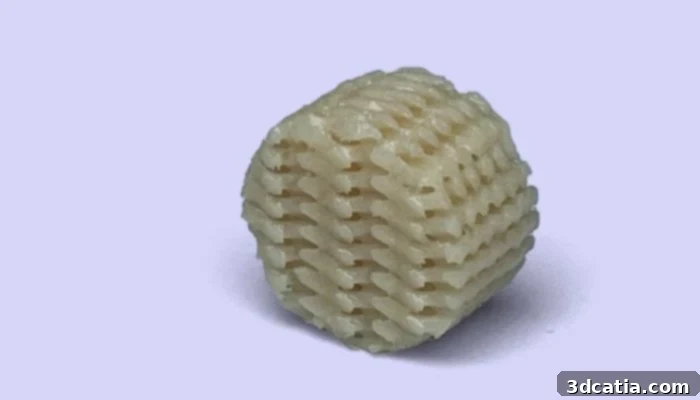
Protein sample used for cell tests (photo credits: sallea AG)
3DN: How did sallea come into existence, and in what ways do you leverage 3D printing technology?
During the course of my doctoral thesis, my research was intensely focused on the intricate optimization of three-dimensional, highly porous lattice structures. My work delved deep into understanding and enhancing their mechanical properties, particularly how they could be engineered to promote optimal cell growth. Additionally, a significant part of my research was dedicated to the development of novel 3D printing methods specifically tailored for the efficient production of such complex structures. In the final year of my doctoral studies, Simona Fehlmann joined our research team. Together, we continued to advance and refine this innovative technology, pushing the boundaries of what was possible in additive manufacturing. By the culmination of my doctoral work, we had successfully established a robust and versatile technology platform that effectively opened up access to 3D printing for a wide array of materials that were previously deemed non-printable, or only printable with severe limitations.
Since its initial conceptualization in 2016, we have continuously modified and optimized our printing process. This ongoing refinement has enabled us to produce exceptionally delicate and intricate structures from materials that were either impossible to print directly or could only be printed with very limited resolution and precision. Today, sallea’s primary focus is directed towards applications within the food sector. More specifically, we specialize in producing highly optimized scaffold structures, crafted from edible proteins and polysaccharides, which are specifically designed for the burgeoning field of cellular agriculture. These bespoke scaffolds are crucial for providing the necessary support and environment for cultured cells to grow and develop into complex tissues.
Through extensive and in-depth market analysis, we identified the significant hurdles and bottlenecks that currently impede the large-scale production of cultured meat and fish. Concurrently, we recognized the immense potential inherent in our unique technology to effectively minimize these very challenges and accelerate the progress of cellular agriculture. This compelling realization led us to a pivotal decision: rather than allowing this groundbreaking technology to remain confined to academic research, we chose to found sallea. Our goal was to actively translate this innovation into practical solutions, thereby creating the greatest possible benefit for global food security, environmental sustainability, and animal welfare. However, our initial founding team required a crucial addition – someone with acute business acumen and strategic drive. It was at this juncture that Anna Bünter joined our ranks, completing what we proudly refer to as our ‘power trio’, bringing invaluable expertise in business development and market strategy to sallea.
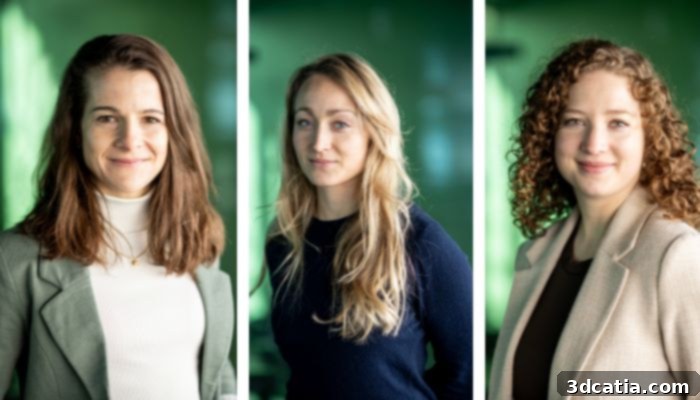
From left to right: Nicole Kleger, Anna Bünter, Simona Fehlmann (photo credits: sallea AG)
3DN: Could you detail sallea’s printing process and the range of materials utilized?
Our innovative printing process at sallea relies on a unique indirect manufacturing approach. The core of our system involves 3D printing common table salt – yes, the very same salt you use in your kitchen. This salt serves as the primary material for creating our highly precise and intricate templates, or stencils, which define the final geometry of the desired product. Once these water-soluble salt templates are accurately printed, we then proceed to cast them with a diverse range of materials. These materials are typically those that are notoriously difficult to print directly, or those that can only be printed with very limited resolution using conventional additive manufacturing techniques. The casting process allows us to fill the meticulously designed salt molds with the chosen material, which then takes on the exact complex geometry of the template.
The final, crucial step involves a simple yet effective method: we dissolve the table salt template. Because salt is water-soluble, it can be easily washed away, leaving behind only the cast material perfectly formed in its intended, highly complex geometry. For cellular agriculture applications, our primary focus is on edible materials, particularly plant-based proteins and various polysaccharides. These biomaterials are ideal as they provide the necessary structural support and biological cues for cells to attach, proliferate, and differentiate, ultimately forming cultured meat or fish tissue.
However, the versatility of our proprietary technology extends far beyond the food sector. The indirect printing methodology is remarkably adaptable and can be successfully applied to a multitude of other materials, demonstrating its broad industrial potential. We have already showcased its capabilities by molding various thermoplastics, including Polycaprolactone (PCL), Polystyrene (PS), and Polypropylene (PP), into complex shapes. Furthermore, our process has proven effective with silicones, and even reactive metals such as aluminum and magnesium. With some specialized techniques and adjustments, we have also achieved success in working with copper. This wide material compatibility underscores the robust and flexible nature of sallea’s 3D printing solution, opening doors for applications across diverse industries from biomedical to advanced manufacturing.
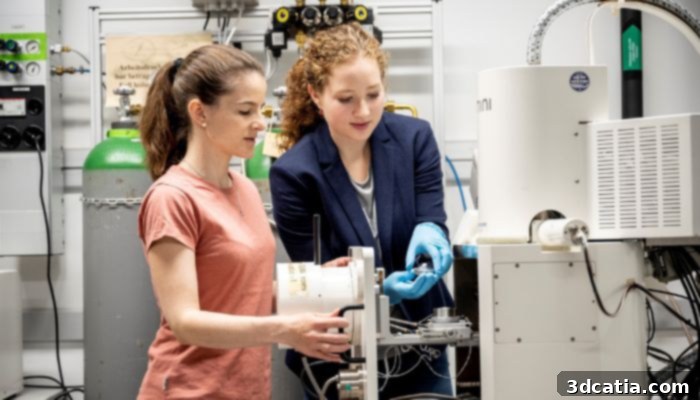
Nicole Kleger and Simona Fehlmann developed sallea’s technology together (photo credits: sallea AG)
3DN: What significant advantages does printing edible scaffolds offer compared to directly bioprinting meat cells, as seen in other processes?
As previously highlighted, many materials present considerable challenges when it comes to direct 3D printing, and this difficulty is particularly pronounced when dealing with delicate biological materials like cells. The direct printing of cells, a specialized technique known as bioprinting, is predominantly employed within academic research settings due to its inherent complexities and limitations for large-scale production. While bioprinting’s ability to deposit various materials, irrespective of their chemical composition, is largely dictated by their rheological properties (flow characteristics), these very rheological conditions pose significant obstacles for its widespread adoption in the commercial production of cultured meat.
To achieve a stable and structurally sound bioprint, there are typically two main approaches: either printing must occur within a supportive liquid bed, or the bioprinting “ink” must possess sufficiently high viscosity and elasticity to retain its shape immediately after extrusion. Both scenarios present drawbacks. High viscosity and elasticity in printing inks inevitably lead to increased shear forces during the printing process. These elevated shear forces, in turn, can have a detrimental effect on cell viability, potentially damaging a substantial percentage of the delicate cells being printed. To mitigate this cell damage, printing speeds must often be significantly reduced, or the cell density in the printing ink must be minimized. However, both of these countermeasures lead to a considerable increase in production costs and time, making bioprinting less economically viable for mass-market cultured meat products.
Another critical challenge inherent in current bioprinting methods for cultured meat lies in achieving desirable texture. Presently, to keep production costs manageable, the proportion of actual cells in the final bioprinted product is relatively low. This means that the supporting matrix, or hydrogel, largely dictates the texture of the cultured product. Unfortunately, many hydrogels commonly used in bioprinting yield textures that are more akin to a ‘jelly bear’ or gelatinous substance than the fibrous, complex texture expected of a piece of meat. This textural discrepancy is a major hurdle for consumer acceptance and product authenticity.
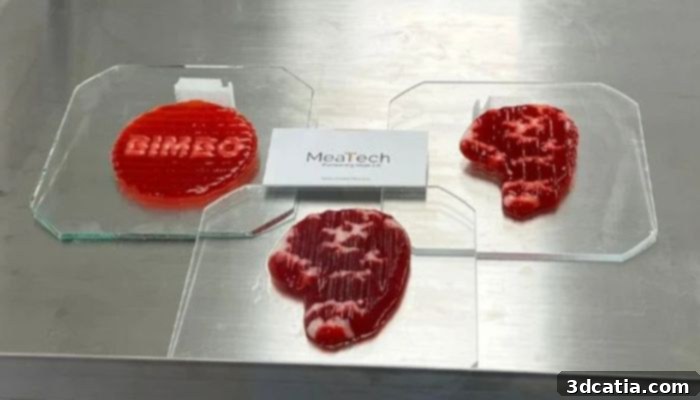
3D-printed meat from cells grown by 3D bioprinting (photo credits: MeaTech/Steakholder Foods)
While bioprinting undeniably holds immense potential for future innovations, it is currently grappling with several practical difficulties, particularly concerning scalability, cost-effectiveness, and textural fidelity for cultured meat. This is precisely why at sallea, we have strategically focused on our unique indirect approach. By structuring edible scaffolds using our 3D-printed, water-soluble molds, we achieve a complete decoupling of the final material from the printing process itself. This methodology allows us to utilize a much broader range of materials for our scaffolds, including those that are difficult or impossible to bioprint directly, without compromising cell viability or incurring prohibitive costs. Our approach enables us to create scaffolds with superior mechanical properties and a more desirable texture from the outset, providing a robust foundation for cells to grow into a product that truly mimics the sensory experience of conventional meat.
3DN: What challenges have you encountered as a team predominantly comprised of women, and what have been sallea’s most significant milestones to date? Furthermore, what are your key objectives moving forward?
As graduates of ETH Zurich, both Simona and I are accustomed to operating in environments where women are often a minority among a large male population. Our third co-founder, Anna Bünter, shares a similar experience, having pursued her studies in finance at the HSG (University of St. Gallen), another field where women are traditionally underrepresented. It is an undeniable reality that the startup ecosystem, particularly in deep tech and venture capital, remains significantly male-dominated. This prevailing dynamic can unfortunately lead many talented women to feel less recognized or addressed, potentially deterring them from venturing into this space. Consequently, countless brilliant ideas and entrepreneurial spirits might be lost. However, we are pleased to report that our personal experiences thus far have been almost exclusively positive and incredibly encouraging. It is precisely for this reason that we are deeply committed to empowering and inspiring other women to take the leap into this vibrant, innovative, and immensely educational ecosystem. The rewards of contributing to meaningful change and building something impactful are truly immeasurable.
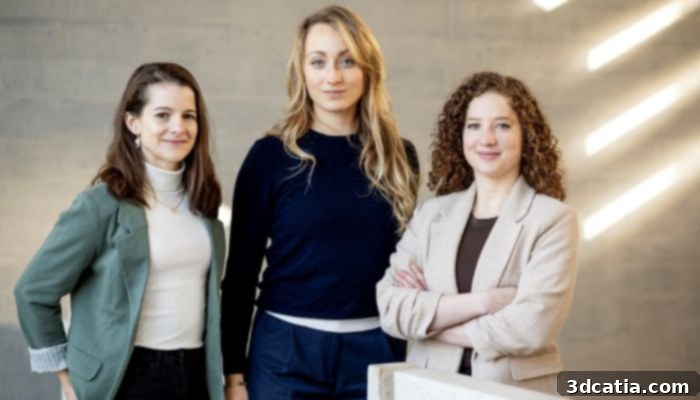
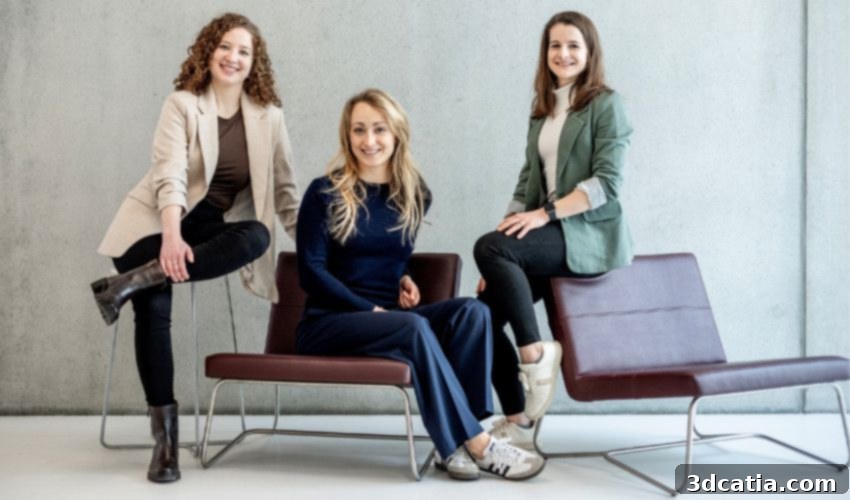
The three women leading the sallea team (photo credits: sallea AG)
Along our journey, sallea has already achieved several pivotal successes and significant milestones that underscore our progress and potential. These accomplishments include the successful development of our Minimum Viable Product (MVP) – our innovative edible scaffolds – which represents a tangible demonstration of our core technology and its capabilities. Another critical achievement was the successful completion of our financing round in October 2024, securing a substantial investment of 2.6 million USD. This funding is instrumental in accelerating our research, development, and scaling efforts. Furthermore, we are immensely proud of the expansion of our interdisciplinary team, which has grown to six dedicated full-time employees, bringing together diverse expertise from various scientific and engineering disciplines. With our MVP now fully developed and ready, we are actively engaged in the first test phases with several potential customers, gathering invaluable feedback and insights to further refine our offerings.
Looking ahead, our next strategic steps include the collaborative development of a refined final product with a key customer who specializes in the cultivation of meat or fish. This partnership will allow us to tailor our scaffold solutions to specific industry needs and integrate our technology seamlessly into existing production lines. We are also diligently working on developing robust integration technology, ensuring that our scaffolds can be incorporated into our customers’ existing value chains as efficiently and easily as possible, minimizing operational friction. To support these ambitious goals, we plan to strategically grow our team to approximately eleven full-time employees by 2026. We are actively seeking and welcoming talented individuals with specialized training and extensive experience in the critical fields of food science, biotechnology, advanced materials science, and business development to join the innovative sallea team. Our focus remains on fostering a collaborative environment that drives forward the future of sustainable food production.
3DN: Do you have any final thoughts or insights regarding the role of 3D printing in the rapidly evolving food tech sector?
As the array of sophisticated 3D printers available for manufacturing continues to expand and become more accessible, it is inevitable that this transformative technology will increasingly permeate and influence the food sector. However, as with its application in any industry, it is crucial to conduct a careful and thorough analysis to determine precisely where 3D printing genuinely offers a distinct advantage and provides true added value. In the immediate future, it is highly improbable that we will exclusively consume 3D-printed food, primarily because conventional food production methods remain significantly more cost-effective for most staple items, and 3D printing, in many basic contexts, does not inherently bring substantial added value in terms of taste or nutrition. Nevertheless, in specific, niche applications, 3D printing is poised to bring clear and undeniable benefits to our intricate food system.
These specific applications include, but are not limited to, the creation of highly personalized special foods for individuals with unique dietary needs or preferences, such as children or the elderly. It can also unlock entirely new taste experiences through the precise combination and layering of ingredients that are impossible with traditional methods, leading to novel flavor profiles and textures. Furthermore, 3D printing is instrumental in developing entirely new product categories that defy conventional food manufacturing techniques, offering innovative forms, structures, and nutritional compositions. This is particularly evident and impactful in the burgeoning field of cellular agriculture, where the precision and customization offered by 3D printing, especially through our indirect scaffold approach at sallea, are absolutely vital for creating structurally complex, desirable, and scalable cultured meat and fish products. If you are interested in learning more about sallea and our pioneering work, we invite you to visit our website HERE.

What are your thoughts on sallea’s innovative approach to sustainable food? Let us know your opinions in a comment below or connect with us on ourLinkedIn,Facebook, andTwitter pages! Don’t forget to sign up for our free weeklyNewsletter here to receive the latest 3D printing news straight to your inbox! You can also find all our compelling videos and interviews on our officialYouTube channel for more in-depth content.