
Transforming Global Supply Chains: The Power of 3D Printing for Agility and Local Manufacturing
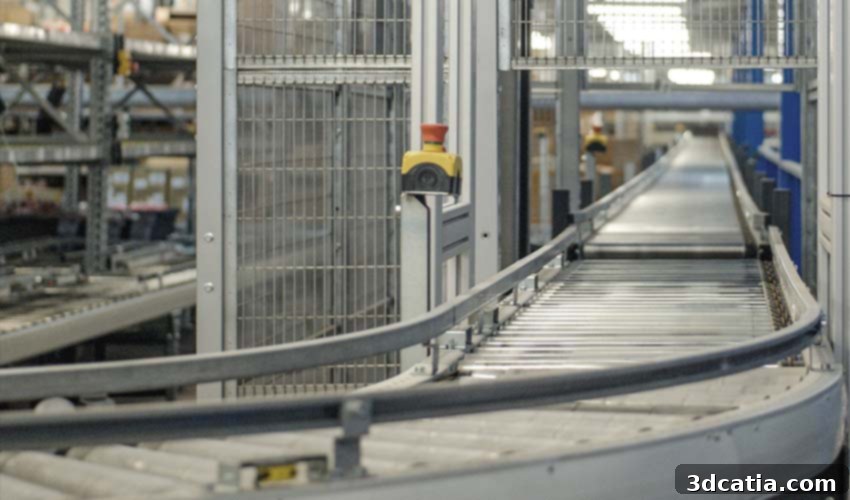
In today’s interconnected global economy, many industries are heavily reliant on complex supply chains, often extending across continents and originating from manufacturing hubs like China and Southeast Asia. Sectors such as automotive, electronics, and general manufacturing, along with their intricate logistics networks, have historically thrived on this globalized model. However, the recent global health pandemic exposed significant vulnerabilities within these traditional supply chains. Widespread disruptions, including factory closures, shipping delays, and labor shortages, severely impacted the operational activities of companies across virtually all industrial sectors. Alarmingly, reports indicated that more than 94% of FORTUNE 1000 companies experienced major disruptions to their supply chains, highlighting critical limitations of conventional manufacturing and logistics methods, particularly their inherent lack of agility and resilience in the face of unexpected global events. This crisis served as a powerful catalyst, urging businesses to re-evaluate and seek out more flexible and robust solutions for their production and distribution networks.
Can 3D Printing Technologies Add Flexibility to Current Supply Chains?
Amidst the initial turmoil of the pandemic, one technology sector rapidly demonstrated its indispensable value: 3D printing, also known as additive manufacturing. Its impact was particularly profound and immediately visible within the medical sector, where it proved instrumental in manufacturing critical emergency equipment for healthcare professionals and patients worldwide. In a remarkable display of rapid response and adaptability, companies and individuals within the 3D printing ecosystem swiftly mobilized. Within days, they were able to design, produce, and distribute essential medical devices, ranging from protective masks and face shields to complex ventilator components, all crucial for saving lives and supporting front-line efforts. This swift and decentralized production capability underscored 3D printing’s unique ability to circumvent broken traditional supply lines and meet urgent, localized demands with unprecedented speed.

In the medical sector, 3D printing was used to produce face shields urgently to protect healthcare professionals, demonstrating its agility in crisis.
While the spotlight shone brightly on the medical industry’s response, manufacturers across all other industrial sectors were simultaneously grappling with severe bottlenecks and inefficiencies in their existing supply chains. The lack of readily available local manufacturing capabilities, coupled with dramatically extended lead times for parts and components from overseas, paralyzed many operations. These challenges highlighted a critical question: Could embracing 3D printing, with its demonstrated agility and potential for localized production, truly be a viable part of the long-term solution to these systemic supply chain vulnerabilities? The answer lies in understanding the intrinsic advantages that additive manufacturing brings to the table for modern businesses seeking greater flexibility and resilience.
One of the most profound benefits of additive manufacturing for supply chains is its inherently distributed and localized nature. Unlike traditional mass production, which often necessitates large-scale factories in distant countries to achieve economies of scale, 3D printing technologies enable businesses to decentralize their production. This means bringing manufacturing capabilities much closer to local markets and end-customers, significantly reducing transportation distances and times. Instead of relying solely on massive, centralized production facilities in other countries, manufacturers can establish more agile, local assembly or production hubs. This shift allows for unprecedented geographical flexibility, minimizing exposure to geopolitical risks, natural disasters, or global pandemics that can disrupt long-distance shipping routes. Furthermore, additive manufacturing offers unparalleled advantages in terms of greater product customisation, the ability to consolidate complex assemblies into fewer parts, and significantly improved time-to-market. For instance, imagine a supply chain where the customer could be more intimately involved in the design and production processes, creating truly bespoke products. A key economic advantage of 3D printing is that the price per unit of a part does not dramatically shift with the volume of production in the same way it does with traditional tooling-dependent methods. Essentially, each part can be personalized, iterated upon, or manufactured on-demand for a specific customer without incurring the prohibitive extra cost typically associated with customisation in conventional manufacturing.
Beyond localization and customization, additive manufacturing is inherently a much quicker method of production for many applications. By digitally designing and producing parts layer by layer, it’s possible to bypass many of the time-consuming steps involved in traditional manufacturing, such as tooling creation, mold making, and complex assembly lines. This consolidation of components and processes directly contributes to decreasing manufacturing complexities, reducing overall production costs, and, most critically for supply chain efficiency, drastically cutting down lead times and accelerating time-to-market. A stark contrast exists between traditional methods and 3D printing in this regard: whereas conventional parts often require expensive, time-consuming molds or dies to exist, 3D printed parts only need a digital file. This digital-to-physical workflow streamlines the entire process. Moreover, the shift towards on-demand production, fabricating parts only when and where they are needed, could become the new norm for many industries. Such a paradigm shift would mean a dramatic reduction in the need to transport vast quantities of physical goods across countries and continents, leading to major positive impacts on warehousing requirements, inventory management, and global logistics networks, all while contributing to a more sustainable manufacturing footprint.
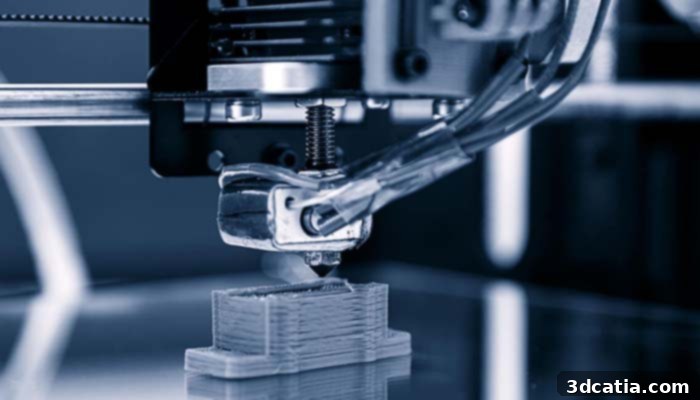
Manufacturers are able to favor more local and agile production thanks to Additive Manufacturing (AM).
Nevertheless, it is crucial to recognize that 3D printing is not a universal panacea for all manufacturing challenges, nor is it intended to entirely replace conventional methods. For certain parts that require extremely high volumes of production, or specific material properties and finishes achievable only through traditional means, conventional manufacturing processes such as injection molding, CNC machining, or stamping will likely remain more cost-competitive and efficient. Therefore, the true power of additive manufacturing lies in its ability to optimize current supply chains, strategically filling critical gaps, and enhancing overall resilience rather than outright supplanting established industrial practices. It acts as a powerful complement, enabling hybrid manufacturing strategies where the strengths of both traditional and additive technologies are leveraged to create more robust, flexible, and efficient production ecosystems.
How Do Manufacturers Adopt 3D Printing?
Despite the compelling advantages, many companies have yet to fully integrate 3D printers into their primary supply chains. For a considerable period, significant barriers to entry have hindered broader adoption, primarily including a lack of specialized know-how within organizations and the substantial initial capital investment required for acquiring industrial-grade equipment. These hurdles partly explain the rapid and sustained growth of 3D printing service providers in recent years. These specialized companies offer on-demand manufacturing services, allowing businesses to access the benefits of additive manufacturing without the upfront costs or the need to develop in-house expertise. Back in 2017, Research and Markets accurately predicted in their comprehensive report, “3D Printing Services Market – Global Outlook and Forecast 2017 – 2022,” that this market segment would exceed $13 billion, demonstrating an impressive Compound Annual Growth Rate (CAGR) of more than 28% during the 2016-2022 period. This strong growth trajectory underscores the vital role service providers play in overcoming the initial barriers companies often face, particularly in the early stages of integration when they are still exploring and strategizing how best to invest in 3D printing for long-term strategic benefits.
More recently, an array of innovative solutions has emerged to further facilitate and streamline the adoption of 3D printing technologies, with engaging specialized service providers being a prominent pathway. For example, Dassault Systèmes’ innovative Make service, an integral component of their expansive 3DEXPERIENCE Marketplace, serves as a crucial digital bridge. This platform efficiently connects buyers—companies needing parts—with an extensive network of over 200 qualified manufacturers primarily located in Europe and the United States. These manufacturers offer a wide spectrum of production technologies, including various 3D printing processes, precise CNC machining, advanced cutting techniques, traditional injection molding, and other essential manufacturing services. Benoît Schildknecht, Marketplace Director at Dassault Systèmes, succinctly articulates the value proposition: ‘The on-demand manufacturing solution by Dassault Systèmes, 3DEXPERIENCE Marketplace Make, allows you to rebuild a more flexible supply chain, safely and closer to you, in order to meet your long-term and short-term needs with unmatched efficiency and reliability.’ This emphasizes the platform’s role in creating a resilient, geographically optimized manufacturing ecosystem.
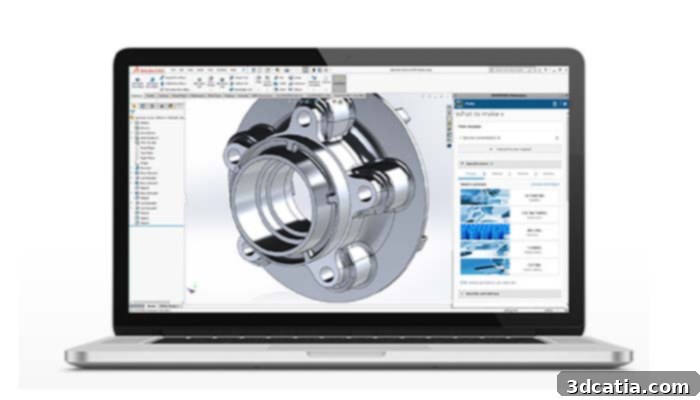
Solutions like Dassault Systèmes’ Make service are emerging to greatly facilitate the adoption of 3D printing and other on-demand manufacturing technologies.
It is also particularly noteworthy that Dassault Systèmes has meticulously addressed some of the most common concerns and typical worries associated with utilizing external manufacturing services. This foresight is reflected in the design of the 3DEXPERIENCE Marketplace, which provides buyers with comprehensive tools to monitor the status of their transactions in real-time and maintain complete traceability throughout the entire manufacturing process. This level of transparency builds trust and provides critical insights into the production lifecycle. Benoît Schildknecht further elaborates on the platform’s user-centric features, stating, ‘Members can effortlessly communicate among themselves and efficiently compare prices across all available on-demand manufacturing resources, thanks to our robust instant quoting engine. Furthermore, the payment process is streamlined and facilitated, allowing project teams to dedicate their full attention to the proper execution and technical aspects of their projects, rather than being bogged down by cumbersome administrative tasks and financial logistics.’ This integrated approach simplifies procurement, accelerates decision-making, and enhances overall project management for businesses leveraging these services.
To conclude, the recent global challenges, epitomized by the COVID-19 pandemic, have served as a powerful impetus for companies worldwide to fundamentally rethink, analyze, and transform their supply chains. This urgency is particularly pronounced for organizations with a high dependency on single-source regions or highly centralized global production models. The strategic move towards reshoring or nearshoring production, significantly enabled by technologies like 3D printing, promises numerous benefits including enhanced flexibility, potentially lower overall operational costs in many cases (especially when accounting for lead times and inventory), and often better part quality control due to closer oversight. It will be fascinating to observe how individual companies and entire industries navigate this complex transition and strategically integrate additive manufacturing into their core operations. In the interim, for those looking to explore immediate solutions, you can find much more detailed information on Dassault Systèmes’ comprehensive on-demand manufacturing service, the 3DEXPERIENCE Marketplace Make, by clicking HERE!
What are your thoughts on the long-term impacts of 3D printing on global supply chains and manufacturing strategies? We encourage you to share your insights and predictions in a comment below, or join the discussion on our Facebook and Twitter pages! Don’t forget to sign up for our free weekly Newsletter to receive all the latest news, trends, and advancements in the dynamic world of 3D printing delivered directly to your inbox!