
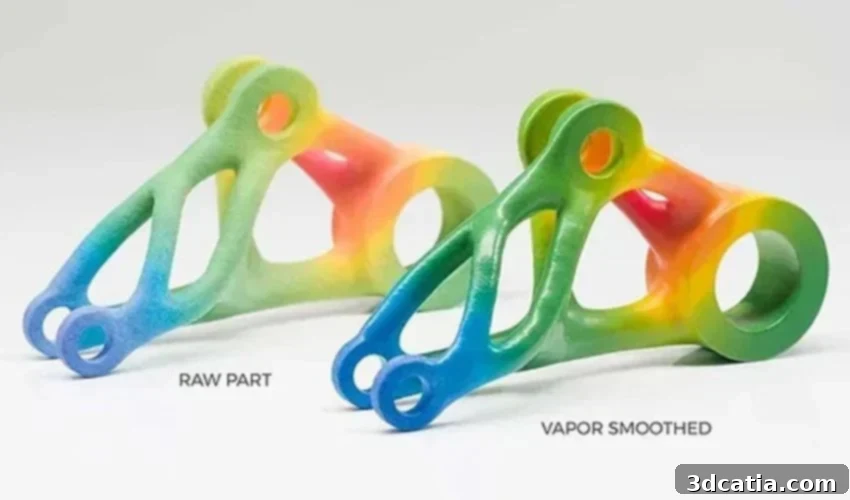
Vapor Smoothing for 3D Printed Parts: Achieving Superior Surface Finish and Enhanced Performance
In the rapidly evolving world of additive manufacturing, the journey from a raw 3D printed object to a functional, aesthetically pleasing, or high-performance component often involves a crucial intermediate step: post-processing. While the capabilities of 3D printers continue to advance, many parts emerge with rough surfaces, visible layer lines, or inherent porosity depending on the chosen printing technology and material. This necessitates various finishing techniques to refine their properties, improve aesthetics, or prepare them for specific applications. Among these techniques, vapor smoothing stands out as a highly effective physical-chemical process specifically designed to enhance the surface quality and mechanical integrity of plastic parts.
Vapor smoothing, also known as chemical vapor polishing or solvent vapor finishing, is a sophisticated post-processing method that transforms the surface of 3D printed thermoplastics. By leveraging a carefully controlled chemical solvent delivered as a vapor, this process effectively melts and reorganizes the outermost layer of the printed part. The result is a densified, significantly smoother, and often glossier surface, which not only dramatically improves the component’s aesthetic appeal but also enhances its mechanical properties, hygiene, and resistance to environmental factors. But how precisely does this transformative process work, and what critical factors must be considered to achieve optimal results for diverse 3D printing applications?
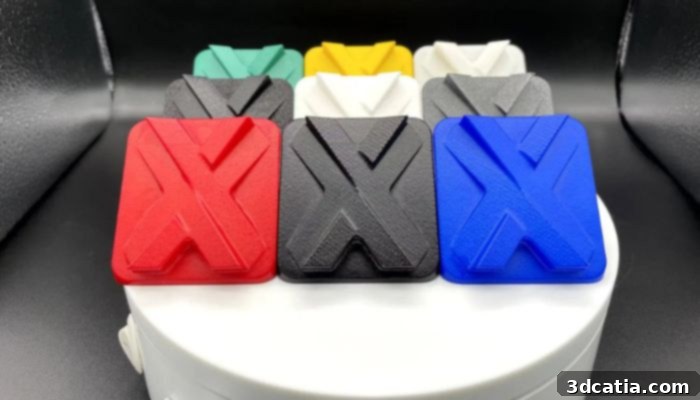
Vapor smoothing is a post-processing technique used to obtain smooth surfaces on 3D printed parts (photo credits: Xometry).
How Vapor Smoothing Works: The Science Behind the Smooth Finish
The fundamental principle behind vapor smoothing lies in the controlled interaction between a chemical solvent in its vapor phase and the surface of a thermoplastic 3D printed part. When exposed to the solvent vapor, the very top layer of the plastic begins to soften and liquefy. This localized, superficial melting allows the surface molecules to redistribute, flowing into microscopic valleys, pores, and layer lines that characterize untreated 3D prints. As the solvent vapor is removed and the surface re-solidifies, it forms a new, structurally improved outer layer that is remarkably smooth and dense, effectively eliminating the original surface imperfections.
The process is typically carried out within a hermetically sealed and heated chamber, where precise environmental conditions are maintained. Once the 3D printed parts are securely placed inside, the selected chemical solvent is heated to its vaporization point. This solvent vapor is then introduced into the chamber through a sophisticated feed system. As the warm vapor comes into contact with the cooler surface of the parts, it condenses. This condensation is crucial, as it delivers the chemical agent directly to the surface, initiating the partial melting and molecular reorganization. The duration and intensity of this chemical exposure directly influence the final outcome: longer or more concentrated treatment generally leads to a glossier and smoother finish.
Modern, dedicated vapor smoothing solutions often integrate this entire finishing process into an automated, multi-stage cycle. After the heating phase and controlled solvent introduction, which facilitates the chemical melting of the surface, the system automatically extracts the solvent vapor. This ensures that no chemical residues are left on the treated parts, which is vital for purity and performance. Furthermore, many advanced machines include an integrated drying stage, preparing the parts for immediate use or further post-processing steps like coloring or assembly. This level of automation ensures consistency and efficiency, making vapor smoothing a reliable technique for industrial applications.
For the best and most uniform results, proper part placement within the smoothing chamber is paramount. Components should ideally be positioned or suspended on a grid, ensuring they do not touch each other. This critical detail allows the solvent vapor to evenly condense on all exposed surfaces of each part, guaranteeing a homogeneous chemical treatment and a consistent surface finish across the entire batch. Achieving this ideal placement can, however, pose a challenge, particularly for parts with intricate or complex geometries.
Many parts produced by additive manufacturing, especially those designed for highly functional or aesthetic applications, often feature complex geometries that complicate straightforward suspension or placement. In such scenarios, designers and engineers must consider the post-processing requirements during the initial design phase. This might involve incorporating temporary eyelets, hooks, or other suspension points directly into the part’s design. These features, which facilitate secure placement in the vapor smoothing chamber, can then be easily removed after the smoothing process is complete, without compromising the final part’s integrity or aesthetic quality. Careful planning in this regard helps to prevent contact marks and ensures uniform treatment even for the most challenging designs.
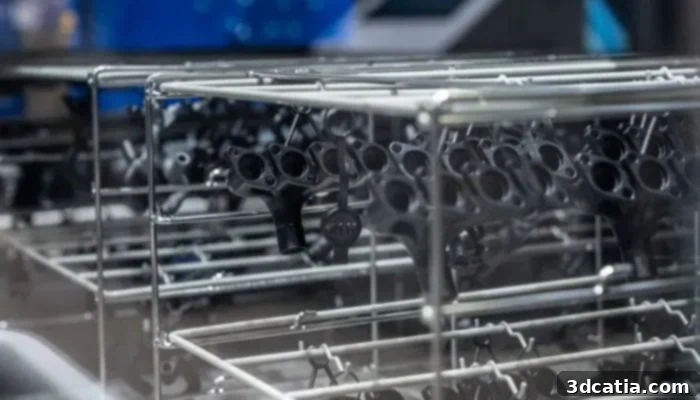
The 3D-printed parts hang in the chamber (photo credits: DyeMansion).
Compatibility With Printing Technologies and Materials: A Versatile Solution for Thermoplastics
Vapor smoothing is an exceptionally versatile post-processing method, but its applicability is specifically confined to thermoplastic materials. This inherent compatibility with a wide array of plastics makes it a preferred choice across various industries. The technique is effective with common 3D printing polymers such as Polyamide (PA), Acrylonitrile Butadiene Styrene (ABS), Polycarbonate (PC), Polylactic Acid (PLA), Polypropylene (PP), Thermoplastic Polyurethane (TPU), and Polyethylene Terephthalate Glycol (PETG). These materials can be processed using various 3D printing technologies, each benefiting from the unique advantages of vapor smoothing.
The process has gained significant popularity, particularly for parts manufactured using powder bed fusion technologies like Selective Laser Sintering (SLS) or Multi Jet Fusion (MJF). These processes typically produce parts with a characteristically rough, porous, and often grainy surface finish due to the nature of powder fusion. Vapor smoothing expertly addresses these issues by melting and sealing the external powder particles, transforming the coarse texture into a smooth, even, and highly functional surface. Beyond powder bed fusion, parts produced via Fused Deposition Modeling (FDM), known for their distinct layer lines, can also be dramatically refined. Vapor smoothing can effectively diminish or even eliminate these visible layer lines, resulting in parts that appear and feel significantly more polished and professional.
The choice of chemical solvent is critical and depends heavily on the specific thermoplastic material being treated. Different polymers react differently to various chemicals, and selecting the correct solvent is essential for achieving the best possible surface finish and maintaining part integrity. For instance, acetones are highly recommended and widely used for materials like ABS and ASA (Acrylonitrile Styrene Acrylate) due to their strong solvency and controlled evaporation rates. For PLA, which has different chemical properties, tetrahydrofuran (THF) is often the preferred choice. Furthermore, methyl ethyl ketones (MEK) can be effectively employed for a range of materials, including ABS, PETG, and PC, demonstrating the need for a tailored approach based on material science. Understanding these chemical specificities ensures that the vapor smoothing process optimally enhances the part without causing damage or undesirable material changes.
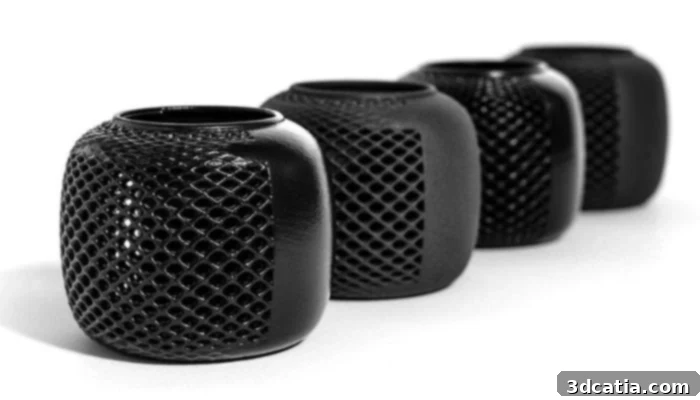
Vapor smoothing is possible for parts made from many different materials (photo credits: Protolabs)
Advantages and Applications: Unlocking the Full Potential of 3D Printed Parts
Vapor smoothing offers a myriad of significant advantages that extend far beyond mere aesthetic improvement, fundamentally transforming the utility and quality of 3D printed components. The primary and most immediately noticeable benefit is its ability to produce a surface quality and aesthetic finish that rivals or even surpasses that of traditional injection-molded parts. By correcting surface irregularities, minimizing roughness, and filling in microscopic pores and layer lines, vapor smoothing creates uniformly smooth surfaces with a consistent look and feel. This enhanced appearance and tactile quality are often decisive factors, making 3D printed parts suitable for end-use applications where visual appeal and haptics are critical.
Beyond aesthetics, the densification and sealing of the surface dramatically improve the hygiene of components. Smoothed parts become significantly more resistant to dirt accumulation, chemical absorption, and bacterial growth. This sealed, non-porous surface is much easier to clean and sterilize, which is a critical advantage for components used in sensitive environments such as medical devices, dental applications, food processing equipment, and consumer goods. This enhancement in hygiene capabilities broadens the scope of applications for treated components into industries with stringent cleanliness requirements.
Crucially, vapor smoothing also substantially improves the mechanical properties of 3D printed parts. After treatment, components often exhibit enhanced mechanical stability, significantly higher flexural and tensile strength, and improved resistance to impact. The process effectively reduces the internal stress concentrations that can arise from surface irregularities, and by sealing micro-fissures and pores, it densifies the material’s outer layer. This reduction in porosity directly translates to a positive effect on the mechanical load-bearing capacity, making vapor-smoothed parts more robust and reliable. This advantage is particularly valuable for thin-walled components, where even minor surface imperfections can act as stress concentrators and lead to premature failure. The improved sliding properties resulting from a smoother surface can also reduce friction in moving parts, extending their lifespan and improving operational efficiency.
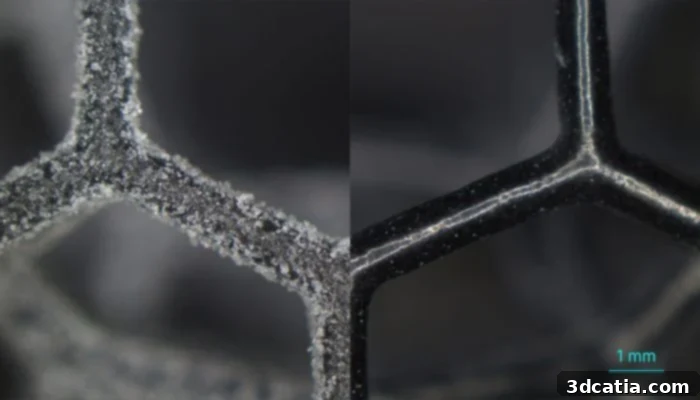
The surface finish of 3D printed parts can be considerably improved by vapor smoothing (photo credits: ASM).
By melting and resealing the surface layer, vapor smoothing also renders parts effectively water-repellent and significantly more resistant to various chemicals. This impermeability is immensely important for functional parts that are designed to conduct or contain liquids, such as pipes, channels, and components for fluid mechanics systems, where watertightness is non-negotiable. The enhanced chemical resistance extends the operational life of parts in harsh industrial environments. Furthermore, a perfectly smooth surface provides an ideal base for subsequent coloring or painting processes. It guarantees uniform adhesion and absorption of pigments, leading to more vibrant, consistent, and professional-looking colored finishes without the need for extensive manual sanding or priming.
From a manufacturing perspective, cost-effectiveness is another compelling argument for adopting vapor smoothing. Compared to labor-intensive traditional finishing methods like manual sanding, grinding, and polishing, vapor smoothing delivers fast, consistent, and often more economical results. Its automated nature reduces the need for skilled labor and shortens lead times, making it an efficient and flexible post-processing solution. The broad compatibility with a wide range of thermoplastics opens up a vast field of applications, enabling smoothed 3D printed parts to effectively replace traditionally manufactured components, whether for high-fidelity prototypes, functional prototypes, or even direct production parts.
The unique combination of a sealed, non-porous surface and improved mechanical properties makes vapor smoothing highly attractive across diverse industries. For components handling liquids, such as intricate channels, fluid connectors, and test parts in fluid mechanics, the process ensures reliability and leak-free operation. Consequently, it is of significant interest for sectors like mechanical engineering, the automotive industry (e.g., for custom ducts or housings), and particularly in aeronautics and aerospace, where high performance and material integrity are paramount for critical components. The ability to create parts with improved strength-to-weight ratios and environmental resistance is a major draw.
The improved hygiene characteristics, including increased resistance to dirt and bacteria, play a central role in environments demanding strict sterility and cleanliness. Chemically smoothed parts can meet the rigorous standards of the medical and dental fields for custom prosthetics, surgical guides, or patient-specific implants. Similarly, the food industry benefits from non-porous surfaces that are easy to sanitize, reducing the risk of contamination. Beyond these functional applications, the design and consumer goods industries also greatly benefit from this finishing method. Smooth, homogeneous surfaces with an optional glossy finish elevate the aesthetic appeal of visible parts, making them more attractive and marketable. Vapor smoothing empowers designers to fully realize their creative visions without compromising on the final product’s quality or functionality.
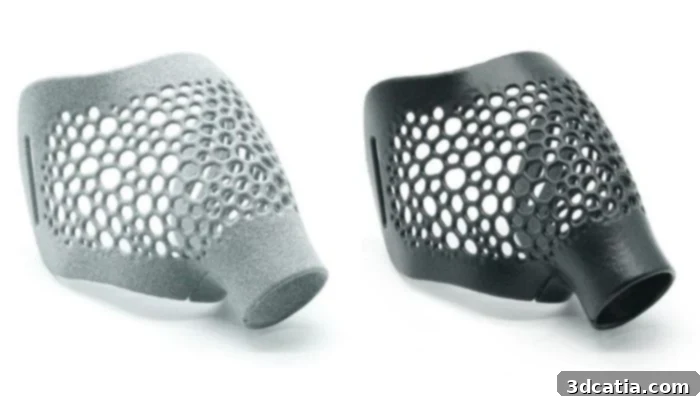
Smoothed parts are used in a variety of industries (photo credits: ASM)
Limitations: Understanding the Nuances for Optimal Results
While vapor smoothing presents a compelling array of advantages and broadens the application possibilities for 3D printed parts, it is not without its limitations. As with any advanced manufacturing process, achieving optimum results requires careful consideration of several factors that can influence the final outcome. Understanding these nuances is key to successful implementation and avoiding potential drawbacks.
A critical factor is the correct positioning of components within the smoothing chamber. As previously mentioned, integrating natural notches, hooks, or temporary eyelets into the part’s design for suspension is highly advantageous. However, if such features are not or cannot be incorporated, alternative hangers or fixtures must be used. A significant drawback here is that these contact points can leave visible marks on the part’s surface. These marks might compromise the aesthetic quality, particularly for consumer-facing or highly visible components, and in some cases, could even impact localized mechanical properties. Careful design for manufacturing (DFM) and post-processing (DFP) is essential to minimize these undesirable artifacts.
Furthermore, vapor smoothing is generally not suitable for parts with extremely thin wall thicknesses. Components with wall thicknesses less than 1-2 mm are particularly vulnerable. The intense chemical vapor exposure and subsequent softening of the plastic can lead to excessive material removal, deformation, or even complete melting through of thin features. This limits the application for highly delicate or ultra-thin walled geometries. Even for larger parts, specifically those with expansive, flat surfaces, the chemical steam treatment can induce distortion, warping effects, or uneven surface finishes, even if the overall shrinkage or warpage is typically less than 0.4%. This is often due to differential cooling or uneven solvent condensation across large areas, leading to internal stresses that manifest as visible deformation.
Finally, and perhaps most importantly, the nature of the process involves handling potent chemical solvents. This inherently introduces a degree of risk that demands stringent safety protocols. Correct handling procedures, including the use of appropriate personal protective equipment (PPE), ensuring adequate ventilation, and adhering to strict operational guidelines, are absolutely essential for user safety. Facilities employing vapor smoothing must be equipped with proper safety infrastructure and personnel must receive thorough training on chemical handling, spill response, and emergency procedures. Environmental considerations for solvent disposal and recycling also need to be carefully managed to ensure compliance and minimize ecological impact.
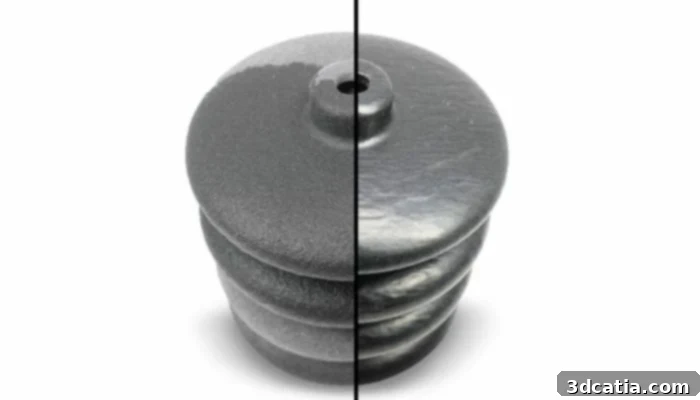
Before vapor smoothing (left) and after (right) (photo credits: ATM)
Manufacturers of Vapor Smoothing Solutions: Leading the Way in Post-Processing Innovation
Despite the increasing recognition of vapor smoothing as a crucial post-processing step for high-quality 3D printed parts, the market for dedicated machine suppliers is still relatively specialized, though growing steadily. These manufacturers are at the forefront of developing innovative, safe, and efficient solutions to bring the benefits of vapor smoothing to a wider industrial audience.
Pioneering British manufacturer **AMT** (Additive Manufacturing Technologies) is a prominent player in this space. They offer a range of high-performance solutions, including their desktop-sized PostPro SFX system, designed for smaller batches or research and development environments. For larger-scale industrial users seeking higher throughput and greater automation, AMT provides robust systems like the PostPro SF Pure and PostPro SF PP machines, which are engineered for consistent and repeatable results in demanding production settings.
Another leader in automated post-processing is **DyeMansion**. With its Powerfuse S series, DyeMansion specifically targets industrial applications, emphasizing fully automated vapor smoothing for serial production. Their systems are known for their integrated processes, ensuring not only excellent surface quality but also operational efficiency and safety, making them a popular choice for automotive, medical, and consumer goods industries.
The German start-up **ASM** (Advanced Surfacing & Manufacturing) also specializes in innovative vapor smoothing solutions. Their VX1 system offers a rapid post-processing solution, typically completing smoothing cycles in a remarkably short timeframe of 1.5 to 2 hours. This efficiency makes the VX1 particularly appealing for applications requiring quick turnaround times without compromising on surface quality. ASM focuses on user-friendly interfaces and robust engineering to deliver reliable performance for various thermoplastic materials.
These manufacturers are continually pushing the boundaries of vapor smoothing technology, making the process more accessible, automated, and versatile. As additive manufacturing continues its trajectory towards mainstream production, the development of sophisticated post-processing solutions like those offered by AMT, DyeMansion, and ASM will be instrumental in delivering end-use parts that meet stringent industry standards for aesthetics, performance, and hygiene.
Do you currently utilize vapor smoothing as a post-processing technique for your 3D printed parts, or are you considering implementing it? Share your experiences, insights, or questions in a comment below or connect with us on our LinkedIn, Facebook, and Twitter pages! Don’t forget to sign up for our free weekly Newsletter here to receive the latest 3D printing news straight to your inbox! You can also find all our comprehensive videos and guides on our YouTube channel.
*Cover Photo Credits: Kingroon