
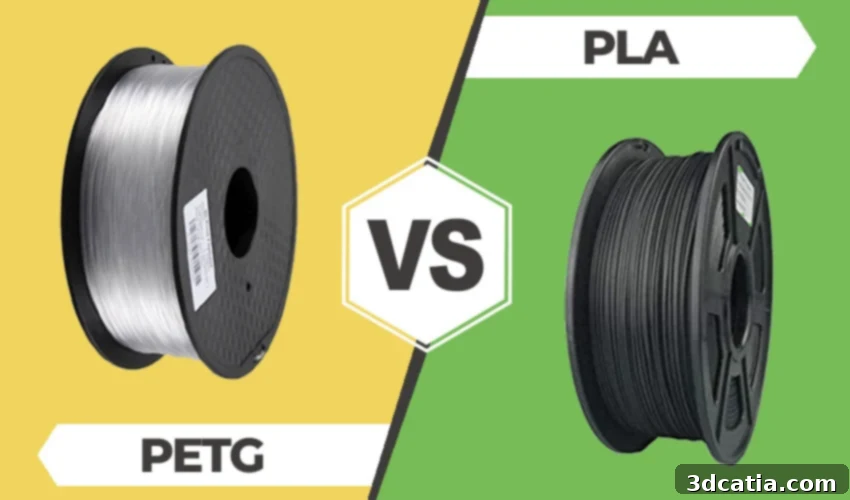
PLA vs. PETG: A Comprehensive Guide to Choosing Your Ideal 3D Printing Filament
When delving into the world of 3D printing, the material that most frequently comes to mind is plastic. While the industry certainly utilizes a diverse range of materials, including advanced metals and ceramics, polymer-based filaments continue to dominate the market. This prevalence is largely due to their versatility; they are indispensable for industrial applications like rapid prototyping, and they also serve as the primary choice for countless desktop 3D printers, especially those employing Fused Deposition Modeling (FDM) technology. Among the vast array of available plastics for 3D printing, a significant rivalry for popularity exists between PLA (Polylactic Acid) and PETG (Polyethylene Terephthalate Glycol).
Both PLA and PETG are widely recognized for their relative ease of use, making them excellent choices for filament production that caters to both novices and seasoned professionals utilizing FDM printers. Despite sharing this key characteristic and several other similarities, these two filaments possess distinct differences that can significantly impact print quality and suitability for specific applications. How do their fundamental characteristics compare? What sets them apart in terms of performance? And crucially, when should you opt for one over the other? We’ve conducted a thorough examination of PLA versus PETG, providing a detailed comparison to help you navigate these essential questions and make an informed decision for your 3D printing endeavors.
Understanding the Characteristics of PLA vs. PETG
A fundamental distinction between PLA and PETG lies in their composition and manufacturing processes. PLA stands out for its origins, being produced from renewable and natural raw materials. Common sources include corn starch, sugarcane, and tapioca roots. This bio-based composition makes PLA attractive for those seeking sustainable and environmentally conscious 3D printing materials. Furthermore, PLA is recognized for its biodegradability under specific industrial composting conditions, cementing its appeal for eco-friendly projects.
In contrast, PETG is derived from PET (Polyethylene Terephthalate), a widely known thermoplastic commonly used in beverage bottles. To create PETG, glycol (the ‘G’ in PETG) is added during the polymerization process at a molecular level. This modification gives PETG enhanced properties compared to standard PET, particularly for 3D printing. The addition of glycol prevents the material from crystallizing and becoming brittle during the printing process, resulting in a filament that boasts greater strength, durability, and most importantly, flexibility. While PETG is 100% recyclable, it is an oil-based polymer, meaning it does not share PLA’s biodegradable qualities as it is not made from renewable raw materials. Its reliance on petroleum distinguishes it from PLA’s sustainable profile.
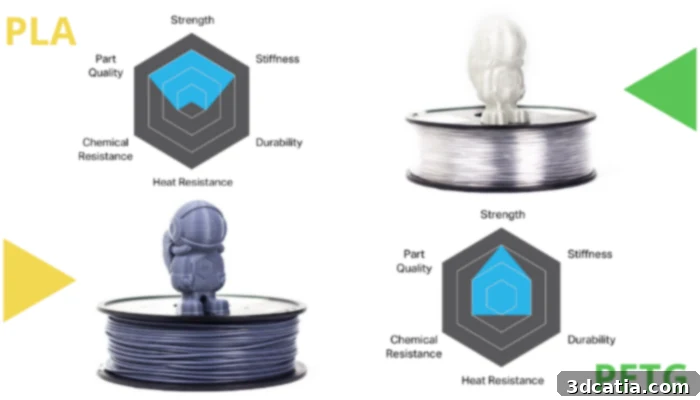
Physical Properties of PLA (left) vs PETG (right).
(Photo Credits: MatterHackers)
Ease of Printing Considerations
Beyond their foundational materials, both polymers share notable similarities in their technical printability. Both are celebrated for being relatively easy to work with on FDM printers. PLA, in particular, often holds the title as the simplest material to 3D print, making it an undeniable favorite among beginners. This ease largely stems from its thermal requirements. PLA can be extruded at significantly lower temperatures, typically between 190-220℃ (374-428℉), and crucially, it generally does not require a heated print bed or an enclosed build chamber. This makes it highly accessible for entry-level printers and reduces overall setup complexity.
PETG is also considered one of the easier filaments to print with, although it presents slightly more challenges than PLA. Like PLA, PETG does not usually necessitate a closed build chamber, which is a convenience for many users. However, its higher temperature demands mean that a heated print bed is almost always required for successful adhesion and to prevent warping. Optimal extrusion temperatures for PETG typically range between 220° and 260°C, with the heated bed ideally set between 75-90°C. These higher thermal requirements can limit the choice of printers for some users and require a more controlled printing environment than PLA.
It’s worth noting that while PETG might present a steeper learning curve initially compared to PLA – which often prints perfectly “out of the box” – once the correct settings are dialed in, PETG is known for its consistent extrusion and excellent thermal stability. This means that after some calibration, users often find PETG prints reliably. A common challenge for both materials, due to their relatively high viscosity, is the potential for clogging printer nozzles. This is, however, a frequent issue across many types of plastic filaments and should not be seen as a specific drawback for either PLA or PETG. Proper retraction settings and nozzle maintenance are key to mitigating this issue for both materials.
Physical and Mechanical Properties
When the physical properties of your printed part are paramount, PETG generally outperforms PLA. PETG exhibits superior resistance to water, chemicals, and fatigue, making it a more robust choice for functional parts that need to withstand environmental stresses or repeated use. It is also inherently more durable and less brittle than PLA. Many enthusiasts describe PETG as striking a beneficial balance between the properties of ABS and PLA, effectively combining desirable attributes from both.
For instance, PETG offers greater strength than PLA, although it is typically not as strong as ABS. Conversely, it is more flexible than ABS, providing a good level of toughness, yet it is generally less flexible than PLA. This unique combination helps mitigate the shortcomings found in either ABS or PLA when used individually for certain applications, making PETG a popular “middle-ground” material. While PETG is also known for being more rigid than PLA, which can be advantageous in industrial contexts requiring structural integrity, users should be aware that PETG surfaces are relatively prone to scratching despite their overall durability.
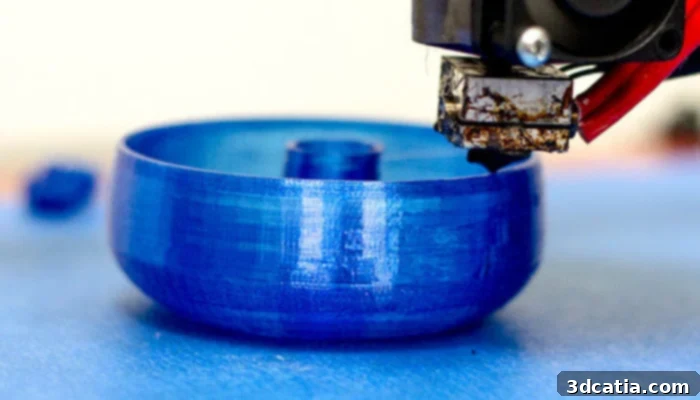
Printing a part with PLA (photo credits: MatterHackers)
It’s important to note that PETG can often be reinforced with materials like carbon fiber, which further enhances its strength and stiffness, albeit at a higher cost. While PLA can also be reinforced, the resulting composite will generally be weaker than its PETG counterpart due to the inherent properties of the base polymers. PETG is particularly well-suited for producing parts that require a degree of flexibility while maintaining good resistance to shock and impact. Neither PETG nor PLA are celebrated for their UV resistance, but PETG does offer a higher degree of resistance to both heat and UV radiation compared to PLA. This means PETG parts can withstand outdoor exposure or elevated temperatures for longer periods before showing signs of degradation.
Both PETG and PLA are typically considered non-toxic and produce minimal odor during printing. PLA, in particular, is often described as emitting a slightly sweet, corn-like smell, which is generally pleasant and harmless. This contrasts sharply with materials like ABS, which can release potentially harmful fumes requiring adequate ventilation. While the long-term health effects of various 3D printing fumes are still being studied, PLA and PETG are generally regarded as safe for use in well-ventilated spaces, though exercising caution is always advised. Additionally, both filaments are less prone to warping than ABS, a significant advantage for larger prints. However, the requirement for a heated bed for PETG suggests that it has a greater tendency to warp than PLA, necessitating more careful temperature control.
Post-Processing Capabilities
A significant differentiating factor between PETG and PLA becomes apparent during post-processing. PLA generally offers a wider array of post-processing options and is typically easier to work with once a print is complete. In stark contrast, removing support structures from PETG prints can be notably challenging due to the material’s excellent layer adhesion and slightly sticky nature. To effectively remove supports without damaging the printed part, it is crucial to maintain a deliberate gap between the support structures and the model itself; a distance of at least 0.5mm is often recommended to facilitate easier removal.
One post-processing method that proves effective for both materials is sanding. Sanding can be used to smooth the surface of FDM-printed parts, which is particularly valuable for improving the aesthetic finish. While some users report that sanding PETG is marginally easier, allowing for a glossy finish that PETG is often praised for, PLA also sands well. The real advantage for PLA comes from the wider range of post-processing techniques available, including chemical smoothing (though less common for home users), drilling, and tapping, which are generally more straightforward than with PETG.
Another crucial consideration, especially for those creating decorative items or props, is that PLA can be easily painted, allowing for extensive customization and detailing. PETG, on the other hand, is much more difficult to paint effectively due to its chemical resistance and slick surface. However, PETG’s inherent ability to be transparent offers its own unique benefits across various sectors, such as in the food industry where visibility is important, or in industrial applications where fluid levels or internal mechanisms need to be observed.
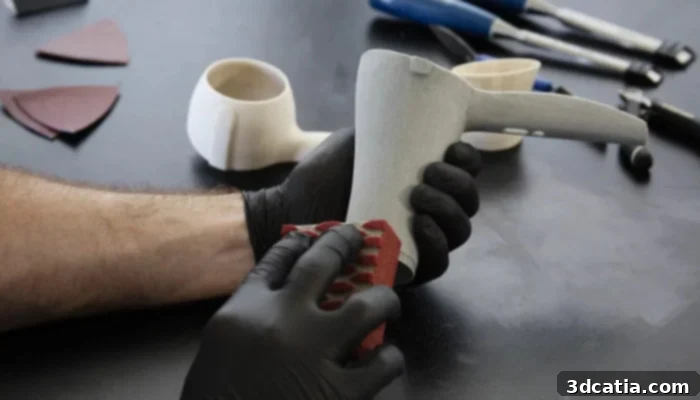
A 3D printed part being sanded (photo credits: MakerBot)
Practical Applications for PLA vs. PETG
Given their similar fundamental properties, there is a considerable overlap in the applications suitable for both PLA and PETG. Both materials find use in diverse sectors, including the food industry (with specific caveats), medical applications, costume and prop manufacturing, and the production of decorative parts. However, each material demonstrates unique advantages that make it superior for certain specific uses.
For instance, when considering applications within the food industry, PETG often emerges as the preferred material. PET, the base material for PETG, is the widely used polymer for manufacturing plastic bottles and food containers due to its inherent water resistance, durability, and safety. Its widespread use, accounting for approximately 18% of global plastic production, underscores its established safety for food contact. PETG inherits many of these properties and is frequently FDA-approved for food contact. Its superior water and heat resistance make it an ideal choice for creating parts that will interact with food, such as custom cookie cutters, kitchen utensils, or components for food storage containers like Tupperware.
PLA is also generally considered food-safe, but to a somewhat lesser degree than PETG. Its lack of significant water resistance can make it less ideal for prolonged food contact or applications requiring repeated washing. Furthermore, while pure PLA is often deemed safe, the safety of certain additives, colorants, or specific manufacturing processes in PLA filaments has been a topic of discussion in recent years. Users must therefore ensure they source PLA that is certified food-safe and free from questionable additives if direct food contact is intended.
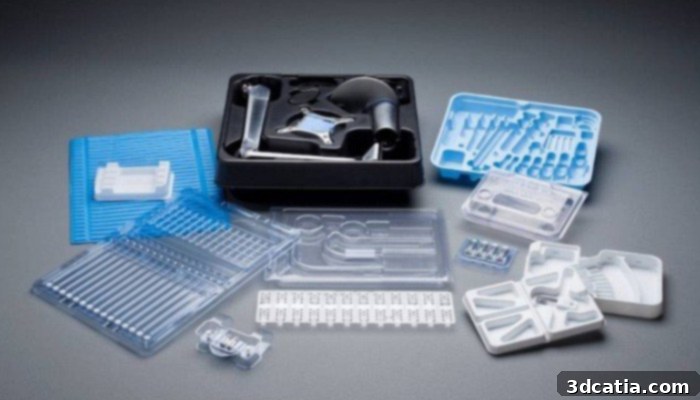
PETG can be used for a variety of applications including in the food industry. (Photo Credits: AMFG)
In the medical sector, both materials play significant, albeit distinct, roles. PETG’s ability to withstand sterilization processes makes it a suitable material for medical implants, pharmaceutical packaging, and components for medical devices that require aseptic conditions. PLA’s popularity in the medical field stems from its unique biodegradable nature. This characteristic allows it to be used for temporary implants that are designed to dissolve harmlessly within the body over time, or for creating parts that can facilitate the slow release of medication.
Broadly speaking, PETG is the more appropriate choice for parts that demand higher resistance to heat and mechanical forces, thanks to its impressive physical properties, which include greater impact resistance and toughness than PLA. Conversely, PLA is frequently employed for creating test and calibration items, as well as dimensionally accurate assemblies where precision is key, and the printed object will not be subjected to significant stress. It excels in projects requiring fine detail and where extensive post-processing for aesthetic purposes is anticipated. However, it’s crucial to understand that neither PLA nor PETG are considered high-performance industrial polymers in the same league as materials like PEKK or PEEK, as they will degrade over time under extreme conditions.
When aesthetics and intricate designs are the priority, PLA generally offers a superior advantage over PETG. As previously discussed, PLA is much easier to paint and allows for more straightforward shaping and finishing processes. The ease of support structure removal enables the creation of more complex and detailed pieces, making it an ideal material for decorative parts, figurines, and cosplay props. Furthermore, PLA is available in a significantly broader spectrum of colors and special finishes compared to PETG, which is famously known for its transparency. An interesting feature of PLA is its ability to mimic other materials; it can be blended to create hybrid filaments such as BronzeFill from colorFabb, Polishable Stainless Steel from Proto-Pasta, PolyWood from Polymaker, or various marble PLA filaments, offering unique textures and appearances. Despite PLA’s aesthetic versatility, both materials are frequently used in creative industries due to their ability to produce visually appealing parts.
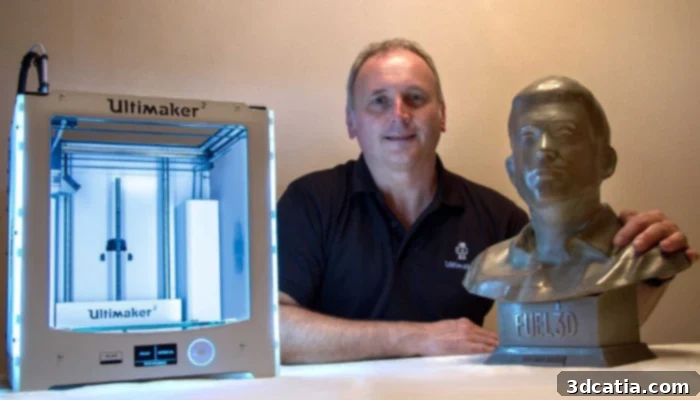
A bust made using colorFabb’s Bronzefill filament (photo credits: colorFabb)
Price Comparison: PLA vs. PETG Filaments
While a common perception is that PLA is considerably cheaper than PETG, the reality is often more nuanced. For instance, it’s possible to find entry-level PLA filaments for approximately $18 per 1kg spool, whereas a similar low-range PETG spool might cost around $20 from various manufacturers or resellers. PETG tends to have a more stable and predictable pricing structure, while PLA prices can fluctuate more broadly. Although you can sometimes find PLA at a lower price point than PETG, it’s not uncommon for some manufacturers or resellers to price their basic PLA higher than their basic PETG, depending on brand, color, and specific properties.
For higher-end filaments, both PLA and PETG can easily exceed $100 per spool, especially when considering specialty blends or professional-grade materials. A key factor influencing the price for both materials is filament quality. The quality can vary drastically, ranging from inexpensive, hobbyist-grade filaments to premium materials suitable for semi-industrial applications that demand consistent dimensional accuracy and superior mechanical properties. Any PLA or PETG filaments that incorporate additional materials, such as carbon fiber, wood particles, or metallic powders, will naturally come at a higher price point due to the added manufacturing complexity and raw material costs. When shopping for filament, it is always advisable to compare prices among major manufacturers and reputable suppliers, carefully matching the filament’s specifications and cost with your specific project requirements and quality expectations.
Leading Manufacturers of PLA and PETG Filaments
Given their status as two of the most widely used and fundamental filaments in 3D printing, it is almost a certainty that any significant manufacturer offering PLA filaments will also provide a range of PETG options. It would be highly unusual for a major filament supplier not to carry at least one of these versatile materials. The extensive availability of both PLA and PETG from a multitude of manufacturers is a significant advantage for both newcomers to 3D printing and experienced users seeking specific filament types. This broad market ensures that users can easily find filaments that meet their precise price points, desired characteristics, and quality standards.
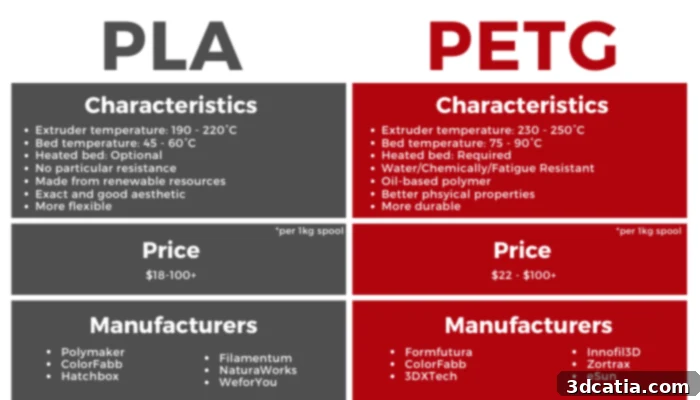
Credits: 3Dnatives
While a comprehensive list of all manufacturers would span several articles, we aim to highlight some of the key players in the market who consistently offer high-quality PLA and PETG filaments. Reputable brands often provide detailed technical specifications, ensuring you can make an informed choice. Ultimately, the decision between PLA and PETG hinges on understanding your project’s specific needs—be it ease of printing, environmental considerations, mechanical strength, post-processing requirements, or aesthetic goals.
What are your thoughts on PETG vs. PLA? Do you have a preferred material for your 3D printing projects? Share your insights in the comments below or connect with us on our LinkedIn, Facebook, and Twitter pages! Don’t forget to sign up for our free weekly Newsletter here to receive the latest 3D printing news directly to your inbox. You can also explore all our videos on our YouTube channel.