
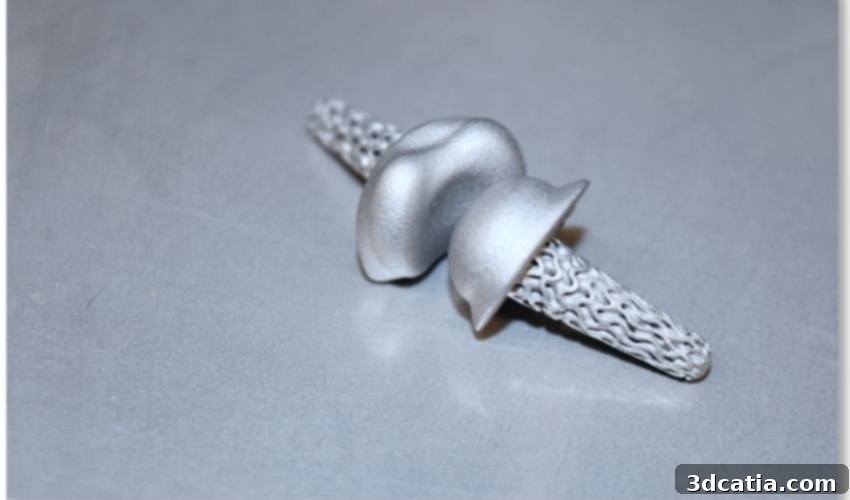
Revolutionizing Arthritis Treatment: How Personalized 3D Printed Finger Implants Offer New Hope
Arthritis, a debilitating condition characterized by joint pain, stiffness, and reduced mobility, affects a significant portion of the global population. In the United States alone, a staggering one in three adults lives with a doctor-diagnosed form of arthritis, often finding current treatments to be inadequate for truly restoring their quality of life. This pressing need for advanced medical solutions drives innovation, and a groundbreaking development from Germany’s esteemed Fraunhofer Institute is poised to offer new hope, particularly for those suffering from severe finger joint arthritis.
The Fraunhofer Institute, a renowned German research organization boasting 76 research bases nationwide, has been at the forefront of this pioneering effort. Their latest breakthrough involves the development of personalized 3D printed finger implants designed to precisely match the unique anatomy of each patient. This highly individualized approach represents a significant leap forward from conventional, off-the-shelf implants and promises to dramatically improve patient outcomes. This ambitious research initiative was not a solo endeavor but a powerful collaboration, drawing on the collective expertise of five specialized Fraunhofer entities: the Fraunhofer Research Institution for Additive Manufacturing Technologies (IAPT), the Fraunhofer Institute for Ceramic Technologies and Systems (IKTS), the Fraunhofer Institute for Toxicology and Experimental Medicine (ITEM), the Fraunhofer Institute for Mechanics of Materials (IWM), and the Fraunhofer Institute for Digital Medicine (MEVIS). This multidisciplinary synergy underscores the complexity and comprehensive nature of this innovative medical advancement.
The Innovative Technical Method Behind Personalized Implants
The creation of these highly personalized finger implants relies on a sophisticated and cutting-edge technical methodology that seamlessly integrates artificial intelligence (AI) with advanced additive manufacturing. The core of this process involves AI-based software capable of transforming standard 2D radiological images into intricate 3D anatomical models. This digital transformation is critical, as it allows medical professionals to generate a precisely tailored implant model that perfectly conforms to the patient’s specific joint structure, accounting for the unique characteristics of their arthritis-affected finger. This bespoke modeling ensures an optimal fit, which is paramount for the long-term success and functionality of the implant.
One of the most significant potential benefits of this AI-driven approach is its ability to potentially eliminate the need for traditional computed tomography (CT) scans in the future. CT scans, while invaluable, are often time-consuming, resource-intensive, and expose patients to ionizing radiation. By utilizing readily available 2D images, the Fraunhofer team aims to streamline the pre-operative planning process, making it more efficient, cost-effective, and safer for patients. This shift represents a paradigm change in medical imaging and diagnostics for implant design, emphasizing speed and accessibility without compromising precision.
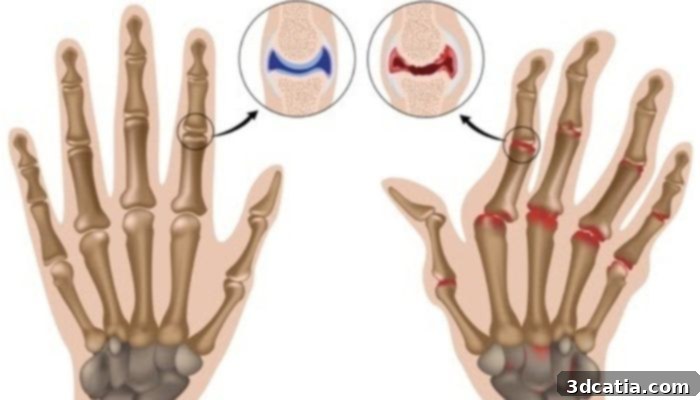
Arthritis sufferers, such as that of the hand on the right, could greatly benefit from personalized 3D printed finger implants, offering a superior alternative to traditional treatments. (Photo credit: FORM Hand Therapy)
For the actual production of these groundbreaking finger implants, the research team employs a sophisticated additive manufacturing technique known as metal binder jetting. This method stands out for its capability to produce complex geometries with exceptional precision and detail. Dr. Philipp Imgrund, who heads the AM Process Qualification department at Fraunhofer IAPT, highlights the key advantages of this technology. He explains that metal binder jetting allows for ‘extremely precise production’ of the implants, enabling the creation of internal structures that are meticulously designed to facilitate bone growth and optimal incorporation into the patient’s existing bone tissue. This bio-integration is crucial for the long-term stability and success of the implant, promoting a natural and durable fusion. Furthermore, a significant practical benefit of metal binder jetting is its minimal post-processing requirements, which further streamlines the manufacturing workflow and potentially reduces overall production costs.
The use of metal binder jetting also opens up possibilities for using advanced biocompatible materials, typically titanium alloys, which are known for their strength, durability, and excellent compatibility with the human body. The ability to precisely control the internal porosity and surface roughness during the binder jetting process is vital for encouraging osseointegration, where living bone tissue grows directly onto and into the implant surface. This creates a stronger, more stable anchor for the implant, significantly reducing the risk of loosening or rejection over time. The meticulous control over the implant’s architecture ensures that it not only replaces the damaged joint but actively integrates with the patient’s skeletal system, paving the way for improved functionality and reduced pain.
Transformative Potential: What This Means for Patients and Future Healthcare
The implications of these personalized 3D printed finger implants are profoundly significant, offering a potential paradigm shift in the treatment of arthritis and similar degenerative conditions affecting the hands. Historically, surgical interventions for severe finger arthritis have been considered a last resort, primarily due to their often limited outcomes and significant drawbacks. Current surgical options include joint fusion, a procedure that, while effective in alleviating pain, involves a drastic and often permanent loss of mobility in the affected joint. Another common option involves the use of silicone implants, which, despite their initial appeal, are unfortunately prone to mechanical failure and breakage. The Arthritis Foundation highlights studies indicating that up to 30 percent of silicone implants can fail within just 10 years, often necessitating revision surgeries and prolonged patient discomfort.
Standard, off-the-shelf metal or ceramic implants also present challenges, as they are not specifically designed to conform to the nuanced anatomical variations among individuals. This can lead to suboptimal fit, increased wear, and potentially shorter implant lifespans. The introduction of personalized 3D printed implants directly addresses these critical shortcomings. By precisely mirroring the patient’s unique anatomy, these custom implants promise a superior fit, enhanced joint mechanics, and potentially greater longevity. This individualized approach could therefore emerge as a truly viable and superior alternative treatment option, offering patients not just pain relief but also improved mobility and a significantly better quality of life.
This innovation is part of a broader trend demonstrating the transformative power of 3D printing in medicine. Similar breakthroughs have already shown the versatility of additive manufacturing in creating patient-specific solutions. For example, previous advancements have included the development of 3D printed ‘scaffolds’ designed to replace traditional breast implants, offering more natural and patient-tailored aesthetic and reconstructive outcomes. Such examples illustrate the accelerating integration of 3D printing into various medical fields, pushing the boundaries of what is possible in reconstructive and orthopedic surgery.

The Fraunhofer Additive Alliance® comprises a dedicated working group focused on advancing 3D printing technologies within the institute, driving medical innovation. (Photo credit: Fraunhofer)
The Road Ahead: From Research to Clinical Application
While the promise of these personalized 3D printed finger implants is immense, the project is currently in its early, yet exciting, stages of development. The dedicated research team at Fraunhofer understands that bringing such a groundbreaking medical device to market requires navigating stringent regulatory pathways and establishing robust commercial partnerships. Their immediate next steps involve obtaining the necessary regulatory approvals from health authorities, a meticulous process that ensures the safety, efficacy, and quality of the implants. Simultaneously, they are actively seeking corporate partners who can provide the industrial expertise, resources, and distribution networks required to scale up production and make this innovative product widely accessible to patients in need. These collaborations are crucial for translating scientific discovery into practical clinical solutions.
Looking further into the future, the Fraunhofer team envisions creating a specialized ‘center for AI-based development and certification-compliant evaluation of personalized implants.’ Such a center would serve as a hub for continued innovation, focusing not only on finger implants but potentially expanding to other small joints and complex orthopedic cases. This vision underscores a commitment to establishing a standardized and certifiable framework for the design, manufacturing, and validation of personalized medical devices, ensuring the highest levels of patient safety and clinical effectiveness. This integrated approach, combining advanced AI, sophisticated additive manufacturing, and rigorous certification processes, aims to solidify the foundation for a new era of personalized medicine.
The overarching significance of Fraunhofer’s work extends beyond finger joints. It exemplifies how additive manufacturing, when coupled with artificial intelligence, is transforming the landscape of healthcare. Personalized medicine, where treatments are tailored to the individual characteristics of each patient, is rapidly moving from concept to reality. This innovation in orthopedic implants highlights the potential for reduced surgical invasiveness, faster patient recovery times, and improved functional outcomes. As research progresses and regulatory hurdles are cleared, such custom medical devices promise to usher in an era where chronic conditions like arthritis can be managed with unparalleled precision and efficacy, ultimately enhancing the lives of millions worldwide. This development not only offers hope but sets a new benchmark for medical device innovation.
What are your thoughts on this revolutionary potential surgical treatment for arthritis? We invite you to share your insights and opinions in a comment below or join the discussion on our LinkedIn, Facebook, and Twitter pages! Don’t miss out on the latest advancements in 3D printing technology – sign up for our free weekly Newsletter here to get all the news delivered straight to your inbox. You can also discover more about these innovations by visiting our YouTube channel for insightful videos.
*Cover photo credit: Fraunhofer Institute