
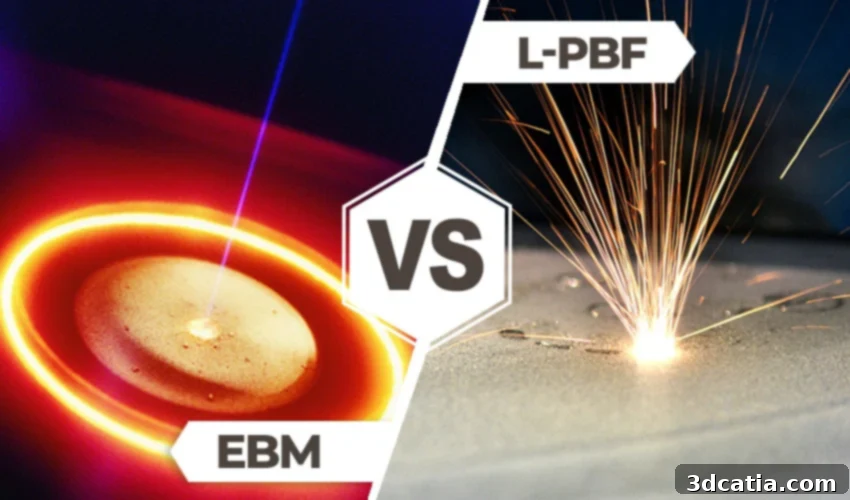
Laser Powder Bed Fusion (L-PBF) vs. Electron Beam Melting (EBM): A Comprehensive Guide to Metal Additive Manufacturing
Metal additive manufacturing (AM) has revolutionized industrial production, enabling the creation of intricate geometries, lightweight components, and high-performance parts with unprecedented quality. This advanced field encompasses a variety of transformative processes, including powder bed fusion, directed energy deposition, binder jetting, and more. Among these, powder bed fusion (PBF) stands out as one of the most widely adopted and versatile techniques for producing functional metal parts.
Within the realm of metal PBF, two primary technologies dominate the landscape: Laser Powder Bed Fusion (L-PBF) and Electron Beam Melting (EBM). While both share the fundamental principle of fusing metal powder particles layer by layer to construct a 3D model, their distinct heat sources – a high-powered laser versus an electron beam – lead to significant differences in process characteristics, material compatibility, part quality, and overall application suitability. Understanding these nuances is critical for businesses and engineers looking to leverage the full potential of metal 3D printing. This article will delve into the specific attributes of L-PBF and EBM, examining their operational mechanisms, technical specifications, typical applications, and market dynamics to help you make an informed decision.
Understanding L-PBF and EBM Technologies
At their core, both L-PBF and EBM involve the selective fusion of metallic powders using a concentrated energy source within a controlled environment. This meticulous layer-by-layer approach allows for the creation of fully dense, solid components with complex internal structures that are otherwise impossible to achieve with traditional manufacturing methods. The fundamental distinction, however, lies in the nature of the energy source and the atmospheric conditions required for each process.
**Laser Powder Bed Fusion (L-PBF):** This technology, often referred to by its older, proprietary names such as Selective Laser Melting (SLM) or Direct Metal Laser Sintering (DMLS), utilizes one or more powerful lasers to precisely melt and fuse metallic powder. The process takes place in a sealed build chamber filled with an inert gas, typically argon or nitrogen, which prevents oxidation of the reactive metal powders during printing. A thin layer of metal powder is spread across a build plate, and the laser beam, directed by a system of galvanometers (movable mirrors), scans the cross-section of the part, selectively melting the powder particles at specific points. The laser’s intensity and scan speed are carefully controlled to ensure complete melting and subsequent solidification into a dense layer. Once a layer is complete, the build plate lowers, a new layer of powder is spread, and the process repeats until the entire 3D model is formed. Modern L-PBF machines can feature multiple lasers, significantly enhancing build speed and throughput.
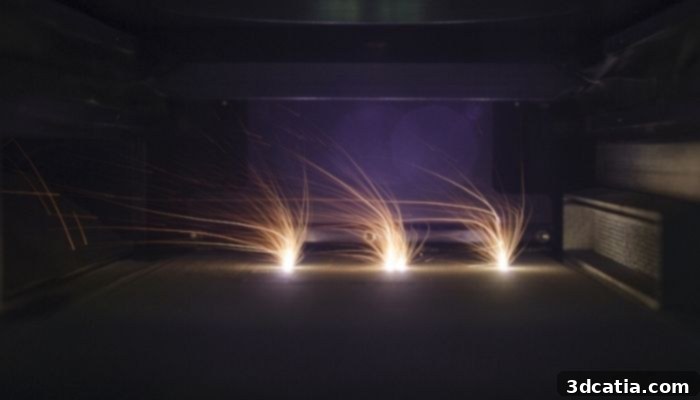
The L-PBF process (photo credits: Schmitz Metallographie GmbH)
**Electron Beam Melting (EBM):** In contrast to L-PBF, EBM employs a high-energy electron beam as its heat source. A critical requirement for EBM is the use of a vacuum chamber. This vacuum environment is essential to prevent the electron beam from scattering and to protect the highly reactive metal powders, particularly during the elevated temperatures reached during processing. Inside the vacuum chamber, a conductive metal powder is spread onto a preheated build plate. An electron gun then emits a focused electron beam, which is precisely guided by electromagnetic coils. As the electron beam scans across the powder bed, it selectively melts the particles. The electron beam can reach temperatures exceeding 2,000°C and operate at extremely high speeds, allowing for rapid fusion of the powder. A unique aspect of EBM is its ability to preheat the entire powder bed to high temperatures, often close to the material’s melting point. This preheating reduces thermal stresses, minimizes part distortion, and improves material properties. Like L-PBF, the process is repeated layer by layer until the part is fully built.
Detailed Technical Specifications Comparison
The decision between L-PBF and EBM often hinges on specific project requirements, including desired part quality, production volume, material properties, and lead times. While both processes yield high-density metal parts, their technical specifications diverge significantly, influencing their optimal use cases. Let’s explore these key differences to facilitate an informed choice.
Printing Quality and Surface Finish
Both L-PBF and EBM are capable of producing precise, dense, and solid metal parts. However, the surface finish directly off the printer for both technologies is typically rough and requires post-processing to achieve a smooth, aesthetically pleasing, or functional surface. When it comes to raw print quality, L-PBF generally offers superior precision and finer detail. This is primarily because L-PBF systems utilize finer metal powders and can achieve thinner layer thicknesses, ranging from 20 to 60 microns. The focused laser spot size allows for intricate feature resolution, resulting in parts with less surface roughness compared to EBM. The precise control over the laser melting pool also contributes to better dimensional accuracy. EBM, while producing dense parts, typically results in a rougher surface finish due to the larger electron beam spot size and the larger particle size of the metal powders used. The high preheating temperatures in EBM can also lead to some sintering of surrounding powder particles, contributing to a less refined surface.
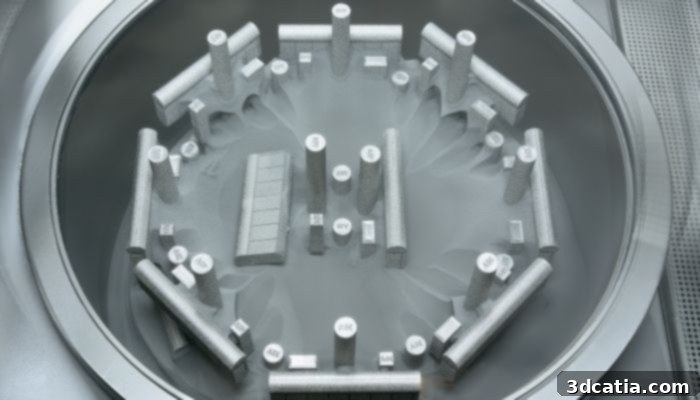
3D printed parts made using EBM (photo credits: Colibrium Additive)
Printing Speed and Productivity
When it comes to manufacturing speed, Electron Beam Melting typically holds an advantage over Laser Powder Bed Fusion. EBM systems can scan and fuse multiple areas simultaneously because the electron beam can be rapidly steered by electromagnetic coils, enabling it to melt powder in parallel rather than serially. Furthermore, the high power of the electron beam and the preheating of the entire powder bed to high temperatures (often above 500°C) reduce the energy required for final melting and significantly accelerate the fusion process. This distributed energy deposition allows for faster build rates, especially for larger parts. In contrast, L-PBF systems use lasers that typically operate by scanning point-by-point or line-by-line using galvanometer mirrors. While multi-laser L-PBF machines have significantly improved speeds, they still generally operate more sequentially compared to EBM’s batch-like fusion capability. The overall manufacturing time for both processes also includes crucial preheating and cooling phases, which can add substantial time to the total production cycle, particularly for L-PBF which often starts from a lower initial temperature and requires controlled cooling to prevent thermal stresses.
Printing Volume and Machine Availability
Metal powder bed fusion technologies are generally not optimized for mass production of very large parts, a domain often addressed by processes like Directed Energy Deposition (DED). However, within the PBF segment, L-PBF systems generally offer more generous build volumes and a wider selection of machine sizes compared to EBM. This is largely due to the longer market presence of L-PBF and the greater number of manufacturers developing these machines. The diversity in L-PBF offerings means that users can find systems with build envelopes ranging from small, laboratory-scale machines to industrial systems capable of producing parts up to 400x400x400 mm, with some specialized solutions offering even larger capacities exceeding 9 tons (though less common for standard industrial applications). The increased market competition and development have led to a broader range of options tailored to various industrial needs. For EBM, the market is considerably more niche, with fewer manufacturers and consequently a more limited range of available build volumes. Typical EBM machines offer build envelopes around 200x200x200 mm, with some larger models reaching approximately 300x300x450 mm. The specialized requirements for EBM, such as high vacuum and precise electron beam control, contribute to the complexity and higher cost of these machines, limiting their widespread adoption and variety.
Material Compatibility
Material selection is a critical differentiator between L-PBF and EBM. Electron Beam Melting is inherently compatible only with electrically conductive metals. The fundamental principle of EBM relies on the electron beam interacting with the material, and the preheating process often involves charging the powder bed. This makes EBM an excellent choice for highly reactive and high-temperature materials like titanium alloys (e.g., Ti-6Al-4V), which are widely used in aerospace and medical implants, as well as cobalt-chromium, nickel alloys, and certain stainless steels. A significant advantage of EBM is that unfused powder can typically be reused with minimal degradation, representing substantial material savings and reduced waste, although careful handling is always necessary. For Laser Powder Bed Fusion, the range of compatible materials is much broader. L-PBF can process a vast array of metals, including aluminum alloys, stainless steels, tool steels, nickel-based superalloys, cobalt-chromium, copper, and precious metals. The process does not depend on electrical conductivity, allowing for greater material versatility. In both L-PBF and EBM, handling fine metal powders requires stringent safety protocols, including the use of personal protective equipment such as masks, gloves, and safety goggles. L-PBF powders are generally finer than EBM powders, which can increase the risk of airborne particle exposure and necessitates even greater precautions during handling and depowdering processes.
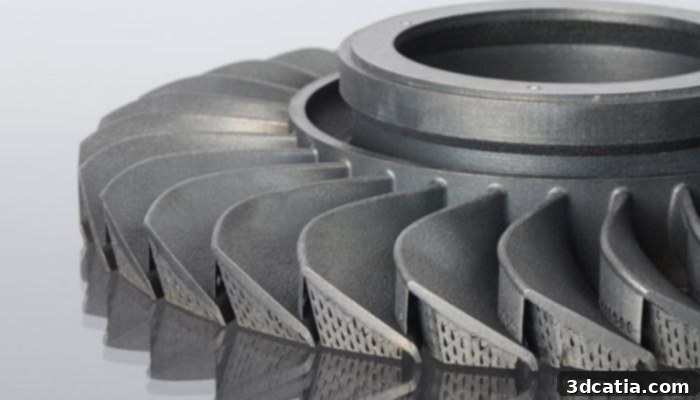
Blades made using laser powder bed fusion (photo credits: Fraunhofer IPT)
Post-Processing Requirements
After the build process is complete, both L-PBF and EBM parts necessitate several post-processing steps to achieve their final desired properties and aesthetics. The initial step for both is depowdering, where unfused metal powder is removed from around and within the printed part. This process can vary in complexity and duration depending on the part’s geometry and internal structures, often requiring specialized equipment such as sandblasting stations, vibratory tables, or ultrasonic baths.
A significant difference emerges in the requirement for support structures. Electron Beam Melting generally requires fewer and less robust support structures. This is primarily due to the high-temperature preheating of the entire powder bed, which significantly reduces thermal gradients and residual stresses within the part during the build. The vacuum environment also contributes to better material stability, minimizing warping and distortion. As a result, EBM-printed parts are typically embedded in a “sinter cake” of lightly fused powder, which can often act as sufficient support, making support removal easier. In contrast, L-PBF processes operate with a colder powder bed and higher thermal gradients, making support structures indispensable. Supports in L-PBF serve multiple crucial functions: anchoring the part to the build plate, preventing warping and distortion from high localized temperatures, and facilitating efficient heat dissipation from the melt pool. The number and density of supports depend heavily on the part’s geometry and material. Removing these supports often requires mechanical methods like machining, cutting, or wire electrical discharge machining (EDM).
Regarding surface finish, both processes yield parts that are inherently rough. EBM parts, in particular, often exhibit a more pronounced “sintered” appearance due to the surrounding powder partially fusing during the preheating stage. Achieving a smooth, functional, or aesthetically pleasing surface for both L-PBF and EBM parts typically involves abrasive finishing techniques such as blasting, tumbling, machining, or manual polishing. Finally, heat treatment is another important post-processing step to optimize mechanical properties, relieve residual stresses, and refine microstructure. While heat treatment is often beneficial for L-PBF parts to improve ductility and reduce internal stresses (sometimes involving processes like Hot Isostatic Pressing – HIP to eliminate internal voids and porosity), it is less frequently a mandatory step for EBM parts. The high operating temperatures and slower cooling rates inherent to the EBM process often result in parts with more desirable as-built mechanical properties and lower residual stresses, reducing the need for extensive post-build heat treatments.
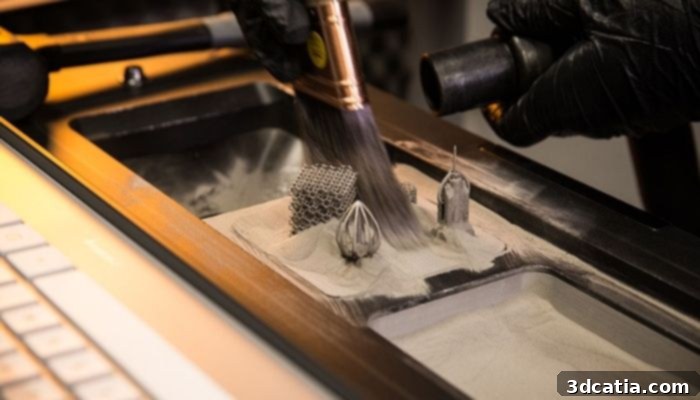
L-PBF parts cleaning (photo credits: Protolabs)
Main Applications of EBM and L-PBF Processes
Both L-PBF and EBM are indispensable in industries demanding high-performance components, yet their distinct processing characteristics orient them towards different application niches. These technologies are foundational for creating parts used in extreme conditions, where strength-to-weight ratio, temperature resistance, and design complexity are paramount.
**Electron Beam Melting (EBM)** excels in manufacturing high-strength parts from difficult-to-machine, high-temperature materials. Its inherent advantages—particularly the ability to process reactive metals in a vacuum and at elevated temperatures—have made it a go-to technology for the aerospace and medical sectors. In aerospace, EBM is frequently employed for producing critical turbine components, such as blades, nozzles, and structural elements for jet engines. For instance, Colibrium Additive (formerly Arcam EBM) has been instrumental in producing thousands of titanium turbine blades for advanced engines like GE Aerospace’s GE9X, leveraging EBM’s capacity for high-volume, high-integrity part manufacturing. In medicine, EBM 3D printing is widely adopted for orthopedic implants, notably acetabular cups for hip prostheses. The process allows for the creation of intricate porous structures that promote osseointegration, facilitating natural bone growth into the implant for enhanced fixation and long-term stability.
**Laser Powder Bed Fusion (L-PBF)** boasts a broader spectrum of applications across diverse high-performance industries, including aerospace, automotive, medical, dental, and turbomachinery. Its versatility in material processing and superior surface finish capabilities make it suitable for a wide array of components. In the automotive industry, L-PBF is utilized for developing complex, lightweight engine and transmission components, structural parts, and even customized interior fittings, contributing to enhanced performance and fuel efficiency. For turbomachinery, L-PBF is crucial for manufacturing sophisticated blades, impellers, and fuel injectors with internal cooling channels and optimized flow paths, which significantly improve component efficiency and extend service life. Within the medical and dental fields, L-PBF is extensively used for custom surgical tools, patient-specific implants, and highly precise dental prosthetics, benefiting from its ability to create complex geometries with high accuracy. The use of both technologies in the medical sector is significantly bolstered by their compatibility with biocompatible materials like titanium and stainless steel. Titanium, known for its excellent biocompatibility and mechanical strength, is ideal for implants, while stainless steel’s characteristics make it perfect for surgical instruments. The controlled, sealed environments of both processes also ensure the production of parts with minimal contamination risk, which is vital for medical applications.
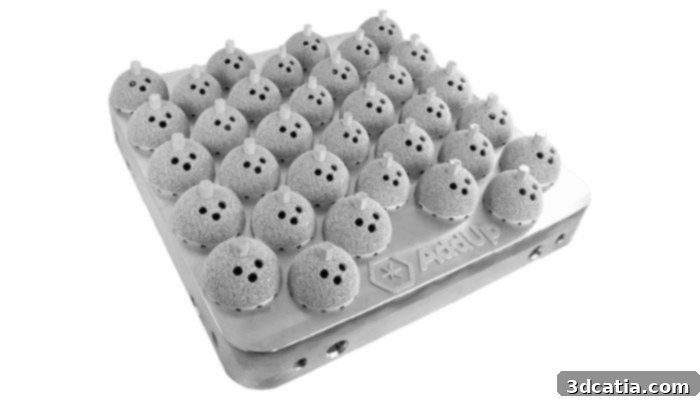
Acetabular cups for hip prostheses (photo credits: AddUp)
Leading Manufacturers of EBM and L-PBF 3D Printers
The landscape of metal additive manufacturing is shaped by key players who continuously innovate and expand the capabilities of EBM and L-PBF technologies. Understanding the manufacturers behind these processes is essential for evaluating market trends and available solutions.
For many years, the Electron Beam Melting (EBM) market was largely synonymous with Arcam, a Swedish pioneer that not only developed but also commercialized this groundbreaking technology. Arcam’s dominance laid the foundation for EBM’s adoption in critical industries. Following its acquisition by GE in 2016, Arcam’s EBM operations were integrated into GE Additive, and eventually became part of **Colibrium Additive**, a GE Aerospace company. Colibrium Additive now stands as the most influential player, driving the mass production of aerospace and medical components, leveraging significant advancements such as automatic beam calibration and enhanced thermal control. This strategic integration has further solidified EBM’s role in industrial applications.
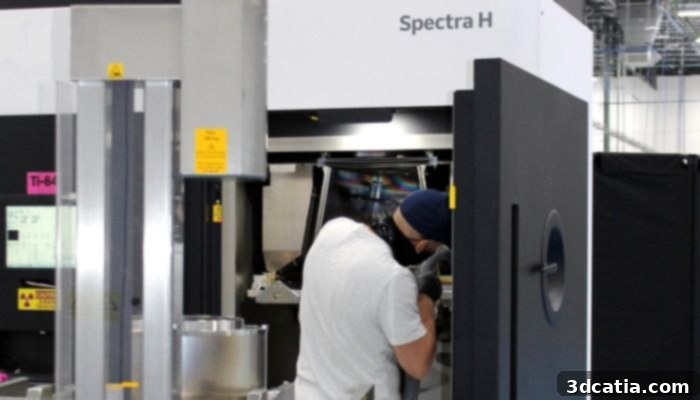
An EBM 3D printer (photo credits: Colibrium Additive)
Beyond Colibrium Additive, new entrants have emerged, seeking to innovate within the EBM space. **Wayland Additive**, for example, introduced its NeuBeam process, aiming to enhance the stability and flexibility of electron-beam fusion with improved thermal management and charge neutralization. Founded in 2017 by former Arcam engineers, **Freemelt** also offers electron-beam printers, including some open-source models that aim to make the technology more accessible. Other notable players, particularly from Asia, include **QBeam**, **Xi’an Sailong Metal**, and **JEOL**. These companies often leverage their existing expertise in electron-beam technologies from other fields, adapting it for additive manufacturing, though their market presence remains predominantly regional.
In the Laser Powder Bed Fusion (L-PBF) sector, the market is significantly more crowded and competitive, reflecting the technology’s broader adoption and versatility. The German company **EOS** is a venerable leader, boasting over three decades of experience in developing L-PBF printers and materials, setting industry standards for reliability and performance. Alongside EOS, a large number of other prominent companies offer advanced L-PBF solutions, each with unique strengths. These include **Nikon SLM Solutions**, **Renishaw**, **Farsoon Technologies**, **Additive Industries**, **3D Systems**, and **AddUp**. Over the years, these manufacturers have refined their offerings to cater to specific industrial demands. For instance, printers from Farsoon and Additive Industries are renowned for their multi-laser configurations and large build volumes, ideal for high-throughput manufacturing. Renishaw and 3D Systems often feature in research and development settings due to their precision and comprehensive material ecosystems. Manufacturers like Nikon and AddUp provide robust solutions for general industrial applications and serial production, demonstrating the wide spectrum of L-PBF capabilities available in the market. It is important to note that while these examples highlight key areas, the product portfolios of these manufacturers are extensive and often span multiple application types.
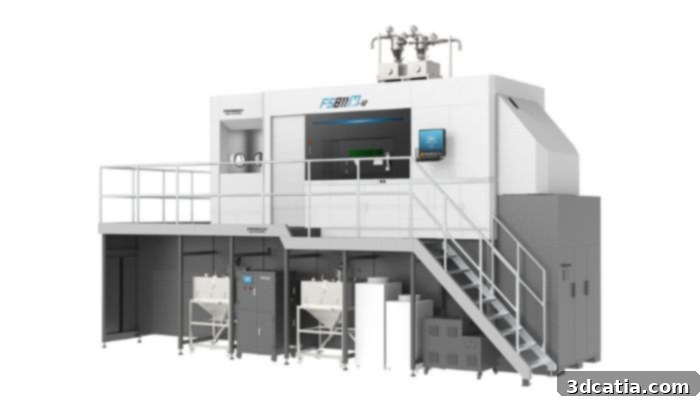
FS811M large-format 3D printer (photo credits: Farsoon Technologies)
Cost Considerations: Price of EBM vs. L-PBF 3D Printers
Investing in metal additive manufacturing equipment, whether EBM or L-PBF, represents a significant capital outlay. The total cost is influenced by numerous factors, including the machine’s model, build volume, specialized features, and the necessary ancillary infrastructure. Generally, EBM printers command a considerably higher price point than their L-PBF counterparts, primarily due to the more specialized technology, the limited number of manufacturers, and the complex vacuum environment requirements.
For Electron Beam Melting systems, initial machine costs typically range between $500,000 and $1,000,000. This substantial investment covers not only the advanced EBM printer itself but also the associated infrastructure critical for its operation. This includes robust vacuum systems, specialized inert gas supplies (if applicable for powder handling), and sophisticated post-processing equipment tailored for EBM parts. Furthermore, operating EBM technology often requires highly skilled technicians and engineers, whose expertise adds to the ongoing operational expenses and influences the overall return on investment. The niche nature of the EBM market, with fewer suppliers, also contributes to the premium pricing.
In contrast, Laser Powder Bed Fusion offers a broader and generally more accessible price range, largely due to the wider selection of models and manufacturers. Entry-level L-PBF machines, such as the 3D Systems ProX 100 with a build volume of 100 x 100 x 180 mm, can be estimated around $250,000. As build volume and feature sets increase, prices escalate. More advanced, industrial-grade L-PBF systems, like the EOS M400, offering a build volume of 400 x 400 x 400 mm, can reach up to $750,000. Beyond the machine cost, prospective buyers must also budget for essential post-processing equipment, which can include depowdering stations, support removal tools, and various finishing machines. The recurring cost of metal powders, which are specific to each process and application, also needs to be factored into the total cost of ownership. Given the variability in configurations and specific requirements, it is always advisable to contact manufacturers or authorized distributors directly for a precise quote tailored to specific production needs and desired features.
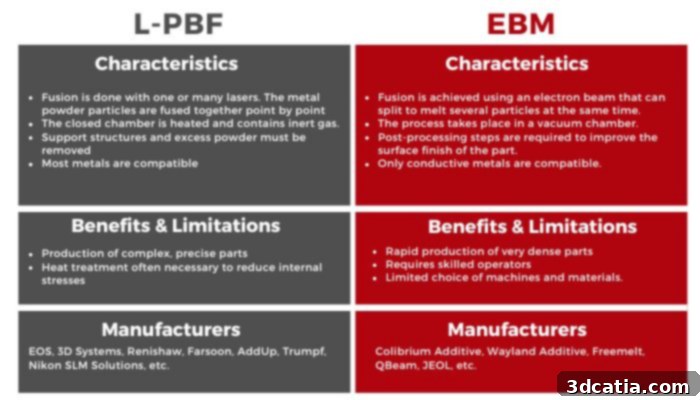
Image Credits: 3Dnatives
The choice between EBM and L-PBF ultimately depends on a detailed evaluation of specific application requirements, material properties, desired part characteristics, production speed, and budget constraints. Both technologies offer unique advantages that make them invaluable tools in the advanced manufacturing landscape. Which metal 3D printing process do you find most suitable for your needs, EBM or L-PBF? Let us know in a comment below or on our LinkedIn, Facebook, and Twitter pages! Don’t forget to sign up for our free weekly Newsletter here, the latest 3D printing news straight to your inbox! You can also find all our videos on our YouTube channel.