
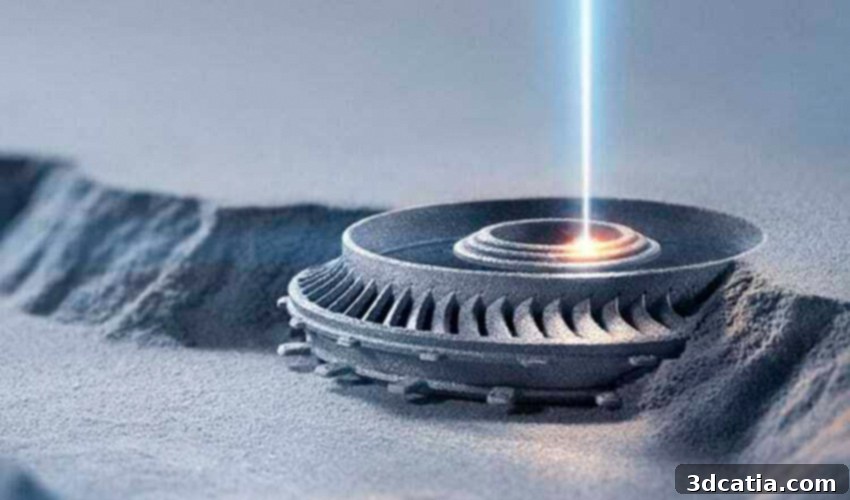
Revolutionizing Manufacturing: Key 3D Printing Trends and Innovations of 2021
As another year drew to a close, 2021 proved to be a pivotal and intriguing period for the additive manufacturing industry. It marked a significant turning point, as the world began to emerge from the shadow of the global pandemic. This year saw the successful return of physical events, signaling a cautious but optimistic return to normalcy. A prime example was Formnext, which attracted 17,859 attendees from 75 nations and hosted over 600 exhibitors from 36 countries. Interestingly, this resurgence of in-person events was coupled with the continued importance of hybrid formats, such as Formnext Digital Days, which followed the physical exhibition. This trend underscored that digital engagement remains a crucial component of industry outreach and is likely to persist. 3Dnatives’ own ADDITIV brand experienced this firsthand, with strong attendance at virtual events like ADDITIV Aerospace in March, even as restrictions eased. Furthermore, 2021 offered the clearest picture yet of COVID-19’s true impact on the industry. The Wohlers Report 2021 revealed that while the industry did grow compared to 2020, its 7.5% growth rate was significantly lower than the historical average of 27.4%. Similarly, a survey on 3D printer shipment growth indicated that although shipments, particularly for industrial 3D printers, increased, sales in 2021 still lagged behind 2019 levels, despite recovering from the previous year’s dip.
This slower growth was largely attributable to the pandemic’s widespread disruption across many sectors served by 3D printing. The aerospace sector, especially commercial aviation, faced severe challenges due to grounded flights, which in turn impacted the metal additive manufacturing market more severely than polymers. However, with the gradual resumption of travel in 2021, these critical sectors began to recover, bringing metal additive manufacturing along with them, albeit with an evolving landscape. So, what were the defining 3D printing trends of 2021? And how is additive manufacturing adapting and evolving? We delved deeper into the key developments that shaped the industry throughout the year, including a notably maturing business environment marked by consolidation and public listings, an intensified focus on sustainability, the expansion of FDM solutions into non-polymer materials, and a booming market for 3D printing in construction.
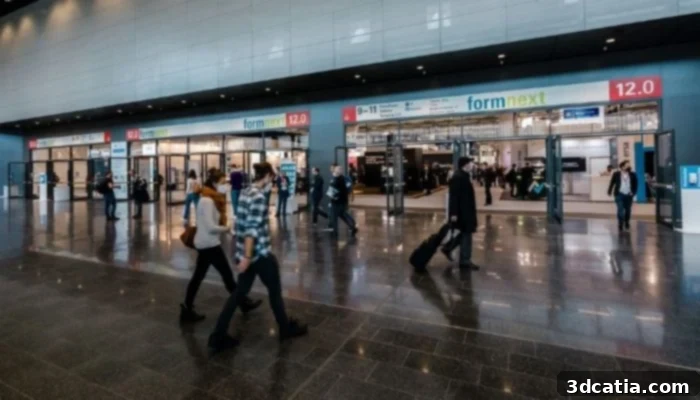
2021 saw the successful return of major industry events, including Formnext 2021 (Photo credits: Formnext)
A More Mature Business Environment for Additive Manufacturing
A prominent trend observed throughout 2021 was the significant consolidation among 3D printing manufacturers, alongside an increasing number of companies opting to go public. This movement corresponds with the industry’s accelerating industrialization, signifying a truly booming business environment within additive manufacturing. Perhaps the most striking example of this maturation is Desktop Metal, which transitioned from a relatively young startup just a few years prior to becoming a major force in the AM market today. Their strategic acquisitions began in February with the purchase of leading DLP 3D printing technology company, EnvisionTEC, clearly demonstrating their ambition to expand beyond metals and establish a strong presence in the polymer market. This acquisition spree continued throughout the year, notably including Aerosint in July. This specific move highlighted Desktop Metal’s intent to enter the multi-material market, leveraging Aerosint’s advanced powder bed fusion technology designed for multi-material processing at reduced cost and minimal material waste. They capped off an eventful year with a surprising announcement in August, entering a definitive agreement to acquire their direct competitor, ExOne, a leader in binder jetting 3D printer technology.
Desktop Metal was far from the only company making significant strategic moves. Other notable acquisitions throughout the year included Protolabs acquiring 3D Hubs in a substantial $280 million deal early in the year, and Materialise securing Link3D in a $33.5 million deal in November. Beyond acquisitions, numerous companies announced their intentions to go public, a clear indicator of market confidence and growth potential. Among these were VELO3D, Markforged, Xometry, Shapeways, and Essentium. This culmination of activity points to an additive manufacturing market that is undeniably maturing, shifting from a landscape dominated by startups to one increasingly characterized by larger entities focused on industrial-scale mass production.
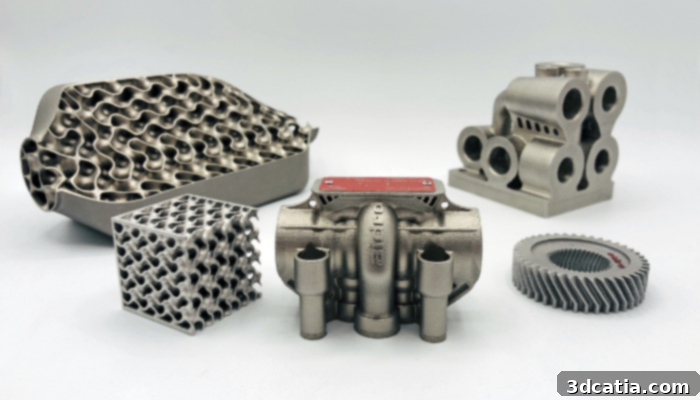
Aidro, a pioneer in volume production of next-generation hydraulic and fluid power systems through metal additive manufacturing (AM), was one of the companies acquired by Desktop Metal this year (Photo credits: Business Wire)
The market’s momentum is also strongly propelled by significant investments, which various reports indicate are beginning to yield tangible returns. In Essentium’s survey conducted earlier in 2021, CEO Blake Teipel highlighted this growth, stating, “Manufacturing companies have finally cracked the code of AM for full-scale production runs of hundreds of thousands of parts, and there will be no turning back. There is no longer any doubt whether AM investments deserve a central feature in the execution strategies of companies endeavoring to out-perform their peers.” Indeed, 2021 showcased major investment rounds across the industry. DyeMansion, a leading manufacturer of post-processing solutions, successfully raised $14 million to boost the production of finished parts. ICON secured an impressive $207 million in Series B funding, while Fabric8Labs raised $19.3 million in Series A funding, among many other startups and established companies. The sustained influx of capital underscores the confidence investors place in the future of additive manufacturing. We anticipate continued maturation and substantial growth in the business environment throughout 2022, building on the highly productive foundation laid in the past year.
A Growing Trend Towards Sustainability in 3D Printing in 2021
In 2021, 3D printing increasingly mirrored broader global movements, most notably the heightened emphasis on environmental responsibility. As the climate crisis intensifies, with NASA reporting the last seven years as the warmest on record and the UN’s IPCC predicting a 1.5-degree Celsius rise in temperatures within two decades, companies and governments are accelerating their shift towards more environmentally-friendly solutions. Additive manufacturing stands at the forefront of this transition, thanks to its inherent ability to significantly reduce material waste compared to traditional manufacturing methods. Throughout 2021, sustainability became a central theme and a top priority for many within the AM community.
A clear indicator of sustainability’s rising prominence in AM this year was the increased visibility and activity of the AMGTA. The Additive Manufacturer Green Trade Association is a global trade organization dedicated to promoting the environmental benefits of additive manufacturing. Its membership now includes 38 leading companies, such as Stratasys, ExOne, EOS, BASF, Siemens, 3D Systems, and GE Additive. The AMGTA played a significant role at Formnext 2021, participating in numerous conferences to advocate for their message: that for additive manufacturing to truly establish itself as a sustainable method, there must be a shift from mere discussion to concrete action. They specifically urged companies to identify and address environmental weaknesses across the entire additive value chain. Sherry Handle, Executive Director of the AMGTA, emphasized this point in a recent article on sustainability and additive manufacturing, stating, “Our mission is now entering its third year and we now have a solid foundation on which to build. In 2023 and beyond, we plan to continue to invest in strategically rigorous research projects on sustainability in additive manufacturing and work with members to make AMGTA key to the industry by championing sustainability in the additive manufacturing industry.”
Indeed, meaningful change appears to be well underway. Throughout 2021, numerous advancements in materials focused on enhancing their sustainability profiles, achieved through various innovative approaches. Many manufacturers opted to create materials from waste or other recycled sources, thereby contributing to a more circular economy. For instance, Covestro launched a new PET 3D printing material derived entirely from recycled post-consumer PET waste. Similarly, Sindoh developed a powder made exclusively from recycled materials, and Recreus unveiled its 100% recycled TPU filament. Beyond recycling, projects also focused on designing inherently eco-friendly materials. NonOilen from Fillamentum was engineered as the first 100% biodegradable filament for 3D printing, entirely composed of bio-based polymers. PolyTerra from Polymaker offered a hybrid approach, combining organic minerals with PLA to significantly reduce the plastic content in the filament.
New research in 2021 also underscored the remarkable potential of additive manufacturing for impactful sustainability projects. One notable case involved the National Renewable Energy Laboratory, which worked to improve the recyclability of 3D printed wind turbine blades, moving towards a circular economy while simultaneously advancing greener energy solutions. In another significant development, Ford announced a partnership with HP to produce automotive parts using recycled 3D printing materials. This project was particularly innovative because it utilized recycled powder rather than filament. Debbie Mielewski, a Ford technical fellow, commented at the announcement, “Many companies are finding great uses for 3D printing technologies, but, together with HP, we’re the first to find a high-value application for waste powder that likely would have gone to landfill, transforming it into functional and durable auto parts.” Additionally, Aectual created 3D printed plants from recycled plastic, and in a separate project, 3D printed beams made from recycled plastic were developed as a replacement for reinforced concrete, showcasing the diverse applications of AM in driving sustainability.
The Launch of Extrusion Projects for Non-Polymer Parts
Another significant trend that characterized 2021 was the continued democratization of 3D printing technology, particularly evident in the realm of non-polymer materials. This refers to the increasing focus on extrusion projects (FDM – Fused Deposition Modeling) for materials such as ceramics and metals. Both metals and ceramics are highly sought-after materials in additive manufacturing, enabling the creation of parts, including end-use components, for critical sectors like aerospace and medical. Historically, machines capable of printing with these advanced materials have been prohibitively expensive, limiting entry-level options for many users and businesses. However, with the rise of more accessible desktop FDM printers designed for metals and ceramics, the technology is becoming increasingly available. These new solutions offer a more cost-effective and often simpler alternative to the complex, laser-based machines that previously dominated the market.
The AM market has clearly responded to the demand for metal filament printers. While Desktop Metal remains one of the most prominent players in this sector, having expanded immensely in 2021 as previously discussed, they are not alone. This year saw a surge of companies introducing their own metal FDM solutions through various approaches. Firstly, established polymer FDM manufacturers, including BCN3D, Ultimaker, and Makerbot, launched metal filaments compatible with their existing printers. These solutions typically came complete with specially adapted nozzles and other necessary components. This allows users to upgrade their current polymer machines, significantly reducing the initial investment while providing a more affordable entry point into metal 3D printing.
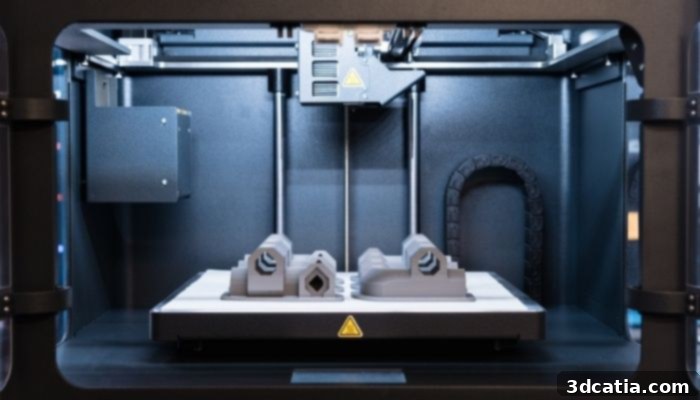
In 2021, we observed a significant trend towards more desktop FDM solutions for non-polymer materials. Here, the Metal X Solution from Markforged (Photo credits: Markforged)
Moreover, comprehensive new solutions are also entering the market, with both Raise3D and 3DGence announcing plans to launch dedicated FDM metal printers in 2022. Discussing their decision to introduce the ELEMENT range, Sebastian Sczasny, 3DGence’s CEO, elaborated: “In the past 2 years, Metal FFF technology has made significant progress as an affordable entry into metal part prototyping and production. The number of desktop systems that can print open market metal filaments has increased, and the current key industrial players are experiencing consistent growth despite the economic impact stemming from Covid-19.” Ceramic 3D printers are also steadily gaining popularity, with notable options from companies like Nanoe contributing to this growth. As both metal and ceramic 3D printing continue to expand in appeal, these FDM solutions are poised to further integrate additive manufacturing into a wider array of industries and applications. They offer a lower-cost, easier-to-use entry point, making these advanced technologies accessible, especially to those new to 3D printing. The coming year will undoubtedly reveal the market’s response to these ceramic and metal extrusion solutions, and we anticipate the arrival of even more innovative machines.
Construction 3D Printing Was A Bigger Trend Than Ever in 2021
The concept of utilizing 3D printing for construction is by no means new. However, 2021 marked a pivotal year where a multitude of diverse projects transitioned from conceptual design to tangible reality. No longer confined to theoretical discussions, 3D printed houses are now a reality across multiple continents, including Europe and North America. ICON, highlighted as our 3D startup of the month in January, alone announced numerous multi-home projects in Texas. Since successfully printing their first house in March 2018, the company has now designed no fewer than 20 buildings, showcasing rapid advancement in the field.
The impact of construction 3D printing extends beyond commercial ventures. In 2021, it was increasingly recognized as a powerful tool for addressing humanitarian concerns, particularly those related to housing crises. Habitat for Humanity, for instance, initiated work on a 3D printed three-bedroom, two-bath single-family home in Arizona to help alleviate the state’s pressing housing challenges. COBOD’s printers were instrumental in constructing houses in India, Germany, Florida, and other locations globally. In collaboration with 14trees, COBOD’s technology was also utilized for building a school in Africa, which is now providing education to students. Beyond individual structures, more and more companies are unveiling plans for entire 3D-printed communities, with a particular focus on providing low-cost housing solutions. A notable example from March was Twente Additive Manufacturing (TAM) and World Housing’s ambitious plans for a 3D printed village in Canada, aiming to eradicate homelessness in the community. Finally, WASP’s groundbreaking TECLA project was completed in 2021, showcasing a viable path towards truly sustainable housing through innovative soil-printed dwellings.
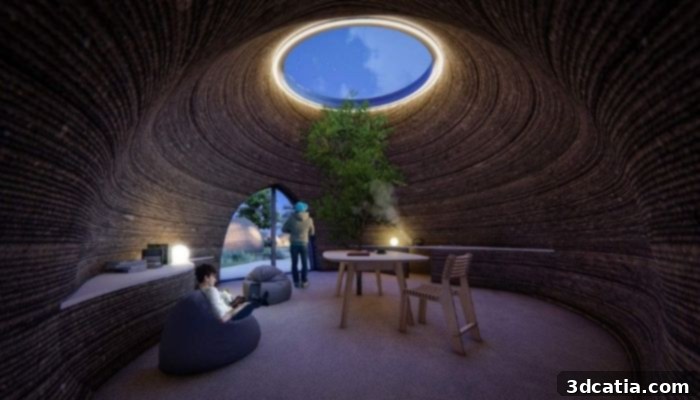
The newly completed TECLA from WASP exemplifies two key 3D printing trends from 2021: both construction and sustainability (Photo credits: WASP)
Beyond these pioneering projects, 2021 was the year that 3D printed houses truly entered the commercial market. In February, SQ4D listed the first ever 3D printed house for sale in Long Island, priced at $299,999, marking a significant milestone for consumer accessibility. Similarly, the first 3D printed house in Germany was inaugurated, also constructed using a BOD 2 printer. TAM’s renowned Fibonacci House achieved another first by officially becoming the first 3D printed house to be listed on Airbnb, inviting travelers and 3D printing enthusiasts alike to experience a night in this unique architectural marvel. Looking ahead to 2022, we anticipate the completion of even more 3D printed homes and the emergence of further innovative projects from the companies leading the charge in additive manufacturing for construction.
What were your key takeaways from the 3D printing trends of 2021? Do you have any predictions for the exciting developments awaiting us in 2022? Share your thoughts in a comment below or connect with us on our LinkedIn, Facebook, and Twitter pages! Don’t forget to subscribe to our free weekly Newsletter here for the latest 3D printing news delivered straight to your inbox! You can also explore all our insightful videos on our YouTube channel.
*Cover Photo Credits: Pro Beam