
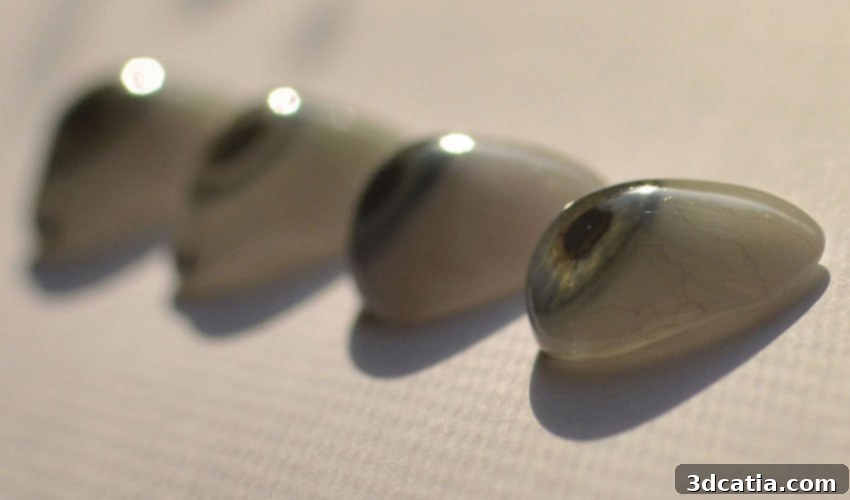
Revolutionizing Ocular Prosthetics: Severance Hospital Pioneers Commercial 3D Printed Eyes
In a groundbreaking advancement set to transform lives globally, the Severance Hospital, an integral part of the esteemed Yonsei University Health System (YUHS) in South Korea, has announced the impending commercialization of the world’s first widely available 3D printed eye. This significant milestone comes after more than three years of dedicated research and development, culminating in an innovative eye prosthesis designed to offer enhanced comfort, customization, and accessibility to hundreds of thousands of patients in need.
This pivotal development underscores the burgeoning role of 3D printing, also known as additive manufacturing, within the medical sector. The technology’s transformative potential spans across a multitude of fields, from general research into innovative surgical technologies and the creation of patient-specific implants to specialized disciplines such as Orthopedics. 3D printing is continuously furnishing medical professionals with novel methods and bespoke solutions that were previously unimaginable, pushing the boundaries of what’s possible in healthcare.
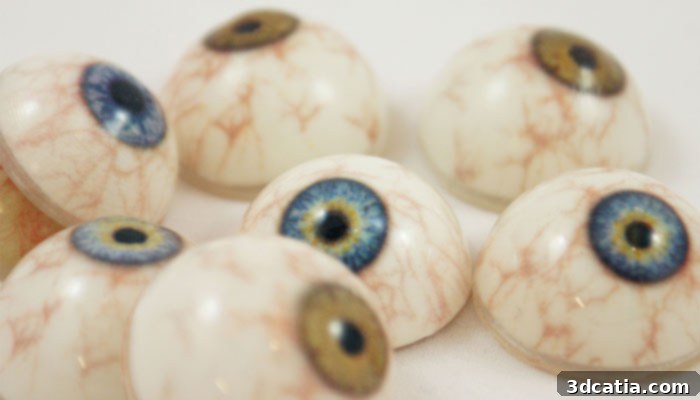
Traditional methods for creating ocular prosthetics are often labor-intensive, requiring multiple appointments for fittings, sculpting, and hand-painting. This process can be time-consuming, expensive, and sometimes results in prostheses that lack the ideal aesthetic match or comfortable fit. The advent of 3D printing promises to streamline this entire procedure, offering a faster, more precise, and potentially more affordable alternative. By leveraging advanced scanning and printing techniques, the Severance Hospital aims to address these long-standing challenges, providing patients with highly customized artificial eyes that closely mimic the appearance of their natural eye.
DLP Technology: The Precision Behind the Artificial Eye

Professor Yoon Jin-sook, a key researcher in this project.
While prototypes of 3D printed eye prostheses have emerged in the past, such as one developed by the University of Leuven in Belgium over a year ago, explicit plans for their widespread commercialization had not been articulated. Recognizing the immense, unmet patient demand, with over 60,000 individuals requiring artificial eyes in Korea alone, Severance Hospital proactively embarked on a mission to bring this life-changing technology to market. This initiative moves beyond mere research, focusing on practical implementation and patient access.
“Our core motivation is to empower patients who rely on artificial eyes by harnessing the full potential of our advanced 3D printing technology,” stated Professor Yoon Jin-sook, a distinguished researcher in the ophthalmology department at Severance Hospital and a driving force behind this project. She further elaborated on the team’s strategic vision: “Our plans are meticulously designed to deliver first-rate public health services, ensuring access to high-quality artificial eyes through an expanded network that significantly increases patient reach and convenience. This isn’t just about a product; it’s about a comprehensive care solution.”
The ambitious project was a collaborative effort, forged through a partnership between the Ministry of Science and ICT of Korea, the dedicated YUHS research team spearheaded by Professor Jin-sook, and Baik Seung-woon, an experienced manufacturer of artificial eyes. This powerful synergy allowed them to successfully develop and refine a cutting-edge technology that utilizes 3D printers to dramatically simplify and enhance the production process of personalized ocular prosthetics. The combined expertise from government support, academic research, and industrial manufacturing was crucial in overcoming the complex challenges associated with bringing such an intricate medical device to commercial readiness.
Manufacturing Precision: The Art and Science of a 3D Printed Eye
For the development of their artificial eyes, the Severance Hospital team meticulously selected Digital Light Processing (DLP) technology. DLP is a sophisticated additive manufacturing process that shares similarities with stereolithography (SLA), another resin-based 3D printing method. However, a key distinction lies in how they cure the liquid photopolymer resin. While SLA employs a focused laser to trace and harden individual points, DLP utilizes a digital light projector to flash an entire cross-sectional layer of the object at once. This fundamental difference grants DLP significant advantages in terms of speed for certain applications and often results in exceptionally smooth surface finishes.
The choice of DLP technology was strategic, as it enables unparalleled precision in the development of artificial eyes. The ability to produce intricate details, essential for replicating the natural iris patterns, pupil, and even subtle vascular structures, is crucial for a lifelike appearance. Furthermore, DLP facilitates the manufacturing process by allowing for faster production cycles compared to traditional manual crafting or even other 3D printing methods. This efficiency is vital for meeting the high demand for ocular prosthetics. Companies such as the Belgian firm Luxexcel have already demonstrated the prowess of DLP in manufacturing 3D printed lenses, showcasing its capability to produce unique optical lenses at speeds of up to four lenses per hour. This precedent further validates DLP’s suitability for high-precision, customized ocular applications.
The meticulous reproduction of anatomical features, combined with the selection of biocompatible materials, ensures that the 3D printed eye prostheses are not only aesthetically pleasing but also comfortable and safe for long-term wear. This level of customization was previously very difficult to achieve at scale, but 3D printing makes it possible to tailor each prosthetic precisely to the patient’s unique orbital cavity and desired appearance, significantly improving fit and psychological well-being.
Professor Yoon’s dedicated team has been rigorously testing the safety, efficacy, and validity of their artificial eye prototypes. While initial projections aimed for readiness by 2020, the continuous refinement and stringent validation processes inherent in medical device development ensure that the final product meets the highest standards. The team’s ongoing commitment to robust testing underscores their dedication to patient safety and product reliability. Moreover, in a visionary move to expand global access, YUHS and Camira are actively planning to establish a remote, comprehensive consultation network system. This innovative system aims to transcend geographical barriers, providing expert consultations and enabling the distribution of these high-quality artificial eyes to patients worldwide, democratizing access to this advanced medical solution.
The commercialization of the 3D printed eye prosthesis marks a pivotal moment in personalized medicine and additive manufacturing within healthcare. It exemplifies how advanced technologies can directly address critical patient needs, offering not just a replacement for a lost eye but a restoration of confidence and quality of life. As the medical 3D printing landscape continues to evolve, we can anticipate further innovations, including enhanced materials, integrated functionalities, and even more streamlined production processes. The efforts of Severance Hospital are paving the way for a future where highly customized, accessible, and aesthetically superior medical devices are the norm, not the exception.
What are your thoughts on this transformative step towards the commercialization of the 3D printed eye? How do you envision this technology impacting patients globally? Share your insights and comments below, or engage with us on our Facebook and Twitter pages! Don’t miss out on the latest advancements in additive manufacturing – remember to sign up for our free weekly Newsletter to receive all the breaking news in 3D printing directly in your inbox!