
RAF and Rolls-Royce Revolutionize Aerospace with Additive Manufacturing: Recycling Tornado Jets for Sustainable Tempest Engine Components
A truly groundbreaking alliance has been forged between the Royal Air Force (RAF) and Rolls-Royce, heralding a new era for sustainable innovation within the demanding aerospace and defense sectors. This pioneering partnership leverages the transformative capabilities of additive manufacturing, more commonly known as 3D printing, to repurpose vital materials from retired military aircraft into components for the propulsion systems of tomorrow. At the core of this initiative lies the strategically significant Tornado 2 Tempest program. This visionary project is dedicated to the meticulous recovery and recycling of spare parts originating from obsolete Tornado fighter jets, transforming what would otherwise be considered waste into high-value resources. Specifically, components rich in titanium, a metal critically important for its unique properties in aerospace applications, are targeted. These salvaged materials undergo a sophisticated, multi-stage process involving rigorous cleaning and advanced atomization, converting them into pristine, high-quality metal powders perfectly suited for precision 3D printing. The ultimate objective is to utilize these sustainably sourced powders to design and manufacture intricate components for the cutting-edge Orpheus engine, a key element of the ambitious Future Combat Air System (FCAS) program. This bold move by the RAF and Rolls-Royce not only addresses the pressing global imperative for environmental stewardship but also promises to significantly bolster operational efficiency, resilience, and strategic independence within the defense industrial base.
Across the global industrial landscape, there is an escalating urgency to diminish ecological footprints and build more robust, resilient supply chains, less susceptible to geopolitical shifts and disruptions. Additive manufacturing emerges as a singularly powerful tool to alleviate many of these complex challenges. Its inherent capacity to enable localized, on-demand production dramatically reduces the reliance on sprawling, often vulnerable, international supply networks, thereby enhancing national security and self-sufficiency. Furthermore, 3D printing processes are characterized by their exceptional material efficiency, minimizing waste generation and fostering a more circular and sustainable economy. Beyond these environmental and logistical benefits, the technology offers profound advantages in design and engineering. It allows for the creation of incredibly intricate and topologically optimized geometries that are simply unachievable with conventional manufacturing techniques. This unprecedented design freedom translates directly into components that are not only significantly lighter, leading to improved fuel efficiency and payload capacity, but also possess superior strength-to-weight ratios and enhanced performance characteristics. In the unforgiving environment of aerospace, where every gram of weight reduction and every increment of strength enhancement can be critical, these attributes are truly transformative. While the theoretical potential of 3D printing for revolutionizing the design and production of future aircraft components is undeniable, its practical implementation, particularly when integrating recycled materials, presents unique complexities. Nevertheless, the rapid pace of technological advancements and the remarkably promising results demonstrated by this collaboration between the RAF and Rolls-Royce firmly point towards a groundbreaking future for additive manufacturing in mission-critical applications.
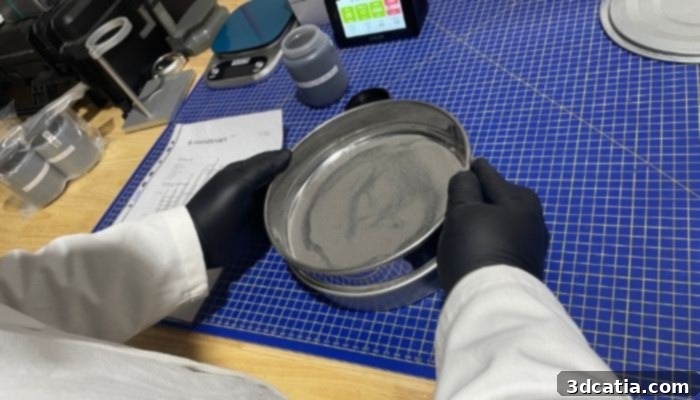
Obsolete components from Tornado fighter jets are being atomized into high-quality metal powders, making them suitable for advanced additive manufacturing processes.
Rolls-Royce’s Strategic Vision: Embracing Additive Manufacturing for the Orpheus Engine Series
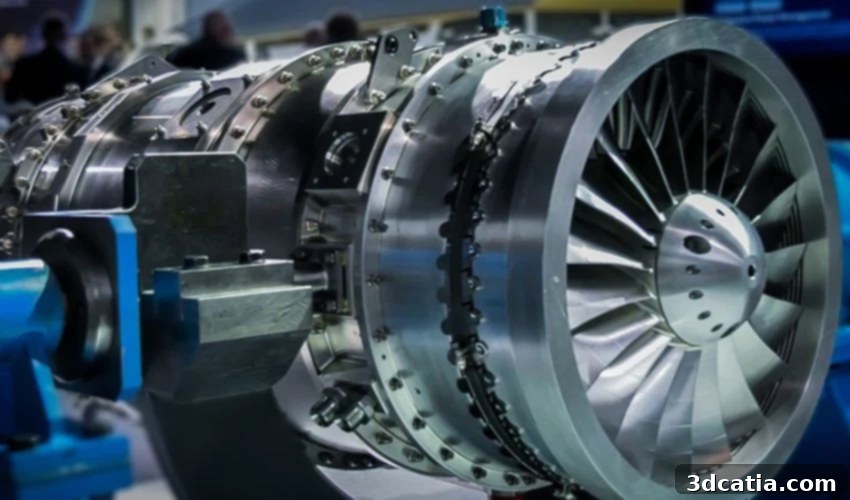
Rolls-Royce, a preeminent global engineering company renowned for its sophisticated power systems, has been strategically and proactively developing its Orpheus engine family for a considerable period. These compact, high-performance turbofan engines are specifically tailored for the defense market, designed to offer a balance of power, efficiency, and relative affordability for a diverse range of military applications. Crucially, the Orpheus project extends beyond merely developing new propulsion systems; it has served as an invaluable platform for Rolls-Royce to incubate and implement entirely new working practices, rigorously test innovative production methods, with additive manufacturing standing as a cornerstone technology. The company has already executed extensive and successful trials involving Orpheus engines that incorporate various 3D-printed parts. These tests have unequivocally validated the performance, structural integrity, and long-term reliability of these additively manufactured components under the most stringent operational conditions. The overarching, ambitious long-term objective for Rolls-Royce is to systematically transition the design and manufacturing processes for all major Orpheus engine components to additive manufacturing, fully exploiting its unique capabilities to achieve unparalleled performance enhancements, significantly streamlined production cycles, and greater cost efficiencies.
The active and pivotal participation of Rolls-Royce in the Tornado 2 Tempest project signifies a monumental leap forward in realizing this ambitious vision for fully integrated additive manufacturing. The fundamental premise of this initiative centers on a deeply collaborative effort with the British Ministry of Defense (MOD) to meticulously collect, assess, and process discarded or damaged parts and components from the extensive inventory of retired military aircraft. The core innovation lies in the advanced recycling of the precious metals embedded within these components. While titanium is a paramount focus due to its exceptional strength-to-weight ratio, high temperature resistance, and corrosion resistance—properties indispensable for demanding aerospace applications—the project also strategically targets other critical metallic alloys. These include various grades of aluminum, prized for its lightness, and different types of steel, valued for their durability and structural integrity. This comprehensive approach to metal recycling not only substantially reduces the demand for virgin raw materials but also proactively establishes a robust, closed-loop resource system, enhancing the self-sufficiency and strategic autonomy of the defense supply chain. This move also contributes significantly to reducing the environmental impact associated with traditional mining and refining processes.
Through the deployment of cutting-edge atomization technologies, these carefully recovered metallic parts are transformed into incredibly fine, uniform metal powders. This intricate process involves melting the metal and then dispersing it into tiny droplets, which rapidly solidify in an inert atmosphere, yielding spherical particles ideal for additive manufacturing. These resultant powders undergo rigorous quality control and certification, ensuring they meet the exacting specifications required for advanced metal 3D printing systems. Rolls-Royce’s dedicated teams have already demonstrated remarkable success, translating this innovative recycling process into tangible, flight-worthy components. For instance, they have successfully fabricated a critical nose cone and highly complex compressor blades, both essential elements of a jet engine, utilizing material derived directly from old jet engine compressor blades. This practical demonstration emphatically underscores the viability and high quality of the entire recycling pipeline, from obsolete component to certified 3D printable powder, setting a powerful precedent for wider adoption across future aerospace design and manufacturing programs. The ability to transform end-of-life military assets into new, high-performance parts represents a paradigm shift in resource management for defense.
Thomas Powell, DRDT’s Strategic & Submarine Recycling Senior Commercial Manager, eloquently articulated the profound implications of this initiative, stating: “Not only can this solution reduce the costs and burden of sourcing critical and high-value metals, but it can also produce components that are lighter, stronger, and longer lasting than those made through traditional forging techniques, thereby further enhancing the MOD’s overall sustainability and effectiveness.” Powell’s statement encapsulates the multifaceted benefits of this revolutionary approach. By significantly mitigating the financial and logistical complexities associated with procuring increasingly scarce and expensive high-value metals, the project directly contributes to cost savings and improved supply chain resilience. Furthermore, the inherent advantages of additive manufacturing in producing optimized, high-performance parts—lighter, stronger, and with extended operational lifespans—directly translate into improved platform efficiency, reduced maintenance burdens, and ultimately, a more effective and sustainable defense capability for the UK. This represents a tangible return on investment not just in monetary terms, but in environmental and strategic advantages as well.
The success of this ambitious project is a testament to the collaborative efforts of a dedicated team, comprising approximately 80 highly skilled engineers and specialists. Their meticulous work culminated in the successful installation and rigorous testing of the 3D-printed nose cone on a fully operational test engine. The results from these comprehensive evaluations were exceptionally positive, unequivocally confirming that the additively manufactured part met and exceeded the extraordinarily stringent safety, reliability, and performance standards demanded of critical aviation components. This crucial validation represents a monumental achievement, definitively proving the practical applicability and profound benefits of employing recycled materials combined with advanced additive manufacturing for the production of flight-critical aerospace parts. The immediate strategic focus now shifts towards exploring the expanded potential for 3D printing a broader spectrum of Orpheus engine components from these sustainably sourced recycled powders. The long-term vision encompasses scaling this innovative and environmentally conscious manufacturing paradigm across the entire Orpheus engine family and, potentially, integrating it into other future combat air systems. This transformative approach is set to redefine how defense platforms are conceived, designed, manufactured, and ultimately sustained throughout their operational lifecycles, marking a significant step towards a truly circular economy in military aviation. Further comprehensive details regarding this groundbreaking partnership and its initial successes can be accessed via the official Rolls-Royce press release, linked below.
What are your thoughts on this pioneering Rolls-Royce and RAF project, and its implications for the future of sustainable defense manufacturing? We invite you to share your insights in a comment below or join the conversation on our LinkedIn, Facebook, and Twitter pages! If you are seeking more in-depth content on 3D printing applications within the aerospace and defense sectors, be sure to explore our dedicated page HERE. Don’t miss out on the latest advancements – sign up for our free weekly Newsletter here to receive the freshest 3D printing news directly to your inbox! You can also discover all our informative videos on our YouTube channel, offering visual insights into the world of additive manufacturing.
*All Photo Credits: Royal Air Force