
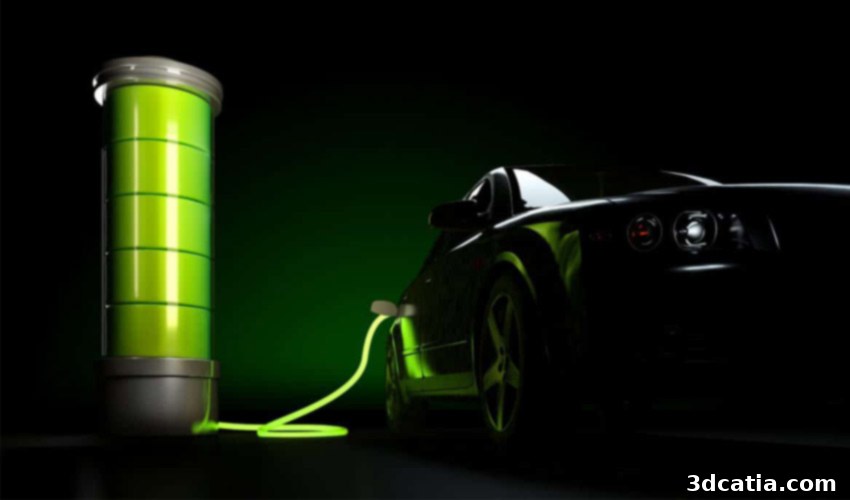
3D Printed Solid-State Batteries: Sakuu’s Innovation Revolutionizing Electric Vehicle Technology
Imagine an additive manufacturing platform capable of 3D printing the advanced battery for your electric car. This groundbreaking vision is precisely what the American company Sakuu, formerly known as KeraCel, has been striving to achieve. In a strategic partnership with Musashi Seimitsu Industry, Sakuu is pioneering the design and production of solid-state batteries (SSBs) through advanced additive manufacturing techniques. This innovative approach promises a significant leap forward, aiming to dramatically reduce costs, size, and weight, while simultaneously boosting performance, extending range, and enhancing durability for electric vehicles (EVs). While the full details of the project continue to unfold, it is clear that Sakuu’s printing solution stands out for its unique multi-material and multi-process capabilities, setting a new benchmark in battery fabrication.
The ambition to transform battery technology is not a recent endeavor for these partners. A few years prior, Musashi and Sakuu initially unveiled their joint intention to develop 3D printed ceramic-based solid batteries specifically tailored for the demanding automotive industry. The fundamental difference of a solid-state battery lies in its electrolyte: it integrates a solid material—which could be a sulfide, oxide, or polymer—instead of the liquid electrolyte found in conventional lithium-ion batteries. This crucial distinction is what grants SSBs their superior qualities, primarily increasing energy density and significantly enhancing safety by mitigating risks such as thermal runaway and dendrite formation. Two years into their concerted efforts, the partners have made substantial progress, nearing a commercial launch that holds immense promise for the rapidly expanding electric automotive market.
The growth trajectory of the EV market underscores the urgent need for such innovations. According to a report by the Bureau of Transportation Statistics, the year 2020 saw the acquisition of 242,000 electric vehicles, 83,000 Plug-in hybrid-electric vehicles, and 400,700 hybrid electric vehicles in the United States alone. This represented an approximate 3% increase from the preceding year and a remarkable 164% surge since 2010. While the United States may not boast the largest global market for electric and hybrid vehicles, its undeniable growth trajectory is set to be further accelerated by pioneering advancements like Sakuu’s 3D printed solid-state batteries, which address critical bottlenecks in current EV technology. Globally, countries are investing heavily in EV infrastructure and incentives, driving a demand for batteries that are not only more efficient but also safer and more environmentally friendly. Sakuu’s solution emerges at a pivotal time when range anxiety, charging times, and battery longevity remain key concerns for potential EV adopters, making the promise of high-performance, compact SSBs particularly attractive.
Sakuu pioneers 3D printing of solid-state batteries (photo credits: Sakuu)
Sakuu’s Additive Manufacturing Breakthrough: A Multi-Process Approach to Lighter, More Efficient Batteries
Sakuu’s revolutionary additive manufacturing solution is engineered to combine two sophisticated processes: laser powder bed fusion and material jetting. This dual-process capability is critical, allowing for the precise deposition and fusion of multiple materials—most notably ceramics and metals—within a single manufacturing step. This synergistic combination is the cornerstone of Sakuu’s ability to produce solid-state batteries that are projected to be an astonishing 50% smaller and 30% lighter than their traditionally manufactured counterparts. This reduction in size and weight is not merely an incremental improvement; it represents a paradigm shift that can significantly enhance vehicle efficiency, dynamics, and overall design flexibility for electric vehicles.
Robert Bagheri, Founder and CEO of Sakuu, articulates the significance of this development: “SSBs are a holy grail technology, but they are both very difficult and expensive to make. By harnessing the flexibility and efficiency-enhancing capabilities of our unique and scalable AM process, we’re enabling battery manufacturers and EV companies to overcome these fundamental pain points.” His statement highlights the core challenge facing SSBs: while their theoretical advantages are immense, their practical production has historically been fraught with complexity and high costs. Traditional manufacturing methods for solid batteries typically involve fabricating thick layers of ceramic, a process that inherently increases the amount of material used, drives up overall production costs, and severely limits the potential for high-volume production. These inherent drawbacks have hindered the widespread adoption of SSBs despite their clear performance benefits. The innovative application of additive manufacturing directly addresses these issues, providing a viable pathway to scalable and cost-effective SSB production.
The combination of laser powder bed fusion and material jetting allows Sakuu to create intricate battery architectures with unprecedented precision. Laser powder bed fusion, typically used for metal components, enables the creation of dense, high-strength structures. Material jetting, on the other hand, offers fine resolution and multi-material capabilities, allowing for the controlled deposition of functional materials like electrolytes and electrodes. By integrating these processes, Sakuu can meticulously deposit thin layers of ceramic and metal simultaneously, building complex internal geometries layer by layer. This advanced control is crucial for optimizing battery performance, as it allows for improved ion pathways, enhanced thermal management, and superior overall energy storage characteristics. The ability to print intricate support structures also minimizes material waste and opens up possibilities for novel battery designs that were previously impossible to achieve with conventional methods. This level of material efficiency and geometric freedom is revolutionary for battery design, enabling the creation of custom-shaped batteries that can be integrated more seamlessly into vehicle platforms, maximizing space utilization and potentially leading to entirely new vehicle layouts.
Sustainable Manufacturing and Transformed Supply Chains with 3D Printed Batteries
Beyond the immediate performance gains, Sakuu’s additive manufacturing approach delivers significant environmental and logistical advantages. The ability to deposit ultra-thin layers of ceramic and metal simultaneously, coupled with the precision to print intricate support structures, dramatically reduces the overall material needed for each battery. Furthermore, the inherent nature of powder-based additive manufacturing allows for the efficient reuse of unfused powder, substantially reducing manufacturing waste and minimizing the ecological footprint of battery production. This closed-loop material system represents a significant stride towards more sustainable manufacturing practices within the battery industry, an industry often criticized for its resource-intensive processes and waste generation. By minimizing material consumption and maximizing resource efficiency, Sakuu is setting a new standard for environmentally conscious battery fabrication.
Initially, Sakuu is strategically targeting the market for two-, three-, and four-wheel electric vehicles. This focused market entry allows for proving the technology at a manageable scale, gathering critical performance data, and refining the manufacturing process before scaling up to larger automotive applications. These segments often have unique space constraints and weight sensitivities, making the compact and lightweight nature of Sakuu’s SSBs particularly advantageous. As the technology matures and production capacities expand, the insights gained from these initial applications will pave the way for broader adoption across the entire spectrum of electric transportation, including passenger cars, commercial vehicles, and potentially even aerospace applications. The scalability inherent in additive manufacturing means that as demand grows, Sakuu can adapt its production to meet the needs of diverse vehicle types and market segments.
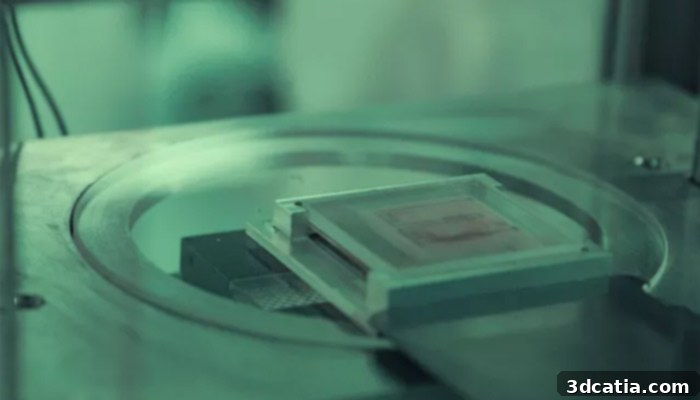
Sakuu’s innovative printing platform integrates multiple processes (photo credits: Sakuu)
The Future of E-Mobility and Manufacturing: Sakuu’s Transformative Vision
Robert Bagheri encapsulates the far-reaching impact of this innovation, stating, “For the e-mobility markets specifically, we believe this to be a landmark achievement, and one that could transform consumer adoption of electric vehicles. Furthermore, by adopting it as the technology of choice, these users also benefit from the wider opportunities our AM platform delivers, namely the ability to enjoy on-demand, localised production, which can help drive more efficient manufacturing operations and shorter supply chains.” This statement underscores not only the direct benefits to battery performance but also the profound implications for manufacturing paradigms and global supply chains.
The shift towards on-demand, localized production offered by Sakuu’s platform represents a significant departure from traditional centralized manufacturing models. In a world increasingly concerned with supply chain resilience and geopolitical stability, the ability to produce advanced batteries closer to the point of consumption offers numerous advantages. It reduces transportation costs and carbon emissions, minimizes lead times, and lessens reliance on complex, extended global supply chains that are vulnerable to disruptions. This localized production capability also opens doors for greater customization and rapid iteration of battery designs, allowing manufacturers to quickly adapt to evolving market demands and integrate bespoke solutions for specific vehicle models. For consumers, this could translate into more affordable EVs due to reduced manufacturing and logistical overheads, alongside potentially faster repair and replacement services for battery packs. Such a decentralized model fosters regional economic growth and creates new opportunities for skilled labor in additive manufacturing.
Ultimately, Sakuu’s pioneering efforts in 3D printing solid-state batteries hold the potential to redefine the landscape of electric vehicle technology and beyond. By addressing the critical challenges of cost, performance, and manufacturability, they are not only making the “holy grail” of battery technology a reality but also championing a more sustainable, efficient, and adaptable future for manufacturing. This innovation could accelerate the global transition to electric mobility, providing the high-performance, safe, and environmentally responsible power sources that are essential for the next generation of transportation.
While you eagerly await the official launch and broader availability of this revolutionary platform, we encourage you to explore more about Sakuu’s vision and technological advancements by visiting their official website HERE. Stay tuned for more updates on how additive manufacturing is shaping the future of energy storage.
*Thumbnail photo credits: Opportunités-Technos
What are your thoughts on the groundbreaking potential of 3D printed solid-state batteries? We’d love to hear your insights! Share your comments below or engage with us on our social media channels, including Facebook,Twitter, andLinkedIn. Don’t miss out on the latest advancements in additive manufacturing—sign up for our free weekly Newsletter here to get the freshest 3D printing news delivered straight to your inbox!