
Unlocking the Future: Top 5 Revolutionary 3D Printing Innovations Reshaping Global Industries
This week, we’re taking a deep dive into the fascinating world of 3D printing, also known as additive manufacturing, showcasing five groundbreaking videos that illustrate just how profoundly this technology is transforming various sectors. From advancements in medical implants and eco-friendly housing to revitalizing automotive design and pioneering sustainable construction methods, 3D printing continues to push the boundaries of what’s possible. Its unique capabilities for customization, rapid prototyping, and complex geometry creation are not just improving existing processes but are entirely reimagining production workflows across the globe. We’ve curated a selection of the week’s most compelling innovations to keep you informed about the cutting edge of this dynamic field. Whether you’re an industry professional, an enthusiast, or simply curious about the future of manufacturing, these videos offer a glimpse into the incredible potential of additive manufacturing. For even more insightful content, be sure to explore our extensive collection of 3D printing videos available on our dedicated Youtube channel. We hope you enjoy this journey through the latest breakthroughs and have a fantastic Sunday!
Top 1: General Motors Embraces Additive Manufacturing to Power the Return of the Stick Shift
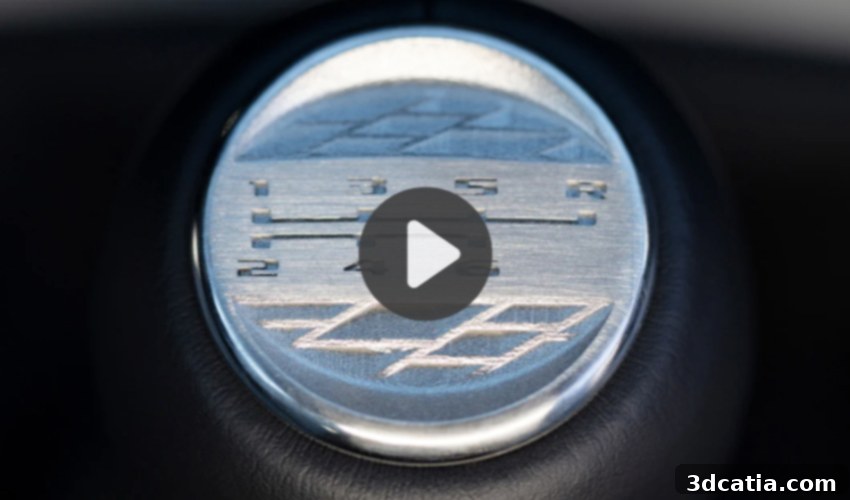
In a significant move signalling its commitment to advanced manufacturing, General Motors announced the grand opening of its first dedicated Additive Industrialization Center (AIC) in December last year. This state-of-the-art facility underscores GM’s ambitious initiative to seamlessly integrate 3D printing into its core production processes, moving beyond mere prototyping to functional, end-use parts. This strategic investment highlights the company’s vision for a more agile, efficient, and innovative future in automotive manufacturing. Demonstrating this commitment, one of GM’s flagship divisions, Cadillac, has already unveiled two pioneering models from its high-performance V-series Blackwing lineup—the CT4 and the CT5—both of which proudly incorporate functional 3D printed components. These groundbreaking parts include a specially designed manual transmission, two high-performance HVAC ducts, and a robust electrical harness bracket. The integration of these additively manufactured elements not only enhances performance and design flexibility but also showcases the durability and reliability of 3D printed components in demanding automotive applications. Both of these highly anticipated models were available for preorder starting February 1, marking a new era for GM and Cadillac. Remarkably, despite Cadillac’s historical role as GM’s lead brand in the industry-wide shift away from manual transmissions, it is now leading the charge in reviving the iconic stick shift, made possible through the precision and customization capabilities of additive manufacturing. This innovative approach allows for the production of complex, high-performance parts that would be challenging or cost-prohibitive to manufacture using traditional methods, effectively merging heritage with cutting-edge technology. Discover more about this exciting development in the video below, illustrating how 3D printing is fundamentally changing how cars are designed and built:
Top 2: WASP’s TECLA Project: Pioneering Eco-Sustainable 3D Printed Housing
Leading Italian 3D printing company, WASP, has successfully completed the printing of the main supporting structure for the TECLA, an innovative and revolutionary eco-habitat built entirely using advanced 3D printing techniques. This ambitious project is founded on a new circular housing model, meticulously designed to be constructed from locally sourced, reusable, and recyclable materials, significantly reducing environmental impact. The TECLA initiative, whose name is a fusion of “technology” and “clay,” began its journey in 2019, emerging from a visionary collaboration between WASP, renowned for its large-scale 3D printing expertise, and the acclaimed Mario Cucinella Architects. Their joint mission is to offer a scalable, eco-friendly, and sustainable solution to the escalating global housing crisis, which is exacerbated by an ever-increasing world population and the pressing challenges of climate change. By leveraging the power of additive manufacturing, TECLA demonstrates how it’s possible to build entire homes quickly, efficiently, and with minimal waste, utilizing earth and other natural components. The successful completion of the printing stage for TECLA marks a pivotal moment, representing a significant stride forward in the realm of more sustainable construction practices. This project not only showcases the incredible capabilities of construction 3D printing but also provides a tangible blueprint for future housing developments that prioritize environmental responsibility and community resilience. Witness the groundbreaking construction of the TECLA eco-sustainable habitats in the compelling video below, and see how additive manufacturing is building a greener future:
Top 3: A.D.A.M. – Revolutionizing On-Demand 3D Printed Bone Implants
In a remarkable advancement for medical technology, the Ukrainian 3D printing company Kwambio, in collaboration with WeFund Ventures, has spearheaded a transformative project focused on the additive manufacturing of on-demand 3D printed bone implants. This pioneering initiative, aptly named A.D.A.M., is set to revolutionize orthopedic surgery by providing personalized, rapid, and cost-effective solutions for patients requiring bone reconstruction. The A.D.A.M. platform ingeniously utilizes advanced biopolymer and bioceramic materials, carefully selected for their biocompatibility, mechanical strength, and ability to integrate seamlessly with the human body. These specialized materials allow for the creation of implants that not only mimic the natural properties of bone but also encourage biological integration, leading to better patient outcomes. What truly sets A.D.A.M. apart is its ability to tailor implants precisely to the unique anatomical needs of each individual patient. Leveraging cutting-edge additive manufacturing technology, the platform can accurately translate complex data from CAT and MRI scans into highly detailed, patient-specific 3D models. This personalized approach ensures an optimal fit, reducing surgical complications and potentially accelerating recovery times. The company is actively pursuing the necessary regulatory clearance for its bone implants, with the ambitious goal of commencing sales in 2022. This regulatory approval will mark a critical milestone, allowing A.D.A.M. to bring its innovative solutions to a broader market and impact countless lives. A.D.A.M. represents a significant leap forward in personalized medicine, promising to make advanced bone implant technology more accessible, efficient, and tailored than ever before. Explore the intricate process and profound impact of the A.D.A.M. project in the video demonstration:
Top 4: A Strategic Partnership Driving Innovation in the Dental 3D Printing Industry
The dental industry is experiencing a rapid transformation thanks to the integration of 3D printing, and a new strategic partnership is set to accelerate this evolution even further. Renowned resin 3D printer manufacturer, Nexa3D, has joined forces with Keystone Industries, a leader in dental resins, to provide healthcare professionals with an unparalleled suite of faster, more agile, and significantly more productive dental solutions. This collaboration brings together Nexa3D’s ultra-fast resin 3D printing technology with Keystone’s clinically validated and high-performance dental materials, creating a powerful synergy designed to optimize dental workflows. As part of this exciting alliance, Keystone Industries’ acclaimed KeyPrint® resins are now fully compatible with Nexa3D’s groundbreaking NXE 400 3D printers. This compatibility unlocks a new level of efficiency and precision for dental laboratories and practices. The comprehensive KeyPrint® range includes industry-leading materials such as KeySplint Soft® and KeyModel Ultra®. KeySplint Soft® is widely recognized for its exceptional properties in creating flexible and comfortable dental splints, nightguards, and orthodontic appliances, offering superior patient comfort and durability. KeyModel Ultra®, on the other hand, is celebrated for its accuracy and smooth finish, making it the ideal material for producing highly detailed dental and orthodontic models, as well as clear aligner molds. This new collaboration is poised to significantly advance the dental additive manufacturing industry by enabling faster turnaround times, superior material performance, and broader accessibility to advanced digital dental solutions. Dental professionals can now leverage the combined expertise of Nexa3D and Keystone to deliver higher quality, customized treatments with unprecedented speed and efficiency, ultimately enhancing patient care and operational productivity. Witness the impact of this transformative partnership in the dental sector in the following video:
Top 5: Biomimicry in Action: Lobsters and the Future of Concrete 3D Printing
At first glance, it might seem challenging to discern any connection between the humble lobster and the cutting-edge technology of concrete 3D printing. However, a brilliant team of researchers at RMIT University in Australia has uncovered a remarkably significant and innovative correlation. Their studies into the natural world have revealed that the robust shells of lobsters, along with other crustaceans, have evolved intricate, patterned internal structures over millions of years. These sophisticated patterns serve a vital purpose: to make their shells incredibly hard, resilient, and resistant to damage, offering superior protection in harsh marine environments. Inspired by this natural marvel of engineering, the RMIT researchers made a groundbreaking discovery: applying these intricate biological patterns to the design of concrete 3D printed structures could unlock unprecedented levels of strength and resilience. By incorporating biomimetic designs—patterns inspired by nature—into the internal geometry of 3D printed concrete, they found that it could significantly enhance the material’s structural integrity. This novel approach allows for the creation of more complex architectural structures that are not only stronger and more durable but also potentially more resource-efficient. This research has led to the development of a revolutionary new method for concrete 3D printing, directly inspired by the intricate patterns found within lobster shells. The aim is to produce final structures that boast significantly increased strength and longevity, while potentially reducing material usage and allowing for more innovative architectural designs. This exciting development exemplifies the power of biomimicry in driving engineering innovation and holds immense promise for the future of sustainable and resilient construction. Dive into this fascinating intersection of nature and advanced manufacturing by watching the video below:
We hope you found this week’s top 5 videos on 3D printing innovations as inspiring and informative as we did! From personalizing healthcare to constructing sustainable homes and revolutionizing traditional industries like automotive and construction, additive manufacturing continues to prove its immense potential. Each of these stories underscores the transformative power of 3D printing in addressing real-world challenges and shaping a more advanced future. Which one of these groundbreaking applications captured your imagination the most, and why? We’d love to hear your thoughts! Share your favorite video and insights in a comment below, or engage with us on our Facebook and Twitter pages. Don’t miss out on any future developments in this fast-evolving industry—remember to sign up for our free weekly Newsletter to receive all the latest news and essential updates from the 3D printing world directly in your inbox!