
Additive Manufacturing’s Green Revolution: Driving Sustainability and Innovation at Formnext
Formnext 2021, the premier international trade fair for additive manufacturing (AM), served as a pivotal platform to showcase the latest advancements in the industry. Over four intensive days, attendees witnessed a remarkable array of new and optimized machines, innovative materials, sophisticated software packages, and advanced post-processing solutions. Beyond the sheer technological prowess, a clear shift in industry focus was evident: instead of a constant stream of entirely novel innovations, the emphasis has firmly moved towards meticulous product optimization and the refinement of the entire AM supply chain. This maturation signifies additive manufacturing’s growing commitment to industrialization, aiming to create more effective machines for series production and automate complex manufacturing processes, thereby solidifying its indispensable presence in Industry 4.0. Crucially, alongside these industrial aspirations, **sustainability** has emerged as a paramount concern and a central driving force in the ongoing development of additive manufacturing technologies. But what are the specific demands the market places on companies in this regard? And how are they actively confronting both current and future environmental challenges? Our team was extensively present at Formnext, engaging with numerous exhibitors to delve into these pressing questions and gain deeper insights into the sustainability aspirations of key players across the additive manufacturing landscape.
Additive manufacturing inherently offers a more sustainable pathway to production compared to many conventional methods. This ecological advantage is particularly striking in its unparalleled material efficiency. Unlike subtractive manufacturing processes, which remove material from a larger block, 3D printing builds objects layer by layer, virtually eliminating excess material waste from the outset. This precision significantly reduces scrap rates and the need for costly post-production material disposal. The integration of advanced computational tools, such as generative design, further amplifies this benefit. Generative design algorithms can automatically create optimized part geometries that are lighter, stronger, and use the absolute minimum amount of material required for their intended function. This capability represents a core advantage of 3D printing over traditional techniques, leading to substantial resource savings. Furthermore, additive manufacturing facilitates on-demand production. This transformative capability not only dramatically reduces lead times but also mitigates the necessity for extensive warehousing and the long, often complex, transport routes associated with global supply chains. By enabling localized production and reducing inventory, 3D printing directly contributes to a significant reduction in carbon footprints and overall logistical environmental impact.
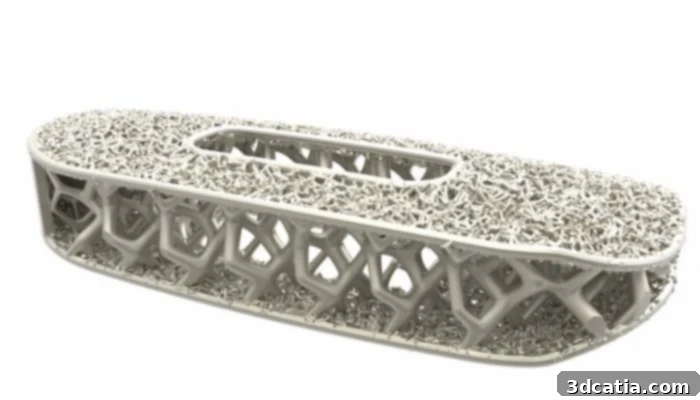
Thanks to generative design, components can be optimized and material used efficiently (photo credits: NuVasive)
While additive manufacturing presents clear environmental advantages, it is also crucial to acknowledge its own ecological footprint. The German Federal Environment Agency has conducted an in-depth trend report to comprehensively assess the environmental impact of 3D printing, meticulously examining both its direct and indirect effects. The report specifically highlights areas of concern, notably the potentially high energy requirements of certain 3D printing processes and the generation of indoor pollutants that demand careful management. Additionally, the mining and processing of raw materials for AM feedstocks contribute to environmental impact, mirroring challenges faced by many industries. However, the Federal Environment Agency identifies significant potential for improvement, particularly through the widespread implementation of innovative recycling concepts. For instance, end-of-life 3D printed parts could be effectively recycled and reprocessed into new filament or powder, creating a more circular economy within the additive manufacturing ecosystem. This forward-thinking approach underscores the industry’s commitment to mitigating its environmental impact and continuously enhancing its sustainability profile.
AMGTA Champions Sustainability in Additive Manufacturing Through Rigorous Research and Awareness
The establishment of the Additive Manufacturing Green Trade Association (AMGTA) in 2019 was a significant turning point, signaling a collective commitment from major players within the additive manufacturing sector to address sustainability head-on. This non-profit organization was founded with the explicit mission to elevate both industrial and public awareness of 3D printing’s potential as a genuinely sustainable alternative to conventional manufacturing methods. With a growing membership that currently includes 35 companies from 11 countries, and with industry titans like Stratasys and ExOne among its founding members, AMGTA acts as a powerful voice for environmental responsibility within the AM community. At Formnext, AMGTA members actively participated in various panel discussions, outlining the industry’s future aspirations and pinpointing the most critical areas of focus. Their key message was unequivocal: if additive manufacturing is to truly establish itself as a sustainable manufacturing method, mere promises and claims are insufficient. The entire industry must now demonstrate its commitment through concrete, verifiable data. This necessitates particular attention to the **Life-Cycle Assessment (LCA)** – a comprehensive methodology that evaluates the environmental impacts associated with all stages of a product’s life, from raw material extraction through processing, manufacturing, distribution, use, repair and maintenance, and disposal or recycling. By meticulously recording the environmental impacts across the entire additive value chain, from material sourcing to post-processing and end-of-life scenarios, weak points can be precisely identified and addressed. The rigorous collection and analysis of this data are absolutely essential to enable a fair and accurate comparison of additive manufacturing with other, often traditional, processes in terms of sustainability. Only when an overall ecological picture is available, backed by robust data, will it be possible to genuinely balance sustainability needs with economic and performance objectives. Today, many studies often compare isolated aspects like energy and material consumption, inadvertently overlooking or underestimating other significant environmental factors, such as the substantial CO2 emissions generated by long-distance transport routes – emissions that are often drastically reduced or entirely eliminated when 3D printing facilitates localized, on-demand production.
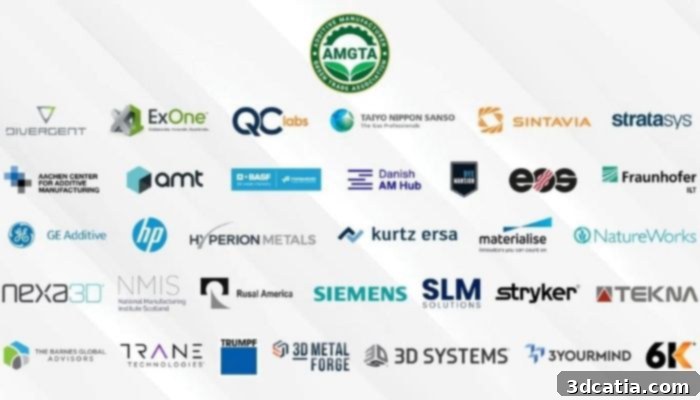
Sherry Handel, Executive Director of AMGTA, articulated the organization’s evolving strategy: “Our mission is now entering its third year, and we have successfully built a solid foundation upon which to expand. In 2023 and beyond, our strategic focus will be on continuing to invest in rigorous research projects specifically centered on sustainability within additive manufacturing. We aim to collaborate closely with our members to firmly establish AMGTA as a pivotal force in the industry, actively championing sustainability and driving meaningful environmental progress across the entire additive manufacturing sector.” This commitment to evidence-based research underscores AMGTA’s dedication to providing credible data that supports the narrative of AM as a greener manufacturing alternative.
Sustainability Takes Center Stage at Formnext: A Collective Industry Movement
During our comprehensive tour of Formnext, the pervasive focus on sustainability by numerous exhibitors was strikingly evident across many booths and presentations. The concept of “sustainability” was a recurring theme, often highlighted through creative and impactful displays. For instance, Stratasys showcased its commitment with an impressive “Green Wall,” symbolizing its dedication to eco-conscious practices. Similarly, Arkema unveiled a new brand identity that subtly but clearly emphasized its sustainable material innovations. Beyond these visual statements, targeted messages adorned banners and brochures, underscoring companies’ environmental pledges. Our conversations with exhibitors consistently revealed that, in addition to their individual corporate efforts, there’s a growing trend towards collaborative initiatives. Companies are increasingly partnering with others across the industry value chain to collectively reduce the environmental footprint of additive manufacturing technologies. This collaborative spirit is essential for addressing systemic challenges and fostering industry-wide change.
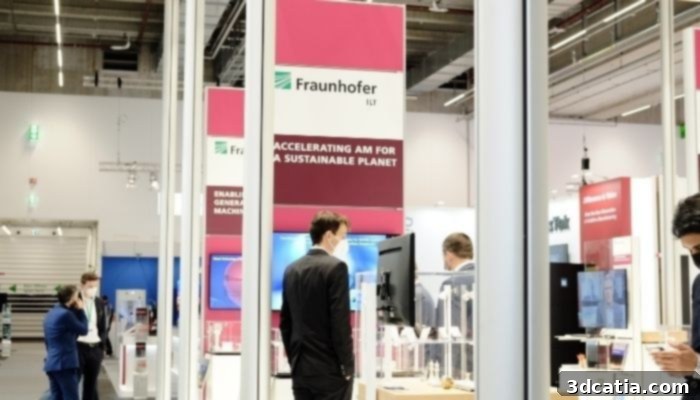
Photo Credits: 3Dnatives
These collaborative efforts encompass a wide range of critical developments. They include the pioneering of innovative materials designed for higher recyclability rates, ensuring the compatibility of these new materials with diverse manufacturing equipment, optimizing the energy consumption of AM machines themselves, and establishing the necessary infrastructure for more effective recycling processes. However, a recurring point emphasized by companies is the potential global challenge faced by the additive manufacturing industry in this aspect. Currently, there is a recognized lack of appropriate, widespread global infrastructure that would enable all companies to act with maximum sustainability. This deficiency often limits the scope and impact of individual corporate initiatives. Therefore, we conclude that while the commitment and desire among manufacturers to improve their ecological balance are undeniably present, the critical next step is to unite these individual forces. By fostering greater collaboration and advocating for policy changes, the industry can collectively prove that additive manufacturing is not only a technological leap forward but also a significant step ahead of many traditional processes in terms of sustainability, driving real-world environmental benefits.
Leading Voices: What Companies Are Saying About Sustainability in AM
**Evonik’s Commitment to Efficiency:** Janusz Berger, Head of Market Communications at Evonik, highlighted their proactive steps: “We started up a new production line for polyamide 12 this year, also for PA12 powder. In this production line, we have tried from the beginning to make the entire production more efficient. This includes lower water consumption, more efficient energy consumption, and less raw material usage with the same or even better output. This production line overhaul has enabled us to reduce our annual carbon footprint by an impressive 15,000 tons.” This demonstrates how process optimization directly translates into substantial environmental gains.
**EOS’s Holistic Approach to Responsible Production:** Björn Hannappel, Head of Sustainability at EOS, emphasized a comprehensive strategy: “At EOS, we have developed a holistic strategy for responsible production in terms of sustainability. This focuses on reducing CO2 emissions, eliminating waste in AM production, and fostering environmentally friendly products and services. Our main goal today is to create transparency. For this, data must also be collected to determine where the weak points and where the strengths are in the AM lifecycle.” His statement underscores the critical need for data-driven insights to truly understand and improve sustainability performance.
**Fraunhofer ILT’s Innovative Research for a Greener Future:** Andreas Vogelpoth from Fraunhofer ILT shed light on their research initiatives: “The analysis of components as part of the LCA is becoming increasingly important for us. We are also devoting ourselves to this as part of the EU’s Clean Sky project, which focuses on sustainable aviation. We are trying to address the energy issue through new materials and new processes; for example, this includes investigating hydrogen as a resource in manufacturing, as well as finding compatible geometries and materials.” This highlights cutting-edge research aimed at future-proofing AM with sustainable energy sources and optimized designs.
**Stratasys Calls for Action, Not Just Talk:** Rosa Coblens, VP Sustainability Public Relations & Global Internal Communications at Stratasys, delivered a potent call to action: “We need numbers, because we don’t want to just greenwash here. But most importantly, we need to act now.” Her words underscore the urgency and the demand for verifiable metrics to back up sustainability claims, advocating for genuine, impactful change.
**6K Additive Sees Sustainability as a Talent Magnet:** Eric Bono, VP Sales & Development at 6K Additive, revealed an interesting trend regarding employee engagement: “More and more employees are also thinking about the issue of sustainability. Some applicants ask me in job interviews what our company policy and strategy is on this topic.” This indicates that sustainability is not just a regulatory or marketing concern but a core value that attracts and retains talent, reflecting a broader societal shift.
**ARBURG’s Focus on the Circular Economy:** Sascha Petereit, Sales Manager AM at ARBURG, emphasized the importance of circularity: “We are incredibly concerned with the circular economy. That is, what can we do to make plastics easier to separate and to more easily and effectively recycle afterwards. In general, however, 3D printing is exerting a major influence on the sustainability strategies of manufacturing companies. This includes focusing on lightweight parts to material savings, to shortening logistics routes. In all these areas, 3D printing creates significant added value.” He paints a clear picture of AM’s multifaceted contributions to sustainability, from end-of-life material management to supply chain optimization.
The discussions at Formnext and the insights from industry leaders clearly demonstrate that sustainability is no longer an ancillary consideration but a fundamental pillar of additive manufacturing’s future. From inherent material efficiency and localized production capabilities to dedicated research, collaborative initiatives, and a commitment to transparent life-cycle assessments, the industry is actively working towards a greener paradigm. While challenges remain, particularly in establishing robust global recycling infrastructures, the collective will to innovate and act responsibly is undeniable. Additive manufacturing stands at the forefront of a potential green revolution in manufacturing, offering unique solutions for a more resource-efficient and environmentally conscious industrial future. We believe that by uniting these efforts, the AM industry can indeed prove its superior environmental credentials.
What are your thoughts on sustainability in additive manufacturing? We invite you to share your perspectives and contribute to the conversation in a comment below or join us on our Linkedin, Facebook, and Twitter pages! Don’t forget to sign up for our free weekly Newsletter here, to receive the latest 3D printing news straight to your inbox! You can also find all our engaging videos on our YouTube channel, offering visual insights into the world of additive manufacturing.