
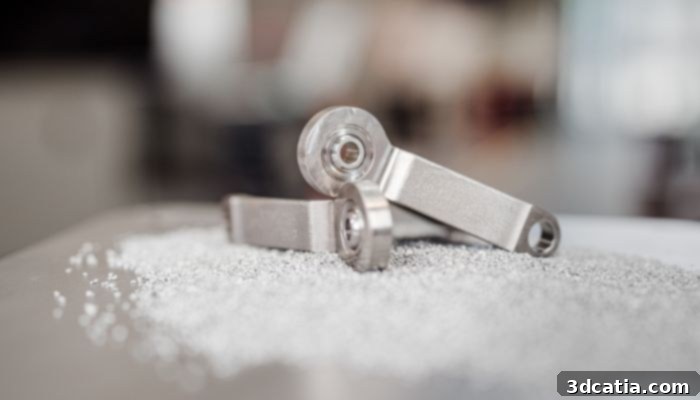
Revolutionizing Aerospace Maintenance: Lufthansa and Premium AEROTEC Secure Landmark EASA Approval for 3D Printed Metal Spare Parts
The landscape of aerospace manufacturing and maintenance is undergoing a profound transformation, largely driven by the advancements in additive manufacturing. This innovative technology, often referred to as 3D printing, has already paved the way for numerous breakthroughs, offering unprecedented design freedom, material efficiency, and rapid prototyping capabilities. In a significant stride forward for the industry, German aviation giant Lufthansa has announced a pioneering collaboration with Premium AEROTEC. This strategic partnership aims to integrate additive manufacturing into the cost-effective production of critical spare parts for their aircraft fleet, marking a new era for aerospace maintenance, repair, and overhaul (MRO).
The initial focus of this groundbreaking initiative centers on a specific metal component: the A-Link. These additively manufactured A-Links, produced at Lufthansa Technik’s Additive Manufacturing Center, are designed for the crucial anti-icing system of the IAE-V2500 engine. This engine model is widely used in commercial aviation, powering a significant portion of the global narrow-body fleet. What makes this announcement particularly impactful is the recent official aviation approval granted by the European Union Aviation Safety Agency (EASA) for these 3D printed A-Links. This is not merely another component approval; it represents the very first instance within the global aerospace industry where EASA has provided certification for a load-bearing, metallic, 3D printed spare part. This landmark approval underscores the rigorous validation and inherent reliability of the additive manufacturing process when applied to vital aircraft components.
Lufthansa’s strategic alliance with Premium AEROTEC positions both companies at the forefront of aerospace innovation. Premium AEROTEC, a global leader in the aviation industry, boasts extensive expertise in the development and production of high-performance aircraft parts, utilizing both metal and advanced carbon fiber composites. This deep knowledge in material science and engineering proved invaluable in bringing the 3D printed A-Links to fruition. For Lufthansa Technik, the need for these A-links is substantial; a total of nine are required to securely fasten a ring-shaped hot air duct within the engine’s inlet cowl. This system is paramount for preventing ice formation on aircraft engines, a critical safety requirement given the extreme altitudes and varying atmospheric conditions an aircraft encounters during flight. While these A-Links are indispensable for flight safety, their traditional manufacturing methods often result in wear and tear at their mounting holes due to constant vibrations and thermal cycling, necessitating frequent replacements every few years. Additive manufacturing offers a promising solution to enhance their durability and longevity.
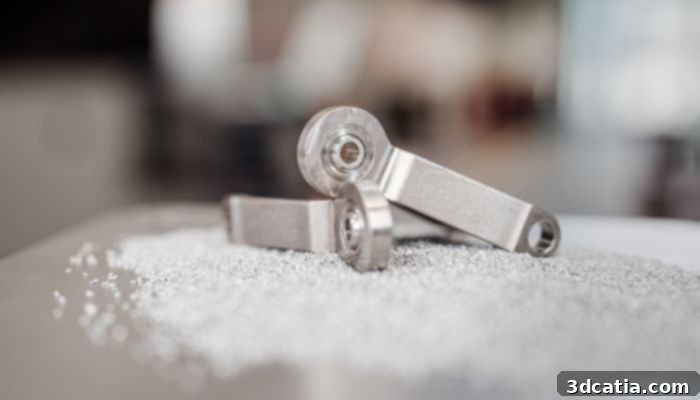
The EASA-approved 3D-printed A-Link, a milestone in metal additive manufacturing for aerospace (photo credits: Premium AEROTEC)
The Additive Advantage: Enhanced Durability, Cost Reduction, and Manufacturing Flexibility
The decision to adopt 3D printing for the production of the A-Links was primarily driven by the limitations of traditional manufacturing processes and the pressing need to address component wear. Traditionally manufactured A-Links, despite their critical function, often exhibit significant wear and tear after only a few years of operational use. The constant vibrations and stress experienced during flight operations compromise their structural integrity, making them unsuitable for continued use under stringent safety protocols and requiring costly, periodic replacements. Conventional aircraft parts of this nature are typically produced using a forging process, which, while robust, involves extensive tooling, significant material waste, and often long lead times.
Through their collaboration with Premium AEROTEC, Lufthansa is now embracing Laser Powder Bed Fusion (LPBF), a sophisticated metal additive manufacturing technique. LPBF offers a transformative alternative to forging, delivering a host of advantages. Unlike traditional methods that rely on molds, dies, or jigs, LPBF builds parts layer by layer directly from a digital design. This eliminates the need for expensive and time-consuming tooling, resulting in substantial material savings and a significant reduction in overall production costs. Furthermore, the inherent flexibility of LPBF allows for the production of complex geometries that are often impossible or prohibitively expensive to achieve with conventional manufacturing. This design freedom opens up opportunities for topology optimization, potentially leading to lighter yet stronger components in the future, even beyond the A-Link’s current design. The ability to produce parts on demand also enhances supply chain resilience, allowing airlines to manufacture spare parts as needed, reducing inventory costs and lead times, which are crucial factors in aerospace MRO operations.
EASA Certification: A New Benchmark for Aerospace Safety and Innovation
Achieving EASA approval for additively manufactured components, especially load-bearing metallic parts, is an exceptionally stringent and complex undertaking. It demands meticulous testing, comprehensive validation, and unwavering adherence to the highest safety and quality standards that govern the aerospace sector. To finally secure this coveted approval for the 3D-printed A-Links, an extensive series of tests had to be rigorously conducted. The properties of additively manufactured parts are inherently linked to the specifics of their production process, including laser power, scan speed, powder characteristics, and post-processing treatments. Any variation can significantly impact the final material characteristics and structural integrity.
Recognizing this critical dependency, Premium AEROTEC embarked on a comprehensive testing regime. This involved performing a vast number of print jobs with various prototypes, meticulously controlling and recording all process-relevant parameters. This systematic approach allowed them to identify and establish a highly successful and reliable printing process, one that consistently achieves and surpasses the most demanding material property requirements. The results were impressive: the additively produced A-Link demonstrated exceptional performance, particularly in terms of tensile strength, where it proved to be superior to the original, traditionally manufactured part. This enhanced durability directly translates into extended service life and improved safety, fulfilling and even exceeding the rigorous demands of aerospace applications. The EASA certification for these parts is a testament to the robust testing and validation framework employed, setting a new benchmark for the widespread adoption of additive manufacturing in critical aerospace applications.
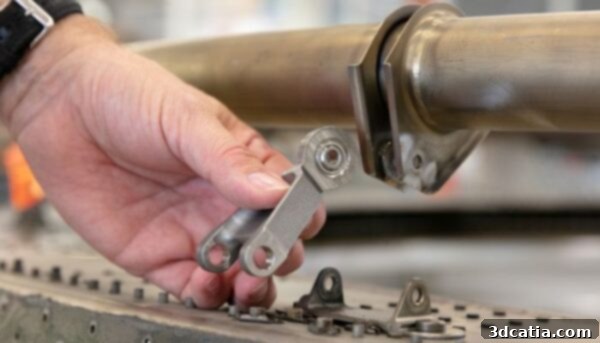
The additively manufactured A-link securely attached to the IAE-V2500 anti-icing system, a testament to its successful integration and certification (photo credits: Lufthansa)
A Strategic Partnership Propelling the Future of Aerospace MRO
The collaboration between Lufthansa and Premium AEROTEC has yielded significant mutual benefits, reinforcing their respective leadership positions within the aerospace industry. For Lufthansa Technik, this partnership has been instrumental in expanding the scope of its EASA Part 21/J development facility. This internal capability now encompasses the certification process for additively manufactured metal components, establishing Lufthansa as a frontrunner in developing and approving 3D printed structural parts. This expertise not only streamlines their own MRO operations but also positions them as a valuable resource for other operators seeking similar solutions.
Premium AEROTEC, on the other hand, celebrates this partnership as a momentous achievement. It marks the first time the company has supplied 3D printed parts to a customer outside the Airbus Group, signifying a major expansion of its market reach and validating its advanced additive manufacturing capabilities on an international scale. Dr. Ulrich Weber, Chief Operating Officer at Premium AEROTEC, expressed his enthusiasm for the cooperation, stating, “I am very pleased that in cooperation with Lufthansa Technik we can now once again demonstrate our comprehensive expertise in 3D printing.” This sentiment was echoed by Soeren Stark, Lufthansa’s Chief Technical Officer, who highlighted the broader implications of this success. Stark commented, “We have been producing components for the aircraft cabin, the vast majority of which are made of plastic, using 3D printing for years. Now we are able to demonstrate that structurally relevant metal parts for use outside the cabin can also be manufactured additively and approved for flight operations. In this way, we have not only achieved a cost saving for the component in question, but also defined and qualified all the necessary processes for the application of this groundbreaking manufacturing method for structurally relevant metal parts.” This statement underscores Lufthansa’s systematic approach to additive manufacturing, moving from non-critical plastic parts to highly critical, load-bearing metal components, thereby setting a comprehensive blueprint for future applications across the aviation sector.
Future Horizons: Expanding the Potential of Additive Manufacturing in Aerospace
The successful certification and implementation of the 3D printed A-Links represent only the initial phase for Lufthansa and Premium AEROTEC. Both companies are already looking ahead, planning to further leverage the immense potential of additive manufacturing to optimize aircraft components and systems. A key area of future development is the strategic optimization of geometries. The unparalleled design freedom offered by additive manufacturing processes allows for the creation of intricate internal structures, lightweight lattice designs, and consolidated parts that integrate multiple functions. This capability can lead to significant weight reductions, which directly translate into fuel efficiency improvements and reduced operational costs for airlines. Beyond weight savings, geometric optimization can also enhance aerodynamic performance, improve thermal management, and increase the overall durability and lifespan of components by tailoring their microstructure and stress distribution.
The successful certification of the A-Link has established a robust framework for future endeavors. This includes exploring the additive manufacturing of other critical engine components, structural airframe parts, and specialized tooling. The ability to produce spare parts on demand will also revolutionize supply chain logistics, drastically reducing lead times for hard-to-find components and minimizing the need for extensive physical inventories. This partnership is not just about a single part; it’s about pioneering a scalable, cost-effective, and highly efficient manufacturing paradigm that will shape the future of aerospace MRO and aircraft design for decades to come. This collaborative spirit, coupled with relentless innovation, promises to unlock new possibilities for the entire aviation ecosystem. For those interested in delving deeper into the specifics of this transformative project, further details can be found HERE.
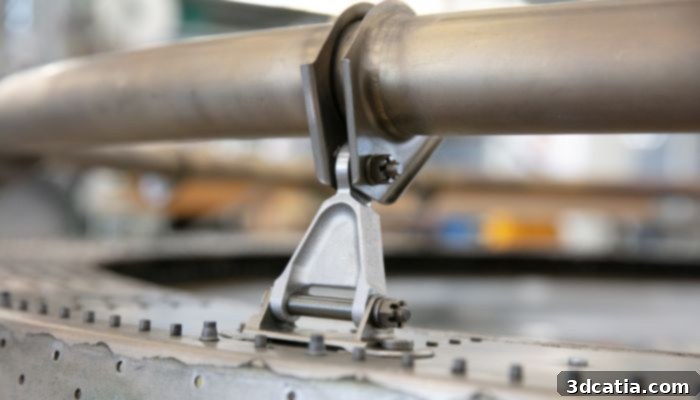
Lufthansa Technik’s advanced additive manufacturing capabilities are key to driving innovation in aerospace (Photo Credits: Lufthansa Technik)
The pioneering efforts of Lufthansa and Premium AEROTEC in securing EASA approval for 3D printed metal parts represent a monumental achievement for the aerospace industry. It demonstrates that additive manufacturing is no longer just a prototyping tool but a viable, certified method for producing mission-critical, load-bearing components. This landmark development promises to drive innovation, enhance safety, reduce costs, and improve operational efficiency across the global aviation sector. As the industry continues to push the boundaries of what’s possible, partnerships like this will be crucial in unlocking the full potential of advanced manufacturing technologies.
What are your thoughts on this significant cooperation between Lufthansa and Premium AEROTEC and its implications for the future of aerospace? Let us know in a comment below or join the discussion on our LinkedIn, Facebook, and Twitter pages! Don’t forget to sign up for our free weekly Newsletter here, bringing the latest 3D printing news straight to your inbox! You can also find all our compelling videos and industry insights on our YouTube channel.
*Cover Photo Credits: Lufthansa