
Revolutionary 3D Printed Living Material: UC San Diego’s Bioremediation Solution for Water Pollution Cleanup
With an alarming rate of over 350 million metric tons of plastic waste generated globally each year, the urgent need for comprehensive strategies to clean up, recycle, and recover parts of our planet inundated by pollution cannot be overstated. A particularly pressing environmental crisis is the pervasive presence of pollutants in our water systems. Each day, countless millions of hazardous materials, including plastics, find their way into our vital rivers, lakes, oceans, and other water supplies, threatening ecosystems and human health alike. In a groundbreaking development, researchers at UC San Diego are pioneering a novel approach: a recently created, organic, 3D printed living material that holds immense promise as a sustainable solution to cleaning up our increasingly contaminated world.
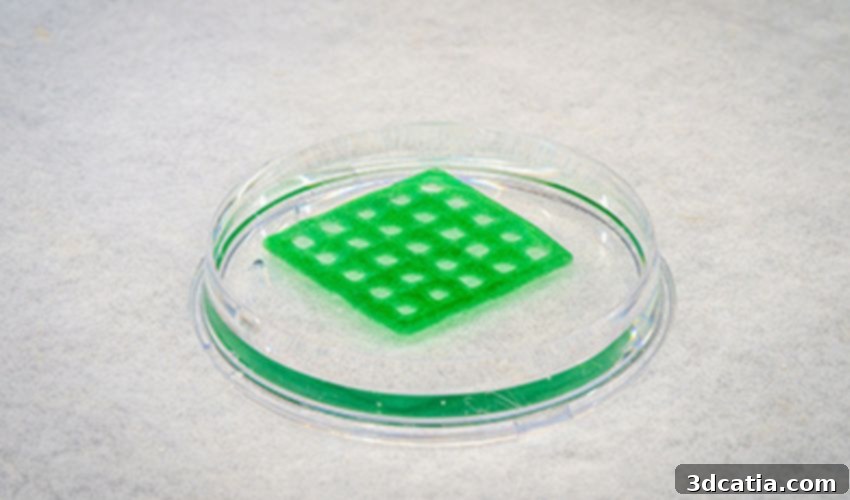
This innovative decontamination technology, operating under the working name of “engineered living material,” represents a significant leap forward in bioremediation. At its core, the creation is a sophisticated 3D printed construct, meticulously designed from a combination of a natural seaweed polymer known as alginate and genetically engineered cyanobacteria. These specialized cyanobacteria are not merely passive components; they are specifically designed to actively remove targeted pollutants from their surrounding environment. They achieve this remarkable feat by producing specific enzymes capable of breaking down the complex structures of harmful materials into benign, non-harmful molecules. This synergistic blend of seaweed alginate, providing structural integrity and a hospitable environment, and the highly functional bacteria, is then precisely extruded through a 3D printer. This advanced manufacturing technique allows for the creation of intricate structures that can be customized to either float in water or be strategically positioned in various contaminated environments, offering unparalleled versatility in deployment.
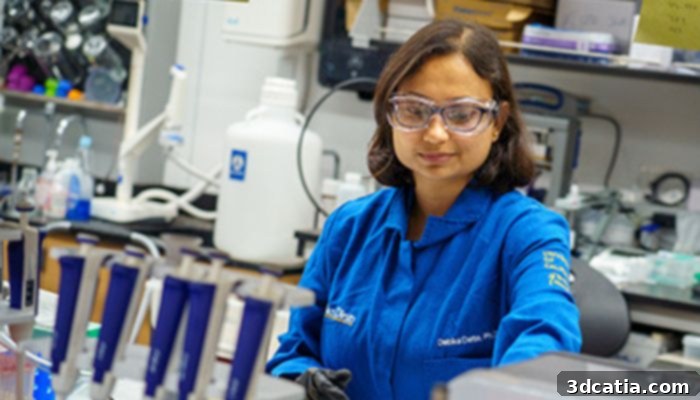
Photo Credits: David Baillot/UC San Diego Jacobs School of Engineering
The true innovation lies in this ingenious marriage of synthetic material and biological system. As research co-lead and nanoengineering professor at UC San Diego, Jon Pokorski, elucidates, “What’s innovative is the pairing of a polymer material with a biological system to create a living material that can function and respond to stimuli in ways that regular synthetic materials cannot.” This highlights the profound importance of the biological component within the mixture. The all-in-one nature of this living material streamlines both its construction and its utility, leading to an exceptionally efficient solution. Furthermore, the inherent adaptability of this technology opens up a wealth of promising possibilities for future applications and product development. During extensive testing and refinement, the researchers converged on a 3D printable grid or waffle-shaped structure. This particular design proved optimal due to its ability to maximize the surface area available for decontamination while simultaneously providing the bacteria with the most efficient access to nutrients, thereby enhancing their pollutant-degrading activity and ensuring their longevity within the material.
A Microscopic Cleanup Crew with Advanced Bioremediation Capabilities
The remarkable ability of this engineered living material to break down pollutants stems from a specific enzyme secreted by the genetically modified cyanobacteria: laccase. Previous scientific studies have conclusively demonstrated the efficacy of laccase in neutralizing a wide array of environmental toxins. Notably, it has shown considerable success in targeting pollutants such as BPA (Bisphenol A), a prevalent chemical found in various polycarbonate plastics, including common water bottles. Beyond plastics, laccase has also proven instrumental in the successful breakdown of antibiotics and other complex pharmaceutical drugs and their waste products, which are increasingly contaminating water sources globally. In their current rigorous testing of the 3D printed living material, the laccase enzyme embedded within the structure effectively broke down indigo carmine. This blue dye, commonly used in coloring denim clothing, is a significant industrial pollutant that often finds its way into waterways, posing environmental challenges. The successful degradation of indigo carmine provides compelling evidence of the material’s potential to address diverse chemical pollutants.
The researchers at UC San Diego are optimistic that, through continued further tests and meticulous modifications, this innovative bacteria-alginate structure can be adapted and enhanced to break down an even broader spectrum of dangerous pollutants pervasive in our environment. This ongoing development phase is critical for expanding the material’s utility across various contamination scenarios. However, the scientific team is acutely aware of the crucial ethical and environmental considerations that accompany the deployment of genetically modified organisms. A primary concern is to ensure that the solution itself does not inadvertently introduce a new problem, such as the uncontrolled spread of genetically engineered bacteria. To meticulously address and allay these legitimate concerns, the bacteria within the living material are ingeniously equipped with a sophisticated, built-in self-destruct mechanism. This safety feature is activated upon exposure to theophylline, a common small molecule found naturally in substances like tea and chocolate. When encountered, theophylline triggers the rapid and complete destruction of the bacteria from within, ensuring their controlled eradication after their mission is accomplished.
Dr. Pokorski further elaborates on this critical safety protocol, stating, “The living material can act on the pollutant of interest, then a small molecule can be added afterwards to kill the bacteria. This way, we can alleviate any concerns about having genetically modified bacteria lingering in the environment.” This proactive approach to biosafety is a cornerstone of their research, demonstrating a deep commitment to responsible innovation. Looking ahead, Dr. Pokorski shares the team’s ambitious goal to further refine this mechanism, aiming for autonomous bacterial destruction without direct human intervention. He states, “Our goal is to make materials that respond to stimuli that are already present in the environment,” envisioning a future where the living material can intelligently detect the completion of its task or specific environmental cues to initiate its own safe degradation, making the system even more self-sufficient and environmentally benign.
The successful initial experiments conducted at UC San Diego are a testament to the power of interdisciplinary collaboration. This significant achievement was the direct result of a concerted effort by a diverse team of dedicated biologists, engineers, and materials scientists, all contributing their specialized expertise from the esteemed Materials Research Science and Engineering Center. Their collective success not only validates the potential of this particular 3D printed living material but also unlocks a host of exciting new possibilities for the creation of advanced 3D printed materials. These future innovations can be strategically designed to play a crucial role in repairing our planet, taking on the complex and daunting task of eliminating waste, molecule by molecule, and paving the way for a cleaner, healthier future. For those interested in delving deeper into the specifics of their groundbreaking research, comprehensive details are available on the official UC San Diego webpage, which you can access HERE.
What are your thoughts on this groundbreaking 3D printed living material and its potential to revolutionize environmental cleanup? We encourage you to share your insights and comments below or engage with us on our social media platforms: LinkedIn, Facebook, and Twitter! Stay informed about the latest advancements in 3D printing technology by signing up for our free weekly Newsletter here, delivering the most relevant news directly to your inbox. Additionally, explore our extensive library of videos on our YouTube channel for more engaging content.
*Cover Photo Credits: UC San Diego Jacobs School of Engineering