
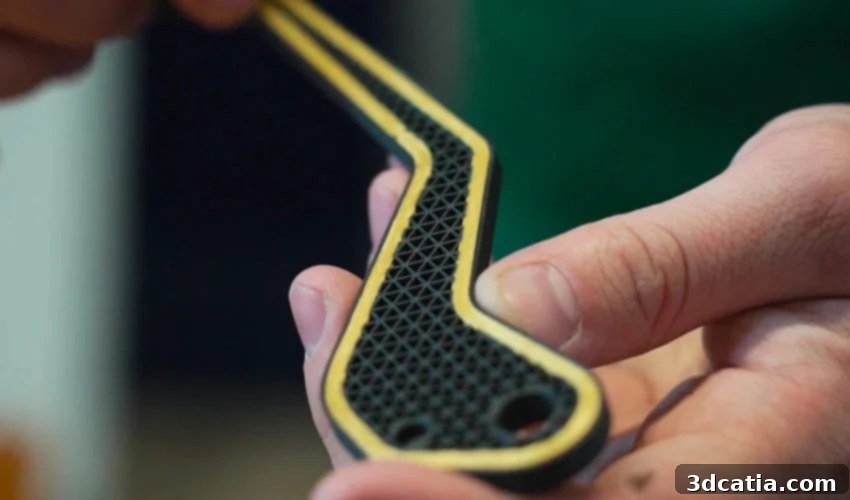
Aramid Fiber (Kevlar) 3D Printing: Unlocking High-Performance Composites in Additive Manufacturing
Aramid fiber, a groundbreaking synthesized polyamide, stands as a testament to material science innovation. Renowned for its extraordinarily high strength and remarkable resistance properties, aramid fiber has revolutionized numerous industries and is increasingly making its mark in the realm of additive manufacturing. Its journey began in 1965 with the pioneering work of chemist Stephanie Kwolek at DuPont. Kwolek, a celebrated figure in polymer research, developed this marvel, eventually leading to DuPont registering the trademark Kevlar® and bringing it to market in 1972. This synthetic plastic, due to its exceptional mechanical characteristics, is consistently ranked among the strongest materials available. Its versatility allows it to be integrated into a wide array of traditional manufacturing processes, and critically, it is now being utilized in 3D printing to produce robust, high-performance final parts. This comprehensive guide delves into the specifics of aramid fiber, particularly its most famous iteration, Kevlar, exploring its unique properties and immense potential within the rapidly evolving additive manufacturing landscape.
Understanding Aramid Fiber: Unrivaled Material Characteristics
At its core, Kevlar is scientifically classified as a synthetic aromatic polyamide. This implies it’s an artificial substance constructed from meticulously interconnected molecules, forming long, stable chains through a process called polymerization. What truly distinguishes aramid fibers, especially Kevlar, is the precise and highly ordered arrangement of these molecular chains. They are aligned in regular, closely interlaced parallel lines, which is the fundamental reason behind their extraordinary strength and resilience. This unique molecular architecture enables Kevlar to exhibit properties that are nothing short of remarkable. To fully appreciate its versatility, it’s essential to understand the primary types of aramid fiber:
- Kevlar 29: This is the basic form of the aramid fiber as initially manufactured. It is characterized by its high tensile strength and relatively low modulus, meaning it is strong but has a good degree of flexibility. Kevlar 29 is predominantly used in applications requiring impact resistance and high strength-to-weight ratios without excessive stiffness. Common uses include reinforcing belts, various fabrics, ropes, cables, and even protective gloves, where its ability to resist cuts and punctures is highly valued.
- Kevlar 49: In contrast, Kevlar 49 is engineered for applications demanding higher stiffness and modulus. It is typically obtained when the aramid fibers are combined with a suitable resin to form a composite material. For effective bonding with the resin, these fibers often require a specialized surface treatment. This type is ideal for structural components in aerospace, marine, and sporting goods industries where rigidity, lightweight properties, and superior fatigue resistance are critical.
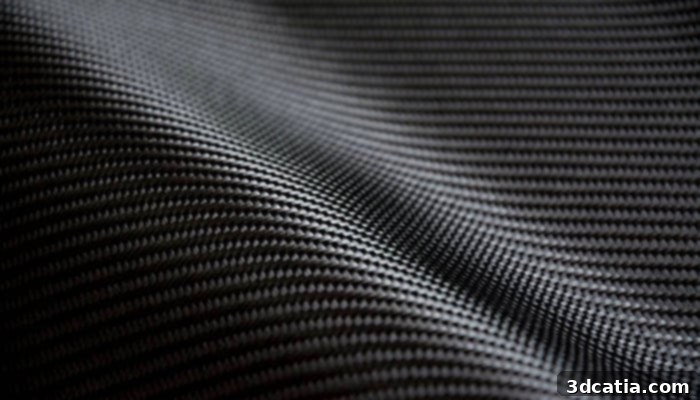
Aramid fiber is characterized by high strength and resistance
The discussion around aramid fiber inevitably highlights its incredible strength, but what exactly underpins this reputation? Kevlar boasts an astounding tensile strength that can be up to ten times greater than that of steel, pound for pound. This phenomenal property is largely attributed to the robust cross-linking of its internal polymer chains via strong hydrogen bonds, which are perfectly extended and aligned. When subjected to stress, these tightly packed molecular chains distribute the load incredibly efficiently.
Beyond sheer tensile strength, Kevlar offers high ballistic resistance, making it a material of choice for protective gear. The fibers are wound so densely and intertwined so intricately that it becomes exceptionally difficult to separate them. Consequently, when a high-velocity projectile, such as a bullet, impacts Kevlar, the fibers do not break; instead, they effectively trap, absorb, and dissipate the projectile’s kinetic energy over a wider area. This energy dispersion prevents penetration and significantly reduces the blunt force trauma. Simultaneously, the perfect alignment of its molecular chains provides an unparalleled defensive barrier against cuts and punctures, making it ideal for cut-resistant fabrics and industrial protective wear.
Furthermore, aramid fiber is intrinsically resistant to heat and flame, a characteristic that broadens its application significantly. It maintains its structural integrity and mechanical properties even at high temperatures, offering protection against thermal hazards up to 425°C. This makes it an ideal choice for fire-resistant clothing, thermal insulation, and components exposed to extreme heat. Its combination of lightweight properties, chemical resistance (to many common solvents, though sensitive to strong acids and bases), and vibration damping capabilities further cement its status as a high-performance material with a diverse range of uses across demanding environments.
Kevlar in 3D Printing: A New Frontier for High-Performance Parts
The integration of Kevlar into plastic-based additive manufacturing represents a significant leap forward in creating parts with superior mechanical properties. As previously highlighted, Kevlar’s remarkable versatility makes it an ideal reinforcement material in 3D printing. Its ability to impart exceptional strength, durability, and a degree of flexibility to printed objects is rapidly expanding its adoption across various segments of the additive manufacturing industry. When quality and performance are paramount, Kevlar’s long, regular molecular structure contributes to very smooth finishes and high resolution in printed layers, ensuring both aesthetic appeal and structural integrity.
Undoubtedly, Fused Deposition Modeling (FDM) 3D printing stands as the most widespread technology for utilizing aramid fiber in its composite filament form. In FDM, Kevlar is often integrated as short, chopped fibers or continuous fibers within a polymer matrix such as Nylon, PETG, or ABS to create composite filaments. While offering immense benefits, 3D printing with Kevlar demands careful consideration of equipment and print settings due to the material’s unique composition. Here are several critical aspects to take into account:
- Equipment Requirements: Kevlar filaments are known for their abrasive nature. Unlike standard plastics, continuous exposure to Kevlar can quickly wear down brass nozzles. Therefore, using hardened steel, ruby, or other abrasion-resistant nozzles is essential to prevent premature wear and maintain print quality. Furthermore, Kevlar has a very high melting temperature, necessitating a 3D printer equipped with an all-metal hotend capable of consistently reaching and maintaining elevated extruder temperatures, often in the range of 240-270°C, depending on the base polymer. A heated print bed and an enclosed build chamber are also highly recommended to manage thermal expansion and prevent warping, ensuring optimal layer adhesion and structural integrity.
- Nozzle Clogging: Due to Kevlar’s long, uninterrupted molecular structure, there is an increased risk of the material fibers getting stuck or accumulating within the nozzle, leading to clogs. To mitigate this, a larger nozzle diameter (typically 0.4mm or wider) is often recommended. Careful calibration of retraction settings is also crucial to prevent heat creep and premature solidification of the material within the hotend, which can exacerbate clogging issues.
- First Layer Adhesion: Kevlar-reinforced filaments are not always known for their easy adhesion to typical print surfaces. Achieving a strong first layer bond is paramount for successful prints. Solutions include utilizing adhesion aids such as specialized glue sticks, Kapton tape, PEI sheets, or even build plates specifically designed for technical materials. Experimenting with bed temperature and ensuring proper bed leveling are also vital steps.
- Moisture Management: Many polymers used as matrices for Kevlar (e.g., Nylon) are hygroscopic, meaning they readily absorb moisture from the air. Moisture absorption can lead to poor print quality, bubbling, stringing, and weakened parts. Storing Kevlar filaments in dry environments and thoroughly drying them before printing (e.g., in a filament dryer) is crucial for optimal results.
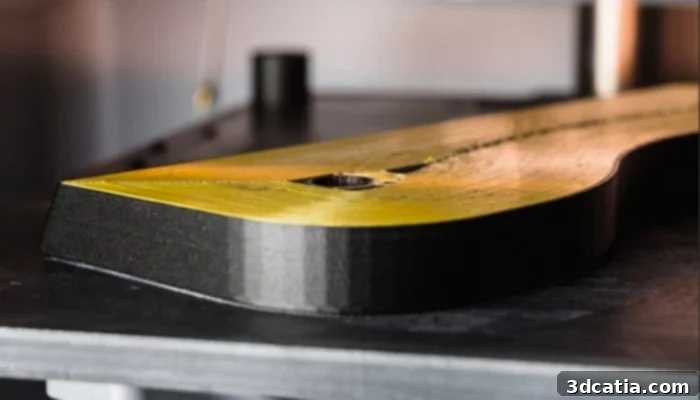
Photo Credits: Markforged
While FDM is the most prevalent method, extrusion manufacturing is not the sole technology compatible with aramid fibers. Emerging research and specialized organizations are actively exploring and employing aramid fiber in resin-based 3D printing, specifically Stereolithography (SLA) or Digital Light Processing (DLP). In these processes, microscopic aramid fibers are meticulously mixed with photopolymer resins to achieve the correct viscosity and uniform dispersion. The challenge lies in preventing fiber settling and ensuring consistent distribution throughout the resin. When successful, the resulting parts exhibit enhanced resistance to wear and tear, superior impact strength, and improved overall durability, opening new avenues for intricate, high-performance components where fine detail and robust properties are both required.
Applications and Economic Considerations of Kevlar 3D Printing
The extraordinary combination of high heat resistance, impressive tensile strength, and unparalleled toughness makes Kevlar an indispensable material for the most demanding applications in 3D printing. With characteristics that rival certain metals but offer the significant advantage of greater lightness, Kevlar-reinforced 3D printed parts are invaluable across a spectrum of critical industries. Its shock-absorbing and anti-abrasion qualities further enhance its appeal, making aramid fiber an excellent choice for the manufacture of industrial machine parts that endure constant friction or impact.
In the defense and security sector, Kevlar’s ballistic resistance is legendary. 3D printed components can be utilized in lightweight protective gear, specialized drone parts, or custom inserts for vehicle armor, offering enhanced protection against projectiles and fragments. The automotive industry benefits from its lightweight yet strong properties for structural components, racing car parts, protective covers, or prototypes that need to withstand rigorous testing. Similarly, the aerospace sector leverages Kevlar for interior panels, unmanned aerial vehicle (UAV) frames, and other structural elements where strength-to-weight ratio is paramount for fuel efficiency and performance. Beyond heavy industry, Kevlar finds its way into consumer goods, enhancing the durability of sports equipment, protective phone cases, or even lightweight yet robust housings for portable electronics. Its application extends to robotics, specialized tools, and machinery components where resistance to wear, vibration, and impact are crucial for longevity and operational efficiency.
From an economic standpoint, Kevlar 3D printing is not an inexpensive endeavor, particularly for individual enthusiasts or small-scale operations. As previously noted, leveraging aramid fiber in additive manufacturing necessitates a suitable 3D printer capable of reliably reaching and maintaining high temperatures, often requiring specialized nozzles and controlled printing environments. This often translates into a significant upfront investment in high-quality, industrial-grade equipment designed to handle advanced composite materials. Beyond the hardware, the material itself carries a premium. While prices vary, a 50-meter spool of Kevlar-reinforced filament can cost approximately $100, which is roughly five times more expensive than standard PLA filament. This higher cost is justified by the superior performance characteristics that Kevlar imparts, but it requires careful cost-benefit analysis.
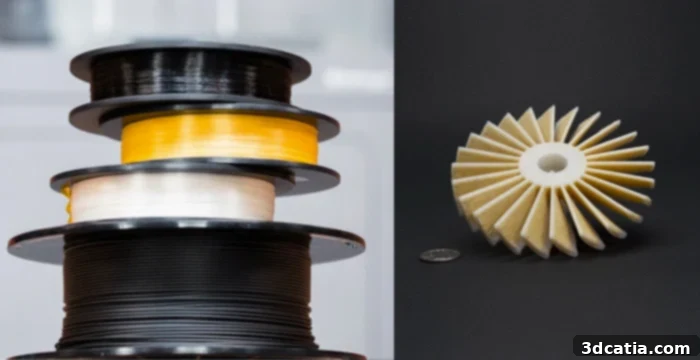
For many individuals and businesses seeking to harness the benefits of Kevlar without the substantial investment in specialized equipment and materials, opting for a professional 3D printing service offers a highly practical and economical solution. These services possess the necessary expertise and advanced machinery to manufacture high-quality, Kevlar-reinforced parts on demand, allowing access to this high-performance material without the prohibitive entry costs. As the technology matures and adoption increases, it is anticipated that both equipment and material costs may become more accessible, further democratizing the power of aramid fiber in additive manufacturing.
The future of Kevlar in 3D printing looks incredibly promising. As research continues into developing even more sophisticated composite filaments and exploring new printing techniques, we can expect to see an even broader range of applications. The ability to create lightweight, exceptionally strong, and durable parts on demand positions Kevlar 3D printing as a transformative technology, set to push the boundaries of design and engineering across myriad industries.
Do you currently utilize Kevlar in your 3D printing projects, or are you considering its potential for high-performance applications? We’d love to hear about your experiences and insights! Share your thoughts in a comment below or engage with us on our LinkedIn, Facebook, and Twitter pages! For the very latest advancements and news in the additive manufacturing world, make sure to sign up for our free weekly newsletter here, delivering all the essential 3D printing updates directly to your inbox. You can also discover a wealth of informative videos and content on our YouTube channel.
*Cover Photo Credits: Mark3D