
Scan the World: Revolutionizing Art and Cultural Heritage Through Open-Source 3D Printing
The intersection of art and technology has never been more dynamic, with 3D printing emerging as a transformative tool for artists, curators, and cultural institutions alike. For several years now, additive manufacturing has empowered creators to push the boundaries of artistic expression, enabling the realization of complex designs and innovative structures that were once unimaginable. Esteemed figures such as the American-Israeli artist Neri Oxman have garnered international acclaim for their pioneering work in 3D printed designs, showcasing the immense potential of this technology within the contemporary art landscape. From the vibrant art scenes in the United States and England to the rich cultural tapestry of South America, a growing number of artists are embracing 3D printing to craft their unique works, fostering a new era of artistic creation.
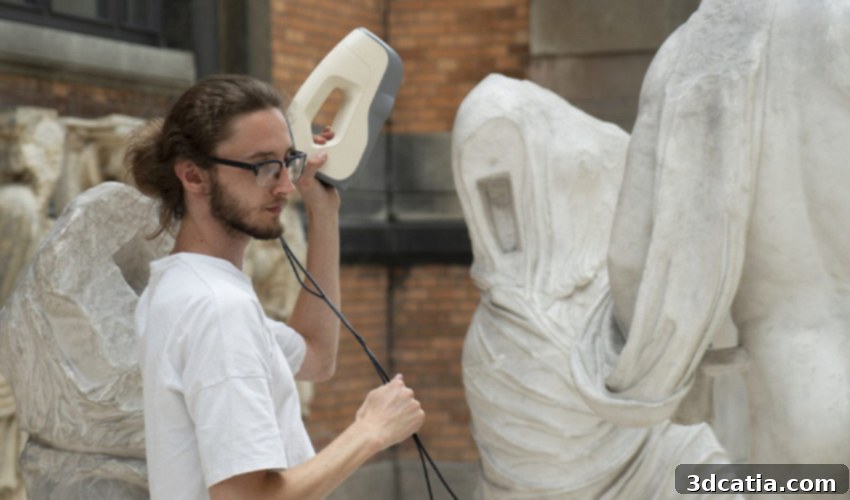
Responding to this burgeoning interest and the inherent possibilities of digital fabrication, a groundbreaking community initiative known as Scan the World was established in London in 2014. This ambitious project aims to democratize access to art and cultural heritage by making high-quality, open-source 3D models of sculptures and other significant cultural artifacts available to the global public. Through the diligent application of various advanced 3D scanning techniques, including photogrammetry and structured light scanning, Scan the World meticulously captures intricate details of masterpieces, transforming physical objects into digital assets that can be easily shared, studied, and reproduced.
Scan the World: Pioneering Open-Source Cultural Heritage Digitization
Scan the World’s core mission is rooted in the belief that cultural heritage should be universally accessible. By creating a vast, free, and open-source library of 3D printable works of art, the initiative is not only preserving these invaluable artifacts in digital form but also empowering individuals worldwide to interact with them in new and meaningful ways. This endeavor transcends geographical and economic barriers, offering an unprecedented opportunity for education, artistic inspiration, and personal engagement with history’s greatest creations. The project began with a bold vision: to build the world’s largest digital archive of cultural artifacts, making them available for anyone with a 3D printer or a passion for art and history.
The technology underpinning Scan the World’s efforts is as fascinating as its mission. Relying on diverse 3D scanning methodologies, the team and its global network of contributors meticulously capture the three-dimensional data of sculptures, busts, and historical objects. Photogrammetry, a technique that involves stitching together multiple photographs taken from various angles, is often employed for its cost-effectiveness and ability to capture intricate textures and colors. For more precise measurements and complex geometries, laser scanning and structured light scanning are utilized, creating highly accurate digital replicas. These digital models are then processed, optimized, and converted into formats like STL, making them ready for 3D printing. This rigorous process ensures that the digital representations are faithful to their physical counterparts, maintaining the artistic integrity and historical value of each piece.
A Landmark Partnership: Scan the World and Google Arts & Culture
In a significant move to expand its reach and further its commitment to art accessibility, Scan the World forged a pivotal partnership with Google Arts & Culture. This online platform is renowned for curating and presenting high-resolution images, videos, and virtual tours from over 2,000 museums, galleries, and cultural institutions worldwide. The collaboration represents a powerful synergy between Scan the World’s open-source 3D model repository and Google Arts & Culture’s extensive digital collection and vast global audience. This strategic alliance is designed to amplify the visibility of 3D printable art, making it easier than ever for the public to discover, download, and bring these cultural treasures into their own homes or workshops using 3D printing technologies.
This partnership offers mutual benefits, significantly enhancing the user experience for art enthusiasts and educators. Google Arts & Culture users gain direct access to a growing library of 3D models, adding another dimension to their exploration of art history. Simultaneously, Scan the World leverages Google’s immense platform to reach millions of potential users, encouraging artists, students, and hobbyists to engage with art on a deeper, more tactile level. The initiative explicitly encourages individuals to 3D print these works themselves, transforming passive viewing into active creation. This democratization of art goes beyond mere appreciation, fostering a global community of makers who can recreate, study, and even reinterpret iconic works, bridging the gap between digital preservation and physical manifestation.
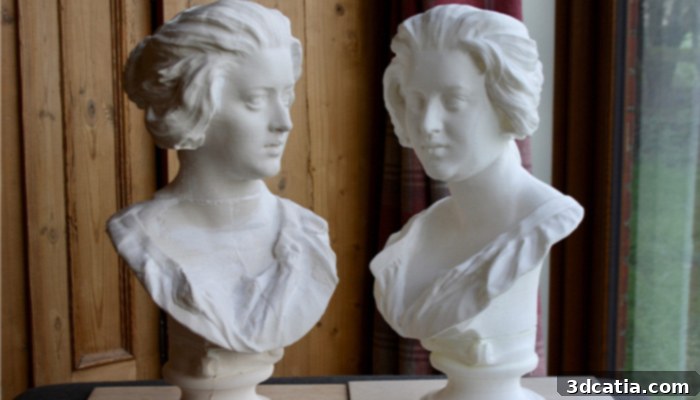
Over 17,000 models are available for free thanks to Scan the World (photo credits: Abbey Ellis)
Empowering Creators: Accessing and Innovating with 3D Models
For those eager to dive into the world of 3D printed art, Scan the World’s extensive collection of 3D models is readily accessible through the MyMiniFactory website, a leading platform for 3D printable designs. Art lovers, students, educators, and makers can easily browse and download these digital files in industry-standard STL format, which is compatible with virtually all desktop and industrial 3D printers. This ease of access significantly lowers the barrier to entry for engaging with cultural heritage, allowing anyone with a 3D printer to bring a miniature version of the Louvre’s Venus de Milo, Michelangelo’s David, or countless other masterpieces into their personal space. This not only serves as a fantastic educational resource but also sparks creativity, inspiring individuals to experiment with different materials, scales, and finishes.
The Scan the World collection is a testament to the power of community and digital collaboration. Starting from humble beginnings, the archive has grown exponentially, now boasting an impressive repository of more than 17,000 unique 3D models, with new additions constantly enriching the database. While the project initially faced challenges in convincing traditional cultural institutions of the value of its approach, a significant shift in perspective has occurred over time. Increasingly, museums, galleries, and heritage organizations worldwide recognize the profound interest and benefits of digitizing their collections and making them available through initiatives like Scan the World. This growing acceptance underscores a broader understanding of how 3D technologies can aid in preservation, research, and public engagement, ensuring these precious artifacts are safeguarded and celebrated for generations to come.
Art and 3D Printing: Shaping Future Collaborations
As the integration of 3D printing within the art world gains increasing traction and widespread popularity, museums and cultural institutions are demonstrating a legitimate and growing interest in exploring its multifaceted applications. Since its inception, Scan the World has successfully cultivated collaborative relationships with over 50 institutions across the globe, and its trajectory of expansion shows no signs of slowing. This burgeoning enthusiasm is particularly evident in the willingness of certain prominent museums, such as the esteemed Victoria and Albert Museum in London, to not only acknowledge but also prominently exhibit 3D printed works. As far back as 2016, the V&A Museum underscored its foresight by inviting Scan the World to participate in its critically acclaimed exhibition, “A World of Fragile Parts,” highlighting the transformative potential of additive manufacturing in preserving and interpreting cultural heritage.
Looking ahead, enthusiasts of both 3D printing and the arts can reasonably anticipate a significant proliferation of these types of innovative initiatives. The current landscape often sees museums employing 3D printing primarily as an invaluable tool for enhancing accessibility, particularly for visually impaired individuals. This was notably demonstrated at Spain’s renowned Prado Museum, which utilized 3D printed tactile replicas to allow visitors with visual impairments to “touch” and experience famous artworks. Similarly, in France’s Grand Est region, the Smart Art consortium has championed the use of 3D printing for cultural inclusion, creating multi-sensory experiences for a diverse audience. While such collaborations are presently somewhat niche, their profound impact on inclusivity and engagement suggests a future where these practices become far more commonplace and integrated into the standard operations of cultural institutions worldwide.
The potential extends beyond accessibility. 3D printing offers unparalleled opportunities for art conservation, allowing for the creation of precise replicas for research or educational handling, minimizing the risk to original artifacts. It also opens avenues for new artistic expressions, enabling contemporary artists to experiment with forms and materials previously impossible. Furthermore, it facilitates virtual exhibitions and digital archives, ensuring that cultural heritage is not only preserved but also dynamically shared and experienced globally. The evolution of 3D scanning and printing technologies, coupled with the open-source philosophy championed by Scan the World, is poised to redefine our interaction with art, making it more personal, more accessible, and profoundly more engaging for everyone.
You can explore and access Scan the World’s extensive collection of 3D models directly on MyMiniFactory by clicking HERE. We invite you to share your thoughts on the revolutionary use of 3D printing in art and cultural preservation. Let us know what you think in a comment below, or join the conversation on our Facebook, Twitter, andLinkedIn pages! Don’t miss out on the latest advancements and news in additive manufacturing – sign up for our free weeklyNewsletter here to get the freshest 3D printing insights delivered straight to your inbox!