
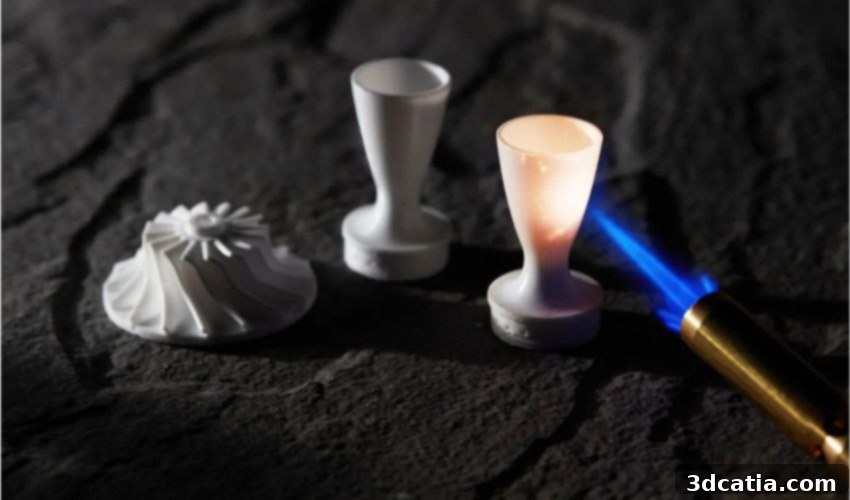
Alumina 3D Printing: Unlocking High-Performance Ceramic Applications
Alumina, scientifically known as aluminum oxide (Al2O3), stands as a cornerstone in the world of advanced materials. Naturally occurring in bauxite – a rock rich in aluminum and iron oxides – it is typically refined through the Bayer process. This industrial method purifies bauxite to extract a fine, white alumina powder, which can then be further processed, often via electrolysis, to yield metallic aluminum. However, beyond its primary role in aluminum production, alumina itself is a remarkable technical ceramic, celebrated for its exceptional chemical, thermal, and electrical properties. Its versatility makes it one of the most widely adopted oxidized ceramics, now gaining significant traction within the rapidly evolving field of additive manufacturing. This article delves into the unique characteristics of alumina and explores the various 3D printing processes that are transforming its potential applications.
The history of alumina dates back to 1754 when German chemist Andreas Sigismund Marggraf successfully isolated it from alum. Decades later, the industrial-scale Bayer process revolutionized its extraction from bauxite ore. Today, while approximately 90% of aluminum oxide serves as a precursor for aluminum metal, its inherent properties as a technical ceramic are incredibly valuable. Alumina boasts outstanding resistance to high temperatures and thermal shock, with a formidable melting point exceeding 2,000°C. This extreme thermal stability makes it indispensable in environments where other materials would fail. Furthermore, it exhibits excellent dimensional stability, superb wear resistance, and superior electrical insulation capabilities. Its hardness is comparable to that of tungsten carbide, placing it among the hardest known materials, a trait that contributes significantly to its durability and longevity in demanding applications.
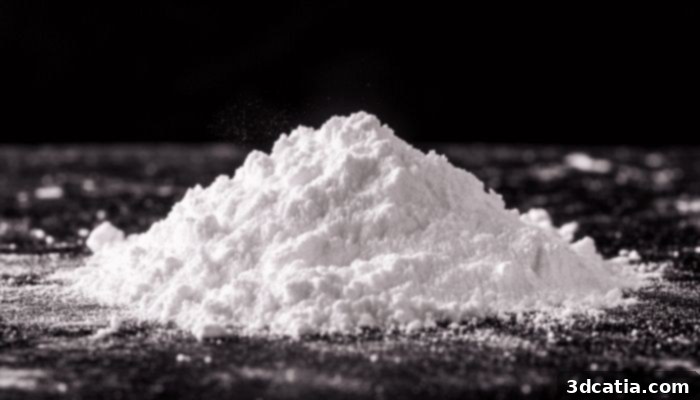
Once extracted, alumina is a white powder, ready for various industrial processes (Photo Credits: Itaforte)
Key Properties Driving Alumina’s Demand
To truly appreciate alumina’s significance in advanced manufacturing, it’s essential to understand its core material properties in detail. These characteristics are what make it suitable for some of the most challenging industrial applications:
- Exceptional Thermal Stability: With a melting point above 2,000°C, alumina components can withstand extreme heat without deforming or degrading. This resistance extends to thermal shock, meaning it can endure rapid temperature changes without cracking or fracturing. Its low thermal conductivity also makes it an excellent insulator in high-temperature environments, crucial for components in furnaces, kilns, and aerospace applications.
- Superior Mechanical Strength: Alumina possesses high compressive strength and hardness, making it highly resistant to wear, abrasion, and erosion. Its hardness, often measured on the Mohs scale, is significantly high, rivalling that of diamond in some respects when considering its use in abrasive tools and wear plates. This mechanical robustness ensures long service life for parts subjected to friction or impact.
- Excellent Electrical Insulation: As a dielectric material, alumina is an outstanding electrical insulator. It exhibits high dielectric strength and low dielectric loss, making it ideal for electrical and electronic components where isolation of electrical currents is paramount. This includes substrates for integrated circuits, spark plug insulators, and various high-voltage components.
- High Chemical Inertness: Alumina is largely impervious to attack from many aggressive chemicals, acids, and alkalis, even at elevated temperatures. This chemical resistance ensures its integrity and performance in corrosive industrial environments, making it suitable for chemical processing equipment, crucibles, and catalyst supports.
- Outstanding Dimensional Stability: Components made from alumina maintain their precise shape and dimensions even under varying thermal or mechanical stresses. This property is vital for applications requiring high precision and tight tolerances, such as in scientific instruments and critical engine parts.
These combined properties make alumina an unparalleled material choice for engineers and manufacturers seeking solutions for extreme conditions, where performance, reliability, and longevity are non-negotiable.
Alumina in Additive Manufacturing: Revolutionizing Ceramic Production
The integration of aluminum oxide into additive manufacturing processes marks a significant leap forward in creating highly specialized ceramic components. This powdery material can be processed using several 3D printing techniques, each offering distinct advantages and requiring specific post-processing steps to achieve the desired ceramic properties. The ability to print alumina opens up new possibilities for design complexity, material optimization, and rapid prototyping.
Compatible 3D Printing Technologies:
-
Fused Deposition Modeling (FDM) with Ceramic Filaments: In FDM, alumina powder is typically encapsulated within a thermoplastic binder to form a filament. This composite filament is then extruded layer-by-layer by a 3D printer, building the desired green part. After printing, the part undergoes a crucial two-step post-processing regime:
- Debinding: This process involves removing the polymeric binder through thermal or chemical means, leaving behind a fragile, porous ceramic structure.
- Sintering: The debound part is then heated to a high temperature (close to alumina’s melting point) in a controlled atmosphere. Sintering causes the ceramic particles to fuse, densify, and shrink, transforming the porous structure into a solid, fully dense ceramic component with robust mechanical properties.
This method is increasingly accessible and allows for relatively straightforward creation of complex geometries.
-
Resin Additive Manufacturing (SLA/DLP/LCD): Resin-based 3D printing for ceramics involves suspending fine alumina particles uniformly within a photopolymer resin. The printer then uses a light source (laser or projector) to selectively cure the resin, layer by layer, forming the green part. Similar to FDM, significant post-processing is required:
- Washing and Curing: Excess resin is removed, and the part undergoes a secondary UV cure to fully solidify the binder.
- Debinding and Sintering: These steps are identical to those in FDM, removing the polymeric binder and then densifying the ceramic powder to achieve the final, high-performance alumina part.
This approach excels at producing parts with exceptionally fine details, smooth surface finishes, and high accuracy, often preferred for intricate designs.
-
Binder Jetting: Binder jetting is particularly well-suited for ceramics, including alumina, due to its ability to print large parts efficiently. In this process, a liquid binding agent is selectively jetted onto a bed of alumina powder, fusing particles together layer by layer. After printing, the “green” part is cured to strengthen the binder. For functional ceramic parts, further post-processing is essential:
- Infiltration or Sintering: The porous part can be infiltrated with another material (e.g., a ceramic slurry or metal) to enhance density and strength, or it can be directly sintered at high temperatures to achieve a dense ceramic component.
Binder jetting offers advantages in terms of build volume, material variety, and the ability to produce parts with complex internal structures, often at a lower cost per part compared to other methods.
It is crucial to note that the need for extensive post-processing—specifically debinding and sintering—introduces additional steps, which can prolong the manufacturing timeline and impose specific production constraints such as furnace capacity and precise temperature control. However, this challenge is actively being addressed by market innovators who are continuously developing and automating these post-processing stages, striving for more streamlined and efficient ceramic 3D printing workflows.
Leading Players in Alumina 3D Printing:
The market for ceramic 3D printing is expanding rapidly, with several companies leading the charge in developing alumina-compatible solutions:
- 3D Ceram: A pioneer in ceramic additive manufacturing, offering specialized SLA machines and materials, including alumina, for high-performance industrial applications.
- Formlabs: Known for its accessible and high-resolution resin 3D printers, Formlabs has developed advanced ceramic resins, such as Alumina 4N, making ceramic 3D printing more attainable for a wider range of users.
- Nanoe: Specializes in innovative ceramic materials, including high-quality alumina filaments for FDM, enabling easier adoption of ceramic additive manufacturing.
- Concr3de: Offers robust industrial solutions based on binder jetting technology, providing systems capable of processing various ceramic powders, including alumina, for large-scale production.
While these are prominent examples, the market is dynamic, with many other suppliers and researchers continually pushing the boundaries of what’s possible with alumina in additive manufacturing.
Transformative Applications of 3D Printed Alumina
The unique combination of properties offered by alumina, enhanced by the design freedom of additive manufacturing, makes it highly attractive to industries demanding peak performance in extreme conditions. Sectors such as aerospace, energy, electronics, and industrial manufacturing are finding innovative ways to leverage 3D printed alumina components.
Key Application Areas:
-
Aerospace and Energy Sectors: These industries frequently require materials that can withstand incredibly high temperatures, aggressive chemicals, and significant mechanical stress. Alumina is ideal for:
- Connector Housings and Insulators: Ensuring electrical integrity and protection in high-temperature environments.
- Parts for Electrical Assemblies: Critical components in power generation and distribution systems that demand excellent dielectric properties and thermal stability.
- Turbine Components: Prototypes or functional parts for gas turbines and jet engines where heat resistance and wear performance are crucial.
- Thermal Barriers and Linings: Protecting sensitive equipment from extreme heat in furnaces, reactors, and energy conversion systems.
-
Industrial Wear Parts and Components: Alumina’s exceptional hardness and wear resistance make it perfect for:
- Nozzles and Guides: For abrasive fluid handling or material extrusion processes.
- Crucibles and Furnace Furniture: For high-temperature processing of metals and other materials.
- Bearings and Seals: In applications where lubrication is difficult or conventional materials fail due to friction and heat.
- Catalyst Supports: Due to its chemical inertness and high surface area potential when optimally structured.
-
Electronics and Semiconductor Industry: Its electrical insulation and thermal management properties are vital for:
- Substrates for Integrated Circuits: Providing a stable, electrically insulating base for electronic components.
- Heat Sinks: Where thermal management is critical, allowing efficient heat dissipation without electrical conductivity.
- Sensor Housings: Protecting delicate sensors in harsh environments while maintaining electrical isolation.
-
Advanced Foundry Applications: Additive manufacturing of alumina is revolutionizing the production of complex foundry cores. By leveraging 3D printing, manufacturers can:
- Reduce Lead Times and Costs: Eliminating the need for traditional tooling, thereby speeding up prototyping and short-run production.
- Design Intricate Internal Channels: Create highly complex internal geometries within molds and cores, such as convoluted cooling channels or optimized fluid/air flow paths, which are virtually impossible to achieve with conventional manufacturing methods. These designs significantly improve casting quality, efficiency, and part performance.
- Produce Lightweight and Optimized Parts: The ability to design with internal lattice structures or hollow sections leads to lighter, yet equally robust, components.
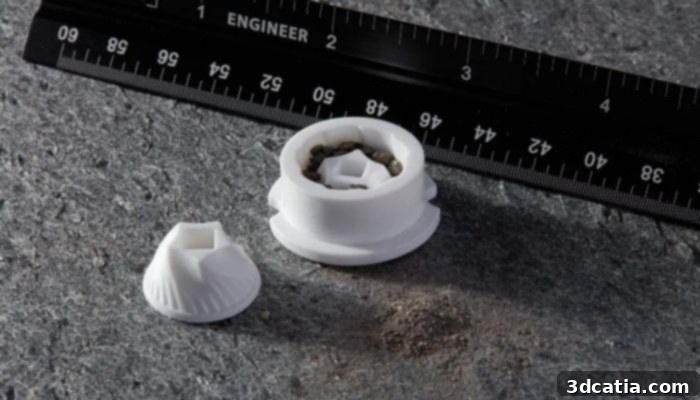
Ceramic grinding disc and milling cutter designed using Formlabs’ Alumina 4N 3D printing resin, showcasing intricate geometries and high-performance capabilities (Photo Credits: Formlabs).
In essence, additive manufacturing empowers industries to design and produce tough, durable, and highly complex alumina parts with unparalleled efficiency and customization. From bespoke prototypes to functionally integrated final components, 3D printed alumina is pushing the boundaries of material science and engineering, promising a future of higher performance and more innovative solutions across a multitude of critical sectors.
What are your thoughts on the advancements in alumina 3D printing and its potential impact? We invite you to share your insights in a comment below or connect with us on our LinkedIn or Facebook pages! Don’t forget to sign up for our free weekly Newsletter to receive the latest 3D printing news directly in your inbox. You can also explore all our informative videos on our YouTube channel.
*Cover Photo Credits: Formlabs