
Innovating the Future: Vote for the Most Impactful 3D Printing Startup of 2020!
The dynamic world of additive manufacturing continues to be reshaped by groundbreaking innovation, largely driven by a vibrant ecosystem of startups. These young companies, armed with innovative business ideas and cutting-edge technologies, are essential catalysts for digitalization, significantly enhancing competitiveness and accelerating industry-wide advancements. With the 3D printing market still exhibiting immense growth potential, the contributions of these entrepreneurial ventures are paramount to its ongoing development and expansion. Recognizing this crucial role, we have dedicated ourselves to spotlighting a new leader in additive manufacturing innovation each month throughout the year.
As the year draws to a close, it’s time to celebrate these pioneers and collectively elect the most innovative 3D printing startup of 2020. This is your opportunity to participate in shaping the future of additive manufacturing! We are officially launching our annual competition, inviting you to cast your vote for the startup you believe most deserves the prestigious title of Startup of the Year. The voting period is now open and will conclude on January 4th. Don’t miss your chance to make a difference – you can vote HERE for your chosen innovator. We will proudly announce the grand winner on January 5th! To help you make an informed decision, below you will find a comprehensive summary of the 12 extraordinary startups we have featured throughout the year, each pushing the boundaries of what’s possible in 3D printing.
January: AdditiveLab – Advanced Simulation for Additive Manufacturing
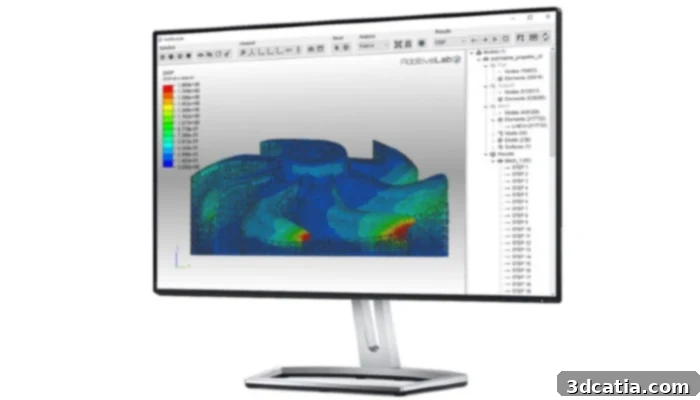
Kicking off our year of innovation was the Belgian startup AdditiveLab, which introduced a powerful simulation software specifically designed for additive manufacturing processes. This sophisticated tool empowers customers to create highly accurate and specific models for AM process simulation, offering critical insights into various aspects of production. Users can gain a clear understanding of expected material consumption, machine costs, and the precise duration of the manufacturing process before any physical production begins. This foresight is particularly valuable for metal 3D printing, where raw materials and production processes are inherently more expensive compared to those involving polymers. AdditiveLab offers two distinct versions to cater to diverse user needs: AdditiveLab RESEARCH and AdditiveLab LITE. AdditiveLab RESEARCH is tailored for seasoned simulation engineers, providing extensive access to in-depth simulation capabilities and advanced functionalities. Conversely, AdditiveLab LITE is developed with ease of use in mind, making it an ideal, cost-effective option for engineers who may not have extensive prior simulation experience but still require robust analytical tools for their additive manufacturing projects. Their focus on pre-production optimization makes them a vital player in reducing waste and increasing efficiency in AM.
February: 3DQue Systems – Revolutionizing Continuous 3D Production
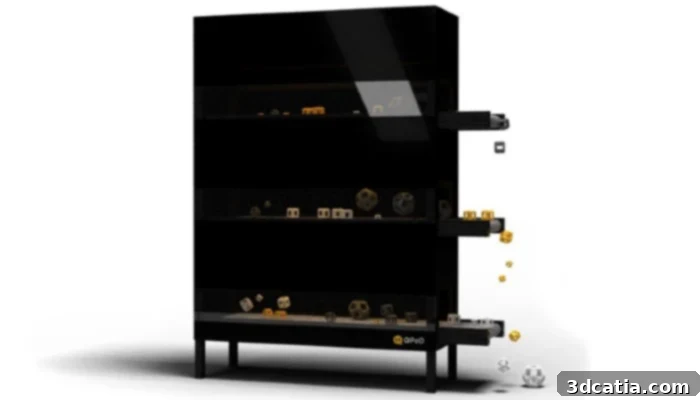
In February, we highlighted the Canadian-based startup 3DQue Systems, which developed an innovative system engineered for continuous, automated 3D production. Their solution comprises the QPod 3D printer and its integrated QSuite software, creating a seamless workflow for in-house manufacturing. This system is designed to produce plastic parts with minimal or no maintenance, fundamentally transforming how FDM technology is perceived and utilized. For instance, it allows for on-demand production of parts crafted from a wide range of popular materials including PLA, ABS, TPU, PETG, and Nylon. According to 3DQue Systems, their technology can dramatically reduce lead times by an impressive 95% – shrinking manufacturing cycles from months to mere hours. Furthermore, it enables an 85% reduction in inventory, leading to significant cost savings across the board. With this pioneering solution, 3DQue Systems aims to unequivocally demonstrate that FDM printers are not just for prototyping but are highly capable of manufacturing finished parts on an industrial scale, earning them our Startup of the Month for February 2020.
March: 6K – Sustainable Advanced Materials for Additive Manufacturing
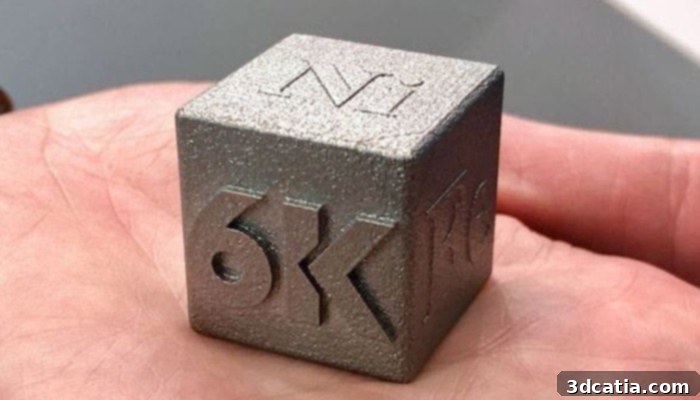
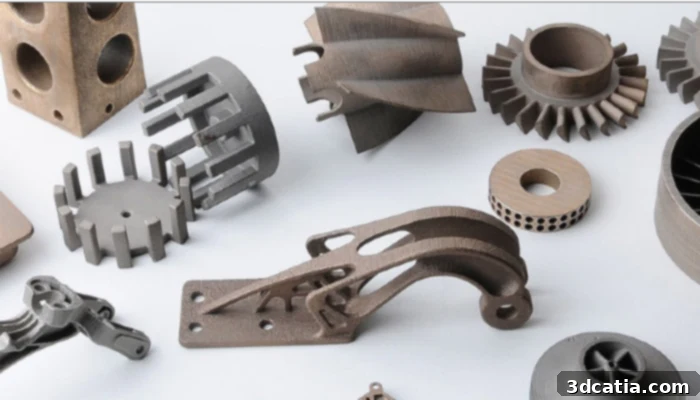
March brought us to 6K, an American company that has carved out a niche in the production of advanced powder materials, not just for additive manufacturing but for a broad spectrum of production processes. The core of 6K’s innovation lies in its proprietary microwave plasma system, aptly named UniMelt. This revolutionary system is capable of converting a diverse array of materials – including ceramics, various metals, and plastics – into exceptionally high-quality powders at extreme temperatures of 6,000 degrees Celsius. This capability unlocks new possibilities, such as the creation of unique, high-performance alloys previously challenging to achieve. Beyond its technical prowess, 6K’s solution is a standout in terms of sustainability. The UniMelt system can effectively transform certified machine scrap, previously used powder, and other potential raw material sources back into high-grade powder, dramatically reducing waste and promoting a circular economy within the manufacturing sector. This dual focus on advanced material creation and environmental responsibility positions 6K as a true innovator.
April: MakerOS – Streamlining Digital Manufacturing Services
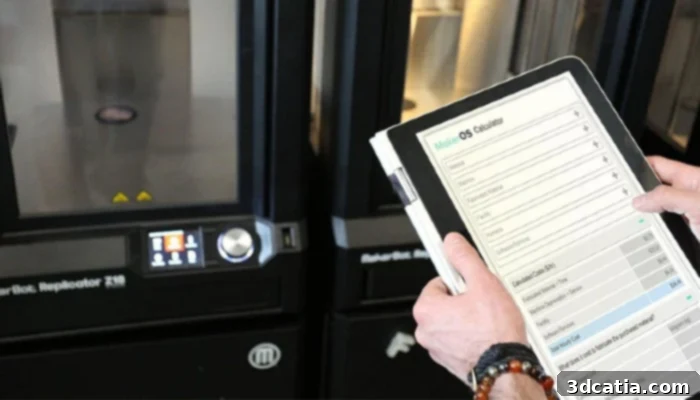
Our Startup of the Month in April 2020 was MakerOS, a company that has developed an invaluable online software platform specifically tailored for businesses offering 3D printing and other digital manufacturing services. The MakerOS platform acts as a central, cloud-based hub that profoundly simplifies and streamlines the entire workflow for these companies. It facilitates seamless communication between clients and service providers, enables easy project submission and tracking, provides real-time updates on manufacturing progress, and offers centralized access to all necessary files and invoices. This comprehensive approach is designed to empower companies to efficiently control their entire supply chain remotely and effectively manage their operational workflow from start to finish. In an era marked by the anticipated exponential growth of the 3D printing market and a critical rethinking of global supply chains – particularly underscored by the recent global pandemic – MakerOS offers an incredibly attractive and timely solution. It helps businesses optimize efficiency, foster collaboration, and maintain agility in a rapidly evolving manufacturing landscape.
May: Marklix – Empowering Repair Through On-Demand 3D Printing
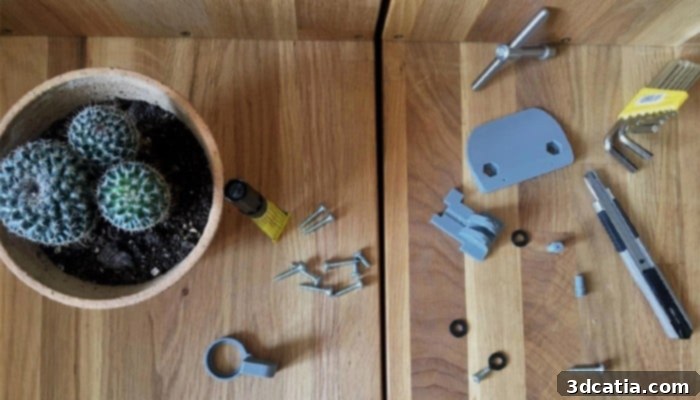
May introduced us to Marklix, a startup with a strong vision for sustainability through accessible repair. 3D printing’s inherent ability to facilitate on-demand manufacturing at largely consistent and predictable costs makes it an ideal tool for small-scale and specialized production. Recognizing this potential, Marklix strategically adopted additive manufacturing as its primary production method. Their core mission is to produce spare parts at a low cost, thereby encouraging more consumers to repair their broken items rather than resorting to purchasing new ones – a significant step towards reducing waste and promoting a more sustainable consumption model. To achieve this, the French company developed an intuitive online platform. This platform allows users to easily search for the specific spare parts they need. Once identified, these parts can then be manufactured precisely using a network of 3D printing services. By making repair economically viable and logistically simple, Marklix became our well-deserved Startup of the Month in May 2020, demonstrating how 3D printing can drive environmental responsibility and extend product lifecycles.
June: dp polar – Industrial-Scale Additive Manufacturing with a Rotating Platform
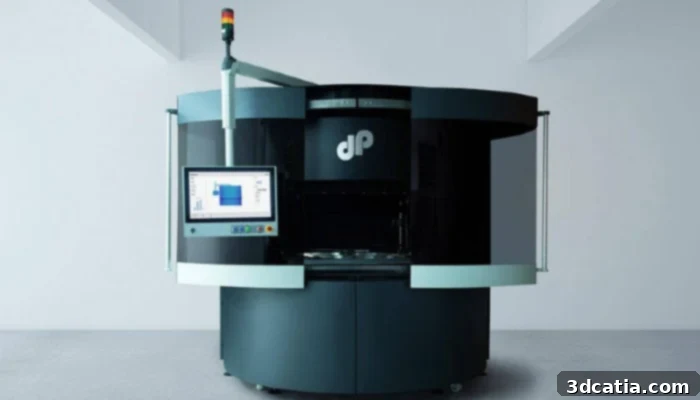
In June 2020, the German company dp polar stood out as our Startup of the Month for its groundbreaking innovation in industrial additive manufacturing. dp polar developed the world’s first AM system featuring a continuously rotating printing platform, known as the AMpolar® i2. This revolutionary design fundamentally rethinks the traditional 3D printing process: instead of the print head moving across a stationary build plate, it is the printing area itself that rotates continuously. This ingenious approach is said to enable the production of high-precision components up to 20 times faster, facilitating larger quantities and boasting an impressive build volume of approximately 700 liters. Furthermore, the system is designed to process different customer-specific materials in a single pass, offering unprecedented flexibility and efficiency for complex parts. With its patented system, dp polar is poised to bridge the gap from rapid prototyping to true industrial series production, paving the way for high-volume, cost-effective additive manufacturing in various industries.
July: CASTOR – Intelligent Software for Optimized 3D Printing Decisions
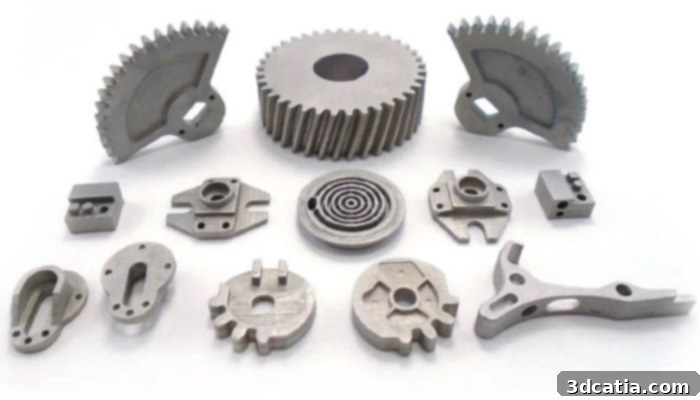
Hailing from Israel, CASTOR made waves in July with its intelligent software solution designed to significantly reduce 3D printing lead times and production costs for manufacturing companies. The core functionality of CASTOR’s 3D printing software involves performing a comprehensive technical and economic analysis of CAD files. This analysis provides detailed and actionable feedback on specific parts, recommending the most appropriate additive manufacturing method, the ideal 3D printer, and the most suitable material for the application. The software goes beyond simple recommendations by incorporating crucial requirements for the final part, performing intricate optimizations, and providing transparent information on projected costs and estimated delivery times. Once the optimal manufacturing strategy is determined, CASTOR then expertly connects the manufacturer of the part with a vetted and suitable 3D printing service provider. The solution’s intuitive interface makes it accessible for both beginners venturing into additive manufacturing and experienced experts seeking to automate and refine their part control processes, thereby democratizing access to efficient 3D printing.
August: Azul 3D – High-Speed, Large-Format Resin 3D Printing
The American company Azul 3D was our Startup of the Month in August 2020, recognized for addressing key limitations in traditional resin 3D printing. Conventional resin printers are often hampered by relatively low printing speeds and constraints on the size of their printing rollers, restricting their output. Azul 3D tackled these challenges head-on by developing their revolutionary High-Area Rapid Printing (HARP) technology. Their stereolithography-based large-format 3D printer, powered by HARP, is capable of printing parts as large as an adult within a remarkably short timeframe, sometimes as little as two hours. Azul 3D emphasizes that “large format” with HARP technology refers not only to the ability to produce physically large components but also to efficiently manufacture medium-sized parts in high volumes or bulk. This breakthrough significantly expands the applications of resin 3D printing, moving it beyond small, intricate prototypes to industrial-scale production of substantial or numerous components, marking a major leap in resin-based additive manufacturing capabilities.
September: Metallum3D – Advancing Metal Sintering with Microwaves
Metallum3D, our September spotlight, specializes in sinter-based additive manufacturing with metal, a crucial step in producing strong, dense metal parts. The company has introduced a significant advancement by developing a novel microwave sintering process aimed at improving the efficiency and quality of traditional sintering. This innovative process leverages non-resonant cross-polarized slotted waveguides in conjunction with specialized granular susceptor materials. This unique combination delivers remarkable improvements: the heating rate is accelerated by an impressive 5 to 10 times, and the overall sintering time is reduced by up to 80% compared to conventional methods. Crucially, the process ensures an exceptionally even distribution of heat throughout the material, which is vital for achieving uniform part properties and structural integrity. With its cutting-edge microwave sintering process, Metallum3D is working towards enabling the widespread commercial adoption of this technology on a large scale, making metal additive manufacturing faster, more efficient, and more consistent.
October: Voltera – Microprinting for Electronics Manufacturing
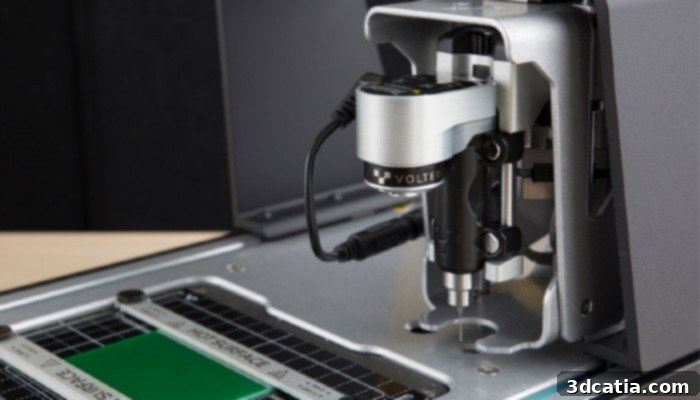
October brought us Voltera, a company that has successfully integrated microprinting into the electrical industry, carving a significant niche for additive manufacturing in electronics. Voltera’s flagship product, the V-One machine, enables the 3D printing of functional electronic circuits directly onto substrates. The printing process is remarkably streamlined: it begins by opening industry-standard Gerber files (the common layout format for printed circuit boards) within Voltera’s CAM software. This software then intelligently converts the input files into precise toolpaths for the machine. Following an automated self-calibration, the V-One is ready to commence the creation of the circuit board. While the V-One is primarily aimed at electronics professionals and engineers seeking rapid prototyping and iterative design, its intuitive design and ease of use also make it an excellent tool for educational purposes in universities and schools, fostering the next generation of electronics innovators. By revolutionizing the prototyping and small-batch production of circuit boards, Voltera has firmly established itself as a key 3D startup impacting the electronics sector, earning our recognition in October 2020.
November: Aeditive – Digitizing Construction with 3D Concrete Printing
Founded in 2019 and based near Hamburg in Norderstedt, Germany, Aeditive emerged as a high-tech startup with an ambitious goal: to digitize and transform the construction industry through advanced robotic printing solutions. Specializing in 3D concrete printing, Aeditive developed the Concrete Aeditor, an innovative concrete printer that utilizes a sophisticated shotcrete process. This system is capable of producing concrete parts with impressive maximum dimensions of 11x4x4 meters directly on a steel pallet. The process involves a highly automated dual-robot system: one robot precisely applies the concrete layer by layer, while a second robot performs finishing touches on surfaces, ensuring high quality and precision. Through this cutting-edge approach, Aeditive aims to provide its customers with an unparalleled level of automation in concrete part production. Concurrently, by optimizing material usage and reducing waste inherent in traditional construction, they are also committed to delivering more sustainable products, contributing significantly to a greener future for the building sector.
December: iFactory3D – Continuous Mass Production with Conveyor Belt 3D Printing
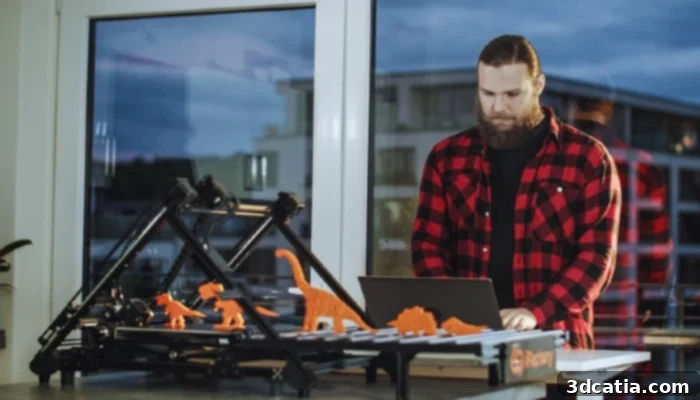
Our final spotlight for 2020 shone on iFactory3D, a German startup that introduced a revolutionary FDM printer featuring an integrated assembly line as its build platform. This innovative machine, aptly named iFactoryOne, is engineered to enable the continuous mass production of parts of virtually any length without interruptions. This unique conveyor belt system eliminates the traditional build volume limitations of FDM printers, allowing for truly infinite Z-axis production. The iFactoryOne is designed for broad accessibility, making it suitable for a diverse range of users including designers, engineers, students, entrepreneurs, healthcare providers, and the education sector, especially with its competitive price point of under $1,000. Further enhancing its appeal, iFactory3D has equipped this 3D printer with advanced capabilities for autonomous operation, negating the need for a constant machine operator, and integrated robust remote control functionalities. In essence, iFactory3D automates the entire FDM printing process, making high-volume, continuous production both accessible and highly efficient, thereby redefining the possibilities of FDM technology for various applications.
Having reviewed these remarkable innovators, the power to choose the ultimate champion of additive manufacturing innovation now rests in your hands. Which 3D startup impressed you the most with its vision, technology, and impact? We invite you to make your voice heard and participate in our annual poll. You can confidently vote HERE for the 3D startup that you believe is most deserving of the coveted title of Startup of the Year. Your vote truly celebrates the incredible strides being made in this dynamic industry.
If you have further insights, comments, or additional thoughts to share about these startups or the wider 3D printing landscape, please don’t hesitate to let us know in a comment below. We also encourage you to engage with us and our vibrant community on our Facebook and Twitter pages! For those who want to stay at the forefront of additive manufacturing news, don’t forget to sign up for our free weekly Newsletter, ensuring all the latest developments in 3D printing are delivered straight to your inbox. Thank you for being a part of this exciting journey of innovation!