
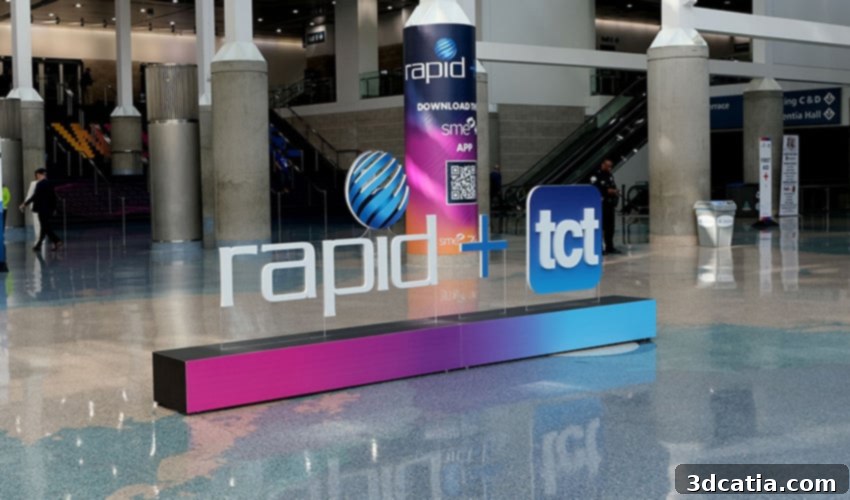
RAPID + TCT 2024 Recap: Unveiling Innovation and Charting the Future of Additive Manufacturing
RAPID + TCT 2024, the premier event for additive manufacturing and industrial 3D printing, successfully concluded its highly anticipated gathering in sunny Los Angeles, California. Held from June 25th to 27th, the event brought together thousands of industry professionals, innovators, and enthusiasts, showcasing groundbreaking technologies and fostering critical discussions about the future of the sector. Attendees were treated to a host of new and engaging features, including the insightful Executive Perspective keynote discussions with key decision-makers in additive manufacturing and the spectacular Hollywood Showcase. As Bob Willig of SME aptly observed on the opening day, “Where else can you be with thousands of people with a common love of and connection to additive manufacturing?” This sentiment perfectly captured the vibrant, collaborative atmosphere that permeated the entire event.
Throughout RAPID + TCT, several overarching trends that have been steadily gaining momentum in recent years were prominently on display. Sustainability, for instance, continues to be a paramount concern and an incredibly important topic for the industry. This focus is hardly surprising, given additive manufacturing’s significant potential to drive greener production processes, reduce waste, and optimize material usage across various applications. The industry is increasingly recognizing its role in environmental stewardship, pushing for innovations that align with eco-conscious goals.
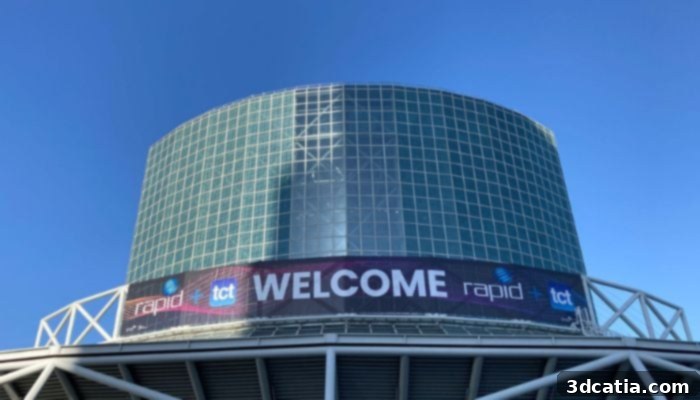
The sign on the Los Angeles Convention Center welcoming attendees to RAPID + TCT 2024
While a certain degree of pessimism, stemming from the economic uncertainties and market shifts of 2023, was perceptible, an undeniable sense of optimism also shone through. Despite doubts and challenges, most manufacturers demonstrated an unwavering commitment to innovation, continuously expanding the universe of 3D printing capabilities. This resilience highlights the industry’s dynamic nature and its determination to push boundaries, developing advanced solutions that defy skepticism and pave the way for future growth.
So, beyond these broad trends, what were the specific new developments? What exactly are the key takeaways and critical insights from RAPID + TCT 2024? What did you miss if you weren’t there? Join us as we delve deeper into our comprehensive recap below, exploring the most impactful discussions, presentations, and exhibits that defined this year’s event.
Executive Perspectives: Industry Leaders Chart the Course for Additive Manufacturing’s Future at RAPID + TCT 2024
One of the highlights of RAPID + TCT 2024 was undoubtedly the Executive Perspectives Keynote series. These daily sessions offered invaluable insights directly from the individuals at the helm of major additive manufacturing companies, those making the most pivotal decisions shaping the industry’s trajectory. Held each morning, these talks brought together prominent leaders to candidly discuss their views on the current state and future direction of the industry. From the outset, it was clear that these executives had compelling perspectives to share, igniting thoughtful dialogue among attendees.
The first highly anticipated keynote panel featured the CEOs of Stratasys, 3D Systems, and Nano Dimension, alongside representatives from EOS and Nikon SLM Solutions. Many will recall the significant industry drama last year surrounding merger discussions involving these companies, which ultimately did not materialize. Despite these prior events, the topic of market consolidation has not entirely faded, even resurfacing briefly earlier this year, making this panel particularly intriguing.
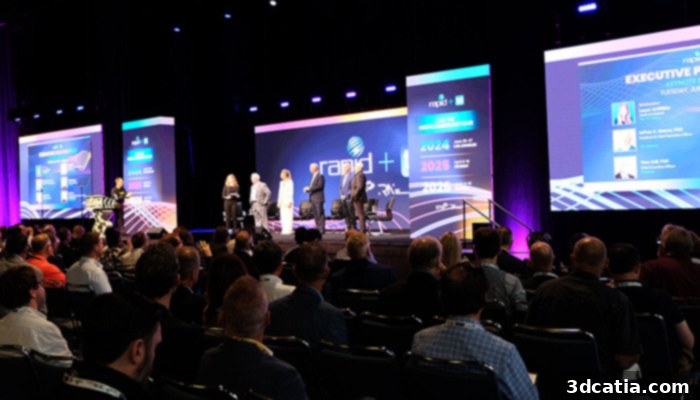
The Executive Perspectives Keynote series brought together leaders in additive manufacturing to discuss critical industry topics.
This panel certainly lived up to expectations. Yoav Stern, CEO of Nano Dimension, made it unequivocally clear that his ambition to merge with Stratasys remained a strong objective. When addressing how to ensure the industry’s continued growth, he consistently advocated for a strategy of consolidation, drawing parallels to the formative years of aerospace giants like Boeing as a potential roadmap for the additive manufacturing sector’s future. His vision underscored the belief that larger, more integrated entities could drive greater innovation and stability.
Indeed, the themes of industry growth and long-term endurance were central, with each executive offering a distinct viewpoint. Marie Langer from EOS emphasized the core priorities of her powder bed fusion solution provider, specifically highlighting the critical importance of environmental responsibility and sustainable practices. She further noted that companies committed to investing in their own long-term development, even if it meant short-to-medium-term reductions in profitability, would be increasingly crucial for the industry’s health and evolution. This perspective underscored a commitment to strategic, rather than purely tactical, growth.
Charlie Grace from Nikon SLM Solutions expressed strong optimism regarding the future of metal additive manufacturing, a sentiment widely echoed by the impressive number of metal AM manufacturers exhibiting on the show floor this year. This contrasted slightly with Dr. Yoav Zeif from Stratasys, who urged a more cautious “stay the course” approach, focusing on disciplined execution amidst market fluctuations. These varying philosophies showcased the diverse strategies employed by leading companies in a dynamic market.
The second Executive Perspective keynote continued this high-level discourse, featuring another esteemed group of industry figures. This included Avi Reichtental of Nexa3D, Savi Baveja of HP, Fried Vancrean of Materialise, Nils Niemeyer from DMG Mori, and Shai Terem from Markforged. The series concluded on the third day with an equally insightful discussion led by Alain Dupont from Colibrium Additive, Maxim Lobovsky from Formlabs, Ric Fulop from Desktop Metal, Michelle Sidwell from Velo3D, and Victor Roman from ARBURGadditive. Each panel offered a unique lens through which to view the challenges and opportunities facing the additive manufacturing landscape.
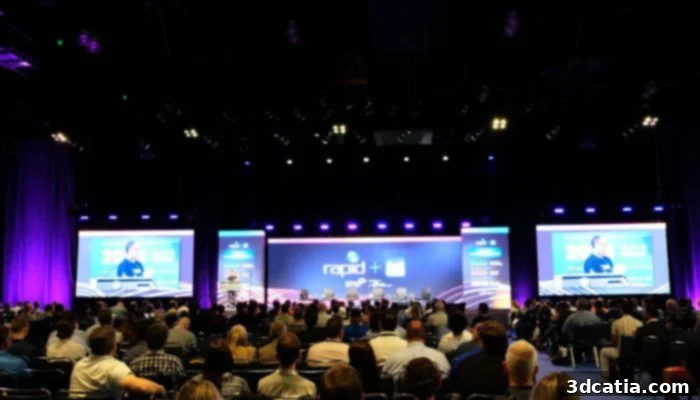
Bob Willig from SME was one of those welcoming the executives to the stage, facilitating valuable discussions.
While these high-level discussions occasionally veered into nuanced disagreements, the overarching insights pointed towards several clear strategic directions for the industry. A common thread was the urgent need for prudence and strategic decision-making, even if the degree of caution varied among leaders. There was a strong consensus that burying one’s head in the sand about the industry’s current realities was not an option. Companies must proactively make informed decisions that will enable them to navigate the current challenging economic climate, ensuring the long-term viability and robust future of additive manufacturing.
The Practical Side of Additive Manufacturing: Beyond the Hype
Despite some of the seemingly dire warnings from the executive keynotes, both the leaders on stage and the exhibitors on the show floor largely concurred on one fundamental principle: practicality is the critical imperative for additive manufacturing right now. But what precisely does this “practicality” entail for the industry?
Marie Langer from EOS articulated this sentiment particularly well during the first executive keynote. She stated that “the hype [for 3D printing] is over,” immediately clarifying that this statement should not lead to pessimism. Instead, it signifies a matured understanding of the technology. The general consensus was a shift away from simply creating innovative parts and hoping customers would emerge. The focus has decisively moved towards understanding specific customer needs and developing targeted, value-driven solutions. This approach signifies a vital transition from technological novelty to industrial utility, emphasizing real-world applications and measurable ROI.
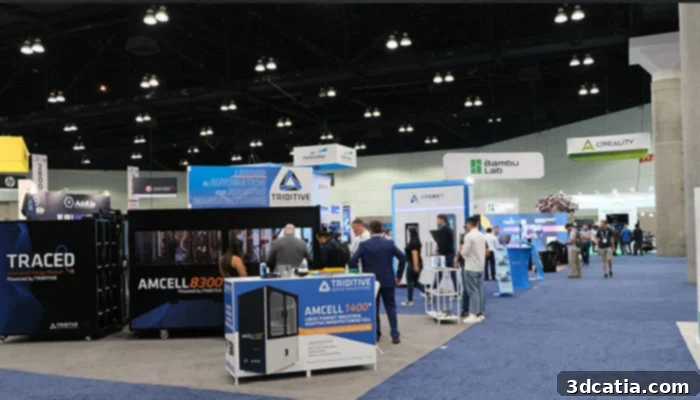
Throughout the show floor, exhibitors were showcasing how additive manufacturing solutions could be used for practical, clear applications, directly addressing industry needs.
Todd Grimm, owner of T. A. Grimm & Associates, Inc. and AM industry advisor for AMUG, positively affirmed this consistent theme. He commented, “One thing that I am pleased with is that I am showing more product innovations that are more in line with what customers need, rather than building a mouse trap and expecting them to come.” This observation underscores a significant and positive evolution within the industry, prioritizing market demand and problem-solving over mere technological prowess.
The Hollywood Showcase provided not only a stunning reminder of the convention center’s proximity to the heart of the entertainment industry but also served as a compelling, tangible example of the urgent need for practical applications. Jason Lopes, Chief Technology Officer at Gentle Giant Studios, eloquently highlighted the strategic importance of this showcase. As RAPID + TCT 2024 aimed to spotlight regions where 3D printing demonstrates significant prominence, the entertainment sector was an ideal choice, given the exponential rise in the adoption of 3D technologies for film, television, and theme park productions in recent years. The showcase was, without exaggeration, an incredible display of creative and technical mastery!
At the Hollywood Showcase, attendees had the unique opportunity to stand alongside breathtaking, life-sized statues of popular characters, many of which are regularly utilized by companies like Disney for immersive marketing campaigns or enchanting theme park experiences. The majority of these intricate models were crafted using large-format SLA (Stereolithography) 3D printing, with meticulous finishing details achieved through various advanced post-processing methods. Material jetting was also a frequently employed technology, particularly for capturing the finer, more elaborate details. What became abundantly clear was not merely the astonishing level of detail achievable with 3D technologies, but also the sheer versatility of their application across the creative spectrum. Iconic figures like Sauron, as well as Jake Sully and Neytiri from James Cameron’s Avatar, stood as particularly incredible examples of 3D printing’s artistic and technical capabilities.
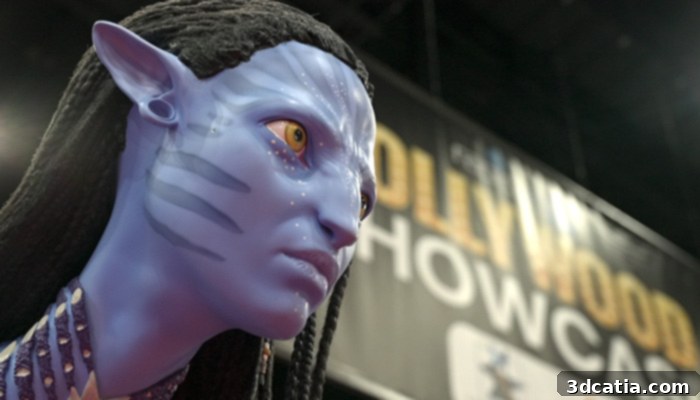
Neytiri from Avatar, displayed in incredible detail at the Hollywood Showcase, demonstrating advanced 3D printing applications.
However, entertainment was far from the only sector demonstrating the robust capabilities of additive manufacturing at RAPID + TCT this year. We witnessed numerous compelling examples from fields where AM is not just beneficial, but truly indispensable, especially when synergistically combined with other advanced manufacturing processes such as CNC machining. This year, industries like defense, aerospace, and medical were prominently featured, a fitting representation given California’s status as a hub for innovation in these very sectors.
While we previously highlighted Manny, the 3D-printed skeleton, that was merely a glimpse of the vast potential showcased. Numerous companies exhibited how effectively their technologies could be utilized for creating highly accurate anatomical models. From astonishingly realistic hearts, invaluable for surgical planning and medical training, to custom-fitted prosthetics that dramatically improve patients’ lives, it was evident that additive manufacturing is making profound contributions to the healthcare sector.
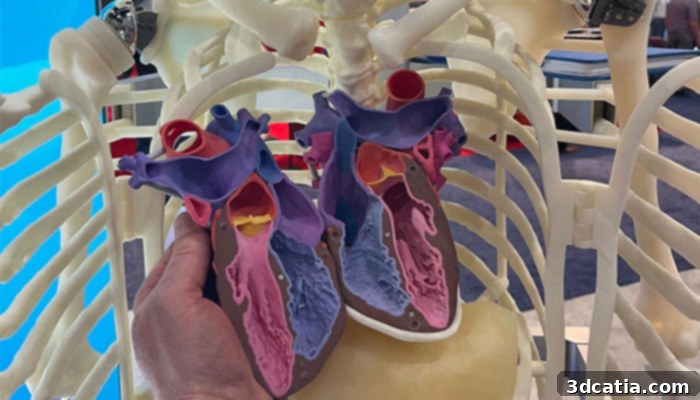
A close-up of Manny’s meticulously 3D-printed heart, highlighting the precision of anatomical models.
The aerospace sector was also exceptionally well-represented, showcasing the full spectrum of additive manufacturing’s capabilities. Exhibits ranged from complete motor blades designed for helicopters to complex, fully metal, 3D-printed engine components, underscoring the technology’s critical role in optimizing performance, reducing weight, and enabling intricate designs for flight applications. This strong presence was particularly apt, considering California’s pivotal importance as a birthplace for space exploration startups and advanced aerospace innovation.
Furthermore, the potential for additive manufacturing in defense was a recurring and loudly articulated theme throughout the event. Discussions frequently centered on collaborations and requirements from major institutions such as the Department of Defense (DOD) and the Pentagon, highlighting the strategic significance of 3D printing for national security and military readiness.
Michelle Sidwell of VELO3D, for instance, outlined her company’s current priorities during a keynote address. She passionately stated, “Our responsibility as well is helping US defense, there are a lot of challenges there and we are behind. We need to see how we can help in this geopolitical climate…Now the question is how do we take what happened in space where we are able to move into that process quickly and start to move horizontally into defense and help educate the market into where we fit in as part of our patriotic duty.” Her remarks powerfully underscored the patriotic duty and the urgent need for additive manufacturing to contribute to defense innovation, mirroring the rapid advancements seen in the commercial space sector.
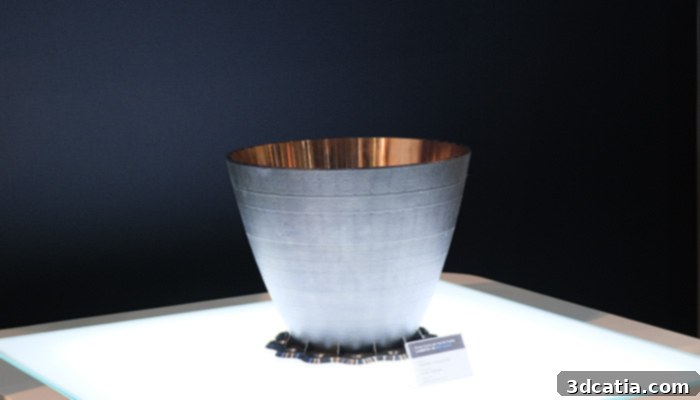
Defense and aerospace were prominent sectors represented at RAPID + TCT 2024, highlighting AM’s critical role in these industries.
The Human Connection: Fostering Community at RAPID + TCT 2024
When contemplating what truly distinguishes RAPID + TCT from other additive manufacturing events, the answer becomes resoundingly clear: human connection and networking. For many attendees, the unparalleled opportunities for networking and forging professional relationships emerged as one of the key benefits of participating in this year’s event. The atmosphere encouraged direct interaction, collaboration, and the sharing of ideas, strengthening the bonds within the AM community.
The exceptional parties held on the second day, which brilliantly captured the glitter and glamor of Hollywood, undoubtedly amplified this sense of community. Featuring lively break dancers and delectable culinary offerings, attendees enthusiastically gathered long after the show floor had closed. This provided an ideal setting to mingle, discuss the latest in additive manufacturing, and simply enjoy the company of peers. The camaraderie continued with vibrant after-parties, including a popular karaoke event sponsored by America Makes, further solidifying the social and professional connections.
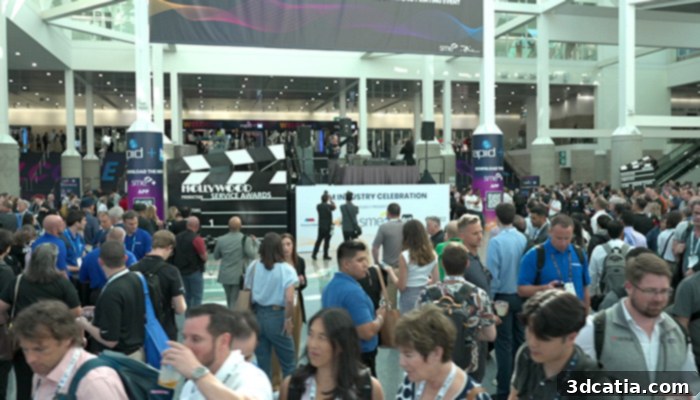
The AM Industry Celebrations showcased the vibrant spirit and Hollywood influence at RAPID + TCT 2024.
This success in fostering human connection is not accidental; it is a fundamental pillar of the event’s philosophy. RAPID + TCT has consistently positioned itself as an additive manufacturing event designed *for the people* – a focus that has been further underscored by its unique and strategic North American tour approach. By bringing the event closer to major industrial hubs, it maximizes accessibility and relevance for a broader audience.
Ben Rubinstein, Senior Marketing Specialist at SME, a key organization in producing the show, explained the strategic rationale behind this initiative: “With the RAPID + TCT’s North American tour, we’re bringing AM directly to the backyards of major manufacturing industries. Next year we’re in Detroit: besides being the home of SME, it’s the mecca for automotive/mobility. And in 2026, we’re super excited to visit Boston and collocate with two other giants in the world of manufacturing events: SAE’s World Congress Experience (think Detroit/automotive meets Silicon Valley-level tech), and SME’s own AeroDef, which puts the spotlight on advanced manufacturing technologies for aerospace and defense.” This forward-thinking strategy ensures that RAPID + TCT remains at the forefront of additive manufacturing education, innovation, and community building.
Materials, Software, and Post-Processing: Driving the Evolution of Additive Manufacturing
Finally, and notably, RAPID + TCT 2024 continued to reinforce a significant trend observed over the past few years across numerous trade shows: while machine manufacturers navigate market shifts, the sectors of materials, software, and post-processing solutions are experiencing rapid and substantial growth. Indeed, a diverse array of innovative offerings was evident throughout the exhibition hall. For instance, advanced water cutting and EDM (Electrical Discharge Machining) were highlighted as popular and effective post-processing techniques, demonstrating the sophistication now applied to finishing 3D-printed parts.
Software, in particular, seemed to hold a place of honor for many participants this year. Beyond its acknowledged role in optimizing and cost-effectively producing useful parts, the broader importance of artificial intelligence (AI) was once again emphasized. Many companies appear to be strategically leveraging this buzzword, not just within software solutions, but even integrating AI into advanced 3D printers, capitalizing on the popularity and perceived value associated with anything bearing the term. This widespread adoption, whether genuinely transformative or partly promotional, indicates a strong belief in AI’s future impact on AM workflows.
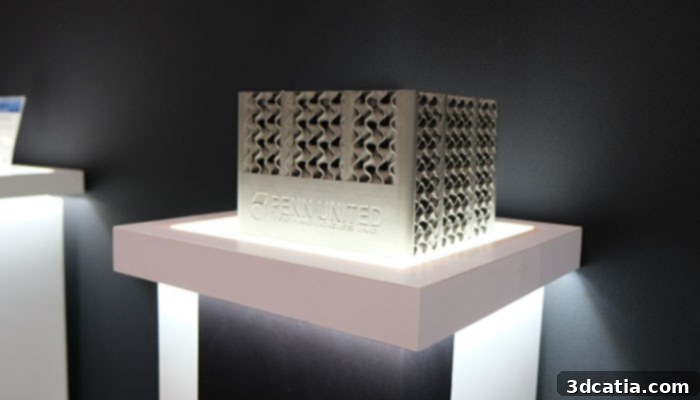
Software is increasingly important in AM, enabling the creation of more optimized parts with incredible, complex geometries.
Cynicism about buzzwords aside, it was unequivocally clear that materials, software, and post-processing solutions are firmly establishing their central place within the broader additive manufacturing market. These critical elements are no longer relegated to the periphery but are recognized as integral drivers of innovation and functionality. Material companies, such as 6K Additive, commanded prominent booths, signifying their growing importance. Similarly, Aibuild garnered noticeable interest by unveiling its latest software update via a press release right in the midst of the show, demonstrating the industry’s keen appetite for advancements in digital tools.
And there you have it – a comprehensive overview of RAPID + TCT 2024! Even with a more subdued and pragmatic tone resonating among many exhibitors and attendees, the event provided a clear roadmap for how the entire additive manufacturing sector expects to advance. This sustained focus on customer-centric solutions is likely to continue, while the crucial areas of software, materials, and post-processing will undoubtedly experience further robust growth. It will certainly be fascinating to compare these trends and new developments next year at RAPID + TCT 2025, scheduled to take place in Detroit, Michigan.
Were you able to attend RAPID + TCT 2024? What was your favorite part or most significant takeaway from the event? We invite you to share your thoughts and experiences in a comment below or connect with us on our LinkedIn, Facebook, and Twitter pages! Don’t forget to sign up for our free weekly newsletter here to receive the latest 3D printing news directly to your inbox! You can also find all our engaging videos and content on our YouTube channel.
*All Photo Credits: 3Dnatives