

Revolutionizing Military Training: Chile’s Acapomil Leads with Advanced 3D Printing Technology
In an era defined by relentless technological advancement, the integration of cutting-edge innovations into military education is no longer optional but a strategic imperative. Future military polytechnic engineers must be equipped not only with a robust theoretical foundation but also with agile, practical skills to navigate and shape the complex defense landscape. Recognizing this critical need, the Chilean Army has taken a monumental leap forward with the recent inauguration of a state-of-the-art 3D Printing Center at its esteemed Military Polytechnic Academy (Acapomil). This pioneering initiative marks a significant milestone, underscoring the institution’s unwavering commitment to fostering innovation, enhancing practical learning, and developing a new generation of engineers capable of designing, building, and optimizing sophisticated systems for national security.
The establishment of this advanced additive manufacturing facility at Acapomil is far more than a mere technical upgrade; it represents a profound pedagogical and strategic transformation in military engineering education. By bringing sophisticated 3D printing capabilities directly into the academic environment, Acapomil empowers its cadets to bridge the traditional gap between abstract concepts and tangible reality. This hands-on approach ensures that future officers are not just consumers of advanced technology but active creators, problem-solvers, and innovators. Additive manufacturing, commonly known as 3D printing, enables the creation of three-dimensional objects from digital designs, layer by layer. This revolutionary process is transforming industries globally, and its application in military contexts promises unprecedented flexibility, speed, and cost-efficiency in everything from rapid prototyping to on-demand spare parts production in the field. For Acapomil, the focus is clear: to cultivate engineers who are not only technically proficient but also critically engaged with emerging technologies, ready to drive the future of military innovation and secure Chile’s defense capabilities.
Acapomil’s Cutting-Edge 3D Printing Capabilities and Their Educational Impact
The newly established 3D Printing Center at Acapomil is meticulously outfitted with a diverse range of advanced printing systems, enabling students to explore a broad spectrum of additive manufacturing applications and material properties. This comprehensive setup ensures that cadets gain a holistic understanding of the technology’s potential and limitations. Among these are two primary printing systems designed to cater to distinct prototyping needs, offering specific advantages in terms of material characteristics, precision, and application versatility. One system specializes in filament-based manufacturing, predominantly employing Fused Deposition Modeling (FDM) technology. This method is exceptionally well-suited for creating robust, functional prototypes and end-use parts from a variety of thermoplastic materials such as PLA, ABS, and PETG. FDM printers are ideal for developing components that require mechanical strength, durability, and a degree of flexibility, allowing students to test designs under realistic conditions and iterate rapidly on functional prototypes for diverse engineering projects, ranging from custom tools to structural components for unmanned systems.
Complementing the FDM capabilities, the center also features advanced resin-based printing systems, typically utilizing Stereolithography (SLA) or Digital Light Processing (DLP) technologies. These systems excel in producing models with exceptionally fine details, intricate geometries, and superior surface finishes. Resin printing is indispensable for applications where precision, aesthetic quality, and intricate design fidelity are paramount. This includes creating highly detailed scale models of complex military equipment, intricate conceptual designs that require smooth surfaces, or components demanding extremely tight tolerances. The strategic ability to work with both filament and resin technologies provides Acapomil students with a profound and comprehensive understanding of additive manufacturing principles. It empowers them to critically assess and select the most appropriate method for any given design challenge, from designing small, intricate electronic housings to prototyping large-scale system components. This versatility transforms abstract engineering concepts into concrete, functional, and highly detailed physical objects, fostering a deeper understanding and significantly accelerating the learning curve for future military engineers.
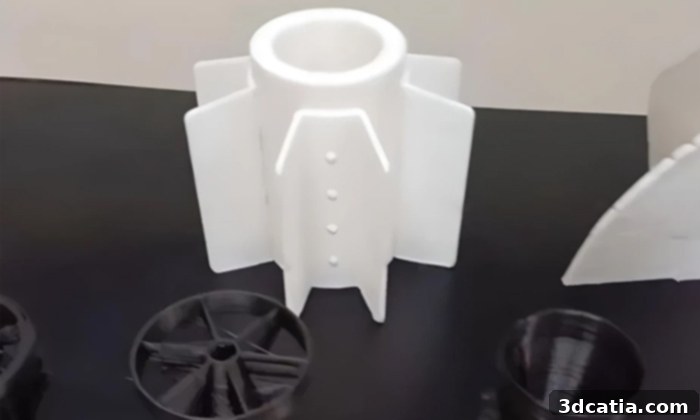
Example of 3D printed parts at the Chilean Army Center
3D Printing: A Game Changer for Chilean Army Training and Operational Readiness
The adoption of 3D printing technology at Acapomil signifies a monumental paradigm shift in how future military engineers are trained, moving decisively beyond traditional theoretical instruction towards an immersive, hands-on learning experience. This progressive approach allows students to experiment with different designs quickly, cost-effectively, and with minimal material waste, fostering an invaluable culture of innovation and continuous improvement. The iterative design process, which is inherent in additive manufacturing—where prototypes can be rapidly designed, modified, reprinted, and tested repeatedly in a significantly condensed timeframe—serves to profoundly accelerate learning and deepen the understanding of complex technical principles. Students can now take an idea from a digital concept to a tangible physical object within hours or days, enabling them to swiftly identify design flaws, optimize performance, and refine their creations with unparalleled efficiency and practical insight.
This advanced capability extends far beyond mere academic exercises. Future military engineers will be empowered to develop specific parts for a wide array of specialized engineering projects, create didactic models to effectively explain advanced military concepts to their peers and subordinates, or even design innovative, bespoke solutions to real-world operational challenges directly faced by the Chilean Army in diverse environments. Imagine cadets designing custom mounting brackets for new sensor systems on vehicles, developing ergonomic improvements for soldier equipment to enhance comfort and effectiveness, or rapidly prototyping specialized components for reconnaissance drones to adapt to evolving mission requirements. The possibilities are virtually limitless, equipping these engineers not just with highly technical fabrication skills but also with an invaluable, proactive problem-solving mindset and a profound understanding of design-for-manufacturability principles.
Beyond fostering individual skill development, the Acapomil 3D Printing Center is strategically designed to cultivate essential professional competencies vital for success in both military and industrial sectors. These critical skills include fostering teamwork, encouraging interdisciplinary collaboration, and honing complex problem-solving abilities. Students will naturally engage in collaborative projects, pooling their diverse technical knowledge from various engineering disciplines to overcome intricate design and manufacturing hurdles. This collaborative environment fosters an atmosphere where cross-functional skills are continuously honed, preparing them not only for the collaborative nature of modern military operations but also for advanced defense research and development. The dynamic work processes enabled by 3D printing inherently reinforce these fundamental pillars, ensuring that Acapomil graduates are not only technically astute but also highly adept at working effectively within diverse teams to achieve complex strategic objectives under pressure.
Acapomil: Forging the Future of Defense Engineering for Chile and Beyond
With the visionary incorporation of this cutting-edge 3D Printing Center, Acapomil emphatically reaffirms its commitment not only to the technical excellence of its students but also to their comprehensive preparation for the complex challenges of tomorrow’s world. This proactive integration of advanced technologies positions Acapomil at the absolute vanguard of military education, ensuring that its engineers are exceptionally well-prepared to tackle future demands in defense technology and engineering. The sophisticated learning environment facilitated by 3D printing vividly demonstrates the institution’s unwavering dedication to academic rigor and to cultivating professionals who can critically assess, adapt to, and actively drive new technological paradigms, thereby shaping the future of national defense.
This pedagogical transformation transcends a simple update of available tools; it signifies a profound and systemic shift in how military engineers are trained to think, innovate, and act. Cadets will gain invaluable hands-on experience in digital design methodologies, advanced material science, rapid prototyping techniques, and cutting-edge manufacturing processes. Such a comprehensive skill set is indispensable for developing innovative solutions that significantly enhance military capabilities. This ranges from improving equipment ergonomics and developing custom parts for highly specialized missions to potentially enabling on-demand, localized manufacturing of critical components in remote operational theaters. This capability dramatically reduces logistical dependencies, enhances strategic autonomy, and improves the overall resilience of the Chilean Army’s supply chain.
Furthermore, by proactively embracing additive manufacturing, Acapomil is preparing its students for a future where defense supply chains are inherently more resilient, agile, and adaptable. The ability to design, iterate, and produce essential components locally can effectively mitigate risks associated with global supply chain disruptions, significantly reduce reliance on external suppliers, and dramatically cut down lead times for critical parts during peacetime and conflict alike. This fosters a more self-reliant, technologically independent, and operationally responsive defense force for Chile. Acapomil graduates will be instrumental in exploring these expansive possibilities, driving cutting-edge research into new materials and applications specific to the unique requirements of the Chilean armed forces, and ensuring that Chile not only keeps pace with but actively leads in defense innovation within the region.
In essence, Acapomil’s strategic investment in 3D printing technology is a forward-looking move to cultivate military engineers who are not only capable of understanding complex defense systems but also of actively shaping their evolution through innovation. These highly skilled professionals will be equipped to think critically, innovate fearlessly, and adapt swiftly to new and emerging technologies, thereby significantly enhancing the operational readiness, technological superiority, and long-term security of the Chilean Army. This visionary and forward-thinking approach solidifies Acapomil’s esteemed reputation as a leading institution in global military education, committed to developing professionals who are truly ready to face both national and international challenges in the dynamic and ever-evolving fields of engineering and technology.
What are your thoughts on the Chilean Army’s groundbreaking implementation of 3D printing in military education and its potential impact on future defense capabilities? We invite you to share your valuable insights in a comment below or connect with us on our LinkedIn, Facebook, and Twitter pages! Don’t miss out on the latest advancements and critical discussions in additive manufacturing—sign up for our free weekly newsletter here to receive top 3D printing news directly in your inbox. You can also explore our comprehensive video content on our YouTube channel, featuring interviews, demonstrations, and expert analyses.
*All Photo Credits: Acapomil / Chilean Army