
Revolutionizing Space Exploration: UC Berkeley’s SpaceCAL 3D Printer Conquers Microgravity
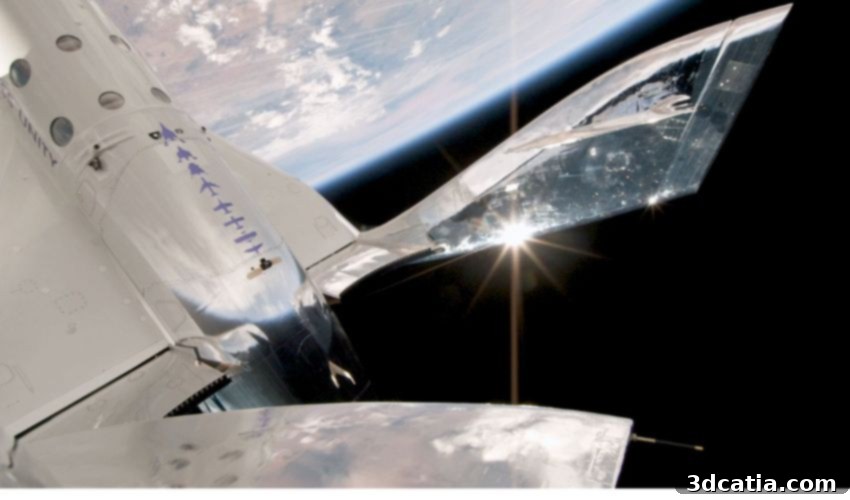
A groundbreaking achievement in additive manufacturing has propelled the future of space exploration forward. A dedicated team of UC Berkeley researchers, under the visionary leadership of Ph.D. student Taylor Waddell, has successfully developed and tested the SpaceCAL 3D printer in the challenging environment of suborbital space. Launched aboard the VSS Unity as part of the Virgin Galactic 07 mission on June 8th, this innovative technology promises to fundamentally transform how astronauts approach critical fabrication and repair needs during extensive space missions, paving the way for unprecedented self-sufficiency beyond Earth.
SpaceCAL, an acronym for Space-Computed Axial Lithography, stands as a testament to cutting-edge advancements in the realm of 3D printing. Developed through a collaborative effort by Hayden Taylor and his team at UC Berkeley, in partnership with Lawrence Livermore National Laboratory (LLNL), this remarkable system utilizes light to meticulously sculpt solid objects from a specialized viscous liquid resin. This process offers significant advantages over traditional 3D printing methods, primarily delivering a significantly faster and more versatile manufacturing capability crucial for the demanding constraints of space environments.
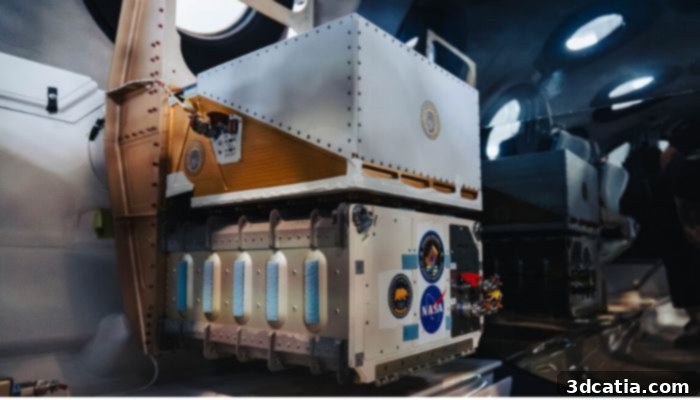
The SpaceCAL Microgravity 3D printer. (Photo Credits: Virgin Galactic)
The true test of SpaceCAL’s capabilities came during its brief yet profoundly impactful journey into suborbital space. For approximately 140 seconds, the printer autonomously executed its operations, successfully producing and post-processing four distinct test objects. These objects were crafted using a liquid plastic known as PEGDA. The successful demonstration of SpaceCAL’s ability to function effectively and reliably in microgravity conditions is an absolutely critical validation for its future role in long-duration space exploration endeavors, including missions to the Moon and Mars, where gravity is either minimal or entirely absent.
Taylor Waddell emphasized the significance of this milestone, stating, “SpaceCAL performed well under microgravity conditions in past tests aboard parabolic flights, but it still had something to prove.” He elaborated, “This latest mission, generously funded through NASA’s Flight Opportunities program and bolstered by the support of Berkeley Engineering and the Berkeley Space Center, provided us with the invaluable opportunity to unequivocally validate the readiness of this advanced 3D printing technology for the rigors and unique challenges of space travel. This success marks a pivotal step towards autonomous manufacturing capabilities for astronauts.” The consistent performance across multiple testing phases builds immense confidence in SpaceCAL’s robust design and operational reliability for future applications far beyond Earth’s atmosphere.
Unlocking Autonomous Manufacturing: SpaceCAL’s Unparalleled Versatility and Speed
The distinguishing characteristics of CAL (Computed Axial Lithography) technology—its exceptional speed and remarkable adaptability—are precisely what make it a game-changer for space missions. The ability to fabricate complex parts in mere seconds or minutes, rather than hours, empowers astronauts with an unprecedented capability for on-demand manufacturing. This rapid production dramatically minimizes the traditional necessity for carrying an extensive inventory of spare parts, which are costly and heavy to launch. For long-duration missions, where every ounce of cargo is meticulously accounted for and space is at an absolute premium, this attribute is not merely beneficial but utterly paramount. Imagine an astronaut needing a specialized tool or a crucial replacement component; with SpaceCAL, it could be printed almost instantly, allowing missions to proceed without costly delays or potentially catastrophic failures.
Moreover, the versatility of CAL technology extends far beyond simple spacecraft repairs. Its capability to print with an impressively wide array of materials truly broadens its potential applications. From durable silicones and resilient glass composites to sophisticated biomaterials, SpaceCAL opens up a plethora of possibilities for maintaining both the integrity of the spacecraft and, crucially, the health and well-being of the crew. Waddell detailed some of these varied applications: “We can print O-rings, which are essential for sealing components; various mechanical mounts for equipment; and even specialized tools designed for specific tasks.” He further highlighted the profound medical implications, underscoring SpaceCAL’s potential to address critical health needs for astronauts in remote environments: “But CAL is also capable of repairing the crew. We can print dental replacements, such as crowns or fillings, develop custom skin grafts for injuries, or even create specialized lenses. More broadly, it can produce things personalized for emergency medicine for astronauts, which is profoundly important in these extended missions where immediate access to Earth-based medical facilities is impossible.” This capability transforms the concept of a space medical kit, allowing for dynamic, on-demand solutions tailored to individual needs.
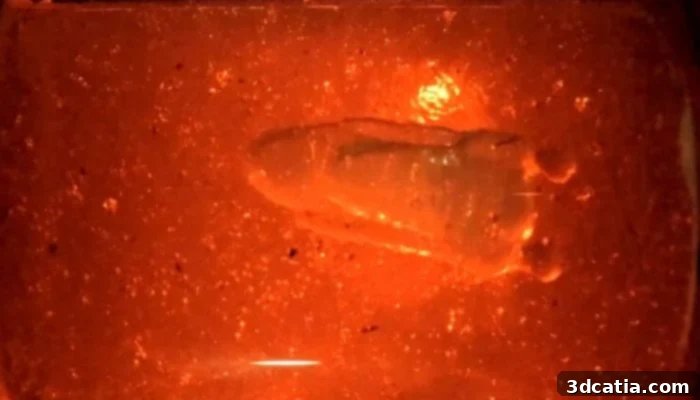
Space shuttle figurine printed by SpaceCAL while in sub-orbit. (Photo Credits: Taylor Waddell)
The Future is Now: Bioprinting, Self-Sufficiency, and Humanity’s Expansion into Space
Looking ahead, the potential applications of CAL technology are both extensive and profoundly captivating, promising to redefine the scope of human endeavors in space. With continued support from NASA, the Berkeley team is relentlessly pushing the boundaries of what is possible, venturing into ambitious realms such as bioprinting human organs in space. This visionary goal represents a monumental leap forward, not just for space medicine but for the broader field of regenerative medicine. Lawrence Livermore National Laboratory has already secured a significant NASA grant to conduct pioneering experiments with this very technology on the International Space Station (ISS), with the ultimate aspiration of demonstrating the feasibility of printing viable organs in space and safely returning them to Earth for medical applications. Such a capability could revolutionize organ donation and transplantation, offering new hope for countless patients.
Beyond organ bioprinting, the team is actively developing the capability to create a diverse range of single objects that will directly contribute to crew health and overall well-being. This includes critical items such as custom dental crowns, which can prevent pain and maintain astronaut health over long missions, or specialized surgical instruments, which could be printed on-demand for emergency procedures. The implications for missions to distant celestial bodies like Mars, where resupply is infrequent and extremely challenging, are immense. By enabling astronauts to manufacture essential components, medical devices, and even biological tissues in situ, SpaceCAL promises to unlock unprecedented levels of self-sufficiency. This capability is absolutely vital for establishing sustainable human presences on lunar bases or future Martian settlements, where reliance on Earth-based supply chains is simply not feasible. Autonomous manufacturing in space means lighter launch payloads, reduced mission costs, and significantly enhanced resilience for deep-space missions, freeing humanity from some of the logistical shackles that have long limited our reach into the cosmos.
The successful test of SpaceCAL marks a profound turning point in in-space manufacturing. It not only validates a cutting-edge 3D printing technology for microgravity but also lays foundational groundwork for a future where astronauts can truly live and work independently far from Earth. This Berkeley-led innovation, backed by crucial collaborations with LLNL and NASA, is not just about printing parts; it’s about printing a future for humanity in space. To delve deeper into the specifics of this remarkable milestone and its technical intricacies, further information is available by clicking here.
What are your thoughts on UC Berkeley’s revolutionary SpaceCAL 3D printer and its implications for future space missions? We invite you to share your insights in a comment below or join the conversation on our LinkedIn, Facebook, and Twitter pages! Don’t miss out on the latest advancements and breaking news in the world of 3D printing – make sure to sign up for our free weekly newsletter here to get it delivered straight to your inbox! Additionally, you can find all our engaging videos and in-depth analyses on our YouTube channel for more visual content.
*Cover Photo Credits: Virgin Galactic