
Desktop Metal Files for Chapter 11: Unpacking the Additive Manufacturing Giant’s Restructuring and Future
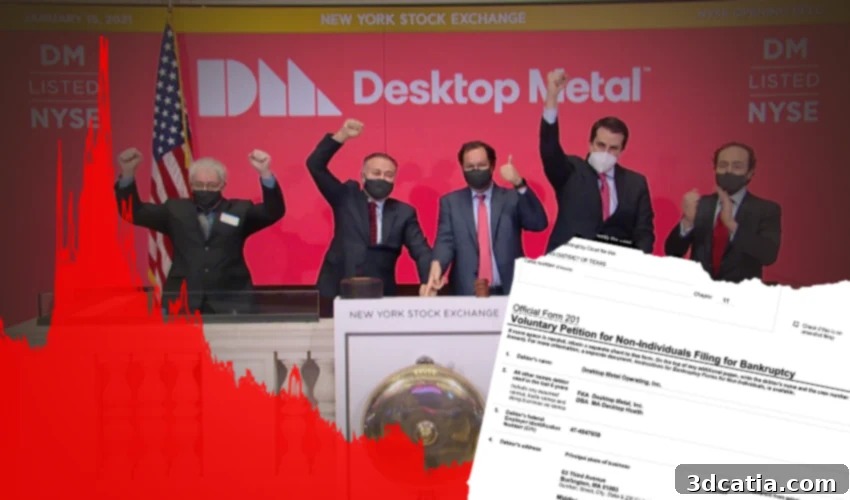
Desktop Metal, once heralded as a pioneering force and a significant disruptor in the burgeoning additive manufacturing industry, has officially filed for Chapter 11 bankruptcy. This pivotal decision, made amidst strenuous efforts to stabilize the company’s precarious financial standing and strategically divest key international subsidiaries, marks a dramatic turning point for a company that had garnered immense investor interest and market expectations. The filing occurred this week with the U.S. Bankruptcy Court for the Southern District of Texas, providing Desktop Metal with a crucial legal framework to restructure its substantial debt obligations while maintaining limited operational capabilities. According to recently disclosed court documents, the company’s financial records indicate a staggering range of between $1 billion and $10 billion in both reported assets and liabilities. This substantial figure underscores the profound financial challenges the company has faced, with a portion of these funds earmarked for distribution among unsecured creditors as part of the reorganization process.
As an integral part of its comprehensive restructuring strategy, Desktop Metal has formally entered into a definitive agreement to divest several of its prominent international business units. These include ExOne GmbH, a renowned entity specializing in binder jetting technology; EnvisionTEC GmbH, known for its expertise in DLP-based 3D printing solutions; ExOne KK, its Japanese counterpart; and AIDRO s.r.l., an Italian company focused on metal additive manufacturing for demanding industrial applications. The acquiring entity for these significant assets is an affiliate of the strategic investment firm Anzu Partners, a move that signals a focused realignment for Desktop Metal. The district court has already granted swift approval for Anzu Partners’ acquisition of ExOne GmbH and ExOne KK, with no objections raised during the proceedings. This expeditious decision is not anticipated to face any appeals, thereby enabling Desktop Metal to commence the immediate transfer of these critical assets. These subsidiaries, operating across Germany, Italy, and Japan, represent some of Desktop Metal’s most recognized and technologically advanced brands, particularly within the binder jetting and DLP-based technologies segments, which were central to the company’s vision for mass production in additive manufacturing.
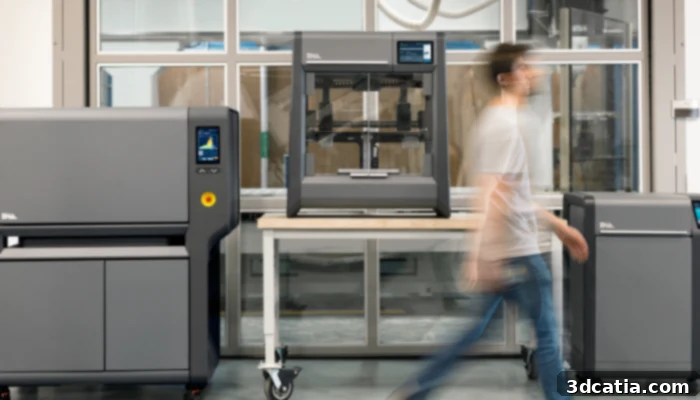
Desktop Metal previously saw large investments with its office-friendly metal 3D printing systems. (Photo Credit: Desktop Metal)
This surprising bankruptcy announcement closely follows recent reports detailing a contentious and highly publicized acquisition by Nano Dimension, which had finalized its purchase of Desktop Metal earlier in the year after a protracted legal battle culminating in a court-ordered ruling. Following Desktop Metal’s bankruptcy filing, Nano Dimension promptly clarified its position, stating unequivocally that the decision to pursue Chapter 11 was made independently by the board of directors at Desktop Metal. Ofir Baharav, the CEO of Nano Dimension, publicly underscored that this strategic move by Desktop Metal’s board was fundamentally aimed at preserving the company’s financial feasibility and empowering it to explore new market opportunities with significantly minimized risk. In a pointed comment regarding the filing, Baharav asserted, “We are safeguarding our financial stability and maintaining our status as the best-capitalized company in our ecosystem. This strong position allows us to pursue strategic opportunities with maximum leverage.” This statement highlights Nano Dimension’s intention to protect its own robust financial standing while strategically navigating the complexities arising from its substantial investment in Desktop Metal, and to continue its pursuit of consolidating key players within the additive manufacturing and electronics manufacturing sectors.
Despite the intricate legal and financial morass now enveloping Desktop Metal, the decision to file for Chapter 11 bankruptcy undeniably signals a profound and potentially transformative shift within the broader additive manufacturing landscape. Not long ago, Desktop Metal was widely celebrated as an industry disruptor, primarily due to its aggressive push towards enabling mass production through advanced metal binder jetting technologies. The company’s unique selling proposition centered on its development of “office-friendly metal 3D printing systems,” designed to make metal additive manufacturing more accessible and less cumbersome for a wider range of industries. This vision attracted substantial investment, culminating in its high-profile Special Purpose Acquisition Company (SPAC) merger in 2020. At its peak during this period, the company was valued at an astonishing nearly $2.5 billion USD, fueled by the enthusiasm for disruptive technologies and backed by a strategic suite of aggressive acquisitions. These acquisitions were explicitly intended to consolidate a significant portion of the burgeoning AM sector under a single, dominant entity, aiming to create a comprehensive portfolio of technologies and market reach. In 2021, further demonstrating its commitment to scaling, Desktop Metal also opened an in-house facility that significantly helped triple its assembly capacity, positioning itself for anticipated high-volume production and market leadership.
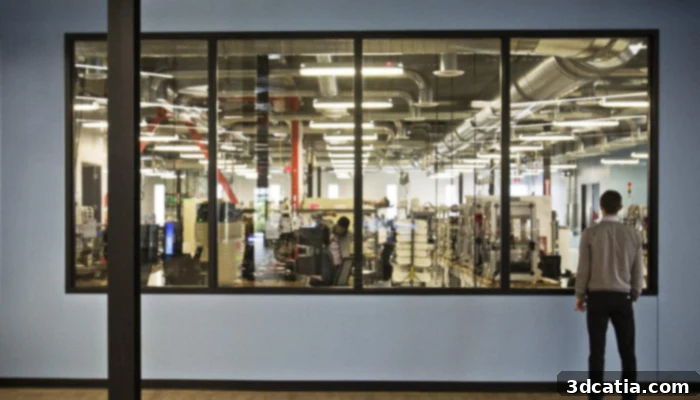
In 2021, Desktop Metal opened an in-house facility that helped triple its assembly capacity. (Photo Credit: Marc Bemsau)
Despite the company’s ambitious and aggressive growth strategy, which was notably bolstered by its acquisitions of market leaders like ExOne and EnvisionTEC, this expansion eventually culminated in surmounting debts and a cascade of difficult operational challenges. The rapid integration of multiple distinct entities proved more complex and costly than initially projected, leading to inefficiencies and a dilution of focus. Furthermore, some astute stock analysts and market observers had previously voiced serious concerns regarding the long-term sustainability of the company’s business model. These concerns were particularly amplified by recent inconsistencies in revenue generation, where the company often fell short of ambitious financial projections. Desktop Metal’s market performance has also declined gradually since its peak in 2021, following its listing in 2018, reflecting these underlying issues. This internal struggle was compounded by broader economic headwinds that have adversely affected virtually all segments of the technology sector, including supply chain disruptions, inflationary pressures, rising interest rates, and a general tightening of investment capital. These macro-economic factors further strained Desktop Metal’s resources and exacerbated its financial vulnerabilities, making it increasingly difficult to achieve profitability amidst high operational costs and slow market adoption rates for industrial-scale additive manufacturing.
Adding a significant layer of complexity to Desktop Metal’s already developing financial challenges is the pressing issue of outstanding legal debts. The prominent law firm Quinn Emanuel Urquhart & Sullivan LLP, which had previously represented Desktop Metal in its litigation against Nano Dimension, has revealed that the company still carries outstanding debts amounting to nearly $30 million in legal fees. This substantial sum represents services rendered during a critical period for Desktop Metal. More recently, the firm has updated these figures and is now actively requesting a significantly higher amount, up to $90 million in total damages, through a separate and ongoing legal suit. This additional financial claim, if successful, would place an even greater burden on Desktop Metal’s already distressed asset base and further complicate the equitable distribution of funds to its various creditors during the bankruptcy proceedings. The escalating legal costs underscore the intense and protracted nature of the disputes the company has faced, further eroding its financial stability and contributing to the current Chapter 11 filing.
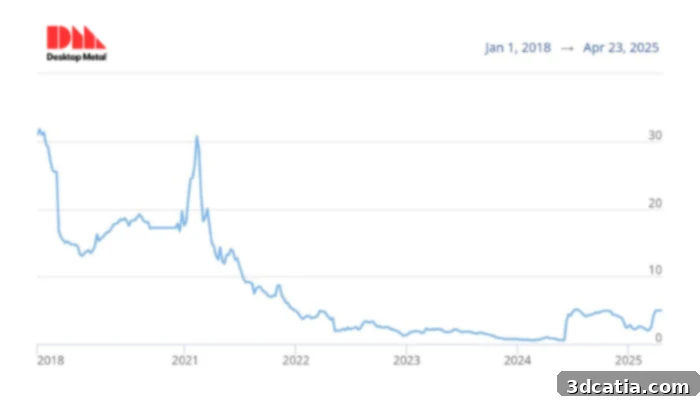
Desktop Metal’s market performance has declined gradually since its peak in 2021 following its listing in 2018. (Data Credit: NYSE)
While it remains critically important to acknowledge the intrinsic potential and innovative capabilities of Desktop Metal’s core technologies, particularly its advancements in metal binder jetting, the decision to file for Chapter 11 bankruptcy and proceed with the dramatic divestitures of its international subsidiaries undeniably marks a profound and dramatic turn for a company that was once confidently poised to revolutionize and lead the future of the 3D printing industry. This development serves as a stark reminder of the inherent volatility and complex challenges associated with pioneering new industrial technologies and scaling them to mass market adoption. As the additive manufacturing industry as a whole now grapples with and reacts to these significant developments, the ultimate fate of Desktop Metal’s remaining assets, its pioneering technologies, and its customer base will remain under exceptionally close scrutiny. This event prompts broader questions about market consolidation, investor confidence in emerging AM companies, and the long-term viability of aggressive growth strategies in a maturing technological landscape. The coming months will be crucial in determining how Desktop Metal, in its restructured form, or its divested components, will continue to contribute, if at all, to the evolving narrative of industrial additive manufacturing.
What are your thoughts on these recent developments? Let us know in a comment below or on our LinkedIn or Facebook pages! Plus, don’t forget to sign up for our free weekly Newsletter to get the latest 3D printing news straight to your inbox. You can also find all our videos on our YouTube channel.
*Cover Photo Credits: NYSE, U.S Bankruptcy Court for the Southern District of Texas, NASDAQ